Smoking pipes
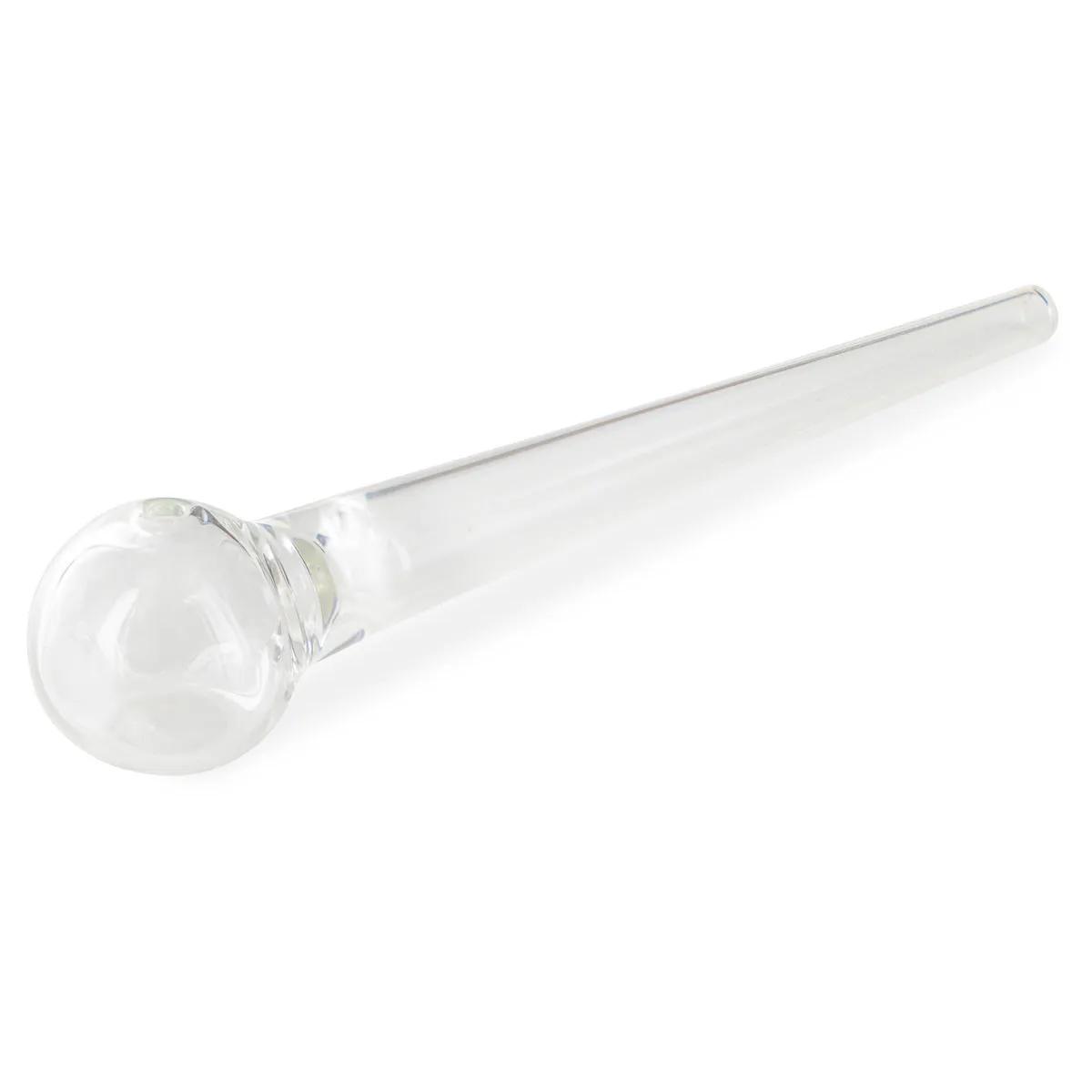
A glass DMT pipe is a borosilicate vaporiser pipe with a rounded bulb chamber that lets you smoke or vaporise dry herbs, concentrates and oils — no extra accessories, no screens, no fiddling. At 15cm, this pipe keeps the heat source far enough from your lips to stay comfortable, and the borosilicate glass handles repeated torch heating without cracking. We've stocked these since the early days of the shop, and they outsell fancier rigs for one reason: they just work. If you're looking to buy a glass DMT pipe that handles every method without compromise, this is the one we hand people first.
A glass DMT pipe is a straight borosilicate glass stem with a rounded bulb at one end, designed to smoke or vaporise dry herbs, concentrates and oils by applying heat to the bulb chamber. Also called a base pipe, oil burner pipe or vaporiser pipe, you place your material inside the bulb through the top opening, apply heat, and inhale through the stem. The bulb acts as a miniature vaporisation chamber: its curved walls distribute heat evenly and let you see exactly what's happening inside. That visibility matters. You can watch your material melt, bubble and vaporise in real time, which gives you far more control than any opaque pipe ever could.
The design has been around for decades — it's one of the oldest smoking devices still in daily use. The reason it's stuck around is pure function. No moving parts, no screens to replace, no water to spill. One piece of glass, one flame, done.
This pipe stands out because it combines 15cm borosilicate glass construction with a rounded bulb chamber that handles both combustion and vaporisation without any accessories. Borosilicate is the same type of glass used in laboratory glassware and high-end bakeware. It has a low coefficient of thermal expansion, which in plain terms means it doesn't crack when you hit it with a torch lighter and then set it down on a cold surface. Regular soda-lime glass would shatter within a few sessions. Borosilicate handles the thermal shock repeatedly.
At 15cm in length, the stem gives you roughly 12cm of distance between the bulb and your mouth. That's enough to cool the vapour noticeably before it reaches your lips. Shorter pipes — the 8-10cm versions you see elsewhere — work, but you'll feel the heat on your face. We'd pick this 15cm length over shorter options every time.
The honest limitation: glass is glass. Drop it on tiles and it's done. There's no silicone sleeve, no protective case. If you're clumsy or planning to take it outdoors, keep it in a padded pouch. A sock works in a pinch — we've seen that solution more times than we can count behind the counter.
| Specification | Detail |
|---|---|
| Material | Borosilicate glass |
| Length | 15cm |
| Chamber type | Rounded bulb with top opening |
| Methods supported | Combustion (smoking) and vaporisation |
| Accessories required | None — works with any standard lighter or torch |
| SKU | HS0625 |
| Heat resistance | High (borosilicate withstands repeated torch heating) |
| Cleaning | Isopropyl alcohol soak or salt rinse |
Complete your setup: order a torch lighter with an adjustable blue flame for precise temperature control during vaporisation. Pipe cleaners and isopropyl alcohol keep the bulb clear between sessions — residue builds up fast with concentrates, and a clean pipe means better flavour every time. A milligram scale is also worth picking up if you're working with concentrates that require precise dosing.
Using a glass DMT pipe requires loading the bulb, choosing between combustion or vaporisation, and controlling flame distance — the technique you pick changes the experience entirely. Both methods work with the same pipe; only the flame placement differs.
Smoking (combustion) ignites material at high temperatures and is best for dry herbs, while vaporising heats material below combustion point and is best for concentrates and oils. The difference comes down to temperature and what you're consuming.
| Factor | Smoking (Combustion) | Vaporising |
|---|---|---|
| Flame position | Above the bulb opening | Below the bulb (underside) |
| Lighter type | Standard lighter | Torch lighter (blue flame) |
| Temperature | Higher — material ignites | Lower — material melts and vaporises |
| Best for | Dry herbs | Concentrates, oils, waxy materials |
| Vapour quality | Thicker smoke, harsher | Thinner vapour, smoother |
| Efficiency | Lower — combustion destroys some active compounds | Higher — lower temperatures preserve more material |
| Skill needed | Minimal | Moderate — requires flame distance control |
If you're working with concentrates or oils, vaporisation is the way to go. Combustion temperatures destroy a significant portion of the active compounds before they reach your lungs. Vaporising at lower temperatures preserves more of what you're actually trying to consume. For dry herbs, combustion is simpler and more straightforward — just light and inhale.
The most common reason customers buy a glass DMT pipe is versatility — one piece that handles herbs, concentrates and oils without swapping parts. We've sold thousands of these pipes since 1999, and the same questions and mistakes come up every week. Here's what actually matters.
The number one mistake is overheating. People treat the torch lighter like a blowtorch and hold it right against the glass. The bulb turns black, the material scorches, and they get a harsh, burnt hit with half the potency wasted. Keep the flame 2-3cm below the glass and move it constantly. Patience gets you a clean, smooth draw. Impatience gets you a mouthful of soot.
The second thing: clean your pipe after every 3-4 sessions. Residue builds up inside the bulb fast, especially with oils and concentrates. That residue re-burns every time you heat the pipe, tainting the flavour and making it harder to see what's happening inside. A 15-minute soak in isopropyl alcohol and a quick rinse is all it takes. We keep a small jar of iso behind the counter specifically for this — it's that routine.
The weight of this pipe is almost nothing — maybe 20-25 grams. It feels delicate in your hand, and honestly, it is. But that lightness is part of the design. You need to be able to hold and rotate it with one hand while managing a lighter with the other. A heavier pipe would make that awkward. Just don't toss it in a bag without protection.
A glass DMT pipe is the simplest and most affordable option for vaporising concentrates, but it's worth knowing how it compares to other methods. Electronic vaporiser pens heat material to a set temperature automatically — convenient, but batteries die, coils burn out, and replacement parts add up. Glass-on-glass rigs with a banger or nail offer more precise temperature control and water filtration, but they're bulkier, more expensive, and require more accessories. The glass DMT pipe sits in the sweet spot: zero accessories, zero electronics, zero maintenance beyond cleaning. The trade-off is that temperature control depends entirely on your technique. If you want set-and-forget convenience, get an electronic vape. If you want a reliable, inexpensive tool that you can learn to use well, this pipe is the better choice.
Precise dosing is essential when using a glass DMT pipe with DMT specifically. According to a study published in Psychopharmacology, a median reported N,N-DMT dose of 40.0mg (IQR 27.5–50.0) with a median of 3.0 inhalations (IQR 2.0–3.0) per experience were reported across 1,347 respondents (PMC9130218). According to research published in Frontiers in Psychiatry, DMT material in clinical settings was weighed using 0.001g microscales to monitor dosage (PMC8716686). A milligram scale is not optional — it's the difference between a threshold experience and an overwhelming one.
According to the EMCDDA (European Monitoring Centre for Drugs and Drug Addiction), DMT is a controlled tryptamine that produces intense short-acting psychedelic effects, and its risk profile varies depending on dose, set and setting. According to Medical News Today, DMT has several health risks and can produce intense hallucinations. At higher doses, the experience can be psychologically distressing (medicalnewstoday.com). The interaction profile also deserves attention: according to research reviewed by the EMCDDA, DMT's most well-documented harmful interaction is its potential to cause serotonin syndrome, particularly in people taking antidepressants or other serotonergic medications. If you're on any medication that affects serotonin, do your homework before combining.
Yes. Hold a standard lighter flame above the bulb opening for dry herbs (combustion), or heat the underside with a torch for concentrates and oils (vaporisation). The same 15cm borosilicate glass pipe handles both methods without any adapters or screens.
A torch lighter with an adjustable blue flame. Standard lighters don't produce enough focused heat to vaporise effectively through the glass. Torch lighters are sold separately and cost just a few euros — they're a worthwhile addition.
Soak the bulb end in isopropyl alcohol (90% or higher) for 15-30 minutes, then rinse with warm water. For stubborn residue, add coarse salt to the alcohol and shake gently. Clean every 3-4 sessions to maintain flavour and visibility through the glass.
Borosilicate glass is specifically designed to withstand thermal shock from repeated heating and cooling cycles. It's the same material used in lab glassware. Avoid running cold water over a hot pipe — let it cool for 2-3 minutes first — and it'll last through hundreds of sessions.
Yes. The 15cm stem provides roughly 12cm between the bulb and your mouth, which is enough to cool the vapour noticeably. Shorter 8-10cm pipes work but feel noticeably warmer. We'd recommend this length as the minimum for comfortable use.
Black residue means you're applying too much heat or holding the flame too close. Keep the torch 2-3cm below the glass and move it in small circles. If the bulb is already blackened, a soak in isopropyl alcohol will clear it. Consistent overheating also wastes material by burning rather than vaporising it.
According to a study in Psychopharmacology, the median reported dose was 40.0mg across 1,347 respondents, with a typical range of 27.5–50.0mg per session (PMC9130218). A milligram-precision scale is strongly recommended for accurate measurement.
Yes. According to the EMCDDA and published clinical research, DMT's most documented harmful interaction is serotonin syndrome, which is more likely in people taking antidepressants (SSRIs, SNRIs, MAOIs) or other serotonergic drugs. Research thoroughly and never combine without understanding the risks involved.
You can buy this 15cm borosilicate glass DMT pipe directly from Azarius. It ships from our Amsterdam warehouse and arrives in discreet packaging. No accessories are required — it's ready to use out of the box with any standard lighter or torch.
Last updated: April 2026