Microscope Bong 14'' (Tsunami Glass)
Water pipes & bongs
by Tsunami Glass
Microscope Bong 14'' by Tsunami Glass
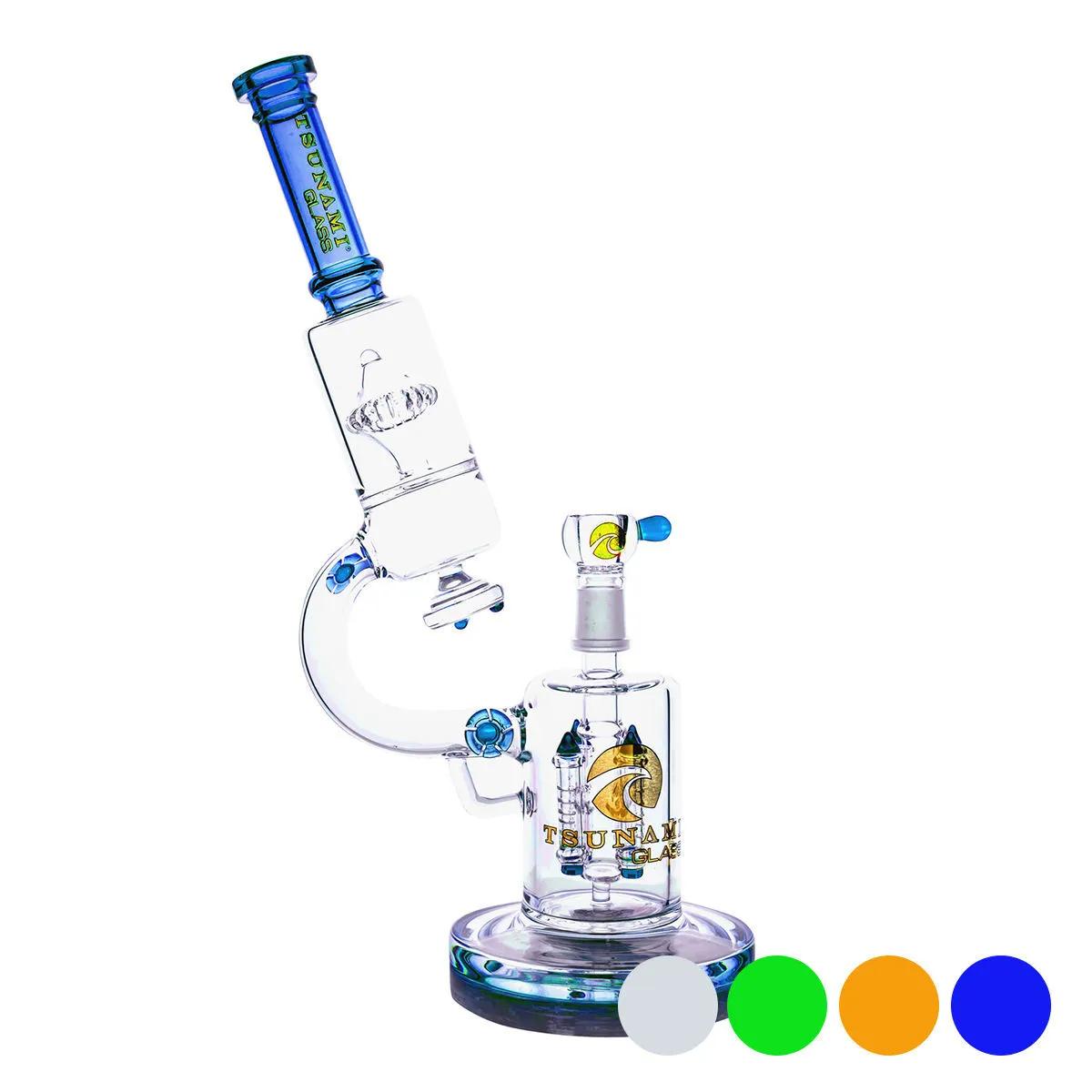
The Microscope Bong 14'' is a borosilicate glass water pipe by Tsunami Glass that delivers seriously smooth, well-filtered hits through a quadruple rocket percolator system. Standing 14 inches tall with a design modelled after a laboratory microscope, this is a conversation-starting centrepiece that also happens to rip beautifully. Available in four colourways — Blue, Green, Amber, and Clear — the Microscope Bong bridges the gap between functional glassware and display-worthy art.
Which Colour Suits You?
All four variants — Blue, Green, Amber, and Clear — share identical specs. The coloured accents run through the glass detailing and percolator section. Clear shows off the water action and percolation in full, which is genuinely mesmerising to watch. Blue and Green give a laboratory-instrument look that leans into the microscope theme. Amber adds a warmer, almost vintage scientific-instrument feel. Pick whichever catches your eye — the performance is the same across the board.
Specifications of the Tsunami Glass Microscope Bong
Here's exactly what you're getting with this 14-inch water pipe — no guesswork needed.
| Spec | Detail |
|---|---|
| Brand | Tsunami Glass |
| Height | 14 inches (approx. 35.5 cm) |
| Glass Type | Borosilicate |
| Glass Thickness | 3 mm |
| Percolator | Quadruple rocket percolator |
| Neck Style | Curved |
| Compatible With | Dry herbs and concentrates |
| Available Colours | Blue, Green, Amber, Clear |
| SKUs | HS2126 (Blue), HS2127 (Green), HS2128 (Amber), HS2125 (Clear) |
Complete your setup with a proper grinder — the SLX Non-Stick Grinder keeps your herb fluffy and consistent, which matters more than you'd think when packing a bowl on a percolated piece like this. A set of pipe cleaners and some isopropyl alcohol will keep those four rocket percs performing at their best between deep cleans.
Why the Microscope Bong Deserves Shelf Space
Most bongs do one thing well: they cool smoke. The Microscope Bong does four things at once, thanks to that quadruple rocket percolator. Each rocket perc forces the smoke through multiple slits, breaking it into tiny bubbles before it reaches the main chamber. More bubbles means more surface area in contact with water, which means better cooling and filtration in a single pull. The result is a noticeably smoother, fuller-flavoured hit compared to a standard single-perc beaker.
At 14 inches, this sits in the sweet spot — tall enough to give the smoke a decent travel path for cooling, but not so tall that you need a dedicated shelf or risk knocking it off a coffee table. The curved neck is a small detail that makes a real difference during longer sessions. Instead of hunching over the mouthpiece, the angle comes to you. Your neck and back will appreciate it after the third or fourth bowl.
The dual-use capability is worth mentioning too. Swap the bowl for a banger and you've got a concentrate rig without buying a second piece. That kind of versatility from a single bong is genuinely useful — especially if you're short on storage or just don't want a growing collection of glass cluttering up the place.
From Our Counter: What We've Noticed
We've handled a lot of Tsunami Glass over the years. The brand consistently delivers solid percolation systems at a reasonable price point. The 3 mm borosilicate on the Microscope Bong feels sturdy in the hand — not featherlight, not a brick. You can feel the weight is distributed well, which matters when you're filling it with water and don't want it tipping. The coloured accents are fused into the glass, not painted on, so they won't chip or fade over time.
The honest limitation? Those four rocket percs are brilliant for smoothness, but they do create drag. If you're used to a simple beaker bong with zero resistance, the Microscope Bong requires a slightly harder pull. That's the trade-off for quadruple filtration — you get cooler, cleaner hits, but you work a touch harder for them. Most experienced users actually prefer that resistance because it lets you control the draw more precisely. If you want something with less drag and a more open airflow, a single-perc beaker like the Tsunami Glass Beaker 15'' would be the simpler alternative.
One more thing: cleaning. Four percolators means four sets of slits that can accumulate residue. A weekly soak in isopropyl alcohol and coarse salt keeps everything flowing. Skip the cleaning for a month and you'll notice the drag increasing — that's residue clogging the perc slits, not a design flaw. Treat the glass well and it'll treat you well.
How to Use the Microscope Bong
- Fill the bong with water through the mouthpiece. The water level should sit roughly 1–2 cm above the top of the rocket percolators. Too much water and you'll get splashback; too little and the percs can't do their job.
- Grind your dry herb to a medium consistency — not powder-fine, not chunky. A consistent grind gives you even airflow through the bowl.
- Pack the bowl loosely. Don't tamp it down hard. Air needs to pass through the herb for the percolators to function properly. A tight pack chokes the airflow and wastes material.
- Place your mouth inside the curved mouthpiece, creating a seal with your lips. Light the herb while inhaling slowly and steadily. You'll hear the water bubbling through all four rocket percs — that's the filtration working.
- Once the chamber fills with smoke to your liking, pull the bowl out of the downstem and inhale the remaining smoke from the chamber.
- Exhale and appreciate the difference that quadruple percolation makes. The hit should be noticeably cooler and smoother than a standard bong.
- For concentrates, replace the herb bowl with a compatible quartz banger. Heat the banger, let it cool for 20–30 seconds, then apply your concentrate and inhale gently.
- After each session, pour out the used water and rinse with warm water. Standing water breeds bacteria — fresh water every session is non-negotiable.
Build Quality and Materials
Borosilicate glass is the same material used in laboratory equipment — Pyrex beakers, test tubes, that sort of thing. It handles thermal shock far better than regular soda-lime glass, which means you're less likely to crack the piece when pouring in cold water or applying heat near the bowl. At 3 mm thickness, the Microscope Bong strikes a balance between durability and weight. Thicker glass (5 mm+) is more resistant to impact but adds significant heft. For a 14-inch piece that you'll be lifting regularly, 3 mm keeps things manageable.
The quadruple rocket percolator system is the centrepiece of the engineering. Each rocket perc features multiple slits cut into a cylindrical tube. Smoke enters the tube, gets forced through the slits, and disperses into the surrounding water as fine bubbles. Multiply that process by four and you've got a filtration system that breaks the smoke down significantly before it reaches your lungs. The large chamber above the percs gives those bubbles room to expand, producing thick, voluminous clouds with less harshness.
| Feature | Benefit |
|---|---|
| Borosilicate glass (3 mm) | Thermal shock resistance, lighter weight than 5 mm alternatives |
| Quadruple rocket percolator | 4-stage filtration for cooler, smoother hits |
| 14-inch height | Adequate smoke path for cooling without being unwieldy |
| Curved neck | Ergonomic mouthpiece angle — less hunching |
| Large chamber | Room for thick clouds to develop before inhalation |
| Dual-use design | Switch between dry herb bowl and concentrate banger |
| Fused colour accents | Permanent colour — won't chip, fade, or peel |
Frequently Asked Questions
How does a quadruple rocket percolator work?
Each rocket perc is a cylindrical tube with slits cut into it. Smoke enters the tube, gets pushed through the slits, and breaks into tiny bubbles in the water. Four of these in sequence means the smoke is filtered and cooled four separate times before it reaches the chamber. More filtration stages equals a smoother, cooler hit.
Can I use the Microscope Bong for concentrates?
Yes. Remove the dry herb bowl and replace it with a compatible quartz banger. The quadruple percolation actually works brilliantly with concentrates — the lower temperatures and denser vapour benefit from multi-stage cooling. Just make sure the banger joint size matches the downstem.
How often should I clean a bong with multiple percolators?
Weekly, at minimum. Fill the bong with isopropyl alcohol (90%+) and coarse salt, cover the openings, and shake vigorously. Let it soak for 30 minutes if residue is stubborn. Rinse thoroughly with warm water. Four percolators means four times the surface area for residue to build up — staying on top of cleaning keeps the drag low and the flavour clean.
Is 3 mm glass thick enough to be durable?
For a 14-inch piece, 3 mm borosilicate is standard and holds up well with normal handling. It's not as impact-resistant as 5 mm or 7 mm glass, so don't set it on the edge of a table or hand it around carelessly. Treat it like the lab instrument it resembles and it'll last years.
Why does the Microscope Bong have more drag than a beaker bong?
Drag increases with every percolator because the smoke has to pass through water-filled slits at each stage. Four rocket percs means four points of resistance. That's the trade-off for superior filtration. If you prefer a wide-open draw, a single-perc beaker is the better fit. Most experienced users find the controlled drag actually gives them better command over their hits.
What's the right water level for this bong?
Fill until the water sits about 1–2 cm above the highest percolator slit. Do a test pull without lighting anything — if water reaches your lips, pour some out. If you don't hear bubbling through all four percs, add a bit more. Getting the level right takes 30 seconds of trial and error the first time.
Does the curved neck actually make a difference?
It does. On a straight-neck bong, you lean forward and tilt your head down to reach the mouthpiece. The curved neck on the Microscope Bong angles the opening towards you, so you sit more naturally. It's a small ergonomic detail that you notice most during longer sessions.
Last updated: April 2026