Books & gifts
by Green Candy Press
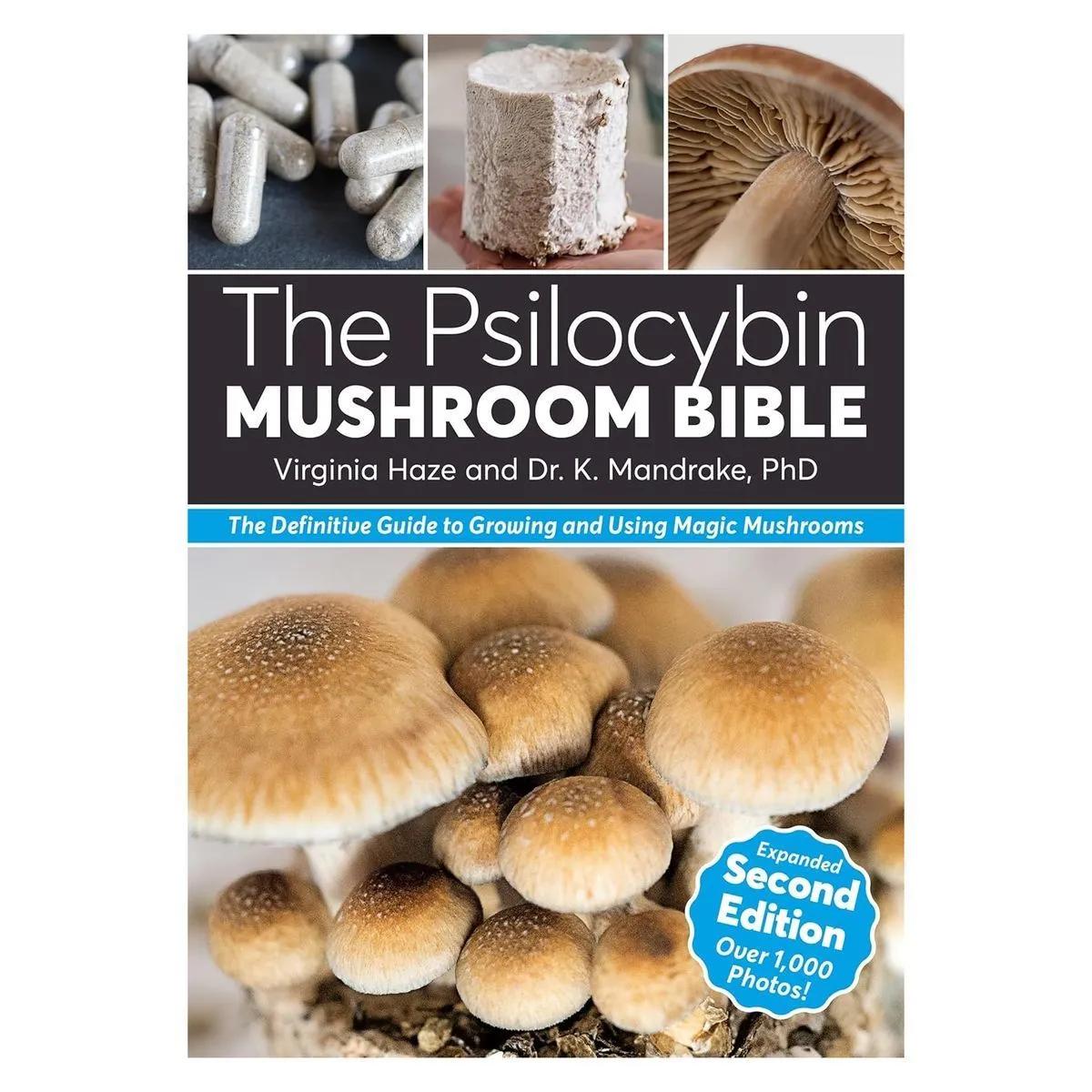
The Psilocybin Mushroom Bible is a 300+ page illustrated cultivation manual covering every stage of growing psilocybin mushrooms at home. Written by Dr K. Mandrake, who holds a doctorate in mycology, this guide pairs clear full-colour photography with practical instruction so you actually know what you're looking at when mycelium starts colonising your substrate. From building your first fruiting chamber to drying and storing your harvest, it's the book we'd hand someone who's tired of guessing and ready to get consistent results. If you want to order a single resource that replaces hours of contradictory forum advice, this is it.
The Psilocybin Mushroom Bible stands out from other cultivation resources because it combines expert-level mycology with step-by-step photography at every stage of the growing process. There are dozens of guides floating around online — forum threads, PDFs of questionable origin, YouTube videos filmed in someone's wardrobe. Most of them skip the bits that actually cause problems: sterilisation technique, spotting contamination before it wipes out a batch, and understanding why your substrate colonised beautifully but nothing fruited. This book covers all of that with photographs taken at each stage, so you're comparing your own work against a clear visual reference rather than a vague text description.
Dr Mandrake's mycology background shows in the detail. This isn't a pamphlet with five steps and a "good luck." The book walks through building your own growing chambers, preparing substrates, sterilising equipment properly, managing humidity and airflow, harvesting at the right moment, and drying for long-term storage. Each chapter builds on the last. By the time you reach your first harvest, you'll understand why each step matters — not just what to do, but what goes wrong when you cut corners.
The honest limitation: this is a physical book, not a troubleshooting hotline. If you run into a contamination issue that doesn't match any photo in the guide, you'll still need to cross-reference with online communities. But as a foundation? We've sold this one since it came out, and the feedback from customers is consistently positive. It's the best single-volume psilocybin mushroom cultivation book we carry.
The book is organised into chapters that each handle one phase of the growing process, from chamber construction through to safe consumption practices. You won't be flipping back and forth trying to piece things together.
| Chapter Focus | What You'll Learn |
|---|---|
| Growing chamber construction | How to build the boxes and enclosures needed for each cultivation method |
| Contamination prevention | Protecting spores and growing mediums from bacteria and competing moulds |
| Sterilisation techniques | Proper equipment sterilisation — the step most beginners underestimate |
| Healthy growth management | Temperature, humidity, fresh air exchange, and light cycle tips |
| Harvesting | When to pick, how to pick, and how to encourage further flushes |
| Drying and storage | Methods for proper dehydration and long-term potency preservation |
| History of psilocybin | The long relationship between humans and psilocybin-containing mushrooms across cultures |
| Safe consumption guide | Practical advice on consuming mushrooms responsibly and effectively |
| Spec | Detail |
|---|---|
| Author | Dr K. Mandrake (PhD, Mycology) |
| Publisher | Green Candy Press |
| Language | English |
| SKU | HS0742 |
| Format | Illustrated paperback |
| Photography | Full-colour, step-by-step |
| Skill level | Beginner to intermediate |
Growing your own? Pair this book with one of our psilocybin grow kits — they arrive fully colonised, so you can practise the fruiting, harvesting, and drying techniques from the book straight away. A digital thermometer/hygrometer is also worth grabbing so you can monitor the conditions Dr Mandrake recommends without guesswork. Browse our smartshop category or check out our mushroom cultivation wiki for substrate comparisons and strain overviews.
A structured, expert-authored book eliminates the contradictions and gaps you encounter when piecing together free online guides. Forum posts, Reddit threads, wiki guides — they're everywhere, but scattered forum advice has no structure, no quality control, and no photographs taken by someone who actually knows what healthy mycelium looks like versus the early stages of trichoderma contamination.
From Our Counter: We've watched this play out for over two decades. A customer walks in, says they followed a YouTube tutorial, lost their first batch to green mould, and had no idea where things went wrong. We hand them the Psilocybin Mushroom Bible and tell them to read the contamination chapter before they buy anything else. Nine times out of ten, they come back a few weeks later with a successful flush. A book like this gives you the complete picture in one place, with a logical order that builds your understanding rather than leaving you to stitch together contradictory advice from five different sources.
There's also the historical and cultural context. The Psilocybin Mushroom Bible dedicates serious space to the relationship between humans and psilocybin-containing mushrooms throughout history. According to research published in PMC, psilocybin — the main psychoactive component in hundreds of species — has garnered particular scientific interest in recent years. According to the EMCDDA, psilocybin-containing mushrooms remain one of the most widely used naturally occurring psychoactive substances in Europe, which underlines why informed, evidence-based resources like this book matter. Understanding that context gives you a deeper appreciation for what you're growing. It's not just a hobby manual — it's a proper education.
One thing we'll say honestly: if you've already been growing successfully for years using monotub tek and have your sterilisation dialled in, this book may cover ground you already know. It's strongest as a first or second cultivation resource. For experienced growers, the value lies more in the historical chapters and the consumption guide than the growing instructions themselves. By comparison, books like The Mushroom Cultivator by Paul Stamets cover broader mycology but lack the focused psilocybin-specific photography and step-by-step approach that makes the Psilocybin Mushroom Bible so practical for beginners.
Reading the full book before purchasing any equipment is the single most effective way to avoid wasted money and failed batches. The later chapters reference concepts from earlier ones, and understanding the complete process before you begin prevents costly mistakes.
Psilocybin is currently one of the most actively researched psychoactive compounds in clinical psychiatry, with over 200 fungal species known to produce it. According to a review in Frontiers in Psychiatry, psilocybin has high affinity for several serotonin receptors and has shown clinical potential as a treatment for mood disorders. A separate analysis in Cureus examined five randomised controlled trials and found measurable impacts on psychiatric symptoms at doses of 10mg to 25mg in clinical settings. And according to an evaluation in MDPI Medicina, many positive outcomes have been observed, though more research is needed to determine optimal protocols.
This isn't fringe science anymore. Clinical studies have used doses ranging from microdose levels (0.1–0.2g dried) up to 3.5g (approximately 35mg psilocybin content) for full-dose research sessions. The Beckley Foundation has been instrumental in advancing psilocybin research through partnerships with institutions like Imperial College London, funding neuroimaging studies that have reshaped our understanding of how psilocybin affects brain connectivity. Understanding what you're cultivating — and what the science says about it — makes the growing process more meaningful. The book's historical chapters connect these modern findings to thousands of years of human use.
That said, it's worth noting that research has also flagged inconsistent results regarding psilocybin's effects on cognitive flexibility and creative cognition across different populations. The science is promising but still developing. The book gives you the cultural and historical grounding to follow that research with informed eyes.
No. The Psilocybin Mushroom Bible starts from absolute zero — building your first growing chamber, preparing substrates, sterilising jars. The step-by-step photography means you can visually confirm you're on track at every stage. It's written for beginners but detailed enough that intermediate growers will fill gaps in their knowledge.
Yes. While Psilocybe cubensis features prominently (it's the most commonly cultivated species), the guide covers cultivation principles applicable across psilocybin-containing species. The consumption chapter also discusses different varieties and their characteristics.
Contamination. Every time. We've watched it happen for over 25 years in the shop. People skip sterilisation steps or touch substrates without gloves. The Psilocybin Mushroom Bible dedicates an entire chapter to contamination prevention — it's the most critical section in the book.
Both. Roughly two-thirds covers cultivation in detail. The remaining sections address the history of psilocybin use across cultures and include a practical guide to consuming mushrooms safely — covering preparation, dosage awareness, and set and setting considerations.
Online guides are fragmented and often contradictory. This book gives you one coherent, photographed, expert-reviewed process from start to finish. Dr Mandrake's mycology doctorate means the science behind each technique is solid, not guesswork passed between forum users. It's the difference between a recipe scribbled on a napkin and an actual cookbook.
Yes. Research indicates psilocybin can interact badly with stimulants, other psychoactive compounds, and certain prescribed medications — particularly those affecting serotonin pathways. The book's consumption chapter addresses safe use practices. If you're on any medication, do your research thoroughly before combining.
According to clinical literature, the most common adverse effects include anxiety, nausea, pupillary dilation, yawning, and transient increases in heart rate and blood pressure. The book's safe consumption guide discusses how preparation and setting can minimise uncomfortable experiences.
You can buy the Psilocybin Mushroom Bible directly from Azarius. We keep it in stock and ship throughout Europe. If you're looking to get started with cultivation, consider ordering this book alongside a grow kit so you have both the knowledge and the materials ready from day one.
Last updated: April 2026