Rolling papers
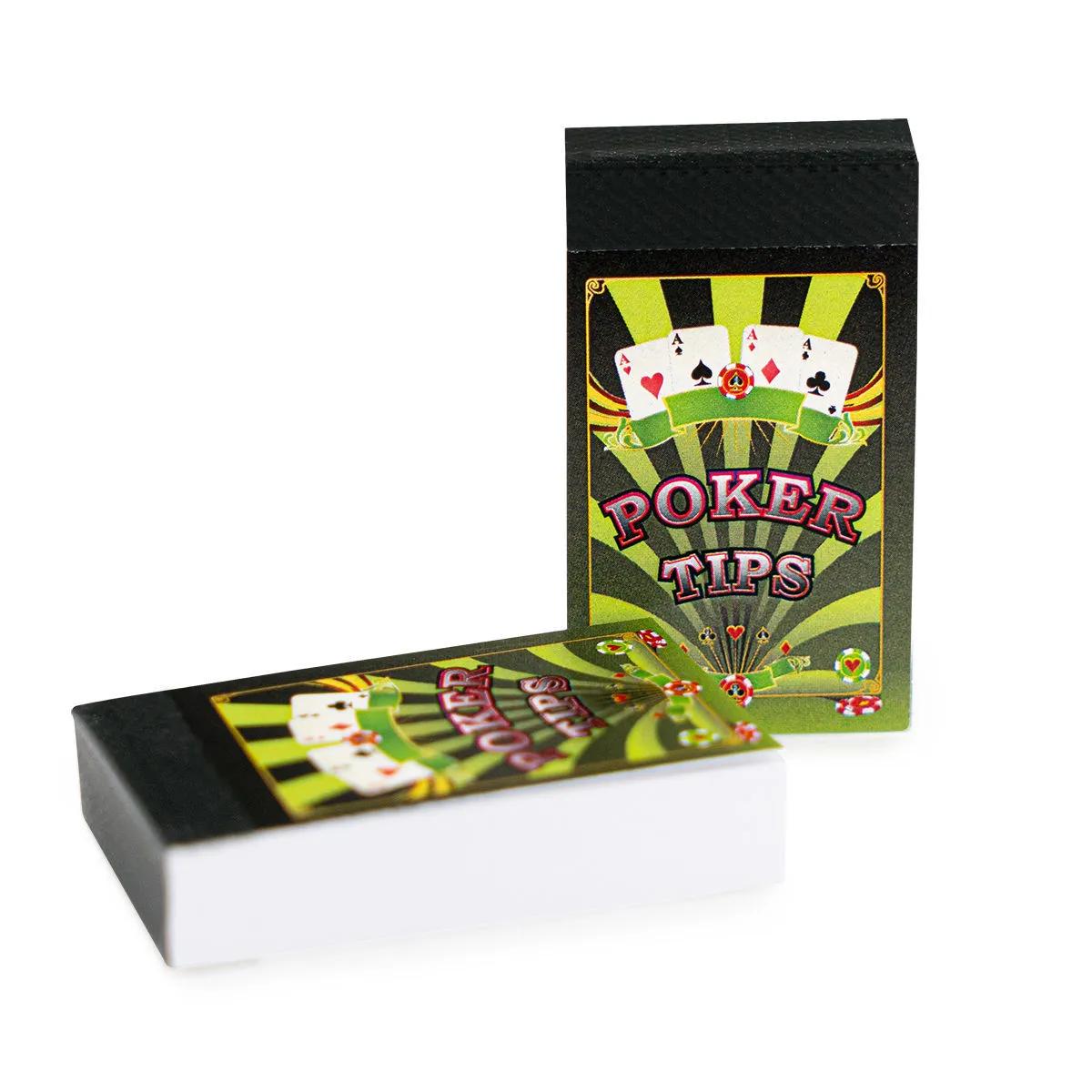
Poker Rolling Tips is a booklet of 52 perforated filter tips, each one printed as a miniature playing card from a standard poker deck. Sized at 50 x 30 mm, they roll into sturdy, well-shaped roaches that hold their form from first puff to last. Part novelty, part genuinely useful smoking accessory — and honestly, the card designs make it almost impossible not to deal out a quick hand before you get round to actually rolling.
| Spec | Value |
|---|---|
| Tips per booklet | 52 (full deck) |
| Tip dimensions | 50 x 30 mm |
| Material | Unbleached card stock |
| Design | Standard poker deck — 4 suits, 13 ranks |
| SKU | HS0477 |
Complete your setup with a pack of king-size rolling papers and a rolling tray. A decent tray keeps your herbs, papers, and tips in one spot — no more chasing loose bits across the table mid-roll.
Most roach books are forgettable. A plain rectangle of card, you tear one off, fold it up, job done. Nothing wrong with that — we sell plenty of them. But the Poker Rolling Tips booklet does the same job with a bit more personality. Each of the 52 tips carries a different playing card face, printed cleanly enough that you can actually tell your ace of spades from your king of hearts before you roll it into a cylinder.
The 50 x 30 mm size is slightly wider than your standard slim tip, which gives you a chunkier roach. That extra width means better airflow and a sturdier mouthpiece that won't collapse when you pinch it. If you're used to the narrow 20 mm tips that come free in some paper packs, you'll notice the difference straight away — the smoke draws cooler and the tip doesn't go soggy as fast.
The one honest limitation: these are novelty tips at heart. The card printing looks great, but once you've rolled the tip into a spiral, nobody's going to see the design. The fun is in the ritual — picking your card, maybe losing a hand of mini-poker to your mate, then rolling up. If you want plain, no-fuss tips in bulk, a standard roach book will do the job for less. But if you want something that makes the rolling process a bit more entertaining, this is the one we'd grab off the shelf.
We've stocked these for a while now, and the thing that sells them isn't the rolling quality — it's the reaction when someone pulls the booklet out at a session. People always want to play a quick round before rolling. We've seen customers buy three booklets at once: one to use, one to keep as a collector's item, and one as a gift. At this price point, it's basically a stocking filler that actually gets used.
One thing we've noticed: the card stock is firm enough to hold a tight roll but not so thick that it affects the burn. Some cheap novelty tips use glossy coated card that tastes off when it heats up — these don't have that problem. The print is on uncoated stock, so you get clean-tasting smoke right down to the roach. Compared to RAW's pre-rolled tips, these require a bit more hands-on rolling, but the 50 x 30 mm format gives you more control over how tight or loose you want the filter.
52 — one for every card in a standard poker deck. No jokers, so you get exactly the same count as a real playing card set.
Each tip measures 50 x 30 mm. That's wider and taller than most slim filter tips, giving you a chunkier roach with better airflow.
Yes. The 30 mm height matches king-size papers almost exactly. They also work with standard-width papers — you'll just have a slightly wider tip relative to the joint.
Technically, yes. Each tip is a unique card from a full 52-card deck, so you can deal a proper hand. They're small — 50 x 30 mm — but perfectly readable. We've seen it happen more than once behind the counter.
The tips use soy-based ink on uncoated card stock. There's no glossy coating or chemical finish, so the tip doesn't produce an off taste when it heats up near the lit end.
A 50 x 30 mm tip like these poker tips is a solid all-rounder. It gives enough card to wrap twice for a firm cylinder without being so bulky that it dominates the joint. For thinner rolls, fold less of the accordion; for fatter ones, use the full width.
Last updated: April 2026