Cleaning supplies
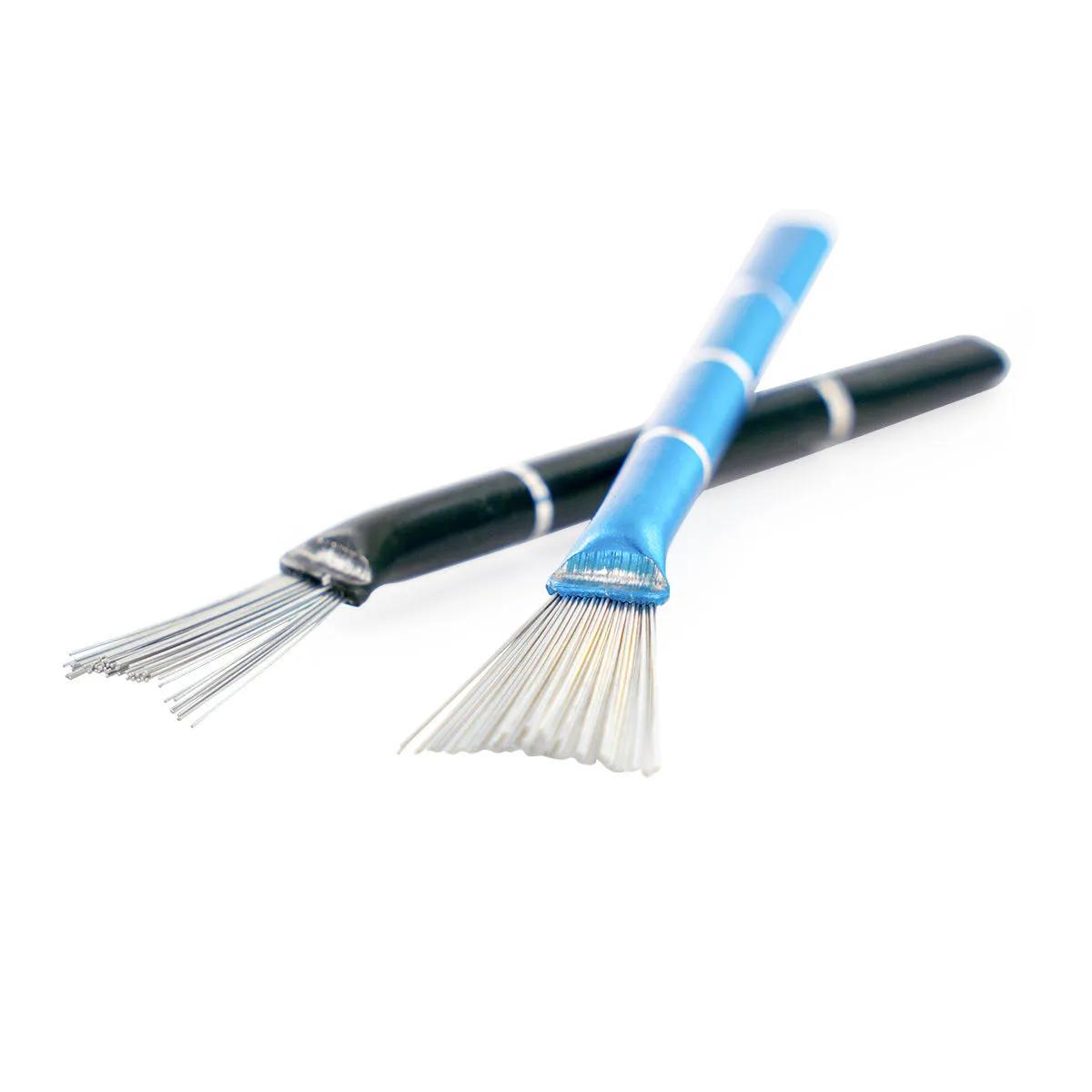
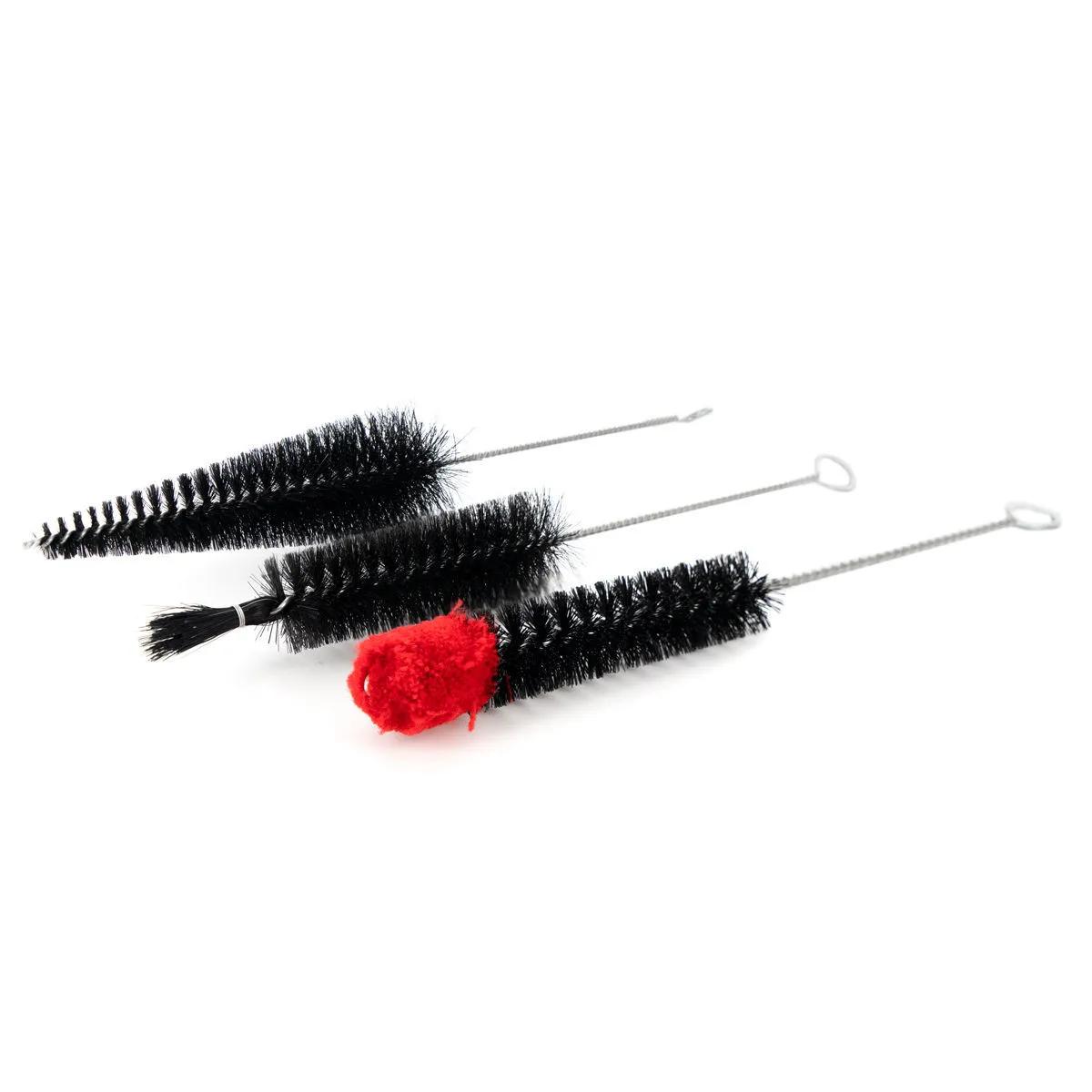
A bong brush is a long, narrow cleaning tool designed to reach the internal surfaces of bongs, downstems, and rigs that your fingers simply cannot. Tar, ash, and resin build up fast — especially around percolators and narrow necks — and a proper brush shifts it in seconds. Available in three bristle styles (Cotton Tipped, Conical, and Tipped), so you can match the brush to the shape of your piece.
| Variant | SKU | Best For |
|---|---|---|
| Cotton Tipped | HS1023 | Gentle cleaning of delicate glass pieces — soft cotton tips absorb residue without scratching. Good for finishing passes and wiping down inner walls. |
| Conical | HS1022 | Tapered shape fits into bowl joints, downstems, and sections that narrow towards the base. The go-to if your bong has tight angles or percolator slits. |
| Tipped | HS0214 | Stiffer bristles at the end for scrubbing stubborn resin deposits. Best for heavily used pieces that haven't been cleaned in a while. |
Not sure? The Conical is the most versatile of the three — it handles 90% of bong shapes without issue. If your piece is particularly gunked up, grab the Tipped variant and follow up with the Cotton Tipped for a polished finish.
| Spec | Value |
|---|---|
| Product type | Bong cleaning brush |
| Variants available | 3 (Cotton Tipped, Conical, Tipped) |
| Bristle type | Tough, flexible bristles — stiff enough to shift resin, soft enough not to scratch glass |
| Profile | Long and narrow — designed for internal bong surfaces |
| Compatible with | Glass, acrylic, and silicone bongs, downstems, rigs |
| Cleaning agents | Use with warm water and mild soap — avoid harsh chemical solvents |
| Category | Cleaning supplies |
Complete your cleaning kit: pair the Bong Brush with a bottle of bong cleaner solution and a set of pipe cleaners for the smaller parts — mouthpieces, adapters, and ash catchers — that even the narrowest brush can't quite reach. A clean piece every session makes a noticeable difference.
Here's the honest truth from behind the counter: most people clean their bong about a tenth as often as they should. We get it — you finish a session, you're relaxed, the last thing you want to do is scrub glassware. But resin builds up faster than you'd think. After 3-4 sessions, you can already see that brown film creeping up the inner walls. After a week of daily use? That's a layer of tar thick enough to affect airflow and flavour.
The problem isn't just aesthetics. Old resin makes every pull taste stale and ashy. It restricts airflow through percolator slits — sometimes down to half their original diameter. And once resin hardens into that dark, crusty layer, it bonds to glass like it's paying rent. At that point, you're not cleaning — you're chiselling. A bong brush used after every 2-3 sessions keeps things manageable. Two minutes of brushing with warm water beats a 45-minute soak and scrub any day.
One honest limitation: no brush reaches every corner of every bong. If you've got a piece with a complex multi-arm percolator or an L-shaped chamber, you'll still want to soak those sections in warm soapy water. The brush handles the main tube, the neck, and the downstem brilliantly — that's where 80% of the buildup lives anyway. For everything else, a soak does the rest. Compared to magnetic bong cleaners (which work well on straight tubes but struggle with curves), a physical brush gives you direct contact with the surface, which means more resin removed per pass.
We've been stocking cleaning supplies since the early 2000s, and the single most common thing we hear is "I didn't think it would get this dirty this fast." It does. Resin accumulation is exponential — the first layer creates a rough surface that the next layer grips onto even more easily. Cleaning a lightly used bong takes 2 minutes. Cleaning one that's been ignored for a month takes 20 minutes, hot water, salt, and a fair bit of elbow grease. The brush is the difference between those two scenarios.
One thing worth knowing: the bristles on these brushes feel properly stiff when you first handle them. That's intentional — soft bristles just slide over hardened resin without shifting it. The stiffness is calibrated to scrub effectively without scratching borosilicate glass (which has a Mohs hardness of around 7.5 — well above what nylon or natural bristles can damage). On acrylic bongs, use a lighter touch and the Cotton Tipped variant, since acrylic scratches more easily than glass.
Typically a flexible wire core wrapped with nylon or natural-fibre bristles. The wire lets you bend the brush slightly to match curved sections, while the bristles do the actual scrubbing. The Cotton Tipped variant uses soft cotton ends instead of bristles for gentler cleaning.
Every 2-3 sessions for a quick brush, with a deeper clean (soap and warm water) once a week if you're a daily user. Waiting longer than a week makes the job significantly harder — resin bonds to glass more tightly the longer it sits.
Yes, but use the Cotton Tipped variant and go easy on the pressure. Silicone is flexible and won't crack, but stiff bristles can leave micro-scratches on the inner surface that trap resin over time. Warm soapy water does most of the work on silicone anyway.
Absolutely — the flexible wire core on these brushes lets you navigate bends and curves that rigid brushes can't reach. For straight tubes, keep the brush straight. For pieces with angled necks or curved chambers, gently bend the wire to follow the contour. Don't force it through tight bends though — that risks snapping the wire.
Warm water and mild dish soap handle 90% of cleaning jobs. For stubborn resin, a dedicated bong cleaning solution or a mix of coarse salt and isopropyl alcohol (90%+) works well. Avoid bleach, acetone, or any solvent that leaves a strong chemical residue — you'll taste it on the next pull.
Warm water, mild soap, and the Cotton Tipped brush variant. Never use isopropyl alcohol or acetone on acrylic — it causes crazing (tiny cracks in the surface) and can weaken the material over time. Stick to gentle soap and soft bristles.
Not necessarily. The Conical handles most bong shapes on its own. Grab the Tipped variant if your piece is heavily used and the Cotton Tipped if you own delicate or thin-walled glass. If you want the full set for a thorough clean, having all three does make the job quicker.
Last updated: April 2026