Digital scales
by On Balance
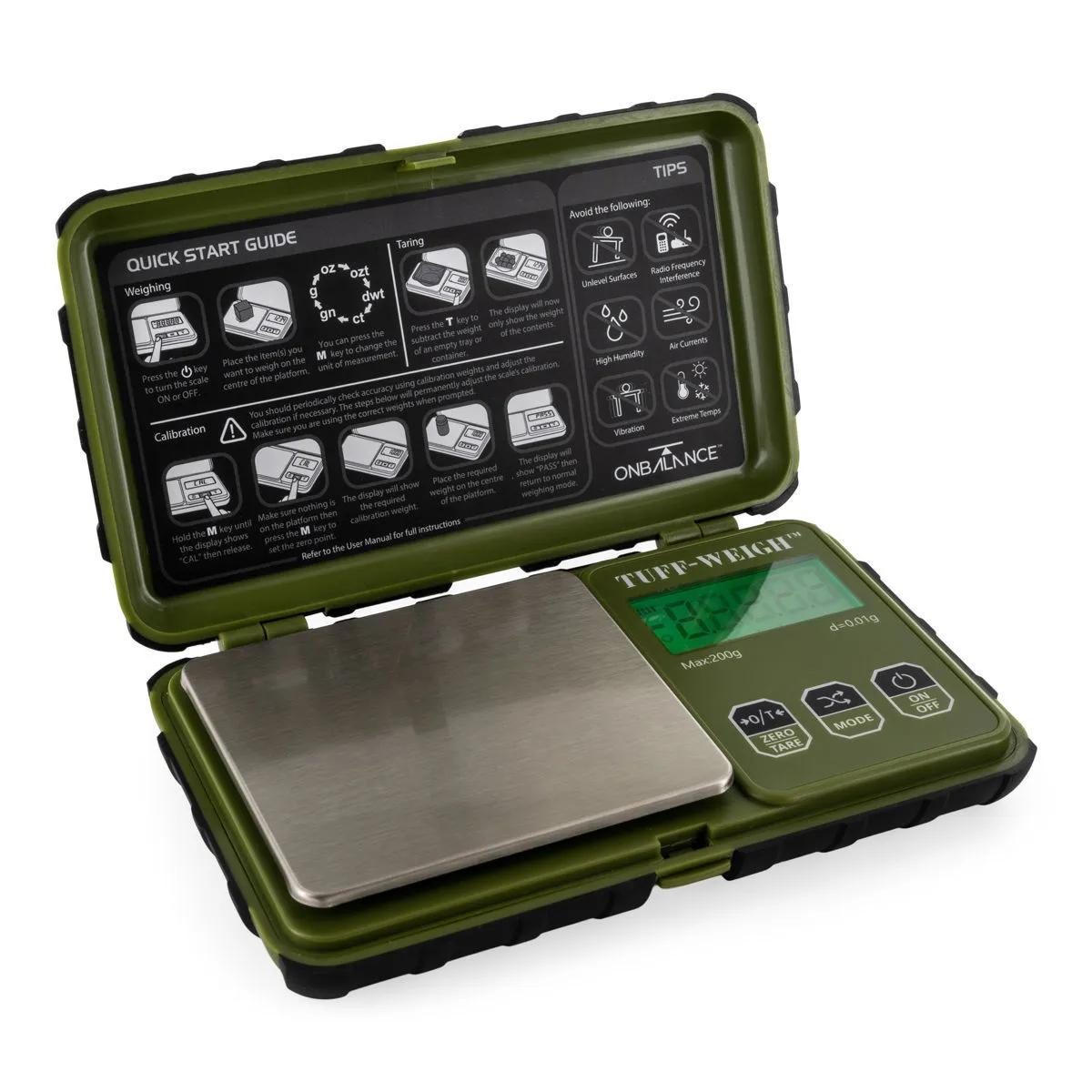
The Tuff-Weigh is an impact resistant digital scale built to survive the kind of knocks that send cheaper scales to the bin. With rubberised grips, reinforced corners, and a 200g capacity at 0.01g resolution, it reads out to the hundredth of a gram — accurate enough for anything from herbs to gemstones. If you need a pocket scale that can actually handle life outside a laboratory drawer, this is the one we'd grab off the shelf.
Most pocket scales feel like they were designed to live in a velvet pouch and never see daylight. The Tuff-Weigh is the opposite. Pick it up and you immediately notice the weight — it's denser than the typical plastic-shell scale, and the rubberised corners have a grippy, almost soft-touch feel that inspires confidence. Drop it off a table onto a hard floor? That's exactly the scenario it was engineered for. The rubber absorbs the shock, the internal calibration holds, and you carry on weighing.
We've had customers bring back other scales after a single tumble cracked the LCD or knocked the load cell out of alignment. The Tuff-Weigh doesn't eliminate that risk entirely — no scale is indestructible — but it pushes the threshold significantly higher than anything else in this price range. The rubberised grips along the sides also stop it sliding around on smooth surfaces, which is a small thing until you've watched a scale skate off a glass table.
One honest limitation: at 8.4 x 14cm, it's a touch larger than ultra-compact credit-card scales. It still fits in a jacket pocket, but if absolute minimum size is your priority, you'll want something slimmer. What you gain in return is a platform that's actually big enough to weigh things on — 5.9 x 7.6cm gives you real working space.
The Tuff-Weigh reads in 6 different units: grams (g), ounces (oz), troy ounces (ozt), pennyweight (dwt), carats (ct), and grains (gn). Switch between them with a single button press. For most people, grams is the daily driver, but if you're weighing precious metals, gemstones, or reloading components, having troy ounces and carats built in saves you from fiddling with conversion apps.
| Specification | Value |
|---|---|
| Capacity | 200g |
| Resolution | 0.01g |
| Weighing modes | g, oz, ozt, dwt, ct, gn |
| Scale dimensions | 8.4 x 14cm |
| Platform dimensions | 5.9 x 7.6cm |
| Protection | Rubberised grips and corners |
| Expansion tray | Yes — removable lid doubles as tray |
| SKU | HS0010 |
Here's a detail that's easy to overlook: the protective lid pops off and flips into an expansion tray. That means when you're weighing something bulky or loose — dried herbs, small crystals, whatever doesn't sit neatly on a flat platform — you've got a lipped container that keeps everything from rolling off the edge. No need to hunt for a separate bowl or cup. Tare the tray, pour your material in, read the number. Simple.
When you're done, the lid snaps back on to protect the platform and LCD during transport. It's a genuinely clever bit of dual-purpose design that most budget scales skip entirely.
We've been selling digital scales since the early 2000s, and the number one reason customers come back for a replacement is physical damage. Not battery failure, not calibration drift — a cracked screen or a bent platform from one bad drop. That's exactly why the Tuff-Weigh exists in our catalogue. It addresses the single most common failure mode for pocket scales.
The second most common issue we see? People weighing on unstable surfaces and blaming the scale. If your Tuff-Weigh reads differently every time, check what's underneath it before you assume it's broken. A kitchen countertop or a hardback book on a desk — that's all you need. We've seen customers get wildly inconsistent readings on a bed or a sofa and think the scale was faulty. It wasn't.
Compared to a basic pocket scale without impact protection, the Tuff-Weigh costs a few euros more. We'd say it's worth it every time. Replacing a broken scale costs more than the price difference, and you lose whatever calibration trust you'd built up with the old one. The best scale is the one that's still accurate after six months of actual use — and that's where the Tuff-Weigh earns its name.
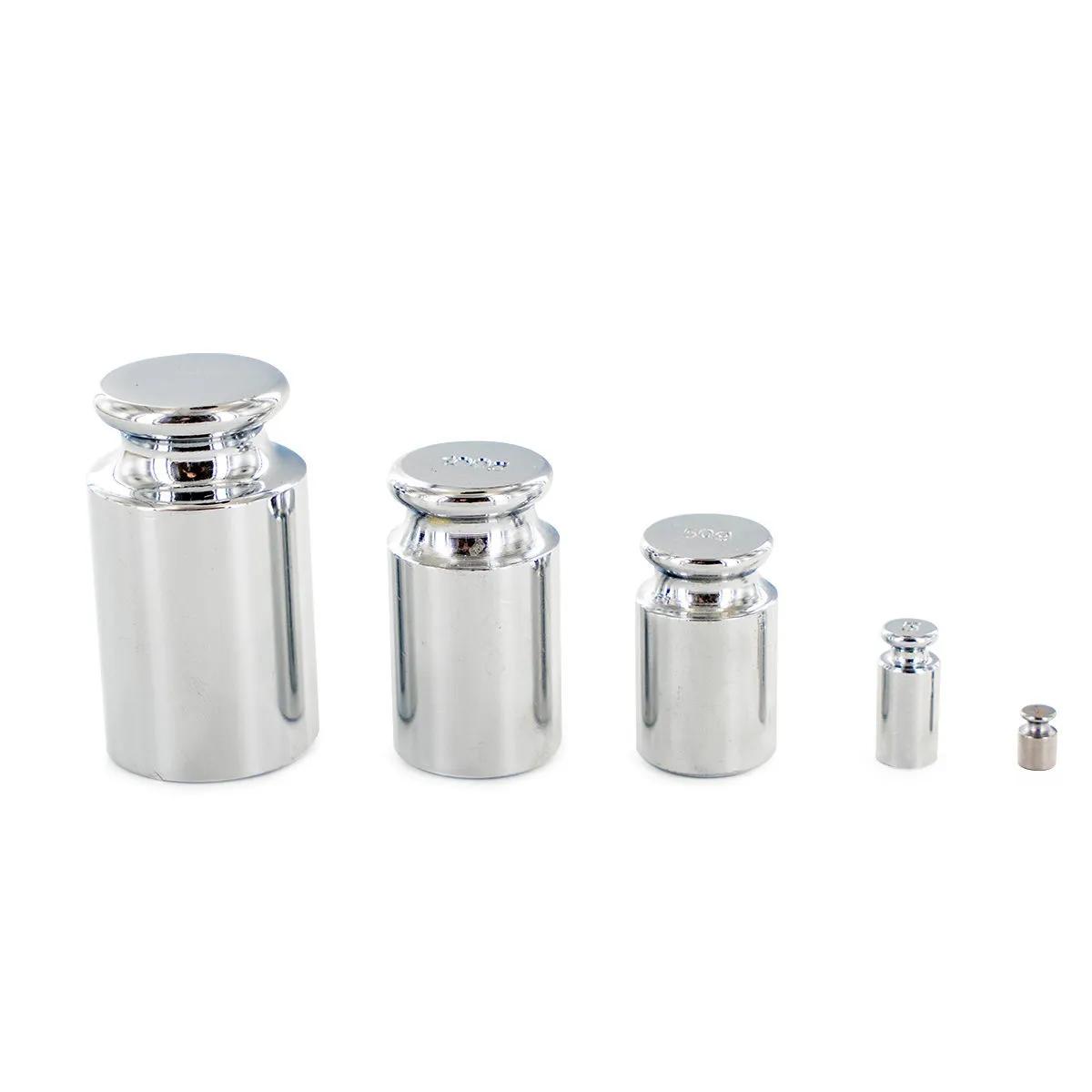
Complete your setup with calibration weights to verify accuracy over time — especially useful after the scale has taken a knock. If you're weighing fine powders or small botanicals, a set of stainless steel micro-scoops pairs well with the Tuff-Weigh's expansion tray for precise portioning.
| Feature | Tuff-Weigh | Standard pocket scale |
|---|---|---|
| Impact protection | Rubberised corners and grips | Hard plastic shell, no protection |
| Resolution | 0.01g | 0.01g–0.1g (varies) |
| Capacity | 200g | 100g–500g (varies) |
| Weighing modes | 6 (g, oz, ozt, dwt, ct, gn) | Typically 2–4 |
| Expansion tray | Yes — lid converts | Rarely included |
| Grip on smooth surfaces | Strong — rubberised base | Slides easily |
| Durability after drops | Designed to absorb impact | Prone to LCD and load cell damage |
It reads to 0.01g, which is hundredth-of-a-gram precision. For context, that's accurate enough for gemstone grading and lab-grade herb measurement. Always weigh on a flat, hard surface for the most consistent results.
That's its whole selling point. The rubberised corners and grips absorb shock from drops onto hard surfaces. It won't survive being thrown off a balcony, but a tumble off a desk or counter is well within its design tolerance.
The protective lid removes and flips over to become a lipped tray. Place it on the platform, tare it to zero, and use it to hold loose materials like powders, dried herbs, or small items that would otherwise roll off the flat platform.
It runs on standard AAA batteries. Keep a spare set handy — low battery voltage can cause inaccurate readings before the scale actually shuts off, which catches people out.
Not strictly necessary out of the box, but we'd recommend picking some up. After a hard impact or a few months of regular use, verifying calibration with a known weight takes 10 seconds and saves you from trusting a reading that's drifted.
For herbs, spices, gemstones, and small items — yes, 200g covers the vast majority of pocket-scale tasks. If you're regularly weighing items over 150g, consider a scale with a higher capacity to give yourself headroom and protect the load cell.
Nine times out of ten, the surface is the problem. Soft, uneven, or vibrating surfaces throw off load cell readings. Place the Tuff-Weigh on a hard, flat, stable surface — a kitchen counter or a hardback book on a desk works well. If readings still vary, check the batteries.
Last updated: April 2026