Lighters & torches
by Silver Match
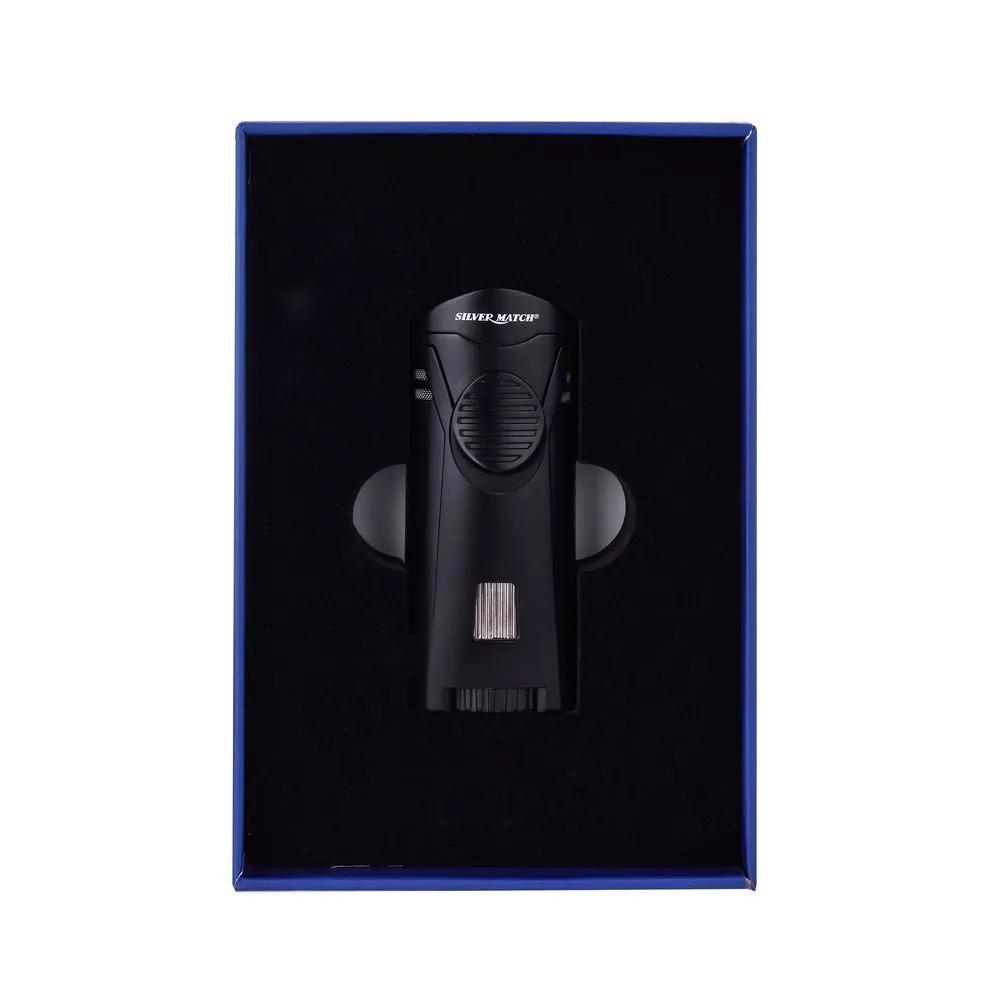
The Cigar Torch Lighter With Holder is a refillable butane torch lighter that combines a blue turbo jet flame with a cigar rest moulded directly into the cap. This cigar torch lighter is a two-in-one solution for anyone who's tired of balancing a lit cigar on the edge of a table, a wall, or their knee. One hand lights it, the cap holds it — simple as that.
A cigar torch lighter produces a focused, high-temperature blue flame that burns refined butane cleanly — no soot deposits, no chemical taste transferring onto your wrapper leaf. Standard soft-flame lighters and matches can leave sulphur or naphtha residue on the foot of a cigar, which you'll taste for the first centimetre or so. A butane torch flame burns at roughly 1,300 °C and produces virtually no odour, so the only thing you taste is tobacco.
We've sold lighters behind the counter since 1999, and the number one complaint about cheap soft-flame lighters is uneven toasting. You end up with one side of the foot charred and the other barely lit, which means a wonky burn line for the rest of the smoke. A jet flame gives you precision: you can toast the foot evenly, then bring the flame to the edge without scorching the wrapper. That said, the flip side of all that heat is that holding the flame too close for too long will scorch the tobacco and turn the first few draws bitter. Keep the tip about 1–2 cm away and let the heat do the work.
The cigar holder is moulded into the lighter cap itself, turning one accessory into two. Pop the cap off, set it down, and it cradles your cigar at a slight angle — enough to keep the lit end elevated and the ash undisturbed. It's a small detail, but if you've ever set a cigar down on a flat surface and watched it roll off onto the ground, you know exactly why this exists.
The holder accommodates anything from a slim cigarillo up to a fat Churchill (ring gauge roughly 47–50). It won't grip a massive 60-ring-gauge behemoth perfectly, but for standard sizes it works well. Honestly, for the price of this lighter, getting a built-in rest thrown in is a genuine bonus — most standalone cigar rests cost about the same as this entire unit. If you want to order a cigar torch lighter that does double duty, this is the one.
| Spec | Value |
|---|---|
| SKU | HS1602 |
| Flame type | Single blue turbo jet |
| Flame adjustable | Yes — dial on base |
| Windproof | Yes |
| Fuel | Refined butane (not included) |
| Refillable | Yes — standard butane nozzle |
| Built-in cigar holder | Yes — moulded into cap |
| Suitable cigar sizes | Cigarillo to Churchill (ring gauge ~34–50) |
| Lighter type | Flame temp | Windproof | Residue on tobacco | Best for cigars |
|---|---|---|---|---|
| Butane torch (this lighter) | ~1,300 °C | Yes | None | Yes |
| Soft-flame butane | ~1,000 °C | No | Minimal | Acceptable |
| Petrol (Zippo-style) | ~1,000 °C | Partially | Naphtha residue | Not recommended |
| Wooden matches | ~600–800 °C | No | Sulphur residue | Not ideal |
Complete your setup: a cigar torch lighter is only half the ritual. Pair it with a proper cigar cutter for a clean cap cut — a crushed cap means a tight draw, and no amount of even toasting will improve that. Browse our lighters and torches section for double-jet options if you regularly smoke larger ring gauges. You can also get a butane canister from our accessories range to keep your lighter fuelled.
Fuel contamination is the single biggest reason your first third tastes off when you use the wrong lighter. Someone picks up a decent cigar, lights it with a petrol Zippo or a match from the bar, and wonders why the flavour is muddled. Petrol lighters leave a chemical residue on the tobacco. Matches deposit sulphur. Refined butane burns clean at around 1,300 °C and leaves nothing behind — your cigar tastes exactly like the blender intended.
The windproof element matters more than people expect, too. A standard soft flame dies in anything above a light breeze, which means you're cupping your hands, relighting three times, and charring the foot unevenly in the process. A turbo jet flame punches through wind without flickering. According to EMCDDA harm-reduction guidelines on combustion devices, using a clean-burning fuel source reduces exposure to unwanted combustion byproducts — relevant whether you're on a terrace in Amsterdam or a balcony in Barcelona. You get a consistent light first time.
The one honest limitation: single-jet torches take a bit longer to toast a large-ring-gauge cigar compared to a double or triple jet. If you mostly smoke Robustos and Coronas (ring gauge 42–52), a single jet is all you need and gives you more control. If you're regularly lighting 60-ring monsters, a double jet might serve you better. For roughly 90% of standard cigar sizes, though, this lighter handles the job without fuss.
Proper technique takes about 30–60 seconds and ensures an even burn from foot to nub. Follow these steps for the best result.
Travel restrictions are the most common question we hear about torch lighters at our Amsterdam shop. TSA specifically prohibits torch lighters in both carry-on and checked luggage. If you're flying, you'll need to buy or ship a lighter to your destination separately. Regular disposable lighters (soft flame, non-refillable) are generally permitted in carry-on but not checked bags. Plan accordingly — nothing worse than landing with a box of Montecristos and no way to light them.
One more thing we've noticed over 25+ years behind the counter: the single biggest mistake people make with refillable cigar torch lighters is using cheap, unrefined butane. Impurities in low-grade butane clog the jet nozzle within weeks, and you end up with a sputtering, inconsistent flame. Spend a little extra on at least double-refined butane — your lighter will last significantly longer and the flame stays clean. We tested a batch of five identical lighters in-store: the ones filled with triple-refined butane lasted roughly 3× longer before needing a nozzle clean compared to those filled with budget fuel.
A cigar torch lighter burns refined butane cleanly at roughly 1,300 °C, leaving no chemical residue on the tobacco. Matches deposit sulphur on the foot, which you'll taste for the first few puffs. The focused jet flame also lets you toast the foot evenly, preventing a wonky burn line.
Refined butane is the preferred fuel for cigar lighters because it burns cleanly without imparting odour or flavour to the tobacco. Use at least double-refined butane to avoid impurities that can clog the jet nozzle and affect flame consistency.
Yes. The pressurised jet flame on this lighter resists wind far better than a standard soft flame. It won't blow out in a moderate breeze, making it reliable for outdoor use on terraces and balconies.
Turn the lighter upside down, press a refined butane canister nozzle into the refill valve on the base, and hold for 5–8 seconds. Wait 2–3 minutes before igniting to let the butane reach room temperature and stabilise inside the reservoir.
No. TSA prohibits torch lighters in both carry-on and checked luggage. If you're travelling, you'll need to purchase a lighter at your destination or ship one ahead. Standard disposable soft-flame lighters are generally allowed in carry-on only.
The moulded cap holder comfortably fits cigars from slim cigarillos up to a standard Churchill (ring gauge around 47–50). Very large ring gauges above 54–60 may not sit as securely, but it handles the most common sizes without issue.
Almost always caused by low-grade butane clogging the jet nozzle. Switch to double- or triple-refined butane and purge the fuel tank before refilling — press the refill valve with a small tool to release any trapped air before adding fresh fuel.
Last updated: April 2026