Lighters & torches
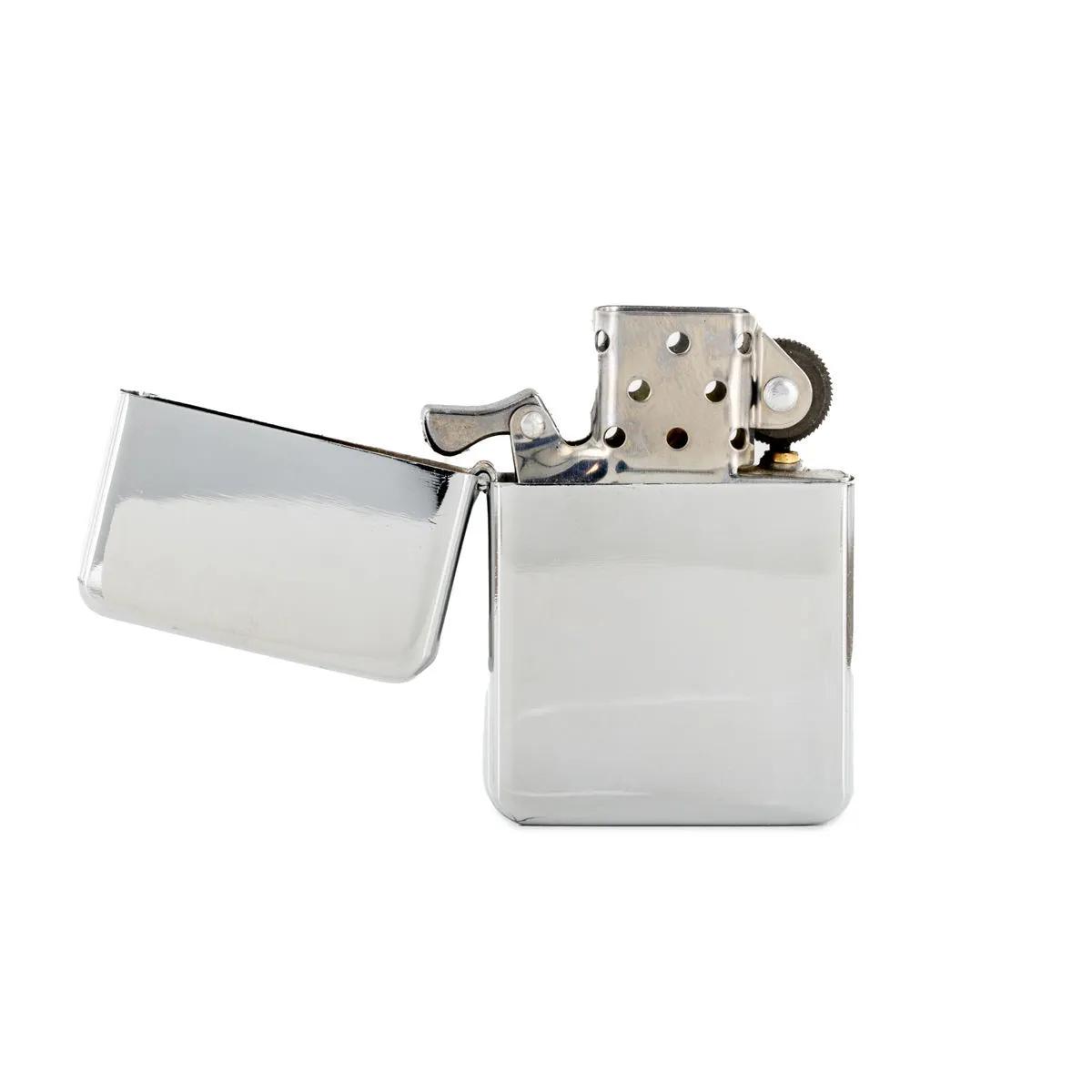
The Classic Chrome Petrol Lighter is a refillable metal lighter built in the style that's been sparking up since the mid-20th century — hinged lid, flint wheel, windproof flame. It's the kind of lighter you actually keep track of instead of losing in a coat pocket. Solid in the hand, satisfying to flip open, and genuinely useful when disposables let you down.
Disposable lighters are fine until they're not. They crack in your bag, run dry at the worst moment, and you end up buying another one every week. A refillable petrol lighter sidesteps all of that. Fill it once, and you've got a reliable flame for weeks depending on use. The chrome body on this one isn't just for looks — metal construction means it survives drops, pressure, and the general chaos of festival bags and hiking packs without splitting open.
We've carried these in the shop for a good reason: they work. The flint wheel gives you a spark every time, the hinged lid keeps the flame shielded from wind, and the whole thing weighs enough in your hand that you actually notice when it's missing. That last point matters more than people think — disposable lighters vanish because they feel like nothing. This one feels like something you own.
The honest limitation? Petrol lighters need maintenance. The fuel evaporates over time even when you're not using it, so if you leave it sitting in a drawer for a month, you'll need to top it up before it sparks. The flint wears down too — typically after a few hundred strikes. Replacement flints are cheap and easy to swap in, but it's worth knowing upfront. This isn't a "fill it and forget it" lighter. It's a "carry it daily and it'll reward you" lighter.
| Spec | Value |
|---|---|
| Material | Metal body with chrome finish |
| Ignition type | Flint wheel (traditional strike) |
| Fuel type | Lighter petrol (naphtha-based fluid) |
| Refillable | Yes — bottom cotton pad fill |
| Lid style | Hinged, spring-loaded |
| Wind resistance | Good — chimney design shields flame |
| Flint replaceable | Yes |
| SKU | HS1923 |
First time filling a petrol lighter? It takes about 30 seconds once you know the steps. Here's the process from empty to flame.
A disposable butane lighter costs almost nothing and works straight out of the packet. No argument there. But it also cracks in cold weather, produces a thin flame that bends in any breeze, and ends up in a landfill within a fortnight. The Classic Chrome Petrol Lighter costs more upfront, but a single bottle of lighter fluid gives you roughly 8 to 12 refills depending on how generously you pour. Over a year of daily use, you're spending less and throwing away nothing.
The flame itself is different too. Petrol lighters produce a softer, wider flame compared to the narrow jet of a disposable. For lighting bowls, candles, campfires, or incense, that broader flame is more practical. It's also windproof in a way that disposables simply aren't — the chimney design around the wick keeps it lit when you're outdoors. We'd pick this over a disposable every time for anything beyond lighting a single candle indoors.
| Feature | Classic Chrome Petrol Lighter | Standard disposable |
|---|---|---|
| Fuel type | Naphtha petrol (refillable) | Butane (sealed, non-refillable) |
| Lifespan | Years with maintenance | 1-3 weeks typical |
| Wind resistance | Good (chimney design) | Poor |
| Flame type | Soft, wide, adjustable via wick | Narrow, fixed |
| Waste | Replacement flints only | Entire lighter discarded |
| Weight in hand | Noticeable, solid | Barely there |
A chrome petrol lighter will last years if you treat it right. Here's what we've learned from selling these since the early days of the shop.
Keep it filled. Petrol fuel evaporates through the wick even when the lighter is closed — that's just how naphtha works. If you use it daily, top it up once a week. If you notice the flame getting shorter or taking multiple strikes to catch, the cotton is running dry.
Replace the flint before it's completely gone. A worn-down flint produces weak sparks and can jam the wheel. You'll feel the difference — the wheel starts spinning freely without resistance. Pop the spring screw at the bottom of the insert, drop in a new flint, and you're sorted. A pack of replacement flints lasts ages.
Trim the wick occasionally. Over months of use, the wick tip gets charred and crusty. Pull it up slightly with tweezers and snip the blackened end off with scissors. Fresh wick surface means a cleaner, more consistent flame.
We've had these on the shelf for a while now, and the people who buy them tend to come back — not because the lighter broke, but because they want a second one. There's something about the weight of it. You pick it up and it feels like an actual object, not a piece of plastic you grabbed from a bowl at the till. The click of the lid opening, the resistance of the flint wheel, the way the flame holds steady when you're trying to light something outdoors — it just works the way a lighter should.
One thing worth mentioning: the chrome finish picks up fingerprints. It's shiny metal, so that's inevitable. Some people like the lived-in look; others wipe it down. Either way, it doesn't affect function. And if you're the type who loses lighters constantly, the weight and feel of this one genuinely helps. You notice when it's not in your pocket.
Complete your setup with lighter petrol fluid for refills and a pack of replacement flints — both available in our smokeshop. A bottle of fluid and a flint pack will keep this lighter running for months without a second thought.
It runs on standard naphtha-based lighter fluid, the same type used in most traditional petrol lighters. Butane won't work — that's for jet lighters with pressurised canisters. Look for lighter petrol fluid sold in small squeeze bottles.
With daily use, roughly once a week. Petrol evaporates through the wick even when the lid is closed, so it empties faster than you might expect. If you only use it occasionally, top it up before heading out.
Yes, by adjusting the wick. Pull the wick up slightly with tweezers for a taller flame, or push it down for a shorter one. There's no dial — it's manual, which gives you more control than most disposables.
Remove the inner insert from the casing. On the bottom, unscrew the spring-loaded flint screw. The old flint (or what's left of it) drops out. Insert a new flint, replace the spring screw, and you're done. Takes under a minute.
It handles wind well thanks to the chimney design around the wick, but it's not a sealed jet flame. In a strong gust, cup your hand around it. For moderate outdoor wind — campfires, garden use, festivals — it holds up reliably.
Yes. Naphtha-based fuel slowly evaporates through the wick and felt pad, even with the lid closed. If you leave it unused for 2-3 weeks, expect to refill before your next use. This is normal for all petrol lighters.
The chrome plating is durable and resists scratches from normal pocket carry. Over time it develops a patina from handling — some people prefer that worn look. It won't peel or flake under standard use.
Last updated: April 2026