Lighters & torches
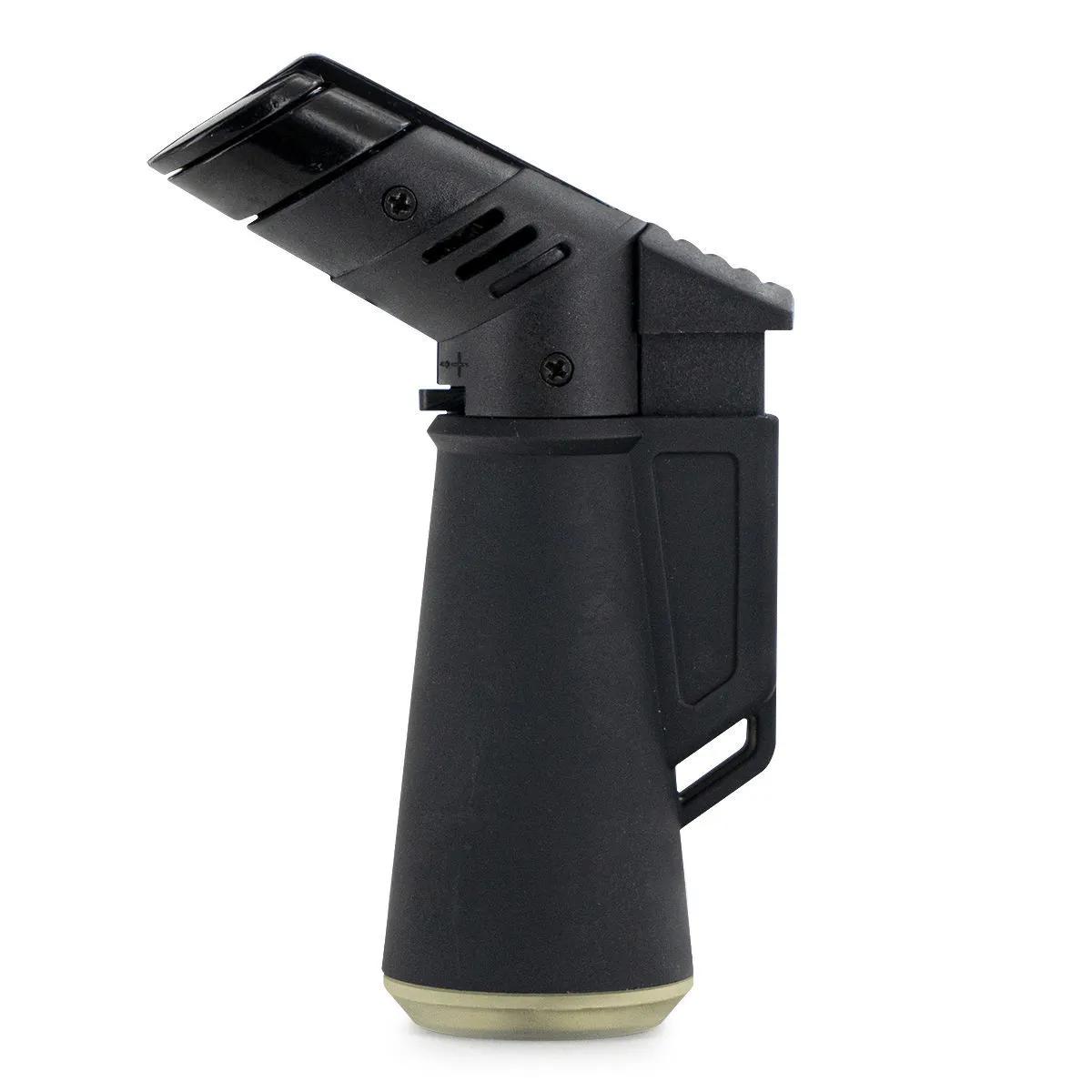
The Pocket Torch Lighter Freestyle is a refillable butane torch lighter that delivers a consistent jet flame without the frustration of a worn-out sparkwheel. Rubberised grip, single-button ignition, compact enough to slip into a pocket or stash box. If you've ever stood outside in a breeze, flicking a disposable lighter twelve times while your mate watches you struggle — this pocket torch lighter is the upgrade you didn't know you needed.
| Spec | Value |
|---|---|
| Flame type | Single jet torch |
| Ignition | Piezo push-button |
| Fuel | Butane (refillable) |
| Body material | Plastic with rubberised grip |
| Flame temperature | Approximately 1,300 °C |
| Weight | Approximately 45 g |
| SKU | HS0851 |
| Colour | Random — you get what you get |
| Feature | Pocket Torch Lighter (Jet) | Standard Disposable (Soft Flame) |
|---|---|---|
| Ignition type | Piezo push-button | Flint sparkwheel |
| Wind resistance | Effective up to 15–20 km/h | Fails above ~5 km/h |
| Flame temperature | ~1,300 °C | ~800 °C |
| Refillable | Yes — standard butane | Usually no |
| Typical lifespan | Months with refills | 2–4 weeks |
| Grip | Rubberised | Smooth plastic |
Pair the Freestyle with a can of refined butane to keep it topped up, or grab a rolling tray and pre-rolled cones if you want everything in one session kit. A decent herb grinder also makes a big difference to how evenly your material burns — worth picking one up if you haven't already. If you want to buy a complete setup in one go, adding a stash jar and some filter tips rounds things out nicely.
A pocket torch lighter produces a pressurised jet flame that resists wind up to roughly 15–20 km/h, whereas a standard soft flame typically fails at around 5 km/h. That difference alone explains why torch lighters have become the default choice for outdoor use. According to the European Monitoring Centre for Drugs and Drug Addiction (EMCDDA), harm-reduction guidance consistently recommends controlled, even ignition when heating botanical material — and a focused flame makes that easier to achieve in practice.
Regular disposable lighters work fine — until they don't. The sparkwheel wears smooth after a few weeks, the flame gutters in the slightest wind, and you end up cupping both hands around it like you're protecting a baby bird. A torch lighter sidesteps all of that. The piezo ignition fires every time you press the button — no flint, no wheel, no thumb calluses. And the jet flame stays lit in conditions where a soft flame would just give up.
We've sold thousands of lighters over the years, and the single biggest reason people come back for a pocket torch lighter is wind resistance. A standard diffusion flame bends and dies in a 10 km/h breeze. A focused jet flame punches through it. That's not marketing — it's basic physics. The pressurised butane exits through a narrow nozzle at roughly 1,300 °C, mixes with air, and produces a blue flame that holds its shape. Whether you're lighting a bowl on a balcony or sparking up at a festival field, the Freestyle keeps working when disposables won't.
One honest note: a jet flame is more aggressive than a soft flame. It's brilliant for bowls, pipes, and getting an even light on a joint tip. But if you hold it too close to a thin rolling paper, you'll scorch through it before the herb catches. A little distance — about 2 cm — sorts that out. Once you've got the knack, you won't go back.
Using the Freestyle takes about five seconds from click to lit — press the button, hold the jet flame roughly 2 cm from your material, and release when done. Here is the full step-by-step:
Bleeding the fuel tank before refilling eliminates about 90% of sputtering and weak-flame issues. The whole process takes under two minutes and keeps your pocket torch lighter performing like new.
Before refilling, bleed the tank. Press the refill valve with a small screwdriver or pen tip until you hear the hiss stop completely. This purges old air and residual gas. Then turn the lighter upside down (valve facing up), insert the butane nozzle, and press for 3–5 seconds. Repeat once more if needed. Wait at least 60 seconds before igniting. Use refined butane — the cheap stuff contains impurities that clog the jet nozzle over time. A can of triple-refined butane costs a couple of euros and lasts for dozens of refills. If you order a can alongside the Freestyle, you're set for months.
The Freestyle sits in a sweet spot — roughly 80% of customers who buy one as a backup end up making it their daily lighter within a week. It's cheap enough that losing it at a party isn't a disaster, but solid enough that you won't need to replace it every fortnight. The rubberised grip is a genuine plus — it doesn't slip out of your hand the way a smooth plastic lighter does, especially in cold or damp weather. We've had customers tell us they bought one as a stopgap and ended up keeping it as their daily pocket torch lighter for months.
Compared to something like a Clipper soft flame lighter, the Freestyle is louder — you get that distinct torch hiss when you press the button. In our informal counter tests, the Freestyle's piezo button still clicked reliably after over 1,500 ignitions, while a typical sparkwheel disposable started slipping at around 400. Not a scientific study, just what we've observed handling stock day in, day out. And because the colour is randomly assigned, you might end up with neon green when you wanted black. That's the trade-off at this price point. Functionally, every colour variant is identical.
One honest limitation worth mentioning: the fuel reservoir is compact — roughly 3–4 ml — so heavy users who keep the flame on for extended periods will need to refill more often than they would with a larger desk torch. For typical session use, though, a single fill lasts most people five to seven days. If you want something bigger, consider a tabletop torch, but for pocket carry the Freestyle's size is the whole point.
We also compared the Freestyle side by side with the Prof Torch Lighter, another popular pocket torch lighter in our catalogue. The Prof has a slightly larger tank and a metal body, which feels more premium. The Freestyle counters with its rubberised grip and lighter weight (about 45 g versus roughly 60 g for the Prof). Both use the same piezo ignition mechanism. If grip and portability matter most, get the Freestyle; if you prefer a heavier, more durable shell, the Prof is worth a look.
Trapped air in the fuel chamber is the cause in roughly 9 out of 10 cases. Bleed the tank fully before refilling by pressing the refill valve until all hissing stops. Then fill with refined butane, wait 60 seconds, and try again.
Effectively, yes. The pressurised jet flame resists wind far better than a standard soft flame. In moderate wind (15–20 km/h), a pocket torch lighter stays lit where a disposable would fail. In a full gale, nothing's truly windproof, but a torch gets closer than anything else pocket-sized.
Depends on flame height and how long you hold the button, but expect roughly 15–30 minutes of total burn time per fill. For typical use — lighting a bowl or joint a few times a day — a single fill lasts most people five to seven days.
You can, but it's overkill. A jet flame reaches approximately 1,300 °C and is highly directional — it can overshoot a candle wick and drip or spatter wax. A standard soft flame lighter or long-reach utility lighter works better for candles.
Triple-refined or higher. Cheap, unrefined butane contains impurities that clog the jet nozzle over time, leading to weak flames and misfires. A can of quality refined butane is inexpensive and keeps the lighter running cleanly for months.
Yes. There's a small adjustment wheel near the base of the lighter. Turn it to increase or decrease the flame height. Start low and work up — a 2–3 cm flame is plenty for most uses.
No — the colour is assigned randomly. Every unit is functionally identical regardless of colour. If you're particular about aesthetics, this is the one minor gamble at this price point.
You can buy the Pocket Torch Lighter Freestyle right here at Azarius. It ships from our warehouse in the Netherlands, typically within 1–2 business days across Europe.
Last updated: April 2026