Stash & storage
by Integra
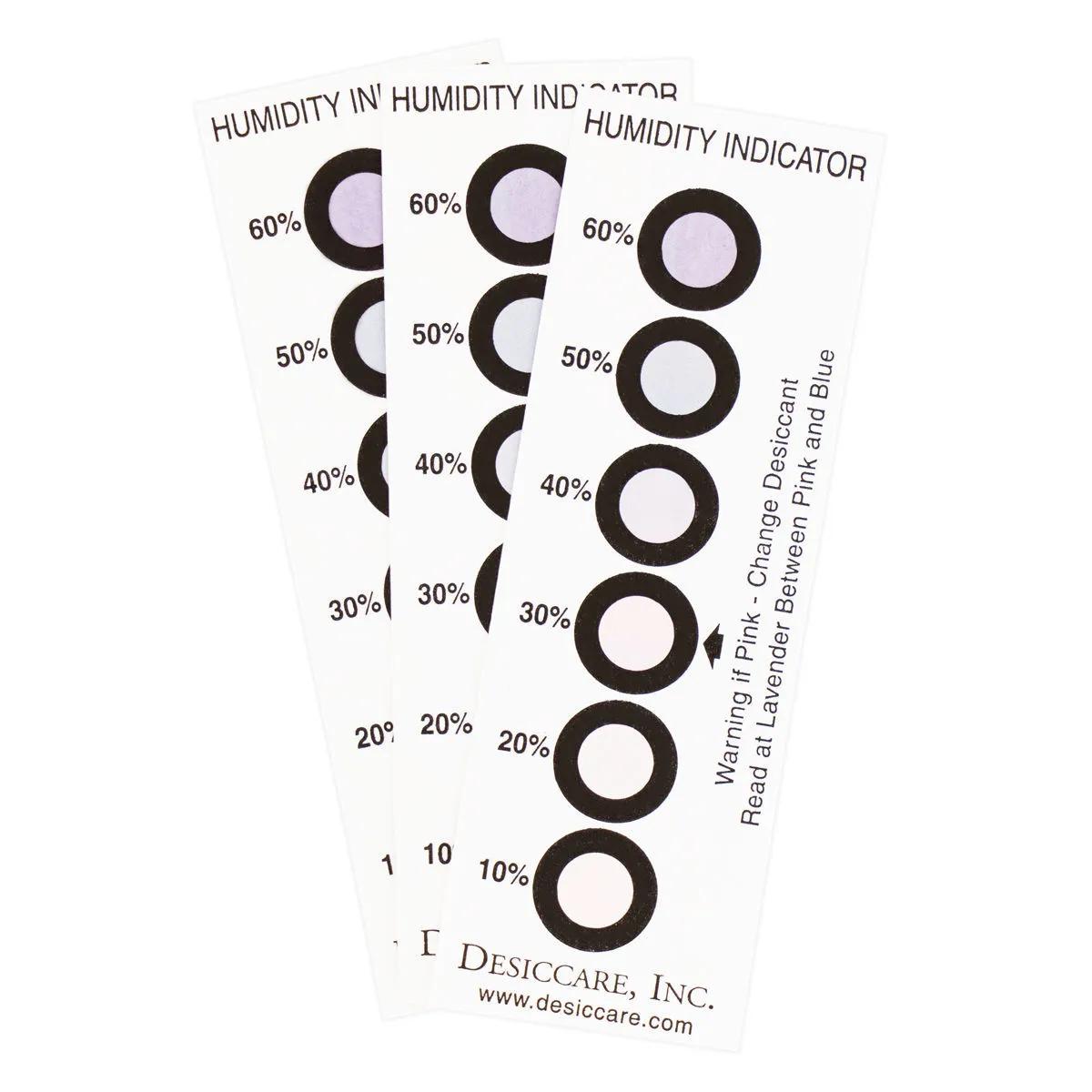
Integra Humidity Indicator Cards are colour-changing cards that show you the exact relative humidity inside your curing jars — no gadgets, no batteries, no guesswork. Each card features chemically impregnated spots that shift from blue to pink as moisture levels rise, covering a 10–60% RH range across six calibrated thresholds. You get 10 cards per pack, enough to monitor every jar on your shelf. If you want to buy humidity indicator cards that actually work without electricity, this is the pack to get.
Humidity monitoring matters because unchecked moisture levels inside sealed jars directly cause mould growth, terpene loss, and degraded aroma. Too wet and you're inviting mould. Too dry and you lose terpenes, aroma, and that smooth smoke you spent weeks working towards. According to research published in the journal Sensors, elevated humidity levels in stored products may reduce shelf life and trigger bacterial growth (PMC10353009). Data from the EMCDDA's storage guidelines similarly notes that organic plant material degrades faster when kept above 65% RH in sealed environments. That applies to anything organic sitting in a sealed container — including your herbs.
We've seen customers lose entire harvests to a jar that looked fine from the outside but was sitting at 75% RH inside. By the time you open the lid and smell the problem, it's too late. A small indicator card catches the drift early, before damage sets in. The sweet spot for curing most botanicals sits between 55% and 62% RH — and these cards cover that range with individual spots at 10%, 20%, 30%, 40%, 50%, and 60%.
The honest limitation: these cards show you the humidity, but they don't control it. If your reading is off, you still need a humidity pack to bring things back in line. Think of the indicator as the thermometer and the humidity pack as the adjustment tool — you need both.
| Specification | Detail |
|---|---|
| Brand | Integra |
| Measurement Range | 10%–60% Relative Humidity |
| Number of Spots | 6 (10%, 20%, 30%, 40%, 50%, 60%) |
| Colour Change | Blue (dry) to Pink (humid) |
| Cards Per Pack | 10 |
| Reversible | Yes — spots revert as humidity changes |
| Power Source | None required |
| SKU | HS0129 |
Each spot on the card is printed with a percentage, and whichever spot has turned pink tells you the relative humidity has reached or exceeded that threshold. If all spots below 40% are pink but the 40% spot is still blue, your jar is sitting somewhere between 30% and 40% RH.
| Spot Colour | Meaning | Action |
|---|---|---|
| All spots blue | Below 10% RH — very dry | Add a humidity pack to rehydrate |
| 50–60% spots pink | 55–62% RH — curing sweet spot | No action needed, you're golden |
| All spots pink | Above 60% RH — too wet | Burp the jar or add a desiccant pack |
Because the colour change is reversible, the same card keeps working as conditions shift. Dry the jar out and the pink spots turn back to blue. No need to replace the card every time — they last until the chemical impregnation wears down, which in practice means months of reliable readings.
Using these cards takes under a minute: place one inside a sealed jar, wait for it to acclimatise, and read the colour of each spot through the glass. Here is the full step-by-step process.
Pair these indicator cards with Integra Boost 62% humidity packs for a complete curing setup — the indicator tells you what's happening, and the Boost pack helps correct it. If you're still storing in plastic bags, grab a set of glass curing jars first. Glass seals tighter, doesn't leach, and lets you read the indicator card without opening the lid. You can order both alongside your indicator cards for a full monitoring and control kit.
The single most common curing mistake is relying on smell and touch alone — it works if you've done it hundreds of times, but for everyone else it's a coin flip. We've been selling storage and curing supplies since the early 2000s, and we hear the same story every season. One customer came in convinced his jars were fine — the herbs felt dry on the outside but the indicator card he finally stuck in there read a solid 70% RH at the bottom of the jar. That's mould territory.
The other thing worth knowing: digital hygrometers exist, and they're more precise. But they're also bulkier, need batteries, and cost more per jar. If you're running 8–12 jars at once, putting a digital meter in each one gets expensive fast. At a fraction of the cost, these indicator cards give you a quick visual check across your entire collection. For most home curers, that's more than enough. If you're running a serious operation and need decimal-point accuracy, go digital for your main jar and use these cards for the rest.
From our counter, here's another thing we learned the hard way: a colleague once left an open pack of unused cards on the shop counter near the humidifier overnight. By morning, every card in the pack had already turned pink. They still worked after drying out, but the scare wasn't worth it. Keep the sealed pack in a dry drawer until you need the next card.
They're accurate within a few percentage points at each marked threshold — reliable enough for curing jars where you're targeting a range (55–62% RH) rather than a precise decimal. For laboratory-grade precision, you'd want a calibrated digital hygrometer instead.
Yes. The colour change is reversible — spots shift from blue to pink and back again as humidity fluctuates. A single card lasts for months of regular use before the chemical impregnation gradually fades.
All blue spots mean the relative humidity inside your container is below 10% — very dry. Your herbs are likely over-dried and would benefit from a two-way humidity pack to bring moisture back up to the 55–62% range.
Technically yes, but you can't read them without breaking the seal, which defeats the purpose. These cards work best in transparent glass jars where you can check the colour through the wall without opening the lid.
Most experienced curers target 55–62% RH. Below 50% and your material dries out too fast, losing aroma and smoothness. Above 65% and you risk mould growth. These indicator cards cover the full 10–60% range, so you can spot problems at either extreme.
Yes — each jar has its own microclimate depending on how full it is, how tightly it seals, and how dry the contents were when you jarred them. One card per jar is the way to go. The 10-pack gives you enough for a decent collection.
Digital hygrometers give you a precise numerical reading and update in real time, but they need batteries and take up more space. Indicator cards are flat, passive, and cheap enough to put one in every jar. For most home setups, the cards are the practical choice.
You can buy them right here at Azarius. We stock the 10-pack and ship across Europe. They pair well with Integra Boost humidity packs and glass curing jars, all available in our curing accessories category.
Last updated: April 2026