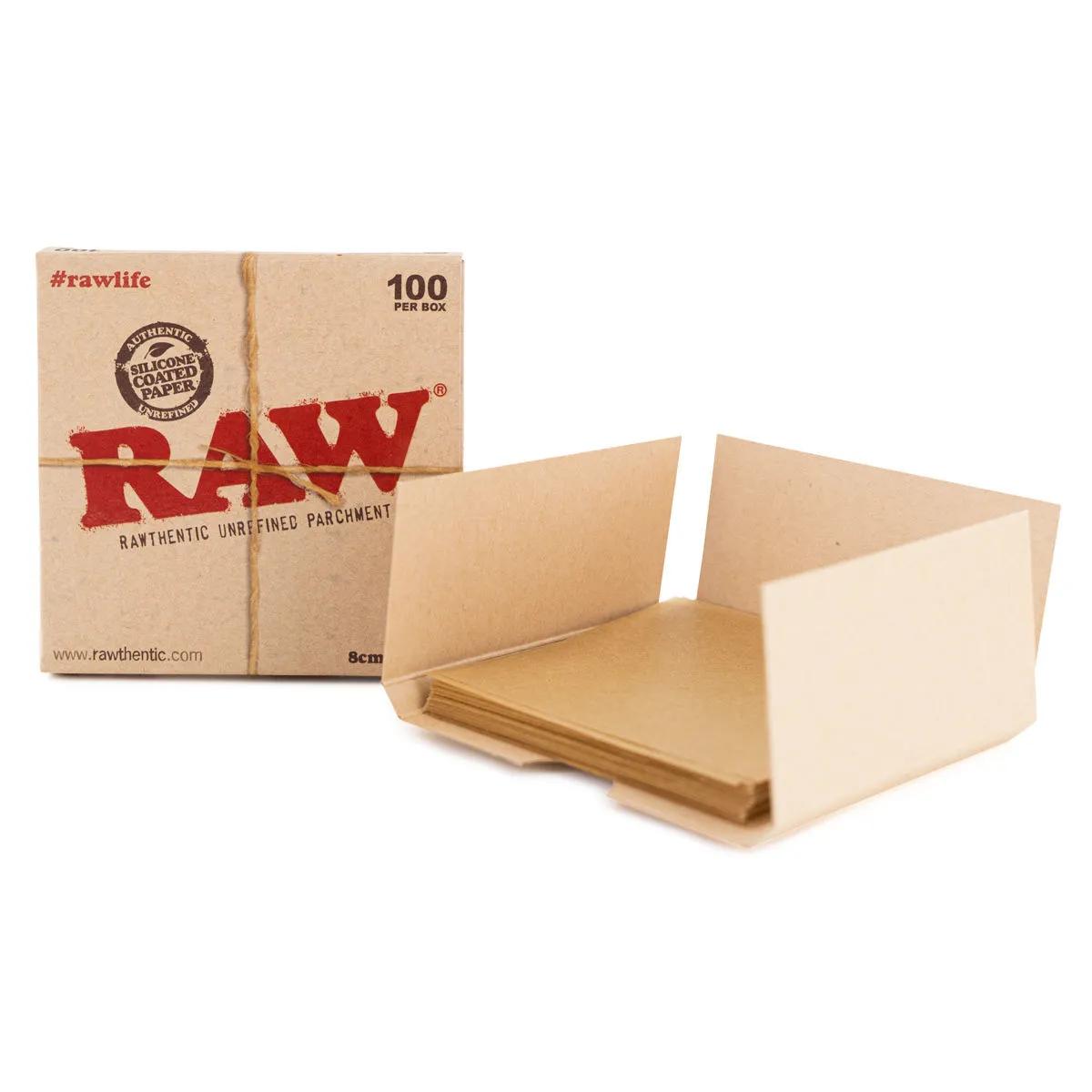
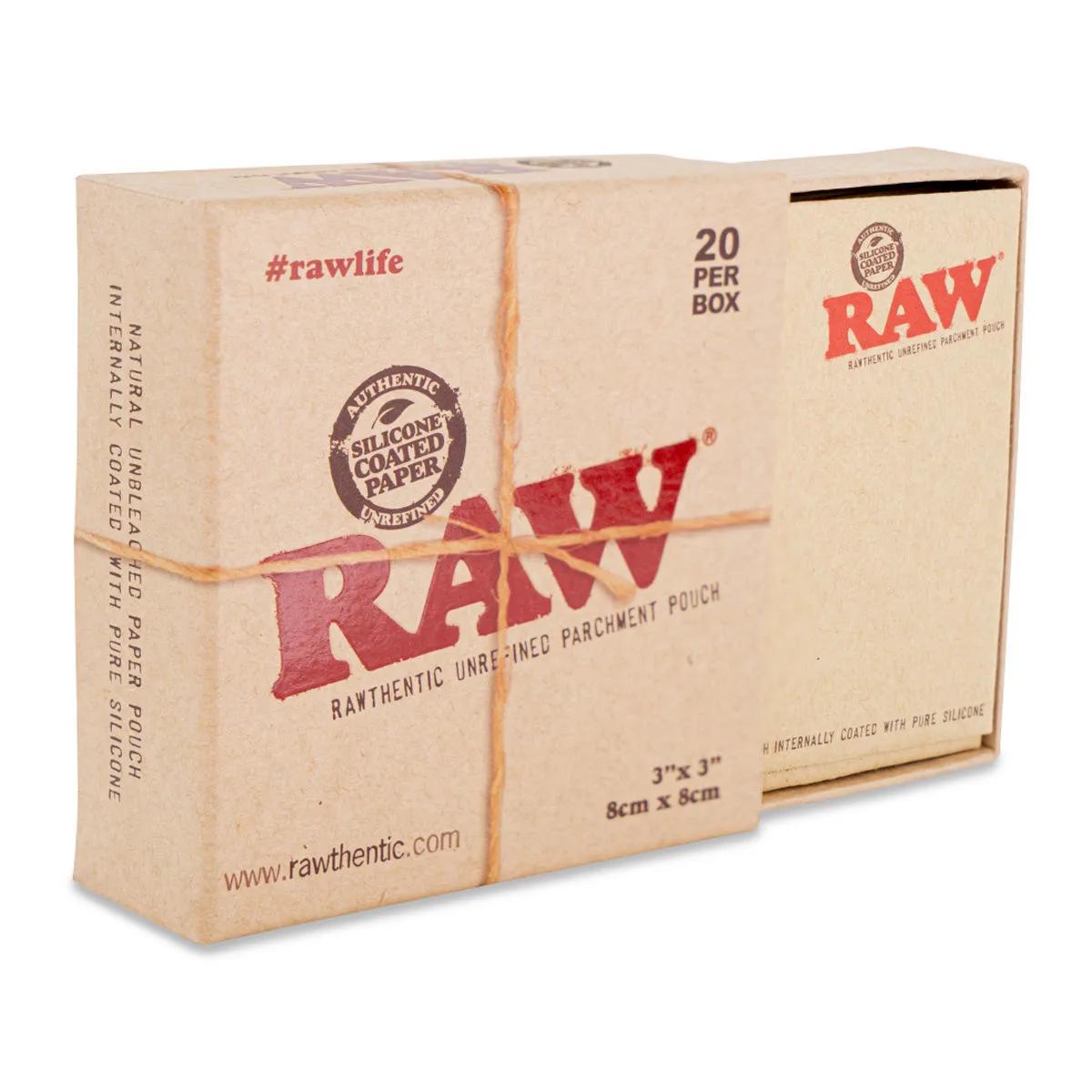
The RAW Silicone-Coated Parchment Pouch is a small, resealable paper pocket that keeps sticky stuff — concentrates, resin, extracts — from glueing itself to everything it touches. Made from 100% unbleached paper with a silicone coating on the inside, it folds down to 8 x 8cm and comes in packs of 20. Simple kit, does one job, does it properly.
Why the RAW Parchment Pouch Earns Its Spot in Your Kit
If you've ever tried to transport a smear of rosin in a rolling paper or a bit of baking paper folded in half, you know how that ends — sticky mess in your pocket, lint on your dab, ruined product. The RAW Silicone-Coated Parchment Pouch solves that with a pre-folded 8 x 8cm pouch that keeps concentrates contained and lint-free. The silicone coating means nothing sticks to the paper itself, so whatever you put in comes out clean.
RAW has been the go-to name in unbleached rolling papers since 1995, and this pouch carries the same eco-conscious DNA — 100% natural, unbleached paper on the outside, food-grade silicone on the inside. No chlorine bleaching, no dyes, no plastic outer shell. You get 20 pouches per pack, which at roughly 4-5 grams of concentrate per pouch is enough to see most people through a fair stretch.
According to research on paper-based food packaging (Deshwal et al., 2019), silicone-coated parchment offers strong oil and wet resistance without off-flavours, which is exactly what you want between your extract and your pocket lining.
What's in the Pack and How It Compares
One pack contains 20 pouches, each folded flat to 8 x 8cm. That's pocket-sized — fits in a tin, a wallet slot, or a dab tool case without bulking anything out.
| Spec | Value |
|---|---|
| Brand | RAW (Rawthentic) |
| Material | 100% unbleached natural paper, silicone-coated interior |
| Dimensions (folded) | 8 x 8cm |
| Quantity per pack | 20 pouches |
| Bleaching | None — unbleached |
| Best for | Concentrates, rosin, wax, resin, sticky flower |
| Reusable | Yes, if undamaged and cleaned |
How the Pouch Compares to Silicone Jars and Parchment Squares
Silicone jars are reusable and airtight, but they're bulky and concentrate can soak into worn silicone over time. Loose parchment squares are cheaper per unit but a faff to fold, and they don't stay closed in your pocket. The RAW pouch sits in between — pre-folded, pocket-flat, lightweight, and disposable or reusable depending on what you put in it.
| Option | Pros | Trade-off |
|---|---|---|
| RAW Parchment Pouch | Pre-folded, pocket-flat, unbleached | Not airtight like a jar |
| Silicone concentrate jar | Airtight, reusable indefinitely | Bulky, can absorb terpenes |
| Loose parchment squares | Cheapest per unit | Needs folding, comes open |
How to Use the RAW Parchment Pouch
- Open the pre-folded pouch along the flap — the silicone side is the inside.
- Place your concentrate, resin, or sticky flower in the centre.
- Fold the flap closed and press lightly to seal.
- Slip it into a tin, wallet, or rigid container — don't squash it under keys.
- To retrieve, open over a clean surface and scrape out with a dab tool.
- If reusing: wipe gently with a paper towel. Replace once the coating looks scratched or discoloured.
Honest Limitations — What the Pouch Won't Do
This isn't a long-term storage solution. The pouch keeps concentrates separated and portable, but it's not airtight — terpenes will slowly evaporate if you leave a pouch sitting around for weeks. For long storage, transfer to a silicone jar or glass concentrate container. Also, don't throw it in the wash with your jeans. The silicone coating holds up to heat and oil, but mechanical abrasion will eventually wear it through, and a compromised coating is when you start losing the non-stick benefit. Research on silicone rubber safety (Zhang et al., 2023) notes that silicone products should be replaced once visibly deteriorated.
Pairs well with a proper dab tool to scrape out every last bit, and a silicone concentrate jar if you want airtight long-term storage alongside the pocket-portable pouches. RAW also does rolling papers and tips if you're kitting out a full smoke pouch.
From Our Counter
We sell a lot of concentrate accessories, and the pouch is the one people come back for in packs of 20. The usual story: someone buys a silicone jar first, realises it's too bulky for festivals or a night out, then grabs these for pocket carry. The combo of jar-at-home, pouch-on-the-go is what most of our regulars land on.
Frequently Asked Questions
Is silicone-coated parchment paper safe?
Yes, silicone-coated parchment is generally considered safe as long as the coating isn't scratched or damaged. The food-grade silicone is heat-resistant up to around 220°C (428°F) and doesn't leach under normal use. Replace the pouch if the coating looks worn.
Can I reuse the RAW parchment pouches?
Yes, if the pouch is still intact and you wipe it clean gently. The silicone coating holds up to repeated use, but once you see scratches, discolouration, or residue that won't wipe off, swap it for a fresh one. Twenty pouches per pack gives you plenty of rotation.
What size are the pouches?
Each pouch folds flat to 8 x 8cm — roughly the size of a small square sticky note. That fits comfortably in a tin, wallet, or dab kit without adding bulk. Pack contains 20 pouches.
What makes RAW parchment different from regular baking paper?
RAW pouches are made from 100% unbleached natural paper — no chlorine bleaching, no dyes. The silicone coating is on the inside only, pre-folded into a pouch shape, so you don't have to cut and fold your own squares. Built for concentrates, not brownies.
Can I store concentrates long-term in these pouches?
Not really — the pouch isn't airtight, so terpenes will slowly evaporate over weeks. Use the pouch for transport and short-term carry, and a silicone or glass concentrate jar for long-term storage at home.
Are the pouches biodegradable?
The paper base is unbleached and biodegradable, though the silicone coating itself isn't fully biodegradable. They're still a more eco-friendly option than plastic-lined alternatives, which is what RAW has built its name on since 1995.
Last updated: April 2026