Vaporizers
by G Pen
We'll only email you about this product — no marketing.
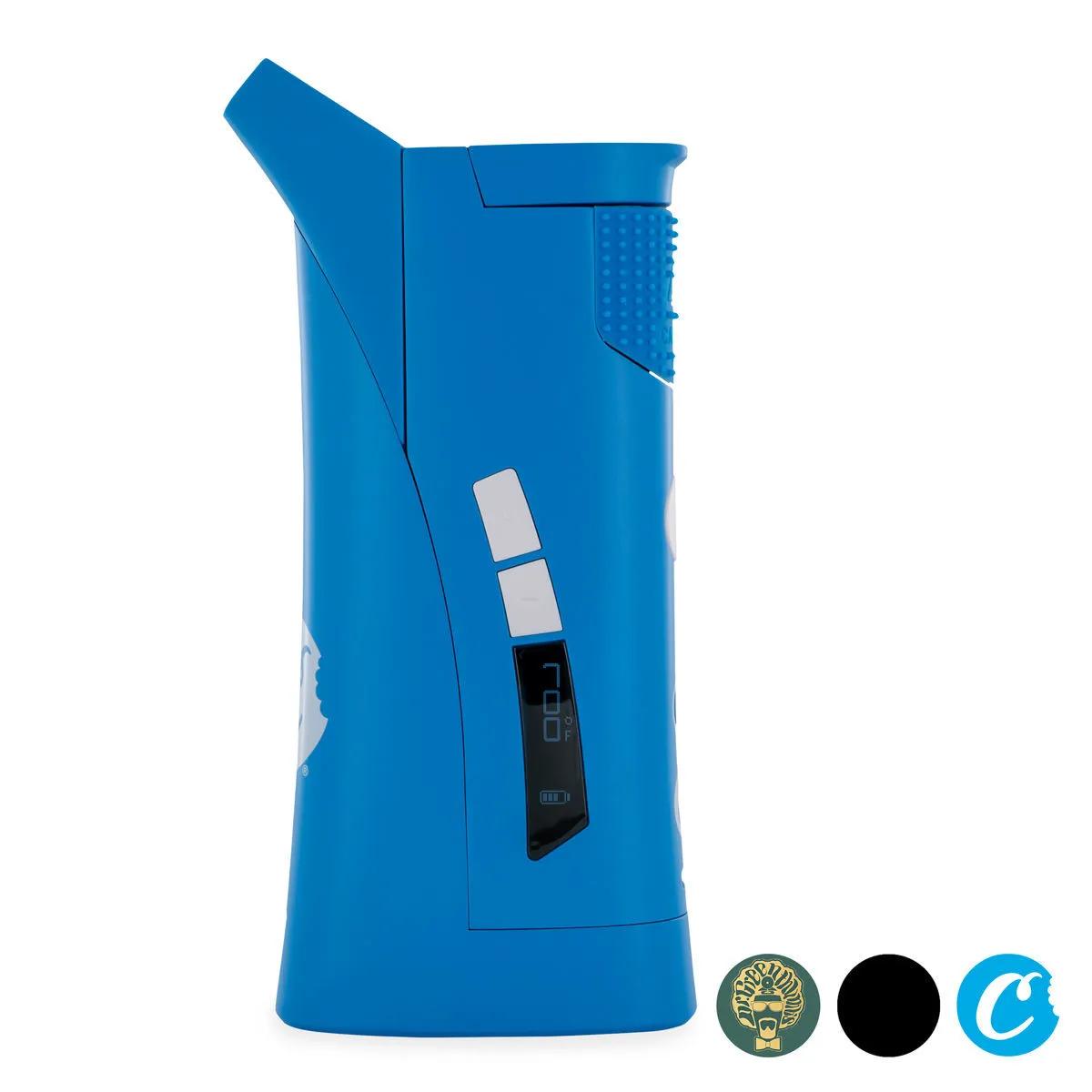
The G Pen Roam is a portable concentrate vaporiser that delivers water-filtered vapour from a fully self-contained unit small enough to slip into a jacket pocket. A quartz tank and borosilicate glass hydro-tube sit inside a protective aluminium shell, giving you dab-rig-quality draws without the torch, the glass, or the awkward setup. Digital temperature control from 315–425°C, a 1300mAh battery, and pass-through charging round out a device that genuinely doesn't compromise on performance for the sake of portability. If you're ready to buy a G Pen Roam, you're getting one of the most complete portable concentrate solutions on the market.
The G Pen Roam comes in four variants — Normal, Cookies, Lemonnade, and Dr. Greenthumb. Internally they're identical: same quartz tank, same glass hydro-tube, same battery, same temperature range. The difference is purely cosmetic. The Normal edition is the classic black colourway. Cookies, Lemonnade, and Dr. Greenthumb are branded collaborations with distinctive graphics and colourways. Pick whichever one you'd happily pull out of your bag — performance is the same across the board.
| Variant | SKU | Notes |
|---|---|---|
| Normal | VS0216 | Classic black — understated, goes with everything |
| Cookies | VS0244 | Cookies brand collab — recognisable streetwear aesthetic |
| Lemonnade | VS0282 | Lemonnade brand collab — bold, bright colourway |
| Dr. Greenthumb | VS0277 | B-Real's Dr. Greenthumb collab — if you know, you know |
The G Pen Roam measures approximately 135 mm tall and weighs 270 g — roughly the same as a standard smartphone. Below are the full technical details for every component.
| Spec | Value |
|---|---|
| Intended Use | Concentrates (wax, shatter, rosin, live resin) |
| Heating Element | Quartz tank |
| Water Filtration | Enclosed borosilicate glass hydro-tube |
| Temperature Range | 315–425°C (600–800°F), adjustable in increments |
| Display | LED with real-time temperature readout |
| Battery | 1300mAh lithium-ion |
| Charging | Micro-USB with pass-through technology |
| Charging Time | Approximately 60–90 minutes from empty |
| Housing Material | Aluminium |
| Dimensions | Approximately 135 × 52 × 52 mm |
| Weight | 270 g |
| Mouthpiece | Removable silicone |
| Feedback | Haptic vibration when ready |
| Air Path | Fully disassemblable for cleaning |
| Included Accessories | Hemp travel case, 2 concentrate jars, loading tool, micro-USB cable |
| Brand | G Pen (Grenco Science) |
Complete your setup: Keep your concentrates organised with additional silicone concentrate jars, and grab isopropyl alcohol wipes or pipe cleaners for quick maintenance between sessions. A fresh quartz tank as a spare means zero downtime when it's cleaning day. Check out our Vaporiser Accessories category and the Grenco Science wiki page for compatible parts.
The G Pen Roam is one of the only portable concentrate vaporisers that includes integrated water filtration within a fully sealed unit. Here's the problem with most portable concentrate vapes: they skip the water filtration. You end up with harsh, hot vapour that tastes like you're sucking on a soldering iron. Desktop dab rigs solve this with big glass bubblers, but good luck fitting one of those in your rucksack. The G Pen Roam closes that gap. The borosilicate glass hydro-tube is sealed inside the aluminium body, so you get genuinely water-cooled vapour from something that weighs just 270 g.
We've had this unit on the shop floor for a while now, and the thing that surprises people most is the weight and density of it. It feels solid in the hand — the aluminium housing has a reassuring heft, not plasticky or cheap. The quartz tank heats evenly, which matters because uneven heating is what gives you that burnt, acrid taste on cheaper units. With the Roam, low-temp draws (around 315–340°C) pull out genuine terpene flavour, while cranking it up towards 425°C produces thick, visible clouds. According to data referenced by the EMCDDA on vaporisation efficiency, water-filtered vapour paths can reduce particulate irritants by a measurable margin compared to unfiltered devices — the Roam's hydro-tube design aligns with that principle.
The honest limitation? The micro-USB charging port. In 2024, USB-C is the standard, and micro-USB feels dated. It still charges fine — and the pass-through feature means you can vape while plugged in — but if you've already ditched all your micro-USB cables, you'll need to keep the included one handy. The other thing: the glass hydro-tube is enclosed and protected, but it still needs regular cleaning. Concentrate residue builds up on glass fast. A weekly soak in isopropyl does the job, and since the entire vapour path disassembles, it's straightforward — just don't skip it.
Compared to the G Pen Connect, which is designed to sit on top of an existing glass rig, the Roam is the fully self-contained option. No external glass needed, no adapters, no separate water piece. If you already own a nice rig at home and want a concentrate attachment for it, the Connect makes sense. If you want one device that does everything and goes everywhere, order the Roam — it's the better pick. We'd grab the Roam nine times out of ten for actual on-the-go use. The Storz & Bickel Plenty vaporiser handles dry herb brilliantly, but for concentrates specifically, the Roam's integrated water path gives it a distinct edge in its category.
Every G Pen Roam ships with a complete accessory kit inside a structured hemp travel case — no extra purchases needed to get started. G Pen doesn't skimp on the unboxing. Everything arrives in a hemp travel case that's actually useful — not one of those flimsy pouches you bin after a week. Inside you'll find:
The case has a dedicated pocket for the cable and tool, plus the two concentrate jars slot into their own spaces. It's genuinely travel-ready — not an afterthought. The total package weight comes to approximately 450 g with all accessories packed inside.
The G Pen Roam uses aerospace-grade aluminium for its outer shell, borosilicate glass rated to withstand thermal shock up to 165°C differential, and medical-grade silicone for the mouthpiece. The aluminium shell takes knocks without denting easily. We've seen units that have been carried in bags daily for months and still look presentable — a few scuffs, but nothing structural. The borosilicate glass hydro-tube is the same type of glass used in lab equipment and decent bongs: heat-resistant, flavour-neutral, and tougher than regular glass. It's enclosed inside the body, so unless you actively disassemble it and drop it on tiles, breakage isn't a realistic concern.
The silicone mouthpiece is soft, comfortable, and pops off for cleaning. It doesn't retain heat, so even after a long session at 425°C your lips aren't getting scorched. The quartz tank is where your concentrate sits, and quartz is the gold standard for flavour — it doesn't impart any taste of its own, unlike ceramic or metal coils. The LED display is bright enough to read outdoors but not so bright it lights up your face like a phone screen in a dark room. Small detail, but it matters if you're going for discretion.
The G Pen Roam is ready to use within 30 seconds of pressing the power button — here's the full step-by-step process from unboxing to your first draw.
The temperature range on the Roam — 315–425°C — spans a 110°C window, which is wider than most portable concentrate vapes offer. In practice, we've found the sweet spot sits around 340–370°C for most concentrates. Below 315°C you won't get much vapour production; above 400°C you're chasing clouds at the expense of flavour. The 1300mAh battery lasts through a solid session — we've gotten roughly 15–20 decent draws on a full charge, depending on temperature. Not all-day battery life, but the pass-through charging means you can plug in and keep going without waiting.
One thing we tell everyone in the shop: keep the glass hydro-tube clean. It's the single biggest factor in maintaining flavour quality. Residue builds up after 3–4 sessions, and once that glass gets cloudy, your flavour drops off noticeably. A 30-second rinse after each use extends the time between deep cleans significantly. We stock isopropyl alcohol cleaning solution and cotton pipe cleaners in our Cleaning & Maintenance category — both work perfectly for the Roam's glass components. For concentrate storage between sessions, our Silicone Concentrate Containers product page has compatible options.
Yes. The entire unit — glass hydro-tube, quartz tank, water chamber — is self-contained inside the aluminium shell. At 270 g and roughly 135 mm tall, it fits in a jacket pocket or the included hemp travel case. No external glass pieces to carry separately.
No. The Roam is designed exclusively for concentrates — wax, shatter, rosin, live resin, and similar extracts. The quartz tank isn't built for dry herb combustion or convection. If you need a portable dry herb vape, look at the G Pen range's herb-specific models or browse our Portable Vaporisers category.
Disassemble the mouthpiece, glass hydro-tube, and quartz tank. Soak them in isopropyl alcohol for 15–30 minutes, then rinse with warm water and dry completely. The entire vapour air path comes apart for this purpose. Do it weekly if you're a regular user.
No, it uses micro-USB. It's the one dated element on an otherwise modern device. The included cable works fine, and pass-through charging means you can vape while plugged in, but keep that cable somewhere you won't lose it.
The 1300mAh lithium-ion battery delivers roughly 15–20 draws per full charge, depending on your temperature setting. Higher temperatures drain the battery faster. Charging from empty takes about 60–90 minutes via micro-USB.
For flavour, start at 315–350°C. For thicker clouds, push towards 380–425°C. The digital LED display lets you dial in precise temperatures. Most users settle around 340–370°C as a good balance between flavour and vapour density.
Yes. Pass-through technology lets you vape while the device is plugged into its micro-USB cable. Handy when the battery runs low mid-session.
The Roam vibrates when it reaches your set temperature. It's a tactile signal so you don't have to stare at the LED display — just feel the vibration and start drawing.
Last updated: April 2026