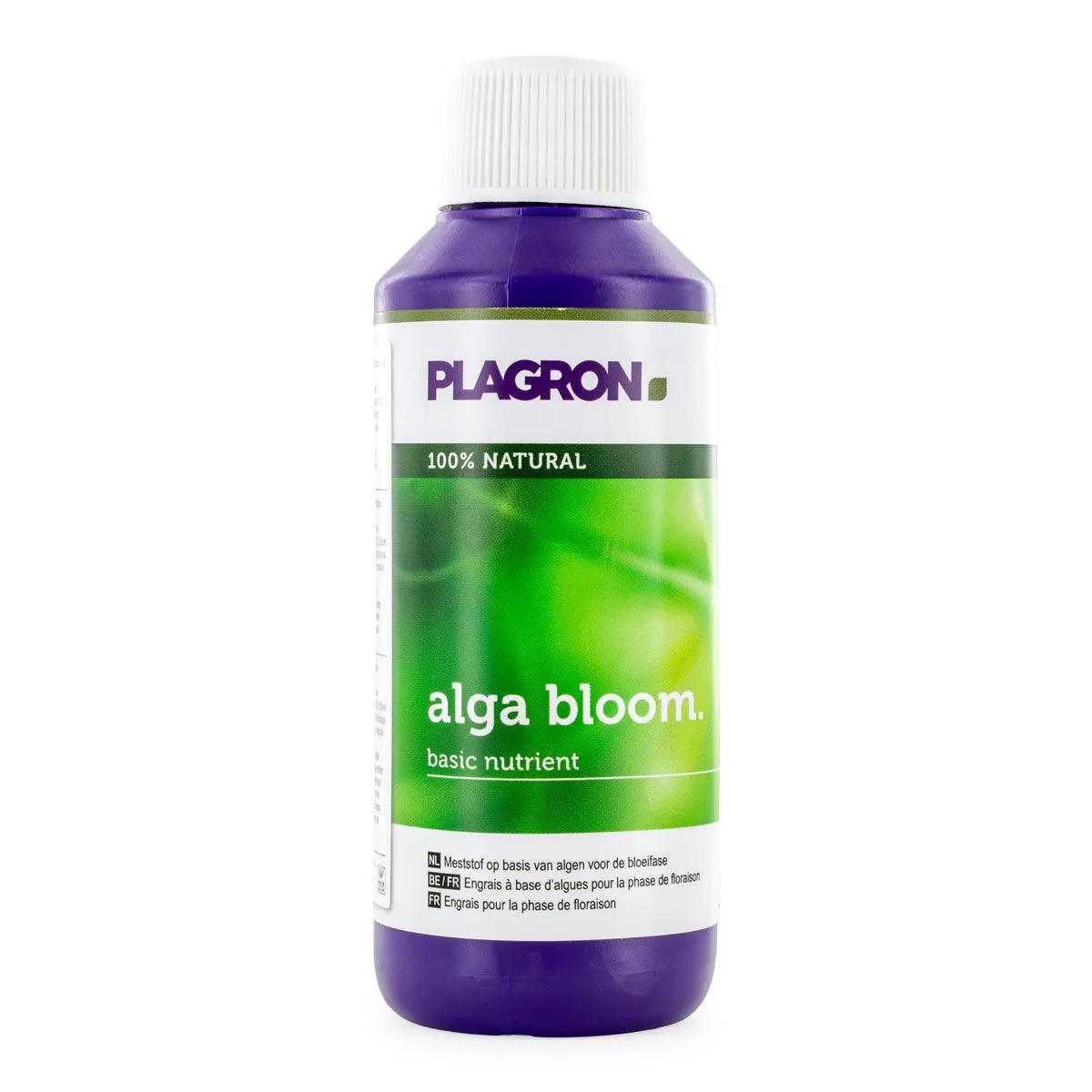
Alga Bloom is an organic flowering nutrient by Plagron that feeds soil-grown plants with natural algae extracts during the bloom phase. It delivers a balanced ratio of phosphorus and potassium — the two minerals plants burn through when they're putting energy into flowers — and helps soil microbes do their thing without you having to mess about with pH or EC meters.
Why pick Alga Bloom for the flowering stage
If you're growing organically in soil and want a bloom feed that doesn't fight your substrate, this is the bottle to reach for. Alga Bloom is built around natural algae extracts — the same kind of seaweed-derived compounds gardeners have been using for decades — and it delivers phosphorus and potassium in a ratio your plants can actually use during flowering. No synthetic salts, no need to hover over a pH pen, no EC drift to chase.
The honest difference between Alga Bloom and a standard mineral bloom feed: it works with the soil biology instead of bypassing it. Algae extracts feed the microbes, the microbes free up nutrients, and the plant gets a steadier delivery instead of a salty spike. The trade-off is that your watering can will look cloudy and smell a bit funky — that's the organic matter doing its job, not a sign anything's wrong.
Plagron Alga Bloom: what's in the bottle
Alga Bloom is a single-bottle organic bloom fertiliser made from algae extracts, designed to be used alongside Alga Grow during the vegetative phase. Plagron has been making organic and mineral nutrients in the Netherlands since 1992, and the Alga line is their entry-level organic range — affordable, forgiving, and aimed squarely at growers who'd rather not memorise a feed chart.
The 100ml bottle gives you 25 litres of feed solution at the maximum dose — enough for a small organic grow from the moment flowers set until you flush.
How to use Alga Bloom (manufacturer dosing)
Plagron's recommendation is straightforward: maximum 4ml of Alga Bloom per 1 litre of water, used to water plants during the flowering stage. No pH adjustment needed if you're using a natural substrate, no EC tweaking, no buffering.
- Shake the bottle well — algae extract settles.
- Add up to 4ml per 1 litre of water in your watering can.
- Stir or shake to mix. Expect a cloudy solution and a slight seaweed smell — both normal.
- Water your plants as usual during the flowering phase.
- Don't bother adjusting pH or EC if you're on a natural soil mix.
Specifications
| Brand | Plagron |
|---|---|
| Product | Alga Bloom |
| Type | Organic bloom fertiliser |
| Base | Natural algae extracts |
| Key minerals | Phosphorus & potassium (balanced ratio) |
| Substrate | Organic soil / natural substrates |
| Growth phase | Flowering |
| Max dosage | 4ml per 1L water |
| pH/EC adjustment | Not required on natural substrates |
| Volume | 100ml |
| SKU | HS1875 |
Alga Bloom vs. mineral bloom feeds — what to expect
Quick comparison so you know what you're getting into. Both approaches work — they're just different tools.
| Feature | Alga Bloom (organic) | Mineral bloom feeds |
|---|---|---|
| Base ingredients | Algae extracts | Synthetic mineral salts |
| pH/EC monitoring | Not needed on natural soil | Required |
| Soil structure impact | Improves over time | Neutral to depleting |
| Nutrient delivery | Slower, microbe-mediated | Direct, fast uptake |
| Smell & appearance | Cloudy, seaweed scent | Clear, low odour |
| Best for | Organic growers, beginners | Hydro setups, fine-tuned grows |
From our counter — what growers actually report
The Alga line is one of the easier organic kits we've sold over the years. The feedback we hear most often: people who've burned plants with mineral feeds appreciate how forgiving Alga Bloom is on dosage. If you go a bit over, the soil buffers it. The one limitation worth flagging — if you're growing in coco or a heavily inert mix, organic nutrients like Alga Bloom rely on microbial life that just isn't there. Stick to soil with some organic matter for this to shine.
Sensory note: yes, the watering can smells like a beach at low tide for a few minutes. Some growers don't mind, others prefer to feed in the evening with a window open. It clears fast.
Pairs with Plagron Alga Grow for the vegetative phase — same algae-extract base, used the same way at up to 4ml per litre. Together they cover the full grow cycle for organic soil growers without you needing to switch nutrient lines mid-flower.
Frequently Asked Questions
Why does my Alga Bloom solution look cloudy and smell strange?
That's the algae extract and other organic ingredients doing their job — completely normal. Plagron flags this on the bottle. Cloudiness and a seaweed-ish smell are expected with any algae-based fertiliser and don't affect the product's performance.
Do I need to adjust pH or EC when using Alga Bloom?
No, not on natural substrates. Plagron formulates Alga Bloom to work with organic soil mixes without pH or EC tweaking. If you're on a heavily inert substrate like pure coco, the rules change — but for standard organic soil, just mix and water.
Can I use Alga Bloom with non-organic soils like Lightmix or Growmix?
It works best on natural, organic substrates where soil microbes can break down the algae extracts. On lightly fertilised mixes like Lightmix it'll still feed your plants, but you'll get more out of it on a richer organic soil where the microbiology is active.
How much Alga Bloom do I use per litre of water?
Up to 4ml of Alga Bloom per 1 litre of water, applied during the flowering stage. That's Plagron's maximum recommended dose — start lower if you're cautious and work up.
Do I need Alga Grow as well, or is Alga Bloom enough?
Alga Bloom is the flowering feed; Alga Grow is the vegetative feed. For a full cycle you'll want both — Alga Grow during veg, then switch to Alga Bloom when flowers set. Using only Alga Bloom from seed leaves your plants short on nitrogen during early growth.
How long does a 100ml bottle last?
At the maximum 4ml-per-litre dose, 100ml makes 25 litres of feed solution. For a small 2-4 plant organic soil grow, that typically covers most or all of the flowering phase depending on pot size and watering frequency.
Last updated: April 2026