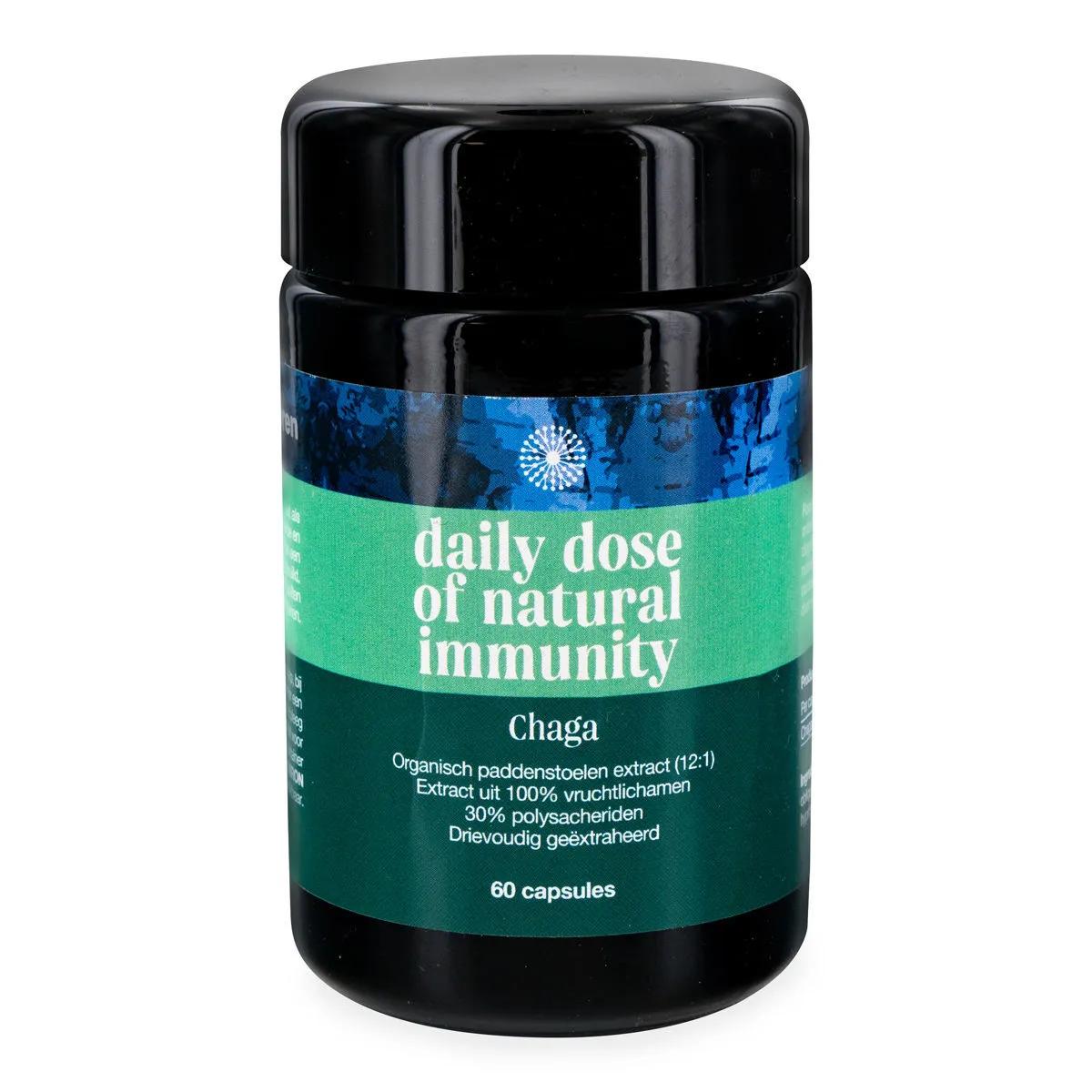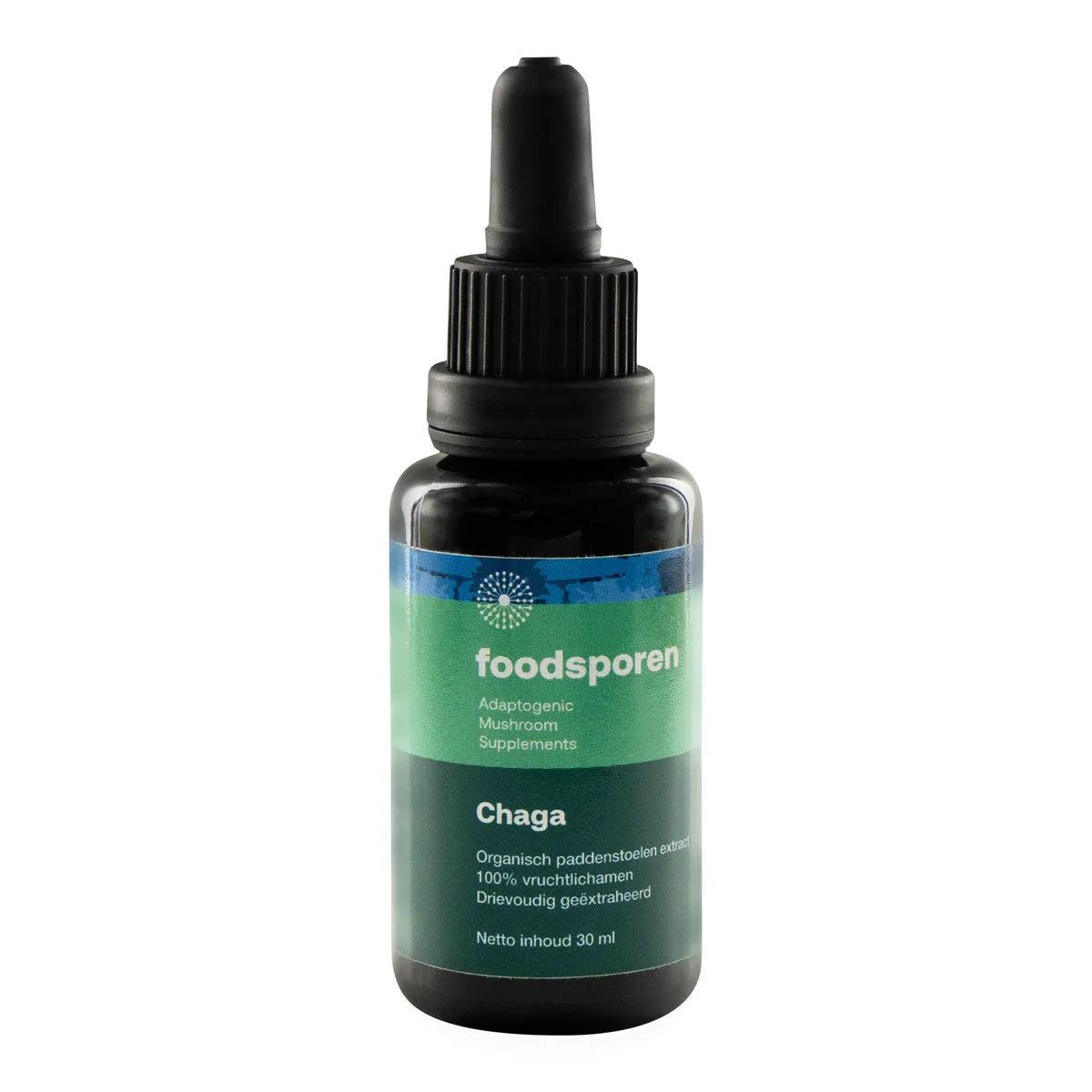
Chaga
by Foodsporen
Chaga tincture is a concentrated liquid extract of Inonotus obliquus — the black, bark-like fungus that grows on birch trees across Siberia, Scandinavia, and northern Canada. Designed for anyone who wants the immune-modulating benefits of chaga without brewing tea for 4 hours, this Foodsporen tincture delivers 200 mg of chaga extract per 10 drops. Azarius has stocked Foodsporen's mushroom tincture range since they launched in the Netherlands, and chaga remains their best-selling functional mushroom extract.
What sets this chaga mushroom tincture apart from capsules or powder is speed and bioavailability. Foodsporen uses a 3-fold extraction process — hot water pulls out beta-glucans and polysaccharides, alcohol extracts triterpenes like betulinic acid, and a final concentration step combines both fractions into a single dropper bottle. The result is a dual-extract chaga tincture that covers the full spectrum of active compounds, not just one fraction.
We've had customers switch from chaga tea to this tincture and report that 10 drops under the tongue feels more consistent than a cup of brewed chunks. That tracks with the extraction method — sublingual absorption bypasses the digestive system, so the compounds hit your bloodstream in roughly 10 minutes instead of 45-60 with oral ingestion.
Foodsporen recommends 10 drops twice daily — once in the morning and once in the afternoon. Each 10-drop serving delivers 200 mg of chaga extract plus 1.5 μg of Vitamin D3 (15% of the recommended daily allowance). At 20 drops per day, a 30 ml bottle lasts approximately 30 days.
Apply drops directly under the tongue and hold for 30 seconds before swallowing. The sublingual route delivers faster absorption — roughly 10 minutes versus 45-60 minutes with oral ingestion. You can also add drops to water, juice, coffee, or food, but avoid carbonated drinks as they may reduce efficacy.
| Specification | Value |
|---|---|
| Brand | Foodsporen |
| Species | Inonotus obliquus (chaga) |
| Extract type | Triple extraction (water + alcohol + concentration) |
| Chaga extract per 10 drops | 200 mg |
| Vitamin D3 per 10 drops | 1.5 μg (15% RDA) |
| Recommended dose | 10 drops twice daily |
| Key compounds | Beta-glucans, betulinic acid, melanin, superoxide dismutase (SOD) |
| Administration | Sublingual or added to food/drinks |
| Onset time | ~10 minutes (sublingual) |
| Bottle sizes | 30 ml, 50 ml, 100 ml |
| Shelf life | Approximately 12 months (stored cool and dark) |
| Psychoactive | No |
| Origin | Netherlands (Foodsporen) |
Chaga pairs well with lion's mane for a focus-plus-immunity stack — chaga handles the immune modulation while lion's mane targets nerve growth factor (NGF) for cognitive clarity. Foodsporen makes both in the same tincture format, so the dosing protocol is identical. If you want broader adaptogenic support, add reishi tincture for sleep quality and stress resilience.
Inonotus obliquus has been used in Russian and Siberian folk medicine for at least 500 years. The earliest written records come from 16th-century Russian herbalists who brewed chaga tea to treat stomach ailments and general fatigue. In Siberian tradition, chaga chunks were simmered in hot water for hours — a process that extracts the water-soluble beta-glucans but misses the alcohol-soluble triterpenes entirely.
The fungus grows almost exclusively on birch trees in cold climates between 45° and 65° north latitude. It takes 5-7 years for a chaga conk to reach harvestable size, during which it absorbs betulin and betulinic acid from the birch bark — compounds that don't exist in chaga grown on other tree species. Wild-harvested chaga from birch forests in Finland, Russia, and Canada commands the highest concentrations of these triterpenes, with betulinic acid content ranging from 0.5% to 2.3% of dry weight depending on harvest location and tree age.
Chaga extract delivers its benefits through three main compound groups, each targeting a different physiological pathway.
Beta-glucans (polysaccharides): These are the primary immunomodulators. Beta-glucans bind to Dectin-1 and complement receptor 3 (CR3) on immune cells, stimulating macrophage and natural killer cell activity. A 2011 review published in the International Journal of Medicinal Mushrooms found that Inonotus obliquus polysaccharides enhanced immune cell response by 30-50% in vitro compared to control groups. The 3-fold extraction Foodsporen uses is specifically designed to maximise beta-glucan yield.
Triterpenes (betulinic acid, inotodiol): These alcohol-soluble compounds are responsible for chaga's antioxidant reputation. Betulinic acid is derived from the betulin in birch bark and has been studied for its anti-inflammatory properties. Inotodiol, unique to Inonotus obliquus, contributes to the overall triterpene profile. A dual or triple extraction is the only way to get these compounds into a tincture — hot water alone won't extract them.
Melanin and SOD (superoxide dismutase): Chaga's characteristic black exterior is packed with melanin, one of the most potent natural antioxidants. The fungus also contains high levels of superoxide dismutase — an enzyme that neutralises superoxide radicals. According to the USDA's ORAC (Oxygen Radical Absorbance Capacity) database, raw chaga scores among the highest antioxidant values of any natural food, with ORAC values reported between 52,000 and 146,000 μmol TE/100 g depending on preparation method.
Expect a deep, earthy flavour with a slight bitterness — somewhere between very strong black tea and wet forest floor. The alcohol base adds a mild warmth. Most people find it more palatable than chaga tea because the serving size is so small — 10 drops versus an entire cup. If the taste bothers you, mix the drops into coffee or a smoothie. The earthy notes actually complement dark roast coffee surprisingly well.
The best chaga tincture for daily immune support is this Foodsporen extract — it uses a genuine 3-fold extraction to capture both water-soluble and alcohol-soluble compounds, comes in three bottle sizes to match your usage, and includes Vitamin D3 as a bonus nutrient.
Chaga mushroom tincture is non-psychoactive and generally well tolerated at recommended doses. The International Journal of Medicinal Mushrooms (2011) classifies Inonotus obliquus as having a low toxicity profile in standard supplementation ranges.
There are a few things to be aware of:
Effects are cumulative, not acute. Unlike psychoactive mushrooms, chaga doesn't produce a noticeable "hit" — the immune-modulating and antioxidant benefits build over weeks of consistent daily use. Most customers at Azarius report noticing differences in energy and resilience after 2-4 weeks of daily dosing.
| Format | Extraction | Onset | Convenience | Best for |
|---|---|---|---|---|
| Tincture (this product) | Triple (water + alcohol + concentration) | ~10 min sublingual | Pocket-sized, no prep | Daily users who want fast absorption and full-spectrum compounds |
| Chaga tea (dried chunks) | Hot water only | 45-60 min oral | Requires 2-4 hour simmer | Traditional ritual, relaxation |
| Chaga powder/capsules | Varies (often single extraction) | 30-60 min oral | Easy to dose, no taste | People who dislike the earthy flavour |
| Chaga dual extract powder | Dual (water + alcohol) | 30-60 min oral | Requires mixing into liquid | High-dose users, smoothie routines |
The tincture wins on speed and compound coverage. Tea is the traditional method but only extracts water-soluble compounds — you miss the triterpenes entirely. Capsules are convenient but absorption is slower and extraction quality varies widely between brands. For daily immune support with minimal effort, the tincture format strikes the best balance.
| Per 10 drops | Amount | % RDA |
|---|---|---|
| Chaga extract (Inonotus obliquus) | 200 mg | — |
| Vitamin D3 (cholecalciferol) | 1.5 μg | 15% |
Chaga tincture is used primarily for immune support and antioxidant intake. The beta-glucans in Inonotus obliquus stimulate macrophage and natural killer cell activity, while betulinic acid and melanin provide antioxidant protection. Benefits build over 2-4 weeks of daily use.
Foodsporen recommends 10 drops twice daily, delivering a total of 400 mg chaga extract. Each 10-drop serving also provides 1.5 μg of Vitamin D3. Apply under the tongue for fastest absorption.
Chaga tea uses hot water extraction only, which pulls out beta-glucans but misses alcohol-soluble triterpenes like betulinic acid. This Foodsporen chaga tincture uses a 3-fold extraction (water + alcohol + concentration) to capture both compound groups. Sublingual tincture absorption also takes roughly 10 minutes versus 45-60 minutes for tea.
At recommended doses, chaga tincture is well tolerated. The main considerations are oxalate content (relevant for people prone to kidney stones), mild anticoagulant properties (relevant if you take blood thinners), and potential blood sugar lowering. Not suitable during pregnancy or breastfeeding.
At the standard dose of 20 drops per day, a 30 ml bottle lasts approximately 30 days. The 50 ml bottle covers around 7 weeks, and the 100 ml bottle stretches to over 3 months.
A chaga tincture is one form of chaga extract — specifically a liquid extract using alcohol and water as solvents. "Chaga extract" can also refer to powdered extracts or capsules. This Foodsporen tincture uses a triple-extraction method, making it more complete than single-extraction powders.
Yes. Mixing chaga tincture drops into coffee is a popular method. The earthy flavour complements dark roast profiles. Avoid adding to carbonated drinks, as carbonation may reduce compound stability. Hot coffee is fine — the active compounds in a properly extracted tincture are heat-stable.
Stored in a cool, dark place, Foodsporen chaga tincture keeps for approximately 12 months. The alcohol base acts as a natural preservative. Avoid freezing or exposing to direct sunlight, which degrades the active compounds faster.
Last updated: April 2026
Medical disclaimer. This content is for informational purposes only and does not constitute medical advice. Consult a qualified healthcare provider before use of any substance.