Herbal teas
by Lasse-T
We'll only email you about this product — no marketing.
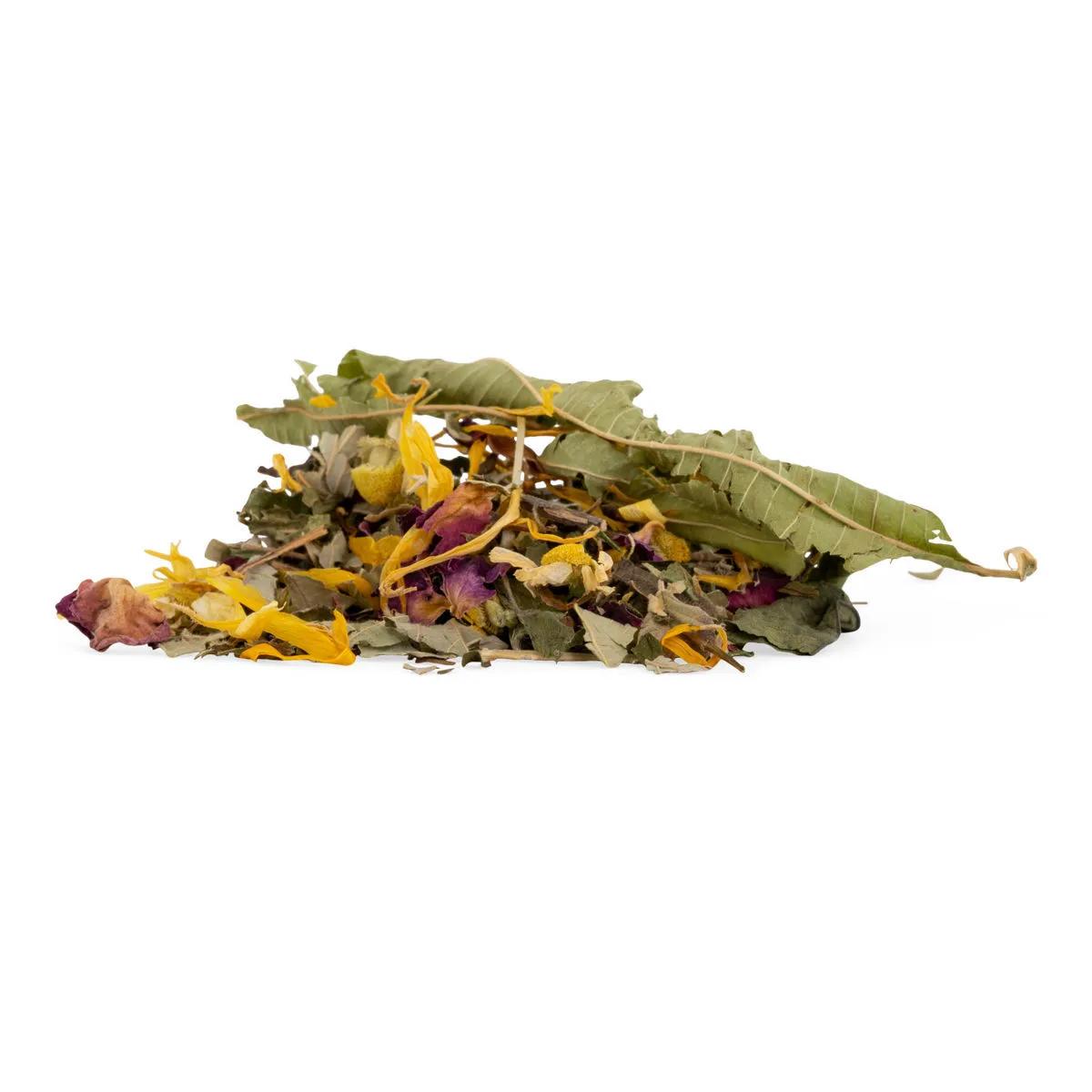
Life Experience Tea is a caffeine-free herbal tea blend that brings together eight botanicals — chamomile, lemon balm, peppermint, ginseng root, verbena, rose petals, blackberry leaf, and sunflower petals — into a loose-leaf mix designed for slow evenings and unhurried mornings. It arrives in airtight, aroma-sealed packaging to keep the blend fresh from the first cup to the last.
Most herbal teas lean on one or two ingredients and call it a day. Life Experience Tea takes a different approach — eight botanicals, each pulling its weight. You get chamomile blossom and lemon balm doing the heavy lifting on the calming side, peppermint adding a clean, cool note that stops the blend from tasting flat, and ginseng root bringing a subtle earthy depth underneath it all. The rose petals and sunflower petals aren't just there for show; they round out the aroma so the whole cup smells like an actual garden rather than a dusty herb cupboard.
We've stocked plenty of single-ingredient chamomile teas over the years, and they're fine — but they can taste a bit one-dimensional after the third or fourth evening in a row. This blend keeps things interesting. The verbena lifts the citrus notes from the lemon balm, and the blackberry leaf adds a faint tannic backbone that gives the cup some structure. It tastes like someone actually thought about it, not like someone threw leftover herbs into a bag.
The honest limitation: this is a gentle, mellow blend. If you're after something punchy or stimulating, this isn't it. It's a wind-down tea, not a wake-up tea. That said, the ginseng root does add a grounding quality that stops it from being purely floral — it's got a bit more body than your average bedtime brew.
Every ingredient in this loose-leaf herbal tea blend serves a purpose. Here's what's inside the 100 g pouch and what each botanical brings to the cup.
| Ingredient | Botanical Role | Flavour Contribution |
|---|---|---|
| Chamomile blossom | Traditional calming herb, used in European herbalism for centuries | Soft, honeyed, slightly apple-like |
| Lemon balm | Member of the mint family, traditionally used for relaxation | Bright citrus, mild sweetness |
| Peppermint | Digestive herb, adds freshness | Cool, clean, slightly sharp |
| Ginseng root | Adaptogenic root used in traditional Asian herbalism | Earthy, slightly bitter, grounding |
| Verbena | Aromatic herb traditionally used in tisanes | Lemon-forward, delicate |
| Rose petals | Aromatic botanical | Floral, fragrant, softens the blend |
| Blackberry leaf | Provides tannic structure | Mild, slightly astringent backbone |
| Sunflower petals | Visual and aromatic accent | Very mild, slightly nutty |
Here are the key details you need before adding this herbal tea to your shelf.
| Spec | Value |
|---|---|
| Product type | Herbal tea (caffeine-free) |
| Weight | 100 g |
| Format | Loose leaf |
| Packaging | Airtight, aroma-sealed |
| Taste profile | Natural — floral, citrus, earthy |
| Production method | Conventional |
| SKU | SM0556 |
| Number of ingredients | 8 botanicals |
| Estimated cups per 100 g | Approximately 40-50 cups (using 2-3 g per serving) |
Pairs well with a tea strainer or infuser if you don't already have one — loose-leaf tea needs room to expand for the best flavour. If you enjoy calming herbal blends, have a look at our other herbal teas for different botanical profiles to rotate through the week.
We get this question at least a few times a week: why bother with loose-leaf when teabags exist? Fair point. But here's what we've noticed after years of stocking both formats. Teabags typically contain finely ground herb dust — the leftovers after the whole leaves and blossoms have been sorted out. That dust brews fast, sure, but it also loses its aromatic oils faster and tends to taste flatter.
Life Experience Tea uses whole chamomile blossoms, intact rose petals, and recognisable leaf pieces. When you open the aroma-sealed pouch, you can actually see and smell the individual ingredients. The peppermint hits your nose first, then the rose, then the lemon balm underneath. That's not something you get from a paper sachet. The airtight packaging keeps those volatile oils locked in until you're ready to brew — which matters more than most people think. Aromatic compounds degrade quickly once exposed to air, so the sealed pouch isn't just marketing; it's functional.
The trade-off: you'll need a strainer or infuser, and it takes about 30 seconds longer than dunking a bag. That's it. For a tea you're drinking to slow down and take a breath, those 30 seconds are part of the ritual.
We're not going to tell you this tea cures anything — it's a herbal blend, not medicine. But the individual ingredients do have a research trail worth knowing about. According to a study published in PMC examining tea consumption and biological ageing, researchers investigated the effects of tea and tea components on ageing-related markers, with findings suggesting potential associations between regular tea consumption and certain biological ageing indicators (PMC, 2023).
Separately, according to a randomised placebo-controlled clinical trial published in PMC, tea consumption was observed to provide temporary emotional gains in the short term for certain populations, though researchers noted that future studies are needed to explore this further (PMC, 2024). And a study on tea consumption frequency found that regular tea drinking was associated with certain health markers, using propensity score matching to confirm the observed effects (PMC, 2023).
According to research on associations between tea consumption and life expectancy, individuals who consumed tea regularly showed certain associations with life expectancy markers, though the researchers noted that additional avenues need to be explored (PMC, 2024). None of this is a guarantee — but it does suggest that the simple habit of sitting down with a cup of herbal tea on a regular basis isn't just pleasant, it might be doing you a quiet favour.
We've been selling herbal teas since the early days of the shop, and the customers who come back for blends like this one tend to have a specific routine. It's not a "grab and go" tea — it's the one they make at 9 PM after the laptop is closed and the phone is face-down. One regular told us she keeps a jar of it on her bedside table and just opens the lid to smell it before bed, even on nights she doesn't brew a cup. That's the kind of blend this is. The aroma does half the work.
If you're comparing this to our other herbal teas: Life Experience Tea sits on the gentler, more floral end of the spectrum. It's less punchy than a straight peppermint tea and less one-note than pure chamomile. Think of it as the blend you reach for when you want something that feels considered rather than functional. The ginseng root adds just enough complexity to keep it from being a "sleepy tea" cliche — it's calming without being boring.
This is a caffeine-free herbal tea made from common botanical ingredients, so for most people it's straightforward. That said, some herbal teas can interact with certain medications. Research indicates that herbal teas may interact with antidepressants, blood thinners, birth control, and pain relievers. Ginseng specifically has been flagged in research for potential interactions with diabetes medications and MAOIs. If you're on any regular medication, it's worth checking with your GP before making this a daily habit — not because the tea is risky, but because herb-drug interactions are a real thing that doesn't get talked about enough.
Clinical studies on green tea safety (a different category, but relevant for context) have concluded that tea polyphenol consumption equivalent to 8-16 cups daily appears safe for healthy individuals. Life Experience Tea is a milder herbal blend, not green tea, so this is a general reference point rather than a direct comparison. A single cup daily, as suggested by general herbal tea guidance, is a reasonable starting point.
No. This is a fully caffeine-free herbal tea blend. None of the eight ingredients — chamomile, lemon balm, peppermint, ginseng, verbena, rose petals, blackberry leaf, or sunflower petals — contain caffeine. You can drink it in the evening without worrying about it keeping you up.
Using 2-3 g per cup (about one heaped teaspoon), you'll get roughly 40-50 cups from a single 100 g pouch. That's over a month of daily cups, which makes this a solid value for a multi-ingredient herbal blend.
Yes — daily consumption of herbal tea made from these common botanicals is standard practice. Research on regular tea consumption has observed associations with various positive health markers over time. Consistency matters more than quantity with herbal teas.
The first thing you'll notice is the peppermint and lemon balm — bright, fresh, slightly citrusy. Then the chamomile and rose come through with a soft floral sweetness. The ginseng root adds an earthy, grounding note at the finish. It's natural-tasting, not perfumy or overly sweet.
You can. Add 3-4 g of the loose-leaf blend to a jar of cold water and refrigerate for 6-8 hours. The result is lighter and more refreshing than the hot version — the peppermint and verbena come forward, while the ginseng stays in the background. Good option for warm weather.
Some herbal teas can interact with medications including antidepressants, blood thinners, and diabetes drugs. Ginseng in particular has been flagged for potential interactions with MAOIs and antidiabetes medications. Check with your doctor if you take any regular medication.
Keep it in the original aroma-sealed pouch, pressed flat to remove excess air, and store in a cool, dry place away from direct sunlight. Aromatic compounds in chamomile and rose petals degrade with light and air exposure, so keeping the pouch sealed between uses is the best way to maintain flavour.
Last updated: April 2026
Medical disclaimer. This content is for informational purposes only and does not constitute medical advice. Consult a qualified healthcare provider before use of any substance.