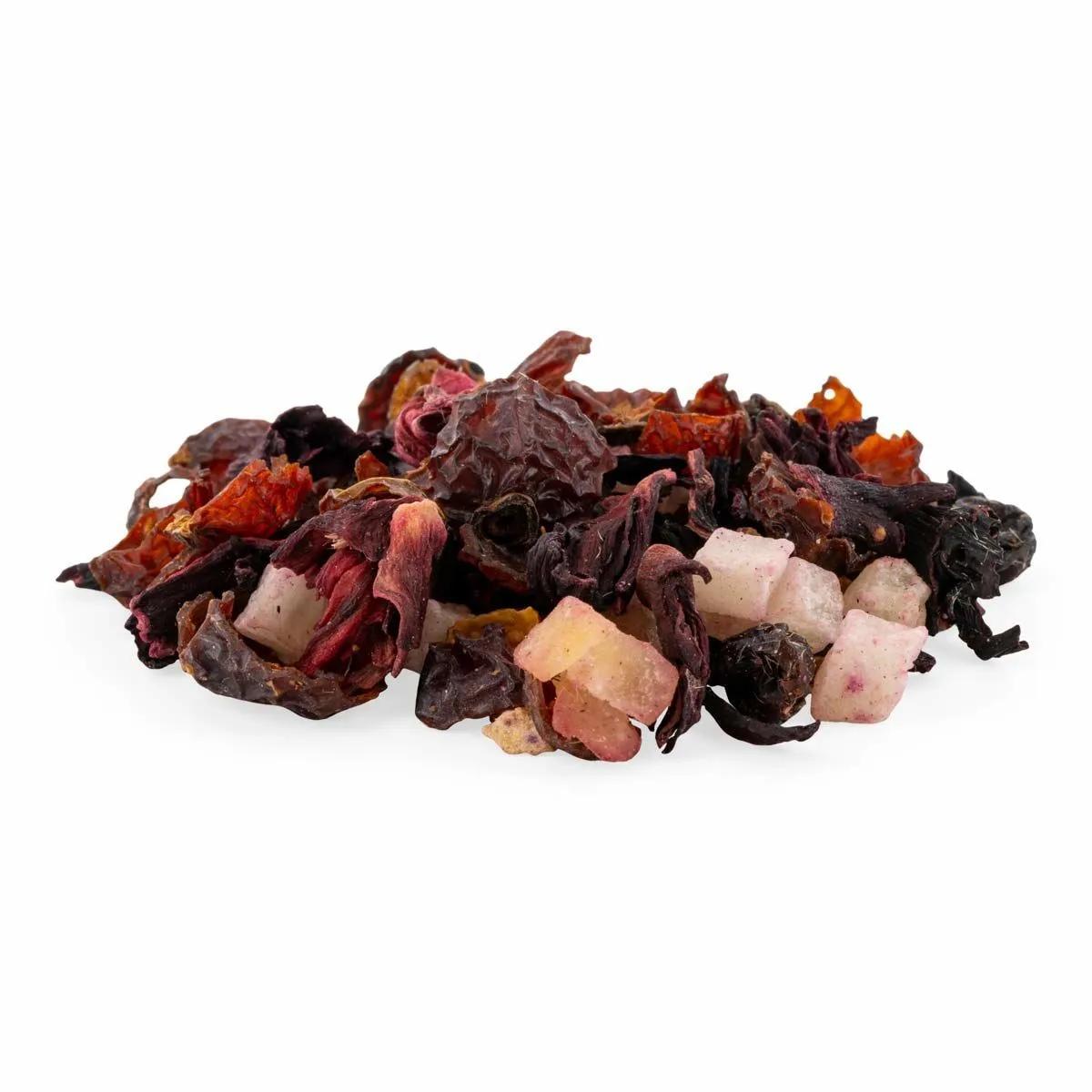
Tropical Fruit Cocktail Tea is a caffeine-free fruit tea blend that pairs hibiscus and rosehip with real pineapple, papaya, mango and grape pieces. One sip and you're somewhere warmer — it's the kind of loose-leaf brew that works equally well iced on a summer afternoon or steaming hot at midnight when you want flavour without the jitters.
Why this tea earns its spot in the cupboard
Most "tropical" tea blends smell like a holiday and taste like tap water. This one doesn't — the fruit pieces are big enough to see (diced pineapple, mango, papaya, whole grapes), and the hibiscus base gives it a proper deep ruby-red colour in the cup. Hibiscus and rosehip do the heavy lifting on flavour, bringing that tart, slightly cranberry-like tang, while the tropical fruit chunks sweeten it naturally as they rehydrate in hot water.
The caffeine-free part matters more than people realise. If you're cutting back on afternoon coffee or you actually want to sleep tonight, a fruit tea hits the "warm drink" spot without the 2 AM ceiling-staring. And at 100 g loose leaf, you're getting roughly 40-50 cups out of a single bag, depending on how strong you brew it.
What's in the blend
No mystery "natural flavours" hiding the real star of the show — this is a proper fruit-forward blend where you can actually identify what you're drinking.
| Hibiscus blossom | Tart, ruby-red base — gives the brew its colour and zing |
| Rosehip peel | Mellow fruitiness, rounds out the hibiscus sharpness |
| Pineapple pieces | With sugar and citric acid — sweet-tart punch |
| Papaya pieces | Soft, mellow, slightly honeyed sweetness |
| Mango pieces | That unmistakable tropical perfume |
| Grapes | Background sweetness |
| Citrus peel + aroma | Lifts the whole thing with a bright top note |
What it tastes like
Think of a slightly tart fruit punch — the hibiscus keeps it from being sickly sweet, the mango and pineapple give it that "holiday cocktail" vibe, and the rosehip pulls it all together. It's more tangy than sugary, which honestly makes it a better everyday drink than the candy-sweet fruit teas you get in supermarket boxes. Hot, it's warming and aromatic. Iced, it's basically a non-alcoholic sangria base.
How to brew it properly
Loose-leaf fruit teas are forgiving — you won't ruin them by over-steeping the way you would with green or black tea. That said, a few tricks make a difference.
- Scoop roughly 1 heaped teaspoon (2-3 g) per cup into a tea strainer, infuser ball, or teapot with filter.
- Pour over freshly boiled water (100 °C — fruit teas like it hot).
- Steep for 8-10 minutes. Yes, that's longer than black tea — fruit pieces need time to rehydrate and release their flavour.
- Remove the leaves, taste, and add honey or a slice of orange if you want.
- For iced tea: double the leaf, brew hot for 10 minutes, pour over a tall glass of ice. Add mint and a splash of sparkling water for a spritz.
Storage
Keep it in the aroma-sealed packaging it came in, or transfer to an airtight tin. Away from sunlight, heat and strong smells (don't stash it next to the coffee). Fruit teas hold their flavour well for 12-18 months when stored properly.
Tropical fruits and what research says
We're not going to pretend a cup of tea is a medical intervention — it's a nice drink. But the ingredients here have been studied for their bioactive compounds. According to a review in Biomarkers of intake for tropical fruits (PMC7304196), several tropical fruits have been studied for their effect on human health due to their content in specific bioactive compounds. A 2024 meta-analysis (PMC11490439) observed that high consumption of tropical fruits was associated with a decreased bladder cancer risk (OR 0.84; 95% CI 0.73-0.94) in the overall analysis. Tropical fruits are also traditionally used as part of a varied diet in their regions of origin.
Caveat: the quantities in a cup of tea are small compared to eating the whole fruit. Drink it because it tastes good. Anything else is a bonus.
Specifications
| Type | Fruit tea (loose leaf) |
| Weight | 100 g |
| Caffeine | None |
| Origin | Mixture |
| Production | Conventional |
| Packaging | Aroma-sealed |
| Cups per bag | ~40-50 |
| Brew time | 8-10 minutes |
| Water temp | 100 °C |
| SKU | SM0522 |
Pairs well with a decent stainless steel tea strainer or a glass teapot with built-in infuser — loose leaf really earns its keep when the fruit pieces have room to unfurl. If you like this kind of blend, the other herbal teas in our smartshop range (chamomile, rooibos, lemon balm) are worth a look for your evening rotation.
Honest limitations
One thing to know: the blend contains added sugar on the fruit pieces (used to preserve them during drying). If you're strict on zero-sugar, this isn't the tea for you — try a pure rooibos or chamomile instead. Also, hibiscus is naturally tart. If you prefer sweet and mellow over tangy and bright, this blend will probably taste sharper than you expect on the first sip. Most people adjust within two cups, but worth flagging.
Frequently Asked Questions
Does this tea contain caffeine?
No. Tropical Fruit Cocktail Tea is completely caffeine-free. The base is hibiscus and rosehip, not actual tea leaves (Camellia sinensis), so it's safe for late nights and kids.
Can I drink it iced?
Absolutely — it's arguably better iced. Brew double-strength with hot water, let it cool, then pour over ice. Add orange slices, mint, or a splash of sparkling water for a summer drink.
How many cups do I get from 100 g?
Roughly 40-50 cups, using one heaped teaspoon (2-3 g) per cup. If you brew stronger or reuse leaves for a second steep, you'll get fewer or more respectively.
Can I re-steep the leaves?
You can get a second steep out of fruit teas, but it'll be noticeably weaker than the first. Add an extra 2-3 minutes to the brew time and expect a lighter, more delicate cup.
Does it have added sugar?
Yes — the pineapple, papaya and mango pieces are preserved with a small amount of sugar, which is standard for dried fruit in tea blends. The sugar content per cup is minimal since you're steeping, not eating the fruit directly.
Is it suitable during pregnancy?
Hibiscus is traditionally avoided in large quantities during pregnancy. If you're pregnant or breastfeeding, check with your midwife or GP before adding any herbal tea to your routine regularly.
Last updated: April 2026