Harvest & curing
by Qnubu
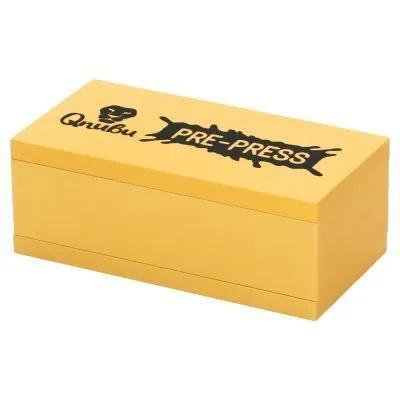
The Qnubu Aluminium Pre-Press Mould is a compact extraction accessory that shapes loose herb into uniform bars ready for rosin pressing. Measuring just 102 x 51 x 38mm, it fits in a drawer and weighs next to nothing — but it makes a genuine difference to your extraction yields. If you've been stuffing rosin bags by hand and wondering why your returns are inconsistent, this is the missing step.
A pre-press mould compacts your ground herb into a dense, evenly shaped bar before it goes into a rosin bag. That sounds simple — and it is — but the difference in extraction quality is noticeable. When herb sits loosely inside a rosin bag, pressure distributes unevenly. Some material gets fully pressed; some barely gets touched. The result: wasted plant material and lower yields.
With the Qnubu pre-press, you're creating a uniform puck that fills the rosin bag edge to edge. Pressure hits every part of the material at the same time. We've seen customers go from mediocre first presses to genuinely impressive returns just by adding this one step. It's not glamorous kit, but it's the kind of thing that separates a frustrating afternoon from a productive one.
The honest limitation? It's a manual tool. You're applying pressure with your hands or a clamp — there's no hydraulic assist here. For the occasional home presser, that's absolutely fine. If you're running batches daily, you'll want something beefier in your setup. But for most people reading this, the Qnubu pre-press is exactly the right level of kit.
| Spec | Value |
|---|---|
| Brand | Qnubu |
| Material | Aluminium |
| Dimensions | 102 x 51 x 38mm (approx. 4" x 2" x 1.5") |
| Compatible bag size | 5 x 10cm (2" x 4") rosin bags |
| Power required | None — manual operation |
| SKU | HS1009 |
| Extraction method | Solvent-free rosin pressing |
| Cleaning | Wipe down with isopropyl alcohol |
Complete your rosin setup: pair the Qnubu Aluminium Pre-Press Mould with Qnubu Extraction Paper for clean, non-stick pressing, and a set of rosin filter bags in your preferred micron size. The pre-press shapes your material; the bags and paper keep everything tidy under heat and pressure.
Pick it up and you'll notice it's lighter than you'd expect — aluminium keeps the weight down while staying rigid enough to handle serious hand pressure. The interior walls are smooth, so your compressed puck slides out without sticking or crumbling. There's a satisfying solidity to it; it doesn't flex or creak when you bear down. The tolerances between the lid and the body are tight enough that material doesn't squeeze out the sides, which is a common complaint with cheaper pre-press options made from plastic.
One thing worth mentioning: the 102 x 51mm footprint produces bars that slot directly into standard 2" x 4" rosin bags. That's not an accident — Qnubu designed the dimensions to match their own bag range. If you're using a different brand of bag, just double-check the internal dimensions before you press. Nothing worse than a bar that's 3mm too wide.
We get it — adding another step to the process feels unnecessary when you just want to get pressing. But here's what happens without a pre-press: you stuff loose herb into a rosin bag, apply heat and pressure, and the material shifts around inside the bag. Some spots get compressed to nothing while others barely make contact with the heated plates. Your yield drops, your rosin quality suffers, and you end up with a bag full of half-pressed material that's annoying to deal with.
A pre-pressed bar eliminates all of that. The material is already uniformly dense before it hits the press. Every square millimetre gets the same pressure and temperature. The active compounds extract evenly, and you're left with less waste. For something that costs under a tenner and takes 30 seconds to use, the improvement in consistency is hard to argue with.
The Qnubu mould is also the best option in this price range for anyone running a manual or hydraulic rosin press at home. Compared to improvised solutions — rolling pins, makeshift clamps, hand-squeezing into bags — it produces a cleaner, more consistent result every single time. We'd pick a purpose-built aluminium mould over a DIY workaround any day of the week.
Rosin extraction is a solvent-free technique that uses heat and pressure to squeeze essential oils out of plant material. No butane, no CO2, no chemicals — just mechanical force. The Qnubu pre-press mould prepares your herb for this process by shaping it into a compact bar.
Yes. Lining the mould with parchment paper prevents herb from sticking to the aluminium walls and makes it much easier to remove the compressed bar cleanly. Without it, you'll spend ages scraping material out of the corners.
The Qnubu Aluminium Pre-Press Mould produces bars sized to fit standard 2" x 4" (5 x 10cm) rosin bags. These are the most common size on the market. If your bags are a different dimension, measure the internal space before pressing.
The mould itself only shapes your herb — it doesn't extract anything. You'll still need a rosin press (manual or hydraulic) to apply heat and pressure for actual extraction. The mould is the prep step, not the main event.
Wipe the interior with isopropyl alcohol and a cloth after each use. If you've used parchment paper, there's usually very little residue. Avoid abrasive scrubbers — they'll scratch the aluminium surface and make future sticking more likely.
Aluminium is hard-wearing and won't deform under hand pressure. We've seen these moulds last years with regular use. The only thing that'll damage it is dropping it on a hard floor — aluminium dents. Keep it on the workbench and you're fine.
Medium grind works best. Too fine and the material can blow through rosin bag mesh during pressing. Too coarse and it won't compress evenly in the mould. Think coarse salt, not powder.
Last updated: April 2026