Climate control
by VDL
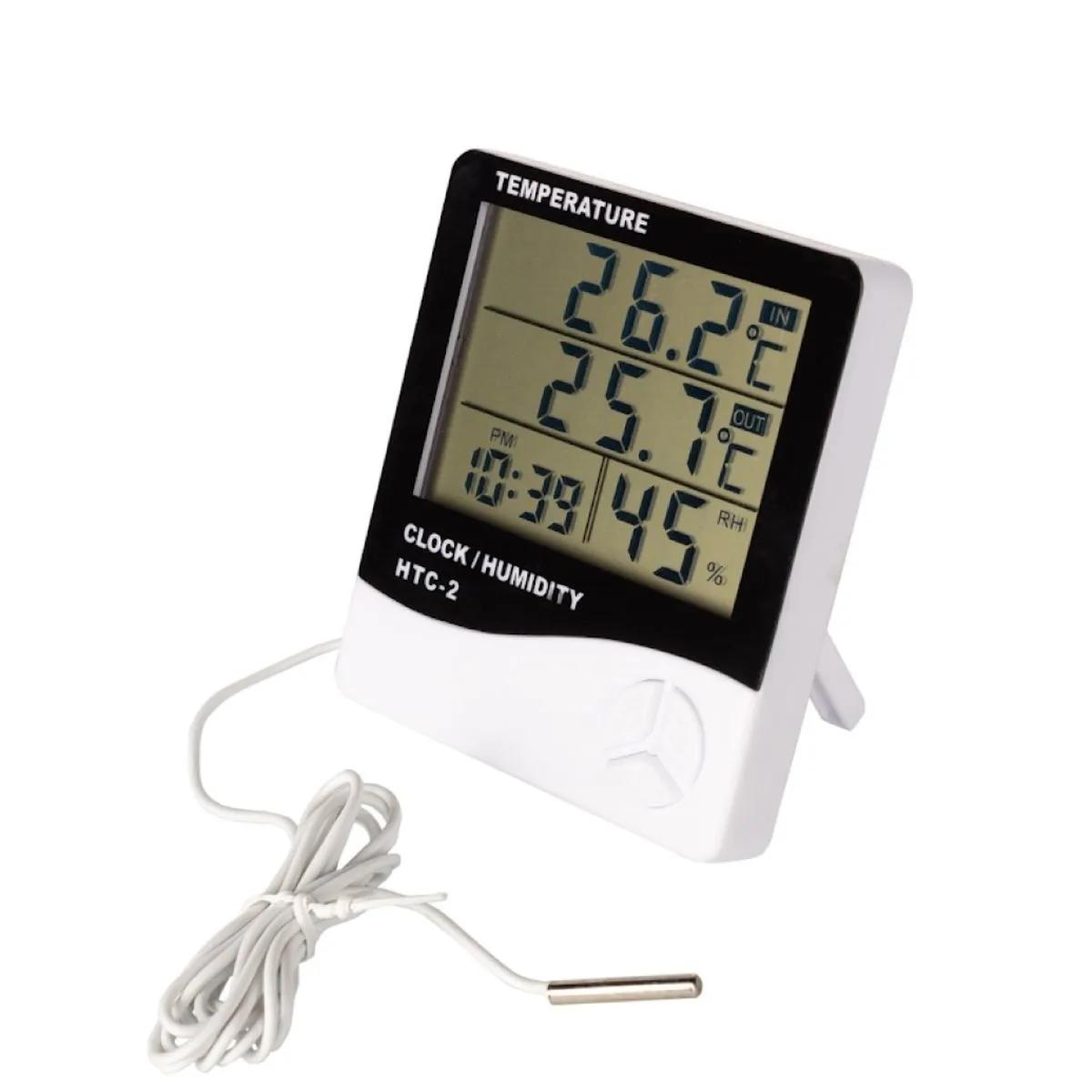
The VDL Large Screen Thermo-Hygrometer is a dual-function climate monitor that tracks both temperature and humidity inside your grow space. With a readable LCD display, min/max memory, and a measurement range covering -10°C to 50°C and 25% to 98% relative humidity, it gives you the numbers you need to keep your indoor garden dialled in — without squinting at a tiny screen from across the tent.
A thermo-hygrometer is the cheapest piece of kit that can save your entire crop. Temperature swings and humidity spikes are invisible — you won't notice them until your leaves are curling, your buds are developing mould, or your seedlings are wilting. By then, the damage is done.
We've seen growers spend serious money on lights, fans, and nutrients, then skip the one tool that tells them whether any of it is actually working. Your extraction fan might be pulling too hard, dropping humidity below 30%. Your tent might be holding heat at 38°C after lights-on. Without a monitor, you're guessing. And guessing in a sealed grow tent is how you lose a harvest to bud rot or heat stress in a single weekend away.
The VDL thermo-hygrometer sits inside your canopy and logs the highs and lows while you're not watching. That min/max memory function is the bit most people overlook — it tells you what happened at 3 AM when the temperature dropped, or at midday when humidity spiked. You check it once a day, spot the pattern, and adjust your ventilation before anything goes wrong. For the price of a couple of packets of seeds, it's the most sensible purchase in any grow setup.
The VDL thermo-hygrometer measures 105mm across the display face, large enough to read from a metre or two away. Here's the full spec breakdown:
| Specification | Detail |
|---|---|
| Brand | VDL |
| SKU | GS0063 |
| Temperature range | -10°C to 50°C |
| Humidity range | 25% to 98% RH |
| Display | Large LCD screen |
| Memory function | Min/max recording for temperature and humidity |
| Power source | AAA batteries (not included) |
| Mounting options | Integrated stand + wall-mount hole |
| Best placement | Canopy level, away from direct light or fan airflow |
The VDL thermo-hygrometer does one job and does it well, but it's worth knowing what it doesn't offer. There's no Bluetooth, no Wi-Fi, no app connectivity. You can't check readings from your phone while you're at work — you need to physically look at the display. If remote monitoring matters to you, you're looking at a smart sensor like the SensorPush, which costs significantly more.
The humidity floor of 25% RH also means it won't give you readings in extremely dry environments, though in a grow tent with plants transpiring, you'll rarely dip that low. And the batteries aren't included — grab a pair of AAAs before you set up. The one genuine weak spot we'd flag: the min/max memory doesn't timestamp readings. You'll know your tent hit 42°C at some point, but not exactly when. For most home growers, that's fine — you'll figure out the pattern quickly enough by checking morning and evening.
We get asked about placement constantly. The short answer: put it where your plants are, not where it's convenient for you. The top of your grow tent can be 5–8°C hotter than the canopy, and the floor can sit 3–5°C cooler. Neither reading tells you what your plants are actually experiencing. Clip it to a plant stake or rest it on top of a pot at the height of your uppermost leaves. That's your real microclimate.
If you're running a larger tent — 120x120 or bigger — consider picking up two units. One at canopy level on the left, one on the right. You'd be surprised how much temperature and humidity can vary across a single tent, especially if your extraction fan pulls from one corner. We've measured 6°C differences side to side in a 150x150 tent with poor air circulation. Two thermo-hygrometers at this price point cost less than a single dead plant.
Complete your climate setup: pair the VDL thermo-hygrometer with a clip-on oscillating fan for air circulation and a carbon filter kit for odour control. If you're building a new grow tent setup, the VDL Dark Box tents use the same brand ecosystem and the wall-mount hole fits neatly on their internal pole structure.
The VDL is a straightforward analogue-style digital monitor. No app, no cloud, no subscription. Smart sensors like the SensorPush or Govee H5075 offer Bluetooth or Wi-Fi connectivity, letting you check readings remotely and log data over weeks. They're genuinely useful if you travel or want to set alerts for temperature spikes.
| Feature | VDL Large Screen | Smart Sensor (e.g. SensorPush) |
|---|---|---|
| Temperature range | -10°C to 50°C | -40°C to 60°C (typical) |
| Humidity range | 25%–98% RH | 0%–100% RH |
| Remote monitoring | No | Yes (Bluetooth/Wi-Fi) |
| Data logging | Min/max only | Continuous (app-based) |
| Display | Large LCD on unit | Phone app only (no on-device screen) |
| Price bracket | Budget | 3–5x higher |
| Battery life | Months (AAA) | 1–2 years (coin cell) |
Our take: if you check your tent daily anyway — and most home growers do — the VDL gives you everything you need at a fraction of the cost. The large LCD screen is actually an advantage over smart sensors that have no display at all; you glance at it as you open the tent, no phone required. Save the smart sensor budget for better lights or genetics.
A thermo-hygrometer is a device that measures both temperature and relative humidity simultaneously. The VDL unit combines both sensors behind a single LCD display, so you monitor your grow tent's two most critical climate variables without needing separate instruments.
It's accurate enough for grow tent use, typically within +/- 1°C for temperature and +/- 5% for humidity. Lab-grade precision isn't necessary for indoor growing — what matters is spotting trends and catching spikes, which the min/max memory handles well.
No. It runs on standard AAA batteries, which you'll need to supply separately. A fresh pair typically lasts several months of continuous use.
At canopy level, shielded from direct light and away from fan airflow. This gives you the temperature and humidity your plants actually experience, rather than a skewed reading from the tent floor or ceiling.
Yes. The -10°C to 50°C range and 25%–98% humidity range make it suitable for greenhouses, drying rooms, storage areas, or any indoor space where climate monitoring matters. The stand and wall-mount options work anywhere.
Press the reset button on the unit. This clears the stored minimum and maximum values and starts logging fresh data from that moment. We'd recommend resetting daily or after making ventilation adjustments, so you can see the effect of your changes.
For tents 100x100cm or smaller, one unit at canopy level is sufficient. For larger tents, two units placed on opposite sides will reveal temperature and humidity gradients you'd otherwise miss — we've measured differences of 5–8°C across a single 150x150 tent.
Last updated: April 2026