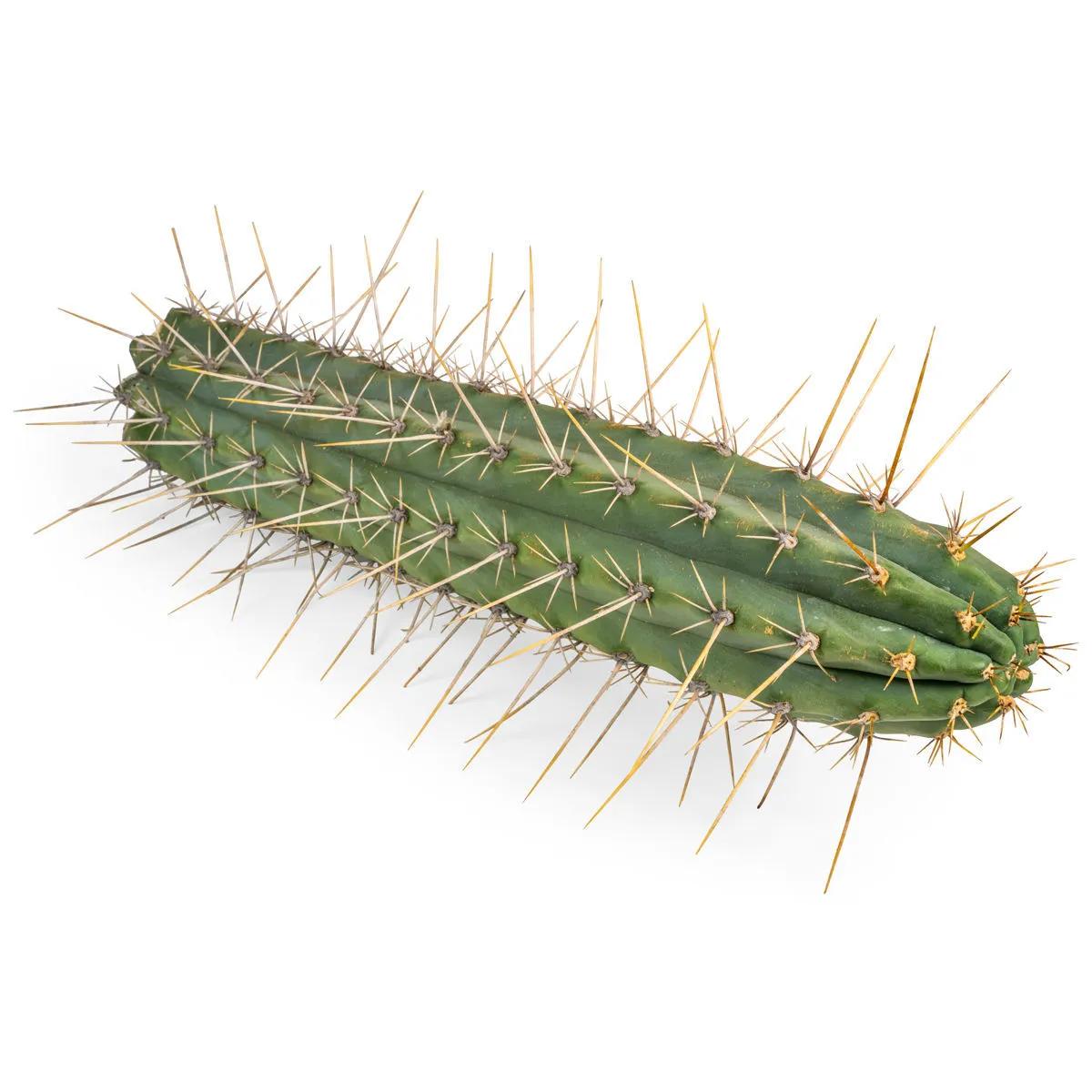
The Peruvian Torch XL (Echinopsis peruviana) is a live mescaline cactus cutting from the Peruvian Andes that gives collectors a fast-growing columnar plant to root, pot up, and keep for decades. This XL listing ships as a 50 cm fresh cutting — long enough to make a statement in your collection from day one, and long enough to chop into smaller sections later if you want to propagate.
We've been shipping live cacti out of Amsterdam since 1999, and Peruvian torch is one of the cuttings that genuinely rewards patience. Sister species to the better-known San Pedro, but with darker green skin, longer spines from a young age, and (in our experience on the shelf) a slightly slower, sturdier growth habit.
What makes Peruvian Torch different from San Pedro
Peruvian torch (Echinopsis peruviana) is a columnar Andean cactus that looks similar to San Pedro at a glance but is a separate species with its own growth traits. The plant grows up to 5 m tall in habitat with 15–20 cm-wide ribbed branches, typically forming 6–8 ribs along each column.
Three things to look for if you want to tell it apart from its cousin on the windowsill:
- Spines. Long, dark-coloured, and present from a young age. San Pedro spines are short to nearly absent.
- Colour. Peruvian torch holds a darker, almost blue-green shade. Bolivian torch and San Pedro lean lighter green.
- Flowers. Large white blooms open at night in summer and often stay open the following day — handy if you're not nocturnal.
According to research on Andean ethnobotany (Bussmann & Sharon, 2006, in Traditional medicinal plant use in Northern Peru), E. peruviana and T. pachanoi were both central to "cimora" preparations used by curanderos in northern Peru — proof that the two species have walked the same ceremonial path for centuries even if Western books mostly remember San Pedro.
The 50 cm XL cutting — why the size matters
50 CM (SKU SM0734) — one fresh cutting, approximately 50 cm long, 6–8 ribs, dark spines, calloused at the base ready for rooting. This is the XL size: roughly double what most starter cuttings ship at, which means more stored energy, a faster establish-in-pot, and the option to top it and propagate further down the line.
An honest limitation: live cacti are agricultural goods. Cuttings can arrive with minor scuffs, slightly bent tips, or a bit of road-rash from transit. None of that affects rooting or long-term growth — the plant is built to survive worse in habitat at 2,000–3,000 m altitude. What matters is that the base is clean, the flesh is firm, and the cutting is callused.
How to grow Peruvian Torch at home
Plant your cutting as soon as it arrives, in cactus-specific soil, in a pot with plenty of drainage holes. Standard potting compost holds too much water and will rot the base before roots have a chance to form.
- Unbox and inspect. The base should be dry and calloused. If it's not, leave the cutting on a shelf for 3–5 days in a dry, shaded spot until it is.
- Use cactus or succulent soil — sandy, gritty, fast-draining. Mix in extra perlite or pumice if it feels too dense.
- Pot the cutting upright, burying roughly 3–5 cm of the base. A deeper pot is better than a wider one.
- For the first 3–4 weeks: no water, shade only. This is the rooting phase. Watering early is the single most common way growers kill a fresh cutting.
- After 3–4 weeks, move it to a bright, sunny spot. Water sparingly — soak fully, then let the soil dry out completely before the next watering.
- In winter, drop watering to almost nothing. Peruvian torch goes semi-dormant below ~10°C.
Specifications
| Species | Echinopsis peruviana (syn. Trichocereus peruvianus) |
| Common name | Peruvian torch |
| Origin | Peruvian Andes, 2,000–3,000 m altitude |
| Cutting length | 50 cm |
| Ribs | 6–8 |
| Branch width | 15–20 cm |
| Max height in habitat | up to 5 m |
| Spines | Long, dark, present from young age |
| Flowers | Large, white, night-opening, summer |
| Soil | Cactus / succulent mix only |
| First watering | After 3–4 weeks of rooting |
| SKU | SM0734 |
Peruvian Torch vs Bolivian Torch vs San Pedro — quick comparison
| Trait | Peruvian Torch | Bolivian Torch | San Pedro |
|---|---|---|---|
| Species | E. peruviana | E. lageniformis | E. pachanoi |
| Colour | Darker, blue-green | Lighter green | Light to mid-green |
| Spines | Long, dark, young | Long, honey-coloured | Short to nearly absent |
| Ribs | 6–8 | 4–8 | 6–8 |
| Growth speed | Moderate | Fast | Fast |
If you already own a San Pedro and want something visibly different on the shelf, Peruvian torch is the obvious next step — same family, very different silhouette.
Mescaline chemistry — the scientific context
This is a botanical specimen, not a supplement, so we won't write a dosing guide. The scientific context, however, is well documented. According to Carod-Artal (2015) in Pharmacokinetic and Pharmacodynamic Aspects of Peyote and Mescaline, Echinopsis peruviana belongs to the small group of mescaline-containing columnar cacti alongside peyote (Lophophora williamsii) and San Pedro (Trichocereus pachanoi). According to Wolfgang et al. (2024) in Drug–drug interactions involving classic psychedelics, mescaline (3,4,5-trimethoxyphenethylamine) is the principal phenethylamine alkaloid across these species, with variable concentrations depending on age, growing conditions, and the specific clone.
Alkaloid content varies widely between individual plants and even between branches on the same plant — one of the reasons collectors and ethnobotanists treat these cacti as long-term garden subjects rather than quick projects.
From our counter
Two things we say to almost every customer who walks out with a torch cutting:
One: don't water it. Seriously. The number-one reason cuttings fail in their first month isn't pests or cold — it's enthusiastic watering. The cutting still has all the water it needs stored inside. Let it root first.
Two: these plants are slow on the human timescale and fast on the cactus timescale. A healthy E. peruviana can push 20–30 cm of new growth in a good summer once it's established. That's faster than most succulents — but it still means your 50 cm cutting becomes a 1 m specimen over a couple of years, not a couple of months. Plan the pot accordingly.
Complete your setup: pair this cutting with a bag of proper cactus and succulent soil and a terracotta pot with drainage. If you're starting a small mescaline-cactus collection, the Bolivian Torch XL and San Pedro cuttings make a natural three-species line-up — same family, distinct silhouettes, all happy in the same sunny windowsill.
Adult-use product
This product is sold to adults aged 18 and over as an ornamental, botanical specimen for collectors and growers.
Frequently Asked Questions
How long does it take a Peruvian Torch cutting to root?
Typically 3–4 weeks in dry, shaded conditions before you see new root activity. Don't water during this period — the cutting roots better dry. Once roots form and you've started light watering, expect visible new growth from the tip within another 4–8 weeks in warm weather.
Is Peruvian Torch the same as San Pedro?
No — they're separate species in the same genus. Echinopsis peruviana has darker green skin, longer dark spines from a young age, and tends to grow slightly slower than E. pachanoi (San Pedro). Both have been used in Peruvian ethnobotanical traditions, often interchangeably under the name "cimora".
Can I grow Peruvian Torch outdoors in Europe?
In summer, yes — full sun on a balcony or in the garden is ideal once the plant is rooted. Bring it indoors before temperatures drop below 5°C. Peruvian torch tolerates cool nights but not frost, and prolonged wet cold will rot the base quickly.
What soil should I use?
Cactus or succulent soil only — never standard potting compost. The mix should drain water within seconds, not minutes. Add extra perlite, pumice, or coarse sand if your bag of cactus soil still feels heavy or peaty.
How big will the 50 cm cutting eventually get?
In a pot indoors, expect 1–2 m over several years with good light. In habitat the species reaches up to 5 m. You can also top the plant to encourage branching, or chop sections for further propagation once it's well established.
The cutting arrived with a few marks — is that a problem?
Almost never. Live cacti often show minor scuffs or slightly soft tips after transit; this doesn't affect rooting. As long as the base is firm and calloused, plant it as described and the plant will recover within weeks. Contact us if anything looks genuinely damaged.
Last updated: April 2026