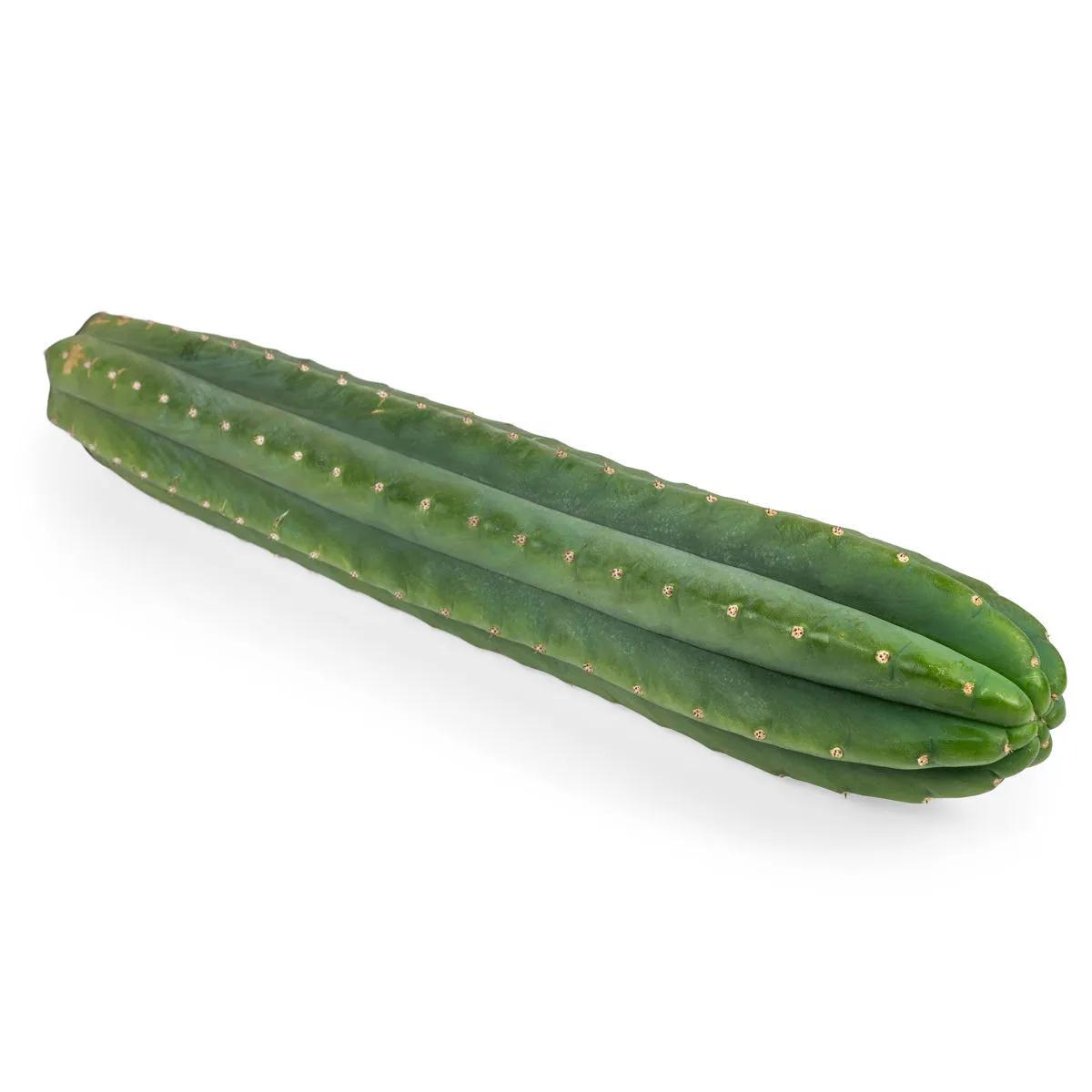
Mescaline cacti
by Unbranded
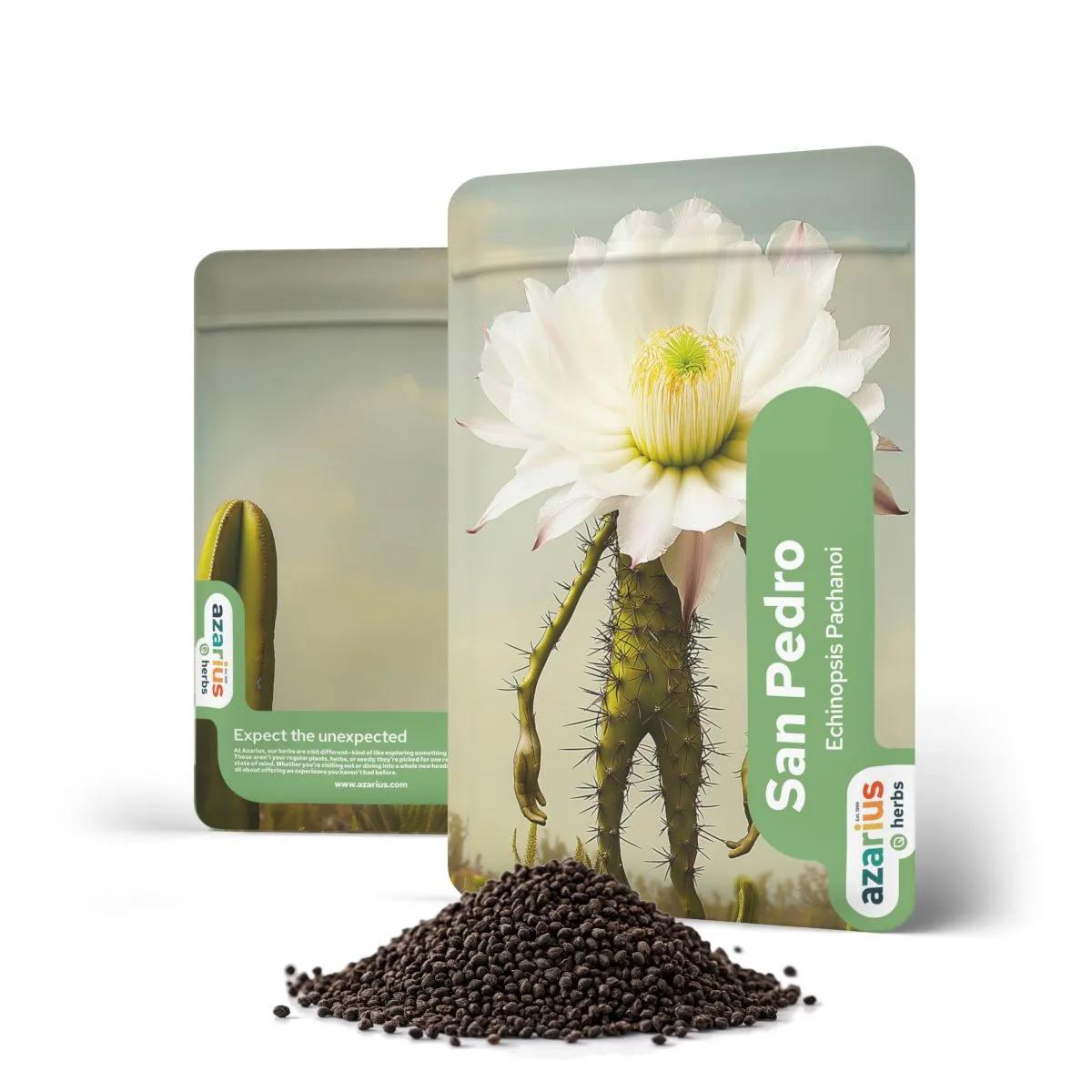
The San Pedro XL (Echinopsis pachanoi) is a live cactus cutting from one of the oldest ceremonial plants in the Americas — a thick, columnar cactus native to the high plains of the Andes. This XL cutting measures 50 cm long and 5–9 cm wide, giving you a substantial head start over seeds or smaller cuttings. Plant it in cactus-specific soil, give it patience, and you'll have a striking specimen that can eventually reach up to 6 metres tall with multiple branching columns. Archaeological evidence suggests humans have used San Pedro for over 2,000 years, making it one of the most historically significant cacti you can grow.
This is the XL format: a single cutting measuring approximately 50 cm in length and 5–9 cm in diameter. That's a proper chunk of cactus — thick enough to have developed 4–8 ribs with white areoles and few spines. Compared to standard San Pedro cuttings (which tend to run thinner and shorter), the XL gives you more stored energy for rooting and faster establishment. If you want to start from scratch, San Pedro seeds are also available, but expect a much longer wait before you've got anything resembling a cactus. For most growers, this XL cutting is the best San Pedro option for getting a visible, healthy plant within the first growing season.
| Spec | Detail |
|---|---|
| Species | Echinopsis pachanoi (syn. Trichocereus pachanoi) |
| Common name | San Pedro cactus |
| Cutting length | Approximately 50 cm |
| Cutting diameter | 5–9 cm |
| Ribs | 4–8 per stem |
| Mature height | Up to 6 metres (multi-branching) |
| Mature stem width | Up to 15 cm |
| Flowers | Large, white, trumpet-shaped, nocturnal, fragrant |
| Native habitat | Andes — primarily Ecuador and Peru, extending to northern Chile and Argentina |
| Soil type | Cactus-specific potting mix with drainage |
| SKU | SM0733 |
Growing San Pedro alongside other mescaline cacti? The Bolivian Torch (Echinopsis lageniformis) and Peruvian Torch (Echinopsis peruviana) make excellent companion plants with slightly different growth habits and rib structures. Pair your San Pedro XL with a bag of cactus-specific potting soil and a terracotta pot with drainage holes — the two things you'll need on day one.
We've been shipping San Pedro cuttings for over two decades, and the XL format outsells everything else for good reason. A 50 cm cutting with a 5–9 cm diameter has enough stored moisture and nutrients to root reliably without babysitting. Smaller cuttings can dry out or rot before they establish, especially if you're new to cacti. The XL gives you a margin for error that's genuinely useful.
San Pedro is also one of the most forgiving columnar cacti you can grow. It tolerates cooler temperatures better than most desert species — unsurprising given it evolved at 2,000–3,000 metres elevation in the Andes. In a European climate, it does well outdoors in summer and indoors near a bright window through winter. You won't need a greenhouse unless you're chasing maximum growth speed. The one honest limitation: San Pedro is not fast. Expect roughly 20–30 cm of new growth per year under good conditions. This is a plant you measure in years, not weeks.
Then there's the visual payoff. Mature San Pedro develops multiple columnar branches, each with clean ribs and subtle white areoles. In summer, established plants produce those extraordinary white trumpet flowers — nocturnal, heavily scented, and genuinely impressive at up to 22 cm across. You'll smell them before you see them. According to traditional medicinal plant research documented in a study on Northern Peruvian ethnobotany, San Pedro has been among the first plants used by indigenous Andean communities for ceremonial purposes (Bussmann & Sharon, 2006). Growing one connects you to over 2,000 years of human-plant relationship.
San Pedro is often confused with its close relatives. Here's how to tell them apart and pick the right one for your collection.
| Feature | San Pedro (E. pachanoi) | Bolivian Torch (E. lageniformis) | Peruvian Torch (E. peruviana) |
|---|---|---|---|
| Ribs | 4–8 (commonly 6–7) | 4–8 (commonly 4–5) | 6–8 |
| Spines | Few, short | Longer, more prominent | Variable, often longer than San Pedro |
| Stem colour | Blue-green to dark green | Blue-green, often glaucous | Blue-green, sometimes grey-green |
| Growth speed | Moderate — 20–30 cm/year | Moderate to fast | Slower than San Pedro |
| Cold tolerance | Down to ~5°C | Similar | Slightly less cold-tolerant |
| Native range | Ecuador, Peru | Bolivia | Peru (western slopes) |
| Flowers | White, nocturnal, fragrant | White, nocturnal | White, nocturnal, very large |
If you're starting your first mescaline cactus collection, San Pedro is the most forgiving of the three. Bolivian Torch grows slightly faster and has a dramatic look with its longer spines, but San Pedro's shorter spines make it easier to handle and repot. Peruvian Torch is the collector's choice — slower, sometimes trickier, but beautiful. We'd say start with the San Pedro XL and add the others once you've got your watering rhythm dialled in.
The number one question we get about San Pedro cuttings is "is it dead?" — usually about two weeks after planting. The cutting looks unchanged, maybe slightly wrinkled, and nothing seems to be happening. That's normal. Below the soil line, roots are forming. Above it, the cactus is conserving energy. We've seen cuttings sit apparently dormant for 6 weeks before suddenly pushing out new growth. If the skin is still firm and green (not mushy or black), it's alive. Leave it alone.
The second most common issue: overwatering. We get it — you want to nurture the thing. But San Pedro evolved in rocky Andean soil where rain is seasonal and drainage is immediate. A soggy pot is the fastest way to kill it. When in doubt, don't water. A slightly thirsty San Pedro will recover in hours after a good soak. A rotting one won't recover at all. You'll notice rot as a soft, dark, sometimes foul-smelling area at the base. If you catch it early, you can cut above the rot, let the cutting re-callous for a week, and replant. We've rescued plenty this way.
One more thing: the texture. When you hold a healthy San Pedro XL cutting, it has a satisfying weight to it — dense, slightly waxy on the surface, with a faint green-herbal scent at the cut end. The ribs should feel firm, not spongy. The areoles (those small white fuzzy spots along the ribs) may have tiny spines or just nubs. That's all normal variation within Echinopsis pachanoi.
San Pedro (Echinopsis pachanoi) has one of the longest documented histories of human use of any plant in the Americas. Archaeological evidence from the Andes dates its ceremonial use to over 2,000 years ago, placing it among the earliest plants adopted by indigenous Andean peoples. According to research on pharmacokinetic and pharmacodynamic aspects, mescaline — the primary psychoactive alkaloid — occurs naturally in several Cactaceae species, including San Pedro, peyote (Lophophora williamsii), and Bolivian Torch (Dinis-Oliveira, 2019).
According to a clinical review published in Experimental and Clinical Psychopharmacology, mescaline (3,4,5-trimethoxy-beta-phenethylamine) is a naturally occurring compound found in several cacti, and research into its pharmacological properties has been ongoing since the early 20th century (Schenberg, 2018). More recent pharmacokinetic research has further characterised mescaline's properties across different cactus species (Holze et al., 2025). The epidemiology of mescaline use has also been studied, with researchers noting that the main adverse effects are psychological in nature, including anxiety and disorganised behaviour (Agin-Liebes et al., 2022).
San Pedro's common name — "Saint Peter" — references the Christian saint who holds the keys to heaven, a name given during Spanish colonial times that speaks to the plant's perceived power. In Quechua, it's known as "wachuma" or "huachuma," and its ceremonial use predates European contact by centuries.
San Pedro contains mescaline, a psychoactive phenethylamine alkaloid. According to epidemiological research, the main adverse effects associated with mescaline are psychological, including anxiety, panic, and disorganised behaviour (Agin-Liebes et al., 2022). Temporary physical side effects commonly reported include nausea, vomiting, and diarrhoea. According to an ethnobotanical study on psychoactive plant use, researchers noted that risks were mainly mentioned in relation to predispositions to mental health issues, particularly schizophrenia, as well as the risk of challenging psychological experiences (Zamberlan et al., 2021).
The patient's response to plant compounds is influenced by age, genetic makeup, medical history, and potential drug interactions. Dehydration is a practical concern during prolonged experiences. Set and setting matter enormously — a calm, familiar environment with a trusted sitter makes a measurable difference. If you're on medication — particularly SSRIs, MAOIs, lithium, or other psychiatric medications — research potential interactions thoroughly before any use.
Typically 3–6 weeks. Don't water during this period. You'll know roots have formed when you see slight new growth at the tip — a lighter green colour or gentle swelling. Some cuttings take longer, especially in cooler temperatures. If the skin stays firm and green, it's working.
Yes, during the warmer months. San Pedro tolerates temperatures down to about 5°C but cannot survive frost. Most European growers keep them outdoors from May to September and bring them inside for winter. A south-facing spot with good drainage works well.
Both are Echinopsis species containing mescaline, but they're distinct. San Pedro (E. pachanoi) typically has fewer, shorter spines and grows slightly faster. Peruvian Torch (E. peruviana) tends to have longer spines, a slightly different blue-green colouration, and a slower growth rate. San Pedro is generally the easier species for beginners.
Slight wrinkling in the first few weeks is normal — the cutting is using its stored moisture while developing roots. Don't water it. If the wrinkling is severe and the skin feels soft or mushy, check for rot at the base. Firm but wrinkled means patience; soft and dark means intervention.
In summer, water thoroughly when the soil is completely dry — roughly every 7–10 days depending on temperature and pot size. In winter, reduce to once a month or less. San Pedro rots far more easily from overwatering than it suffers from drought. When in doubt, wait another few days.
Eventually, yes — but not for several years. San Pedro needs to reach a certain maturity before producing its large white nocturnal flowers. Expect to wait 4–6 years minimum from a cutting, sometimes longer. The flowers are spectacular and heavily fragrant, opening at night and closing by mid-morning.
Absolutely. Once your San Pedro has grown tall enough, you can take cuttings from the top or from side branches. Let the cut end callous for 7–10 days in a dry, shaded spot before planting. This is how San Pedro has been propagated traditionally for thousands of years.
Terracotta with drainage holes. The porous material allows excess moisture to evaporate through the walls, reducing rot risk. Plastic pots work but hold moisture longer, so you'll need to water less frequently. Whatever you choose, drainage holes are non-negotiable.
Last updated: April 2026
Medical disclaimer. This content is for informational purposes only and does not constitute medical advice. Consult a qualified healthcare provider before use of any substance.