Cultivation supplies
by Microppose
We'll only email you about this product — no marketing.
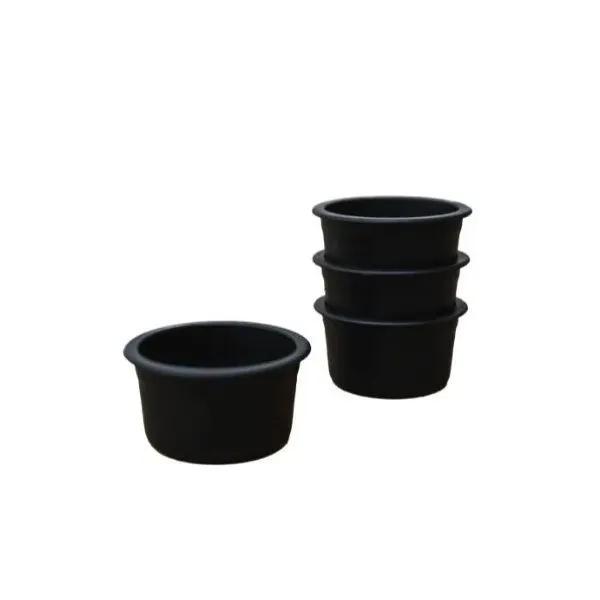
Monotub hole plugs are simple plastic stoppers that seal the air-exchange holes on your Microppose Monotub during the colonisation phase. They lock in moisture, block airborne contaminants, and give your mycelium the still, humid environment it needs to take over the substrate before you ever think about fruiting. Available in packs of 4 or 6 to match your tub setup.
The Microppose Monotub has 6 holes — 4 along the long sides and 1 on each short side. If you're running a single tub with the standard hole layout, the 6-pack covers every opening. Got a smaller custom setup or only need to plug the top row? The 4-pack does the job. Running multiple tubs? Grab a 6-pack per tub so you're not shuffling plugs between grows.
| Spec | Value |
|---|---|
| Brand | Microppose |
| Material | Plastic |
| Compatibility | Microppose Monotub |
| Pack of 6 | SKU: SH0200 |
| Pack of 4 | SKU: SH0192 |
| Purpose | Seal air-exchange holes during colonisation |
| Reusable | Yes — clean between grows |
Once your substrate is fully colonised and you're ready to trigger fruiting, swap these plugs out for Microppose Adherable Monotub Filters. The filters allow fresh air exchange while still keeping contaminants out and humidity stable — exactly what your pins need to develop into full-sized mushrooms. If you haven't picked up the Microppose Monotub itself yet, that's your starting point.
After you inoculate your substrate, the mycelium needs a very specific environment to colonise properly: high humidity, minimal air exchange, and zero contamination. Open holes on your monotub work against all three of those conditions. Fresh air flowing through the chamber drops humidity levels, dries out the surface of your substrate, and — here's the real problem — carries bacterial spores and competing fungi straight into your grow.
We've seen growers lose entire tubs to a single open hole during colonisation. Trichoderma (that nasty green mould) doesn't need much of an invitation. One draft of unfiltered air on day 3 and by day 10 you've got green patches spreading across what should have been a solid white mat of mycelium. These plugs cost almost nothing compared to the substrate, spawn, and time you've already invested. Think of them as cheap insurance.
The general rule with monotub holes is one every 20 cm along the long sides and one on each short side. That's a lot of potential entry points for contaminants. Plugging every single one during colonisation creates a sealed, stable microclimate inside your tub. Your substrate stays saturated, your CO2 levels stay elevated (which mycelium actually prefers during this phase), and nothing unwanted gets in.
Let's be straight — these are plastic plugs. They're not a technological marvel. They don't do anything clever. What they do is fit the Microppose Monotub holes properly, which is exactly why they exist. We've seen growers try to bodge this step with cotton wool, micropore tape, or wadded-up polyfill, and the results are inconsistent at best. Tape peels in humid conditions. Polyfill wicks moisture out of the tub. Cotton wool compresses and leaves gaps. A purpose-made plug that seats flush into the hole just works better.
The one thing to watch out for: these are specifically sized for the Microppose Monotub. If you've drilled your own holes in a random tub from a hardware shop, there's no guarantee they'll fit. Measure your holes before ordering. The Microppose tub holes are standardised, so if you're using their system, you're sorted.
The other honest note — plugs are only half the story. They handle colonisation beautifully, but the moment your mycelium is ready to fruit, you need to switch to filtered air exchange. Leaving the plugs in during fruiting starves your mushrooms of oxygen and traps excess CO2, which leads to leggy, elongated stems and tiny caps. The plugs come out, the filters go in. That's the workflow.
When you seal all the holes on your monotub, you're creating a near-closed system. The substrate releases moisture through evaporation, which condenses on the tub walls and lid, then drips back down — a self-sustaining humidity cycle. CO2 levels climb as the mycelium metabolises nutrients, and that elevated CO2 actually encourages faster, denser colonisation. Mycelium thrives in still, CO2-rich air during this phase.
Contaminants, meanwhile, need oxygen and airflow to establish themselves effectively. By cutting off fresh air, you're giving your mushroom mycelium a head start over competing organisms. Once the substrate is fully colonised — that solid white mat covering every surface — the mycelium itself acts as a biological barrier against contamination. That's why the colonisation phase is so critical to get right, and why these plugs earn their place in your kit.
| Colonisation Phase (Plugs In) | Fruiting Phase (Filters In) |
|---|---|
| Minimal air exchange | Filtered fresh air exchange |
| High CO2 (mycelium prefers this) | Lower CO2, higher O2 (mushrooms need this) |
| Maximum humidity retention | Controlled humidity with some evaporation |
| Zero airborne contaminant entry | Filtered air — contaminants still blocked |
| Dark, undisturbed | Light exposure to trigger pinning |
| Typically 10–14 days for full colonisation | First flush typically 7–14 days after fruiting conditions introduced |
A monotub is a large plastic storage container modified with holes for air exchange, used as a fruiting chamber for mushroom cultivation. The Microppose Monotub comes pre-drilled with standardised holes, saving you the DIY step. You fill it with colonised substrate, manage airflow with plugs and filters, and harvest directly from the tub.
You can, but tape tends to peel off in the humid conditions inside a monotub. It's a common workaround, not an ideal solution. These plugs seat flush into the Microppose Monotub holes and create a proper seal without adhesive that degrades over time. For a few quid, they save you the hassle of reapplying tape mid-colonisation.
Remove them once your substrate is fully colonised — you'll see a solid white mat of mycelium covering the entire surface with no bare patches visible. This typically takes 10–14 days depending on your species and conditions. Replace the plugs with Microppose Adherable Monotub Filters to introduce filtered air exchange for the fruiting phase.
The standard Microppose Monotub has 6 air-exchange holes. If you want to seal every hole — which we'd recommend — grab the 6-pack. The 4-pack works if you're only plugging the side holes and leaving the short ends covered another way, or if you're running a modified setup with fewer holes.
Your mushrooms will suffocate. Without fresh air exchange, CO2 builds up and oxygen drops. The result is elongated, spindly stems with undersized caps — if you get any fruiting at all. Mushrooms need oxygen to develop properly. Swap the plugs for filters as soon as colonisation is complete.
Yes. Wipe them down with 70% isopropyl alcohol between grows and let them dry before reinserting. They're solid plastic, so they don't degrade. One set should last you through many cultivation cycles.
Not necessarily. These are sized specifically for the Microppose Monotub's pre-drilled holes. If you've made your own tub, your hole diameter might differ. Measure before ordering — or better yet, pick up the Microppose Monotub and save yourself the guesswork.
Last updated: April 2026
Medical disclaimer. This content is for informational purposes only and does not constitute medical advice. Consult a qualified healthcare provider before use of any substance.