Cultivation supplies
by North Spore
We'll only email you about this product — no marketing.
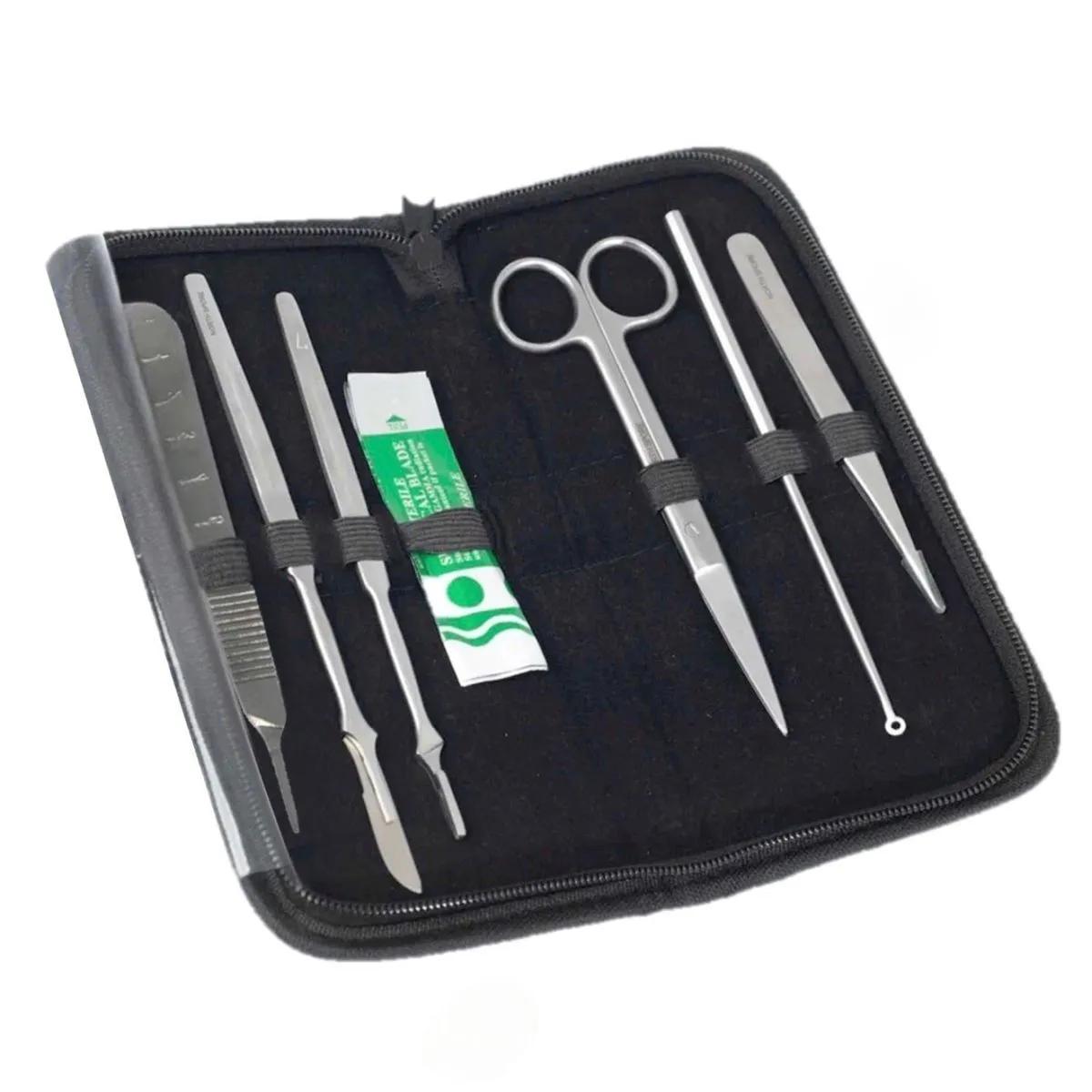
The Mycology Lab Tool Set is a 7-piece stainless steel kit that gives you everything you need to clone, culture, and harvest mushrooms at home. Made by North Spore — one of the more respected names in the mycology supplies space — this set covers the full workflow from agar work to fruiting body harvest, all packed in a single carrying case. No more rummaging through kitchen drawers for a halfway-decent knife.
Every piece in this kit serves a specific purpose in the mushroom cultivation process. Here's the full breakdown of what you get when you open the carrying case:
| Tool | Best Used For |
|---|---|
| Stainless steel needle-nose tweezers (high-precision) | Handling delicate mushroom tissue, transferring samples |
| Stainless steel straight-blade dissection scissors | Cutting filters, micropore tape, cultivation materials |
| Stainless steel one-piece scalpel (integrated blade) | Slicing and harvesting mature fruiting bodies |
| Stainless steel inoculation loop | Handling mycelium, transferring inoculum to agar plates |
| Stainless steel grooved scalpel handle #3 (with engraved metric ruler) | Precise cuts, tissue cloning, measuring small samples |
| Stainless steel flat scalpel handle #7 | Larger cuts, general-purpose work |
| 4x sterile #10 scalpel blades | Replaceable blades for scalpel handles #3 and #7 |
| Carrying case | Storage and transport |
That's 6 tools, 4 spare blades, and a case — 11 pieces total when you count everything. The two scalpel handles (#3 and #7) accept the included #10 blades, so you've got replacements ready to go without ordering separately.
| Spec | Value |
|---|---|
| Brand | North Spore |
| Material | Surgical-grade stainless steel |
| Total tools | 6 instruments + 4 sterile blades |
| Scalpel blade type | #10 (sterile, individually wrapped) |
| Compatible handles | #3 (grooved, with metric ruler) and #7 (flat) |
| Carrying case | Included |
| SKU | SH0176 |
Complete your setup: pair this tool set with a mushroom grow kit to put these instruments to work straight away. Spore syringes and agar plates are also worth grabbing if you're planning to clone or culture — having the tools without the medium is like owning a pen without paper.
We've watched people try to do agar transfers with kitchen knives and eyebrow tweezers. It works — until it doesn't. The issue isn't that a butter knife can't cut mushroom tissue. It can. The issue is contamination. Every tool you bring into your workspace is a potential vector for mould, bacteria, and wild yeast. Kitchen utensils carry residues, micro-scratches, and surface textures that harbour contaminants even after a wipe-down.
Surgical-grade stainless steel is the standard in mycology for a reason: it flame-sterilises cleanly, doesn't corrode from repeated alcohol baths, and the polished surface doesn't trap spores in microscopic pits. The inoculation loop in this set, for example, is designed to be passed through a flame until it glows red, then cooled — try that with a bent paperclip and you'll see the difference in your contamination rate within a week.
The honest limitation here: 4 spare blades won't last forever. If you're doing regular cloning work — say, 10-15 transfers per week — you'll burn through those #10 blades in a month or two. Stock up on replacements early. The handles themselves, though, will outlast you. Stainless steel doesn't fatigue the way carbon steel does, and the #3 handle's engraved metric ruler is genuinely useful for measuring tissue samples without reaching for a separate ruler and introducing another contamination risk.
We've been selling grow supplies since 1999, and the single most common reason people lose a batch of mushrooms isn't bad genetics or dodgy substrate — it's contamination from sloppy technique. A proper tool set doesn't guarantee sterile results, but it removes one of the biggest variables. When your scalpel is purpose-built for tissue work and your inoculation loop holds a consistent bead of inoculum, you're working with the process instead of against it.
One thing worth mentioning: the carrying case is functional, not flashy. It keeps your tools organised and protected, but it's not a padded laboratory roll. If you're transporting this set regularly — say, between a home lab and a community growing space — wrapping the case in a towel isn't a bad idea. The tools themselves feel solid in the hand. The tweezers have a satisfying spring tension, and the scalpel handles have enough weight to them that you're not fighting the tool during fine cuts. That tactile feedback matters more than you'd think when you're working under a still-air box with limited visibility.
Compared to buying individual tools from medical supply shops, a bundled set like this saves you the headache of compatibility checking. The #10 blades fit both included handles, and every tool in the case is rated for flame and alcohol sterilisation. We've seen people buy cheap stainless tools from general-purpose suppliers and find the steel discolours or pits after 3-4 sterilisation cycles. North Spore's surgical-grade steel holds up significantly better — we've had the same set in the office for over a year now and the finish is still clean.
The scalpel blades are genuinely sharp — these are surgical instruments, not craft knives. Handle #10 blades with the same respect you'd give a fresh razor. Always cut away from yourself, and never try to catch a dropped scalpel. Let it fall. The carrying case doesn't have individual blade slots, so keep the sterile blades in their original packaging until you're ready to mount them.
Also, stainless steel is corrosion-resistant, not corrosion-proof. If you leave tools wet or store them in a humid environment, you'll eventually see spots. Dry them properly after cleaning. A light coat of mineral oil on the scissor hinge every few months keeps the action smooth.
Yes. Surgical-grade stainless steel handles autoclave temperatures (121°C / 250°F at 15 PSI) without issue. Remove the scalpel blades first — they'll dull faster under repeated autoclave cycles. Flame sterilisation between individual transfers is still recommended during a session.
Replace a blade whenever it feels like it's dragging rather than slicing cleanly. For regular cloning work, that's roughly every 5-10 transfers. The kit includes 4 sterile blades, which is enough to get started, but order a box of replacements if you're planning ongoing agar work.
No. A still-air box (SAB) — basically a large plastic tub with arm holes — works well for home mycology. A flow hood is better but costs significantly more. These tools work in either environment. The critical thing is sterile technique, not expensive equipment.
The inoculation loop picks up and transfers small amounts of mycelium, spore solution, or liquid culture to agar plates or other media. You flame-sterilise it, let it cool, dip it into your source material, and streak it across the agar surface. It's the standard tool for isolating clean cultures.
Absolutely. The one-piece scalpel and the tweezers are the two tools you'll reach for most at harvest time. The scalpel slices cleanly at the base of the stem, and the tweezers help you handle smaller pins without bruising them. Overkill for a single flush, but if you're growing regularly, it becomes second nature.
The #3 handle is slimmer with a grooved grip and an engraved metric ruler — best for fine, precise cuts like tissue cloning. The #7 handle is flatter and slightly longer, giving you more reach and use for general-purpose cutting. Both accept the included #10 blades.
They're standard surgical-grade instruments, so yes — they work for any task requiring precision cutting, gripping, or dissection. Hobbyist taxidermy, model building, botanical work. But once you've used them in a mycology setting, keep them dedicated to that purpose to avoid cross-contamination.
Last updated: April 2026
Medical disclaimer. This content is for informational purposes only and does not constitute medical advice. Consult a qualified healthcare provider before use of any substance.