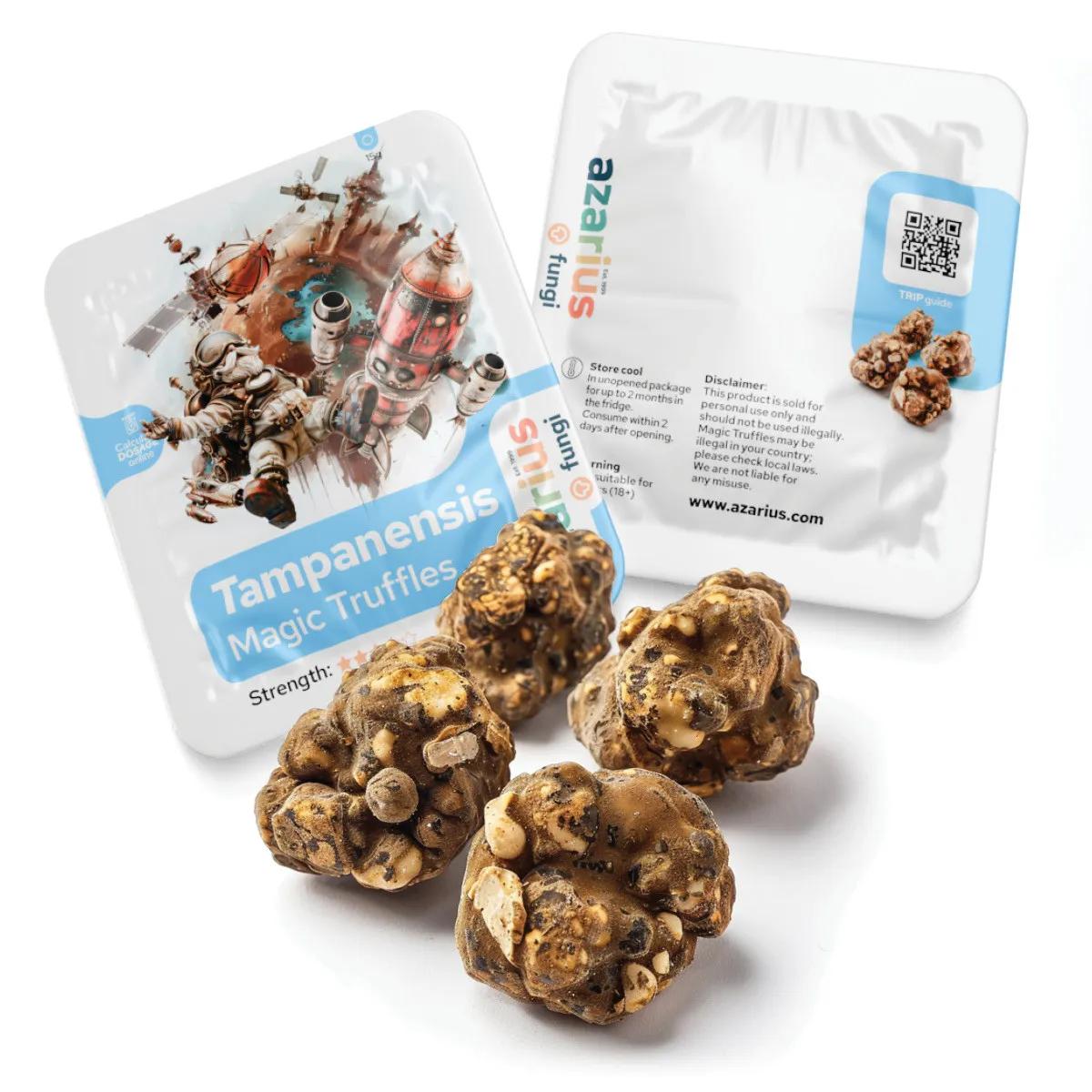
Magic truffles
by Azarius
Psilocybe tampanensis is a psilocybin-producing sclerotia — the truffle that launched an entire culture of underground philosophy and quiet self-examination. Rated 4 out of 5 for strength, with psilocybin content reaching up to 1.2 mg/g and psilocin at 0.2 mg/g, Tampanensis sits in that sweet spot between gentle introspection and genuinely altered perception. Every cultivated specimen alive today descends from a single wild find in Tampa, Florida, in 1977. That's not marketing — that's mycological history. You're holding a direct genetic line to a one-off discovery nearly fifty years ago.
Calm clarity with a philosophical lean — that's the short version. Tampanensis truffles are known for deep self-reflection and a floating body sensation rather than intense visual fireworks. The character here is contemplative. You'll find yourself turning ideas over, noticing emotional patterns, sitting with thoughts you normally brush aside. There's warmth to it, a kind of gentle opening rather than being thrown through a door.
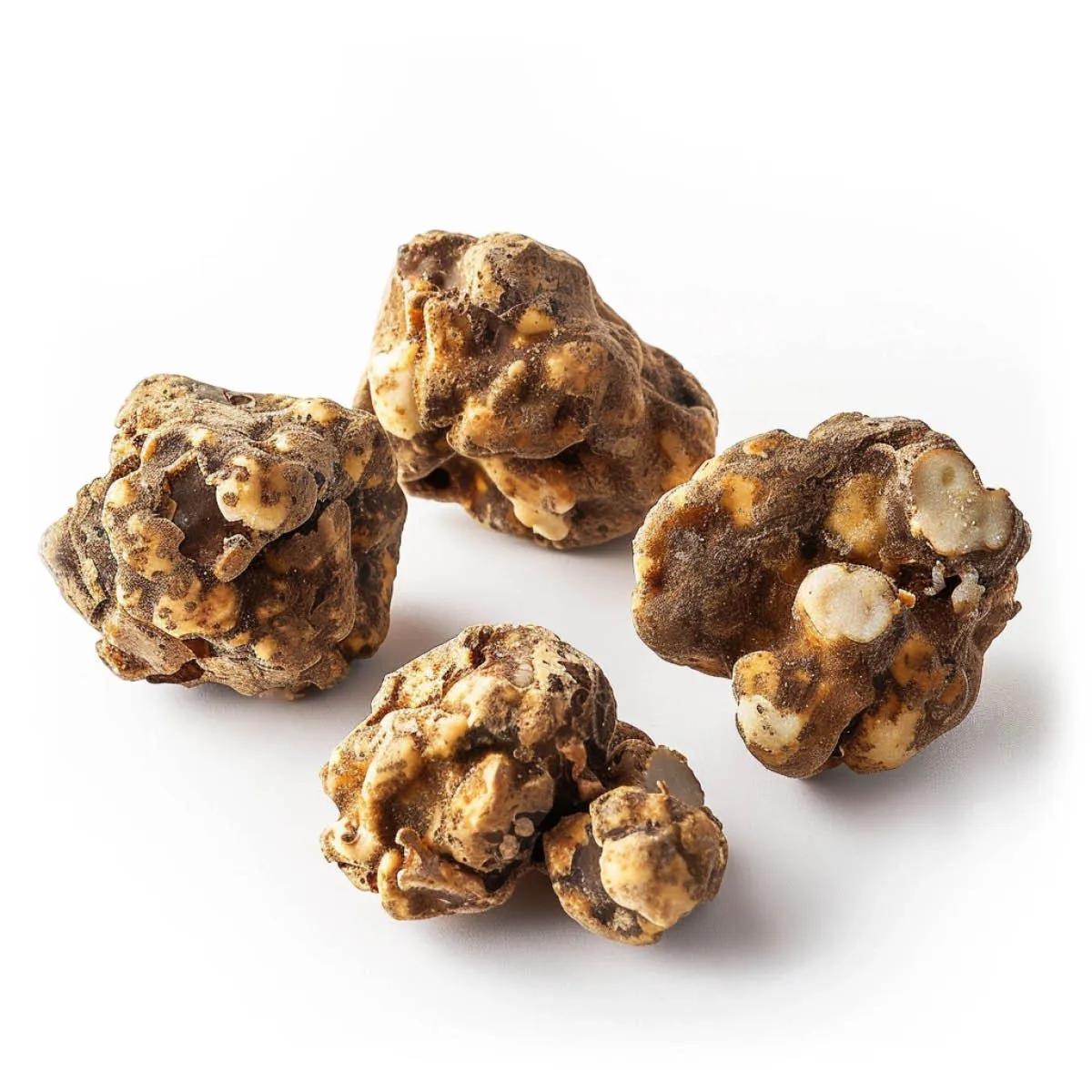
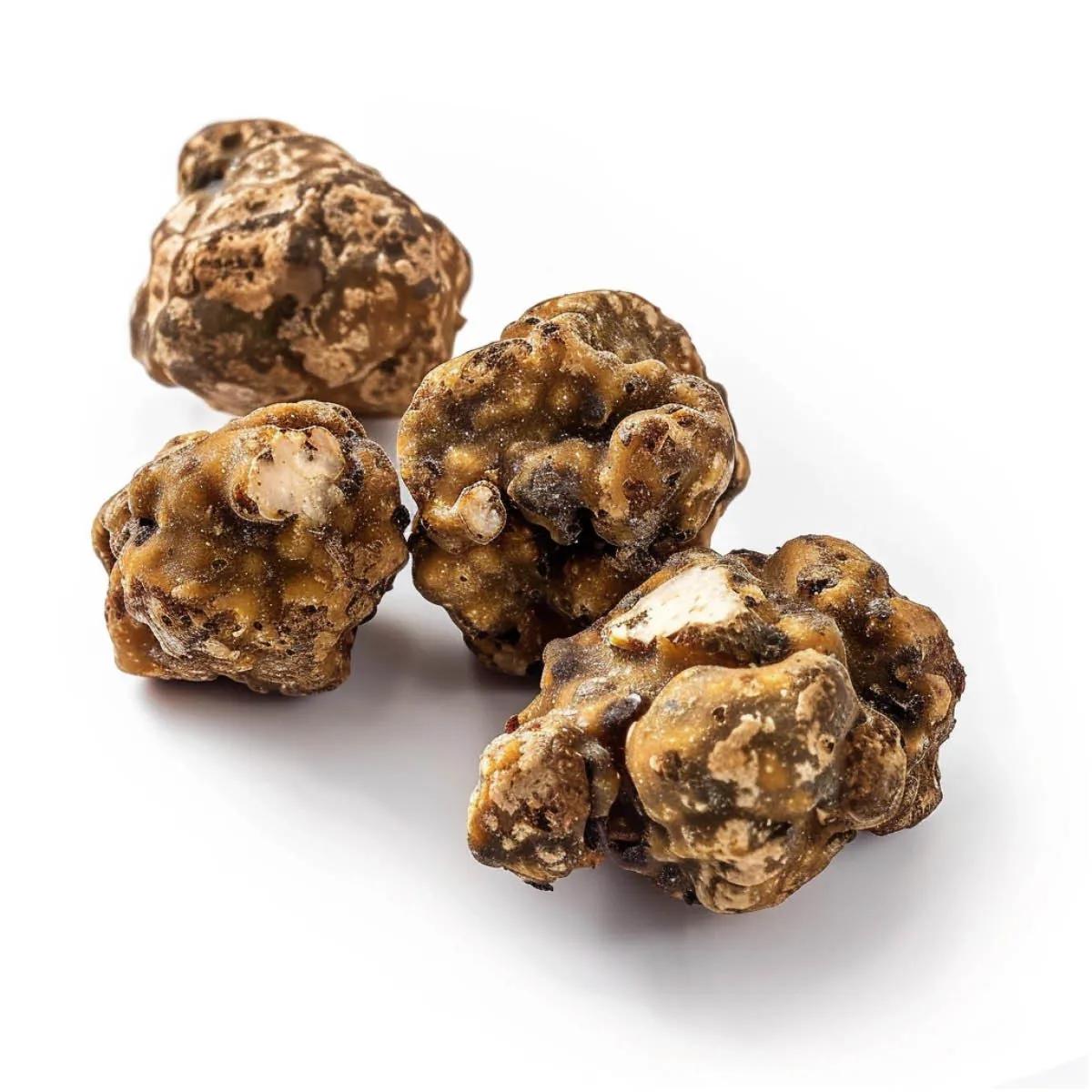
The taste? Earthy, nutty, with a sour tang that sits somewhere between walnut and blue cheese. Not pleasant, if we're honest — but not as aggressive as some of the stronger varieties. Most people chew them thoroughly or brew them into a tea with ginger and honey. Texture is dense and slightly rubbery, like a firm mushroom that's been vacuum-packed (because it has been).
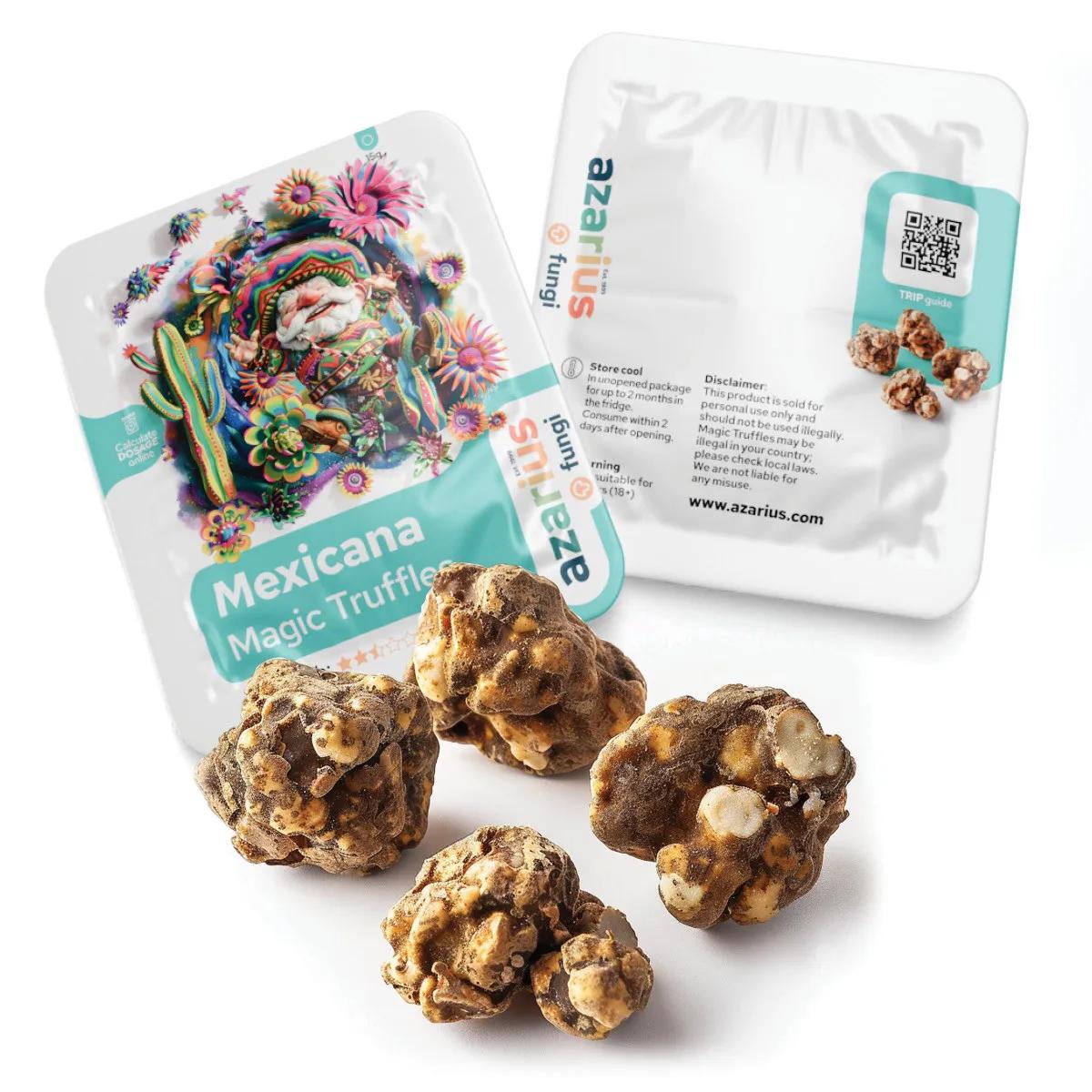
Compared to something like Valhalla (rated 5/5), Tampanensis won't knock you sideways. Compared to Mexicana (rated 3/5), it goes noticeably deeper. If Mexicana is dipping your toes in, Tampanensis is wading in up to your chest — you're still standing, but the current has your attention. That middle-ground character is exactly why it's been a bestseller at our shop for over two decades.
Psilocybe tampanensis contains a specific alkaloid profile that shapes its character. The primary active compound is psilocybin (up to 1.2 mg/g in fresh sclerotia), which your liver converts into psilocin — the molecule that actually binds to your serotonin receptors, specifically the 5-HT2A receptor. Fresh Tampanensis truffles also contain psilocin directly at approximately 0.2 mg/g, plus trace amounts of baeocystine and norbaeocystine — two lesser-studied tryptamine alkaloids that may contribute to the overall character of the experience.
According to a 2025 analysis published in PMC covering 42 psilocybin-producing species, Psilocybe tampanensis was selected as a representative cluster specimen for tryptamine alkaloid profiling, confirming its consistent and well-characterised chemical makeup. A separate extraction study published in PMC (2025) documented psilocybin concentrations in Tampanensis ranging from 0.057 to 0.190 mg/g depending on extraction method, with psilocin at 0.01–0.03 mg/g — figures that align with what we see from our own Fungi Farm batches.
Research supported by the Beckley Foundation has shown that psilocybin can foster states of heightened introspection and emotional openness. According to a 2022 study on psilocybin microdosing published in PMC, researchers noted that psilocybin-containing truffles may also contain other active compounds that influence the overall experience. And a 2021 study on anti-inflammatory effects of four psilocybin-containing species, published in PMC, found that prolonged inflammation research intersected with psilocybin research in unexpected ways — though this area is still early-stage and far from settled science.
| Compound | Concentration (fresh sclerotia) | Role |
|---|---|---|
| Psilocybin | Up to 1.2 mg/g | Primary prodrug — converts to psilocin |
| Psilocin | ~0.2 mg/g | Active metabolite — binds 5-HT2A receptors |
| Baeocystine | Trace | Tryptamine alkaloid — role under investigation |
| Norbaeocystine | Trace | Tryptamine alkaloid — role under investigation |
Psilocybe tampanensis was discovered exactly once in the wild — by mycologist Steven Pollock near Tampa, Florida, in 1977. Despite extensive searches over the following decades, no second wild population has ever been confirmed. Every single Tampanensis truffle you can buy anywhere on earth descends from that one original specimen. The species was formally described and the sclerotia-forming habit was documented, leading directly to the cultivation methods that made the entire truffle market possible.
That's not just a fun fact — it means the genetic base is remarkably narrow. The consistency you get from pack to pack is a direct result of this single-origin lineage. It also means Tampanensis is, in a real sense, irreplaceable. If that genetic line were ever lost, there's no going back to Florida to find another one. We've been growing these at the Azarius Fungi Farm for over 25 years, and that responsibility — keeping a living genetic line healthy and productive — is something we take seriously.
Tampanensis sits at 4/5 on our strength scale. Here's how it stacks up against the rest of the range we grow at the Fungi Farm:
| Truffle Variety | Strength Rating | Character | Best For |
|---|---|---|---|
| Mexicana | 3/5 | Light, social, giggly | First-timers, social settings |
| Tampanensis | 4/5 | Philosophical, reflective, floating | Introspection, solo sessions |
| Atlantis | 4/5 | Visual, creative, energetic | Creative exploration, nature |
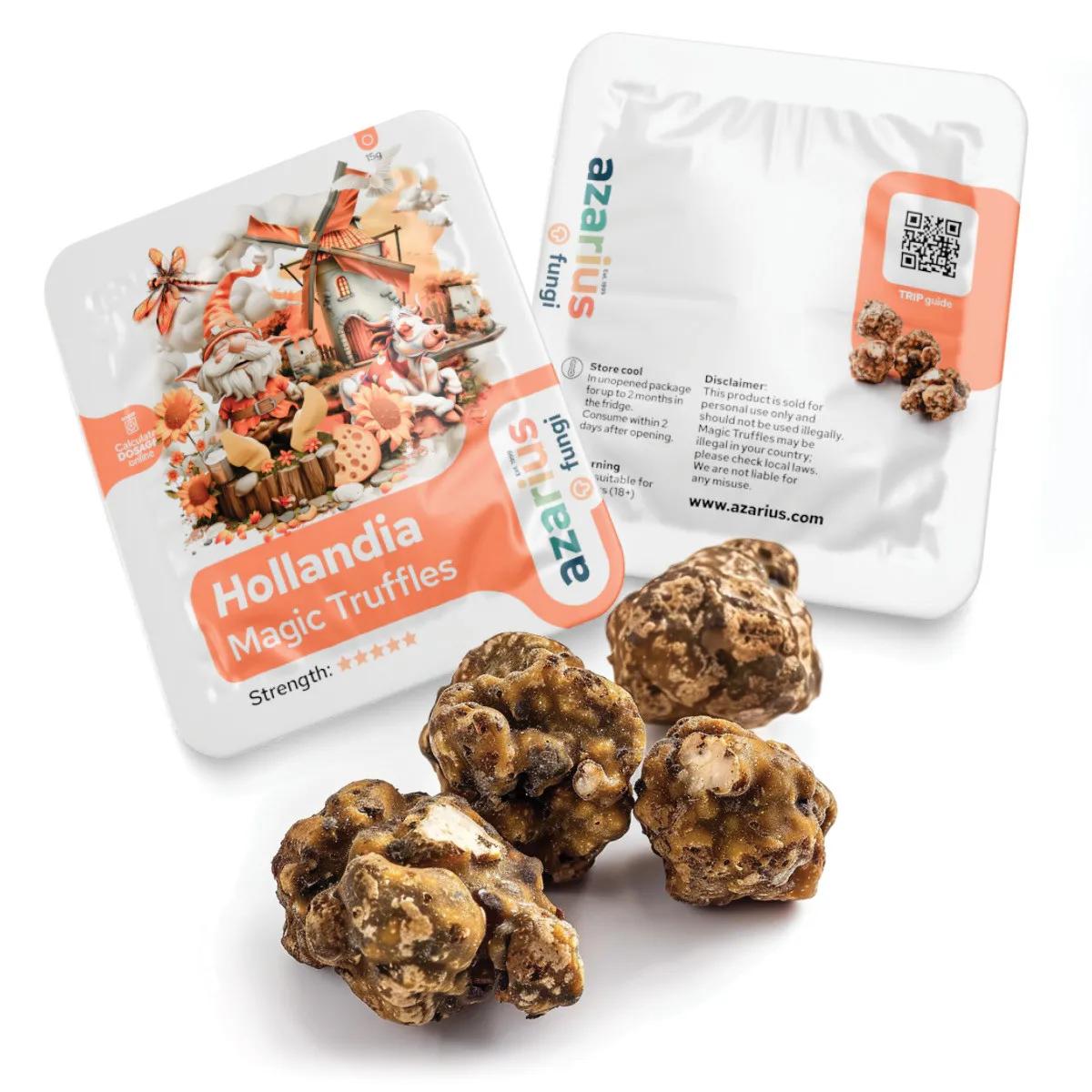
| Hollandia | 4.5/5 | Intense, visual, emotional | Experienced users |
| Valhalla | 5/5 | Very strong, deep, overwhelming | Experienced psychonauts only |
The honest limitation with Tampanensis: if you're after heavy visual distortion or a really intense ride, this isn't the one. It leans cerebral. People who want fireworks sometimes find it too "heady." That's not a flaw — it's the character. But if you want something more visually driven at a similar strength level, Atlantis is the better pick. If you want the philosophical depth of Tampanensis but cranked up significantly, Hollandia or Valhalla will take you further.
We've sold Tampanensis since the early days of the shop — it was one of the first truffles we ever stocked. The number one thing we hear from customers coming back: "I didn't expect it to be so... quiet." And they mean that as a compliment. Tampanensis doesn't shout. It sits with you. People come in wanting the strongest thing on the shelf, and we'll hand them Valhalla. But the ones who come back and become regulars? They almost always settle on Tampanensis or Atlantis.
The second most common question we get: "Is 15g the right amount?" For most people, yes — a full 15g pack is a solid session. Half a pack (roughly 7–8g) gives a lighter, more functional experience. We wouldn't go below 5g for a first time unless you're specifically looking for a sub-perceptual dose. According to a therapeutic use review published in PMC (2022), clinical trials with proper screening and monitored consumption reported no serious adverse events — but those were controlled settings with preparation and support. Set and setting matter more than dose, and that's something we've watched play out thousands of times from behind the counter.
Each pack contains 15g of fresh, vacuum-sealed sclerotia grown at the Azarius Fungi Farm. Unopened, they'll keep in the fridge (2–4°C) for several weeks — check the best-before date on the pack. Once opened, consume within 2–3 days and keep refrigerated in the meantime. Don't freeze fresh truffles — ice crystals damage the cell structure and can affect both texture and potency. If you notice any off smell (ammonia, strong sourness beyond the normal tang), discard them.
| Specification | Detail |
|---|---|
| Species | Psilocybe tampanensis |
| Common Name | Philosopher's Stone |
| Form | Fresh sclerotia (truffles) |
| Pack Weight | 15g |
| Strength Rating | 4 out of 5 |
| Psilocybin Content | Up to 1.2 mg/g |
| Psilocin Content | ~0.2 mg/g |
| Other Alkaloids | Baeocystine, norbaeocystine (trace) |
| Packaging | Vacuum sealed |
| Storage | Refrigerate (2–4°C) |
| Origin | Azarius Fungi Farm, Netherlands |
| Age Restriction | 18+ |
Pair Tampanensis with a Trip Stopper kit — it won't kill the experience, but it takes the edge off if things get too intense. Dextrose and valerian root bring you back to baseline faster. If you're looking for something lighter to start with before working up to a 4/5, grab a pack of Mexicana truffles (3/5) for a gentler introduction to the Psilocybe family.
Psilocybin is a serotonin receptor agonist. That means it directly interacts with your serotonergic system. If you're taking SSRIs, SNRIs, lithium, or MAOIs, the interaction profile is real and potentially serious — SSRIs can blunt or unpredictably alter the effects, while MAOIs can dangerously intensify them. According to a 2022 review on therapeutic use of psilocybin published in PMC, proper screening is critical, and clinical trials with monitored consumption reported no serious adverse events in screened participants. The key words there are "screened" and "monitored."
According to a 2021 review published in PMC on psychedelics and human evolution, the most commonly reported adverse physical effects during psilocybin action include dizziness, nausea, drowsiness, paraesthesia, and blurred vision. These are typically transient and dose-dependent. Nausea is especially common with truffles specifically — the dense sclerotia tissue is harder to digest than dried mushroom caps. Ginger tea before and during helps. Grinding the truffles finely before eating or brewing helps more.
One thing we can't stress enough: don't combine truffles with alcohol or cannabis during the onset phase. Alcohol dulls the experience and often leads to nausea. Cannabis can intensify things unpredictably, especially for less experienced users. Keep your first few sessions clean.
Rated 4 out of 5 on our strength scale, with up to 1.2 mg/g psilocybin. Stronger than Mexicana (3/5) and Pajaritos (3/5), comparable to Atlantis (4/5), but noticeably less intense than Hollandia (4.5/5) or Valhalla (5/5). The character is more reflective than visual.
A full 15g pack is a strong experience. For a first time with this variety, 7–10g gives a solid but manageable session. Below 5g, effects are subtle and mostly sub-perceptual. Always on an empty or light stomach, and wait at least 90 minutes before considering whether to take more.
Sclerotia are dense nutrient stores — essentially compressed fungal tissue. The sour, nutty, slightly cheesy flavour comes from organic acids and amino compounds in that dense matrix. Chewing thoroughly is important for absorption, but chasing with citrus juice or brewing as tea with honey and ginger makes it far more tolerable.
SSRIs and SNRIs can significantly blunt or unpredictably alter psilocybin's effects. MAOIs can dangerously intensify them. Do not combine without consulting a medical professional. This isn't a disclaimer — it's a serotonin system interaction with real clinical significance.
Onset is typically 30–60 minutes on an empty stomach. Peak effects last 2–3 hours, with the full experience running 4–6 hours. Residual effects (mild mood elevation, reflective thinking) can linger for several hours after the main session ends.
Yes. Psilocybe tampanensis was found once in the wild by Steven Pollock near Tampa, Florida, in 1977. No second wild population has been confirmed despite decades of searching. Every cultivated Tampanensis truffle worldwide descends from that single genetic line.
Keep them refrigerated at 2–4°C. Unopened and vacuum sealed, they last several weeks — check the best-before date on the pack. Once opened, consume within 2–3 days. Never freeze fresh truffles; ice crystals damage cell structure and affect potency.
Somewhere quiet, comfortable, and familiar. Tampanensis leans heavily into introspection, so a calm home environment with soft lighting and a good playlist works better than a busy social setting. Having a sober, trusted friend nearby is the single best safety measure you can take.
Last updated: April 2026
Medical disclaimer. This content is for informational purposes only and does not constitute medical advice. Consult a qualified healthcare provider before use of any substance.