Culture Syringes
by Fufufungu
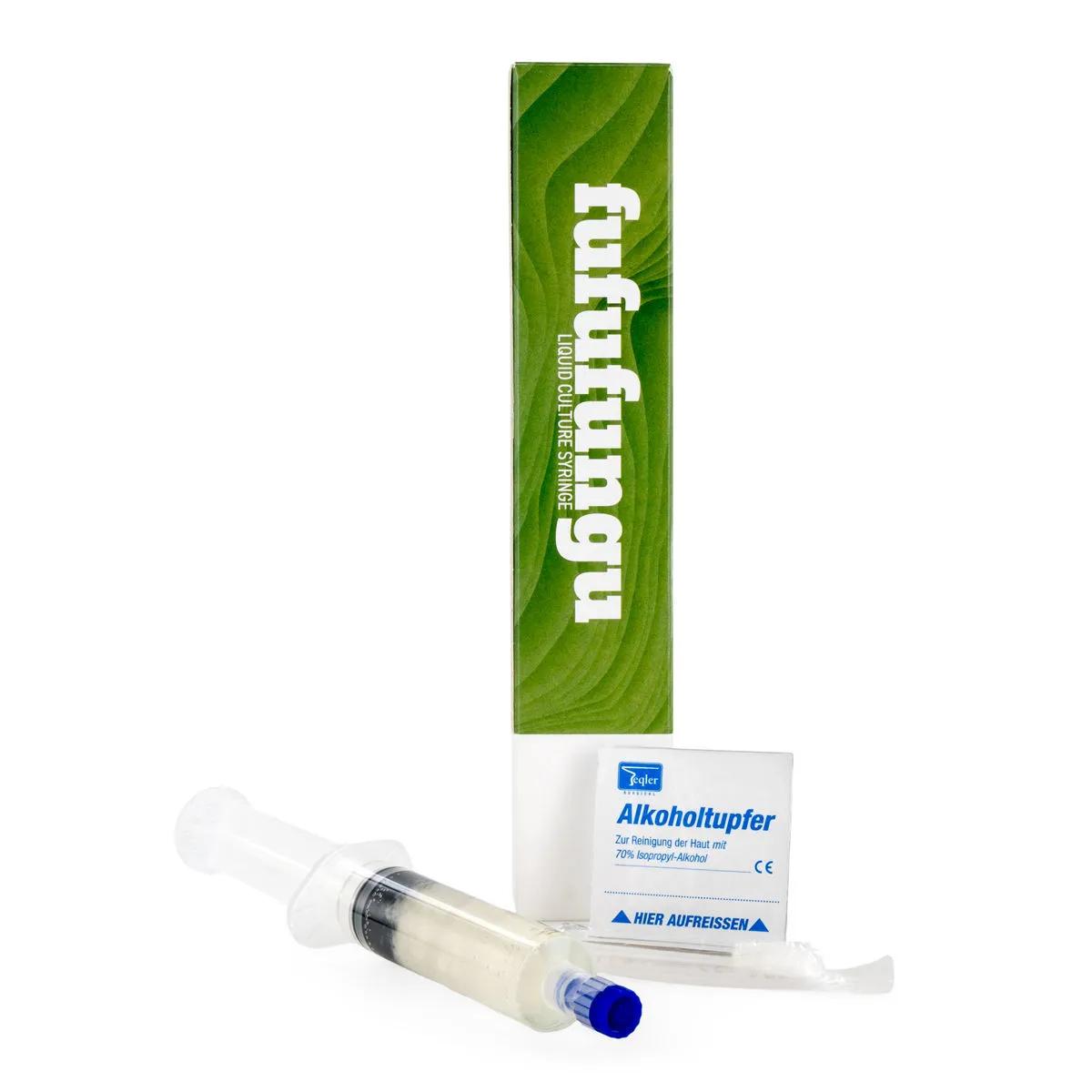
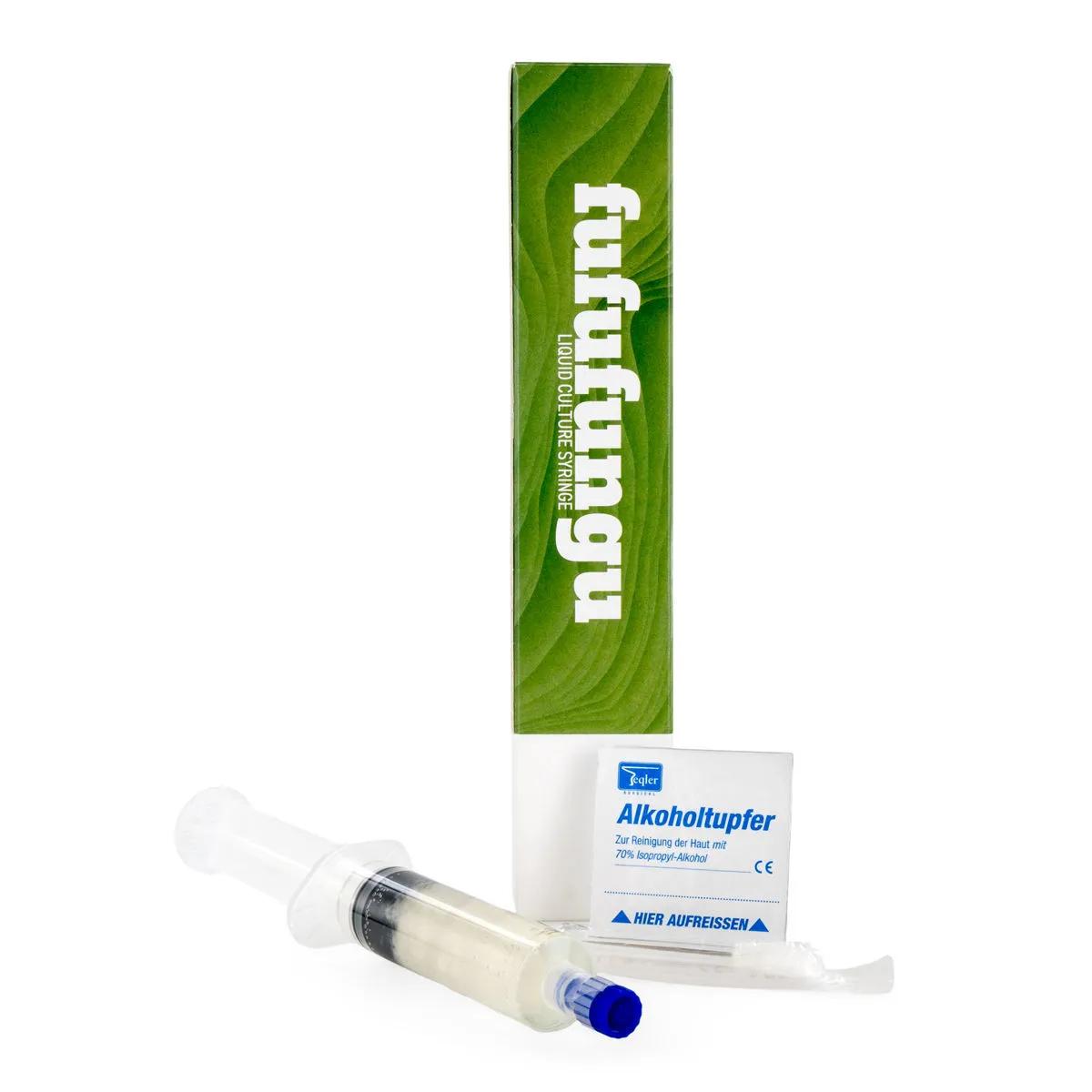
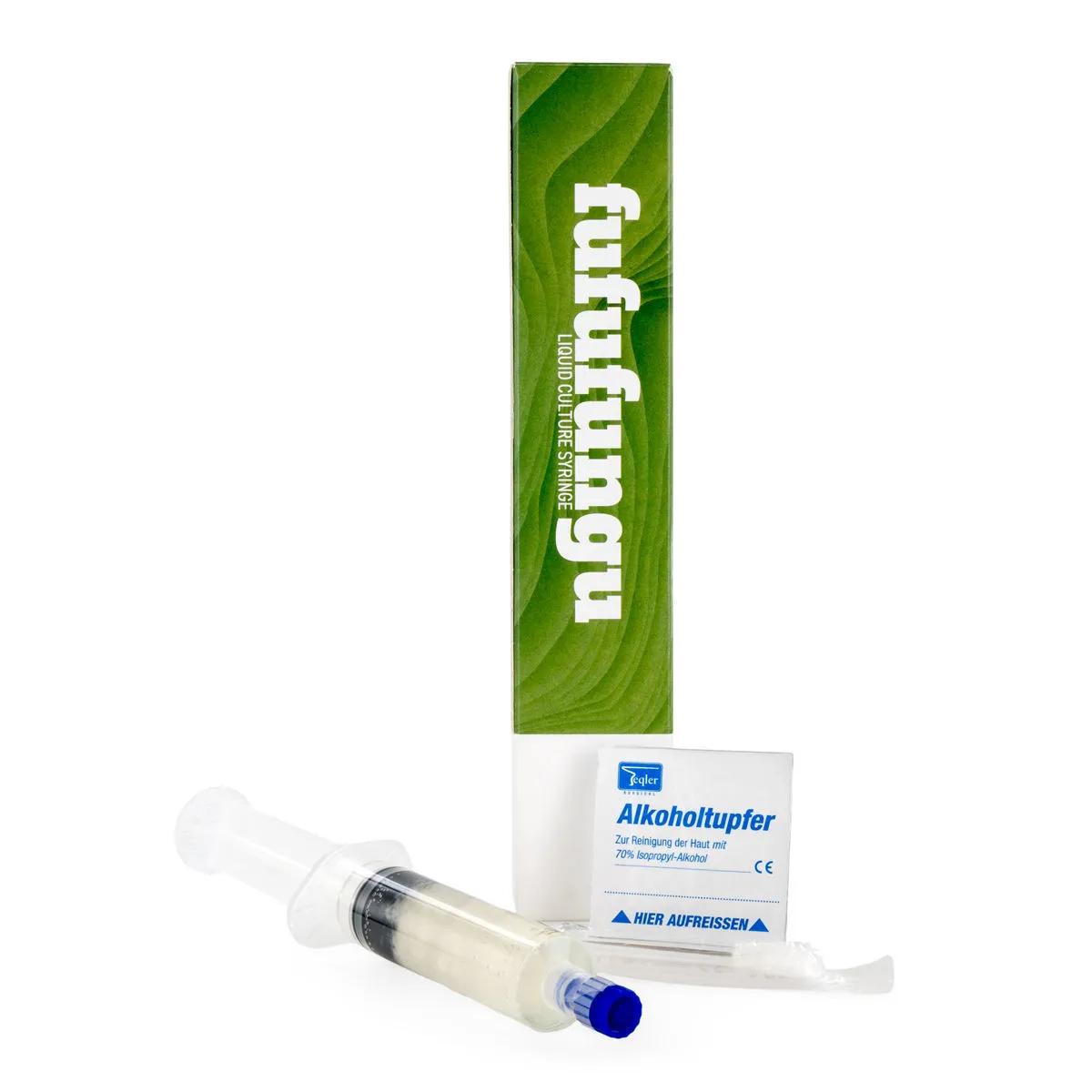
The Grey Oyster Liquid Culture Syringe is a 20ml syringe containing live mycelium of Pleurotus ostreatus (grey oyster mushroom) suspended in a nutrient-rich liquid solution. Unlike spore syringes, where germination is still a question mark, liquid culture gives you actively growing mycelium from the moment you inoculate — cutting colonisation time significantly and giving you a head start on your first flush.
Made by Fufufungu, this syringe ships with two alcohol wipes and a sterilised needle, so you can get straight to work. Grey oysters are one of the most forgiving gourmet species to cultivate, and pairing that tolerance with the speed of liquid culture means you're set up for a genuinely satisfying harvest — even on your first attempt.
Each Grey Oyster Liquid Culture Syringe kit arrives ready to inoculate — no extra purchases needed to get started with grain spawn.
| Item | Quantity |
|---|---|
| Liquid culture syringe (20ml) | 1 |
| Sterilised needle | 1 |
| Alcohol wipes | 2 |
Here are the key specs and growing parameters for this liquid culture syringe — everything you need to plan your grow before you crack the seal.
| Specification | Detail |
|---|---|
| Species | Pleurotus ostreatus (Grey Oyster) |
| Culture Type | Liquid culture (live mycelium) |
| Syringe Volume | 20ml |
| Inoculation Rate | 2–5ml per litre/quart jar of sterilised grain |
| Brand | Fufufungu |
| Shelf Life | Use within 2 months of delivery |
| Storage | Cool, dark place (refrigerator recommended) |
| Compatible Substrates | Straw, hardwood, coffee grounds, masters mix, paper |
| Cultivation Methods | Straw bales, wood logs, mushroom patches, indoor mycelium bags |
| Sterile Technique Required | Yes — laminar flow hood or still air box recommended |
Complete your setup: pair this grey oyster liquid culture syringe with sterilised grain spawn bags for a smooth inoculation process. If you're growing indoors, a mushroom grow bag with a filter patch keeps contamination out while letting your mycelium breathe. Already got spawn sorted? Straw pellets or supplemented hardwood sawdust (masters mix) are the substrates we'd reach for first with grey oysters.
We get asked this constantly, so here it is straight: liquid culture contains living, actively growing mycelium. A spore syringe contains spores that still need to germinate, pair up, and form mycelium before colonisation even begins. That extra step adds days — sometimes weeks — and introduces more opportunity for contamination to take hold.
With 2–5ml of this grey oyster liquid culture per litre jar of sterilised grain, you're looking at visibly faster colonisation. The mycelium has a running start. It grabs the grain, spreads through the jar, and gives competing moulds less time to establish. For anyone who's lost a jar to green Trichoderma and stared at it wondering where things went wrong — speed matters. Liquid culture is the single biggest upgrade you can make to your success rate without buying a flow hood.
The honest limitation? Liquid culture is more perishable than spores. Spore syringes can sit in a fridge for months. This syringe needs to be used within 2 months of delivery, and it must stay refrigerated. If you forget about it at the back of a warm cupboard for six weeks, you'll likely end up with a cloudy syringe full of dead mycelium. Treat it like fresh produce — use it while it's good.
Grey oysters (Pleurotus ostreatus) are a white-rot saprotrophic fungus — they break down both lignin and cellulose in dead organic matter. In practical terms, this means they'll colonise almost anything plant-based you throw at them: straw, hardwood sawdust, coffee grounds, even shredded cardboard in a pinch. That versatility is why grey oysters are the species we'd point any new grower towards.
The flavour is mild, slightly savoury, with a texture that holds up well in stir-fries and soups. Fresh grey oysters from your own grow taste noticeably different from the ones that have been sitting in plastic at the supermarket for four days — there's a firmness and a clean, almost anise-like note that disappears once they start drying out on a shelf. That alone makes home cultivation worth the effort.
Beyond the kitchen, grey oyster mushrooms have attracted research attention. According to a study referenced in Potential Beneficial Effects and Pharmacological Properties (PMC, 2023), antioxidant extracts from grey oyster mushrooms (Pleurotus pulmonarius, a closely related species) showed protective effects in preclinical models. And research published in Antioxidant and Anti-Inflammatory Activity of Five Mushroom Species (PMC, 2022) noted antioxidant and anti-inflammatory activity across Pleurotus species. Separately, according to a review in Ergothioneine: An Antioxidative, Neuroprotective and Anti-Inflammatory Compound (PMC, 2025), mushroom stems — including oyster mushrooms — contain significant amounts of ergothioneine (EGT), a compound with documented antioxidant properties. Grey oysters are packed with protein, B vitamins, and all essential amino acids, making them one of the more nutritionally dense gourmet mushrooms you can grow at home.
This is a step-by-step process. Sterile technique is non-negotiable — one ungloved finger touching the wrong surface and you're growing Trichoderma instead of oysters. We've seen growers lose entire batches to a single moment of carelessness.
The number one mistake we see with liquid culture syringes? People treat them like spore syringes and leave them sitting around for months. Spores are dormant — they can handle that. Live mycelium cannot. If you order this syringe, have your sterilised grain ready to go before it arrives. Plan the grow, then order the culture. Not the other way around.
The second most common question: "Can I use this without a flow hood?" Technically, yes — a still air box gets the job done for most home growers. But if you're planning to do more than one or two grows, a flow hood pays for itself in saved grain jars. Every jar lost to contamination is money and time down the drain. Grey oysters are forgiving, but they're not immune to green mould in a dirty workspace.
One more thing worth knowing: grey oysters produce a lot of spores when they're mature. Harvest just before the cap edges flatten out completely. If you wait too long, you'll find a fine white dust coating everything nearby. It's not harmful in small amounts, but it's messy, and prolonged exposure in enclosed spaces isn't great for your lungs. Harvest on time, and you won't have this problem.
It's a 20ml syringe containing live mycelium of Pleurotus ostreatus suspended in a sterile nutrient solution. Unlike spore syringes, the mycelium is already growing, so colonisation of grain spawn starts immediately after inoculation.
Use 2–5ml per litre (quart) jar of sterilised grain. A single 20ml syringe can inoculate 4–10 jars depending on how much you use per jar. Distributing the liquid across multiple injection points in each jar speeds up colonisation.
Not strictly, but sterile technique is critical. A still air box — a clear plastic tote with arm holes — works well for home growers. Wipe everything with isopropyl alcohol, work calmly, and minimise air movement. A flow hood is better, but a still air box gets solid results.
Grey oysters colonise straw, hardwood sawdust (oak, beech, poplar, birch, maple, and others), masters mix, coffee grounds, and paper-based substrates. Straw is the easiest and cheapest option for beginners. Masters mix (50/50 hardwood and soy hulls) gives the highest yields.
Refrigerate it in a cool, dark place as soon as it arrives. Use it within 2 months of delivery. Don't freeze it — freezing kills the live mycelium. Shake well before each use to redistribute the culture evenly.
Grain jars inoculated with liquid culture typically show visible growth within 3–7 days and reach full colonisation in 2–3 weeks. Spore syringes can take 1–2 weeks just to germinate before colonisation begins, adding significant time to the overall process.
Yes. If you don't use all 20ml in one session, recap the needle, wipe it with alcohol, and refrigerate the syringe. Just make sure to use the remainder within the 2-month window from delivery. Always shake before the next use.
Grey oysters are rich in protein, B vitamins, and all essential amino acids. Research into Pleurotus species has also identified antioxidant compounds including ergothioneine. According to a review in PMC (2025), mushroom stems contain significant concentrations of this antioxidant compound.
Last updated: April 2026
Medical disclaimer. This content is for informational purposes only and does not constitute medical advice. Consult a qualified healthcare provider before use of any substance.