Culture Syringes
by Fufufungu
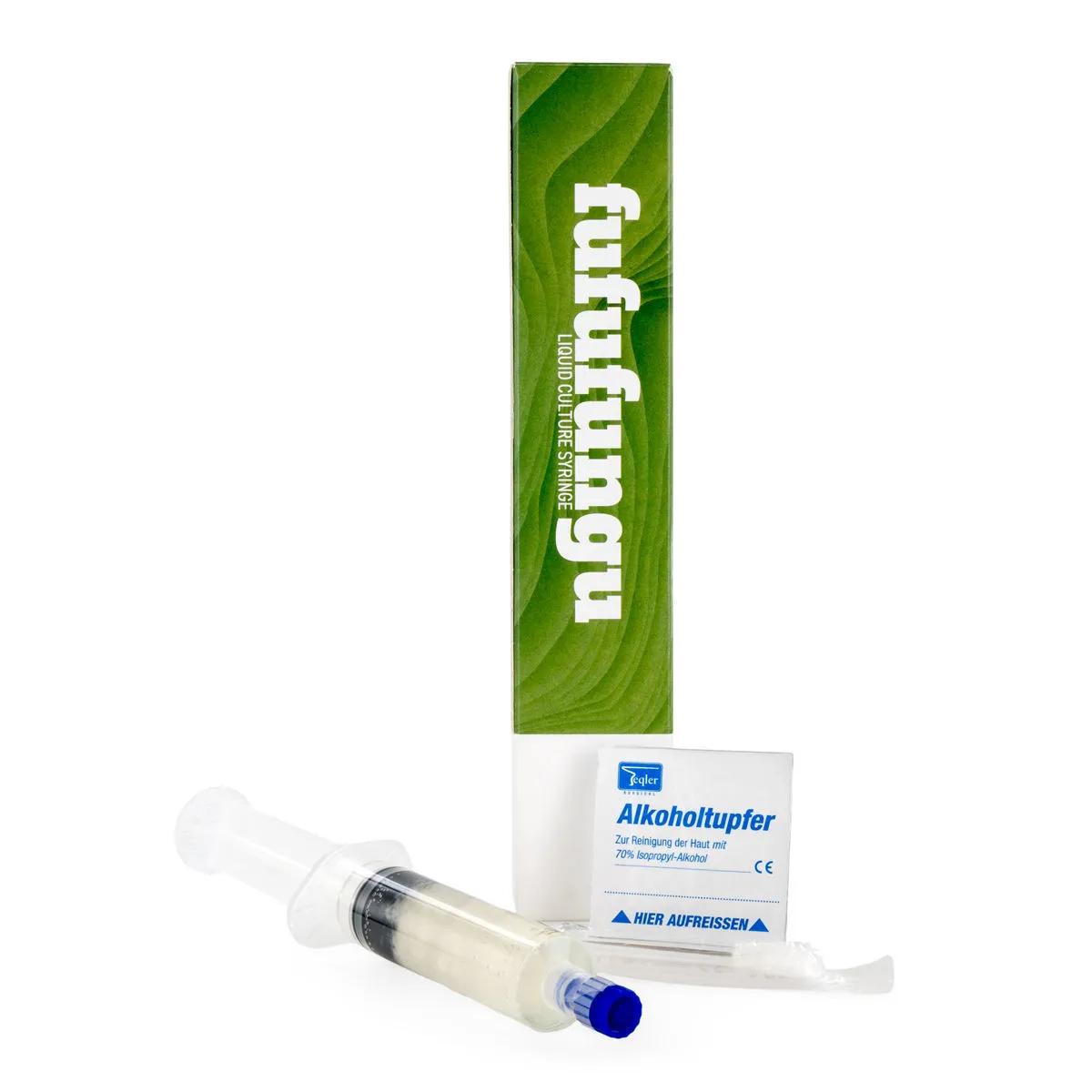
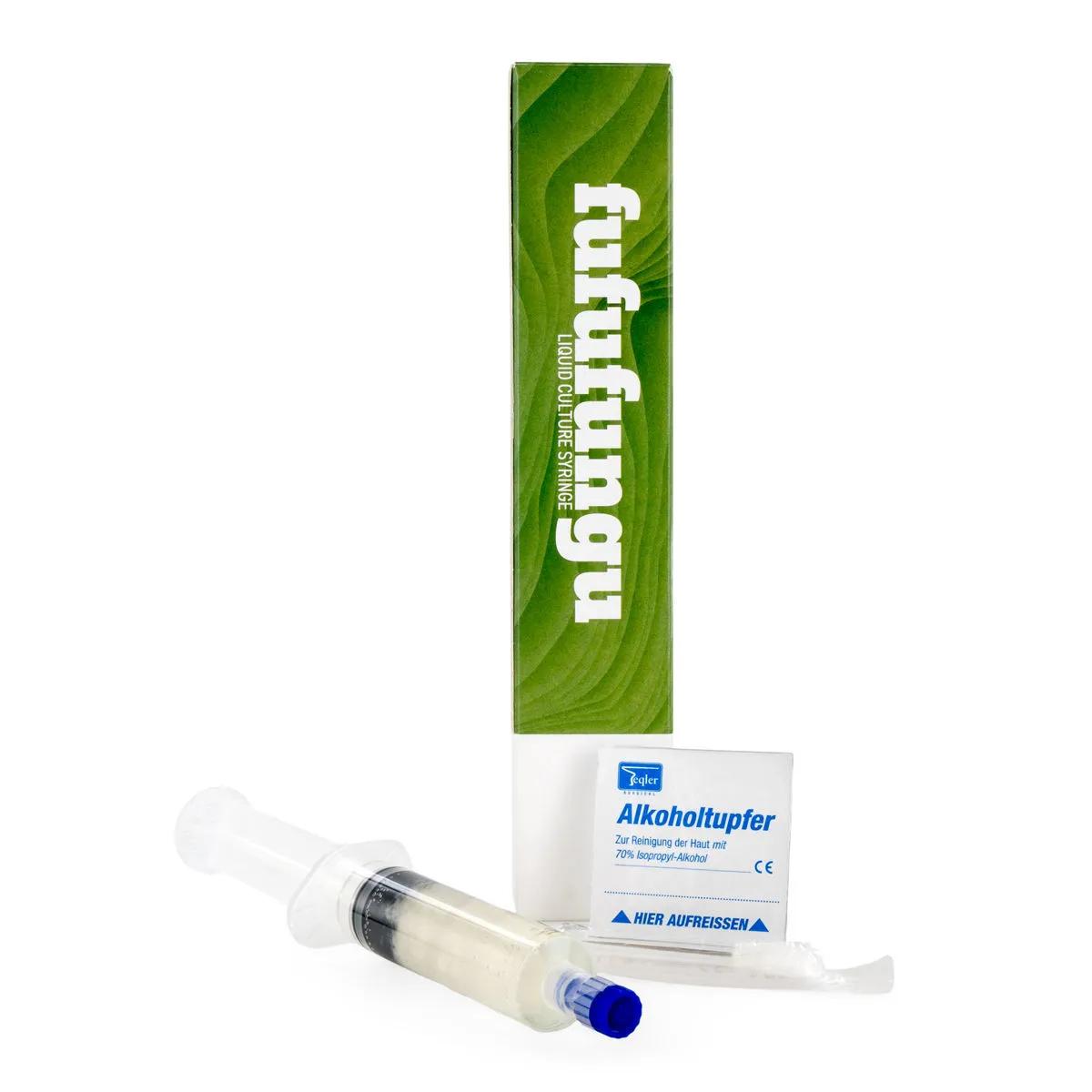
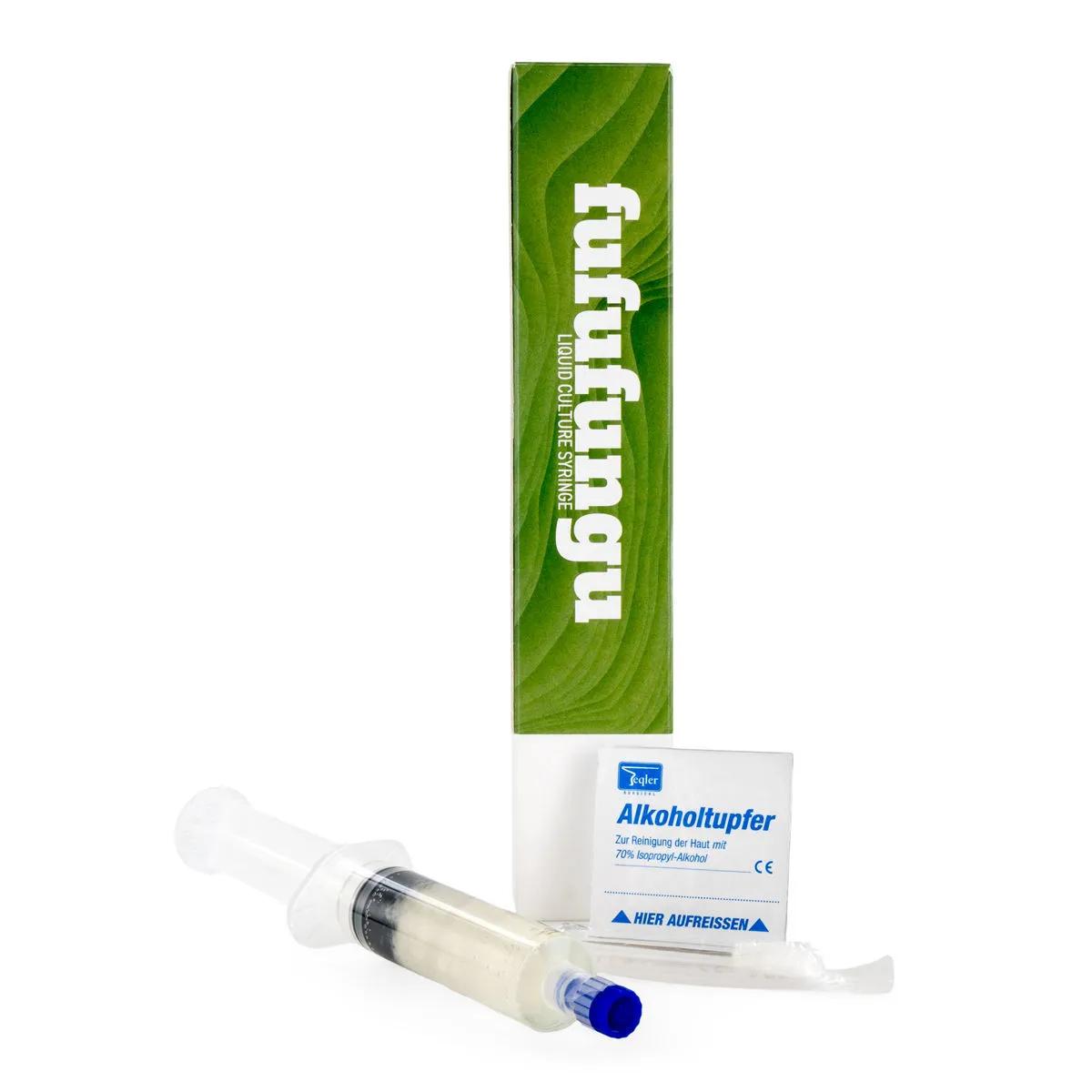
The King Oyster Liquid Culture Syringe is a 20ml syringe of live Pleurotus eryngii mycelium suspended in nutrient solution, designed to colonise your substrate in a fraction of the time spore syringes take. Made by Fufufungu, this liquid culture gives you a head start — viable mycelium is already growing, so you skip the germination stage entirely and go straight to colonisation. If you want thick, meaty king oyster mushrooms on your plate within weeks rather than months, this is how you get there.
Everything you need to inoculate your first batch of grain spawn is inside the packet — no hunting around for sterile supplies on day one.
| Item | Quantity |
|---|---|
| Liquid culture syringe (live P. eryngii mycelium) | 1x 20ml |
| Sterilised needle | 1x |
| Alcohol wipes | 2x |
Complete your setup with sterilised grain spawn bags and a supplemented sawdust substrate or masters mix. If you are new to mushroom cultivation, a monotub or indoor grow bag makes the whole process far simpler — pair this syringe with one and you are basically just adding water and patience.
Liquid culture contains living, actively growing mycelium — not dormant spores waiting to germinate. That single difference changes everything about your timeline. With a spore syringe, you are waiting for germination first, then colonisation. With this king oyster liquid culture, the mycelium hits your grain and starts spreading immediately.
Under the right conditions (around 23–25°C), a litre jar of sterilised grain can be fully colonised within roughly two weeks of inoculation. Compare that to spore-based methods, where germination alone can eat up a week or more before colonisation even begins. For a species like Pleurotus eryngii — which is already slower to colonise than, say, blue oyster — that speed advantage matters. We have seen growers get impatient with king oyster timelines and open jars too early, introducing contamination. Liquid culture shortens the window where things can go wrong.
The one honest limitation: liquid culture has a shorter shelf life than spores. You need to use this within two months of delivery, and it should live in the fridge between uses. Spore syringes can sit around for much longer. So if you are the type to buy supplies and then forget about them for six months, a spore syringe might be more forgiving. But if you are ready to grow now, liquid culture is the faster, more reliable route.
King oyster — also called king trumpet — is the largest species in the oyster mushroom family and one of the few where the stem is the star, not the cap.
| Specification | Detail |
|---|---|
| Species | Pleurotus eryngii |
| Common names | King oyster, king trumpet, French horn mushroom |
| Cap diameter at maturity | 3–10 cm |
| Syringe volume | 20 ml |
| Inoculation rate | 2–5 ml per litre/quart jar of sterilised grain |
| Optimal colonisation temperature | 23–25°C (73–77°F) |
| Colonisation time (liquid culture) | Approximately 10–15 days |
| Best substrates | Straw, supplemented sawdust, masters mix |
| Shelf life | Use within 2 months of delivery |
| Storage | Refrigerator, away from UV light |
| Brand | Fufufungu (distributed by Mycotech) |
Sterile technique is non-negotiable here. We have watched growers lose entire batches to one ungloved hand or a needle that touched the table. Take the five extra minutes to do it properly.
Most oyster mushroom species are all cap and no stem. King oyster flips that ratio completely — the thick, white stem is the prize. Slice one crosswise into 2 cm rounds, sear them in a hot pan with butter, and you get something with the density and chew of a scallop. That is not an exaggeration; "king oyster scallops" are a staple in plant-based cooking for a reason. The caps are more delicate, almost silky, and work well sliced thin in stir-fries or soups.
In East Asian cuisine, king oyster is a workhorse ingredient — braised, grilled, added to hot pots, or shredded into pulled-mushroom dishes. But it adapts beautifully to European cooking too. Risotto, pasta, or simply roasted with garlic and thyme. The flavour is mild and savoury with a faint nuttiness that absorbs whatever you cook it with.
Beyond the kitchen, Pleurotus eryngii has drawn attention from researchers. According to a study published in PMC, the lipid-lowering properties of P. eryngii extract were investigated in the context of hyperlipidemia, a key risk factor for fatty liver and atherosclerosis (PMC, 2019). Separately, research published in PMC examined the dietary effects of king oyster mushroom fruiting bodies on biochemical and histological changes in hypercholesterolaemic rats (PMC, 2013). And according to a review in PMC, various Pleurotus species have demonstrated antioxidant and anti-inflammatory activity in laboratory settings (PMC, 2022). King oyster mushrooms also contain ergothioneine, a naturally occurring antioxidant compound; according to research published in PMC, P. eryngii fruiting bodies are a notable dietary source of this compound (PMC, 2025). Nutritionally, they are low in calories and a good source of vitamins B3 and B5.
None of this is medical advice, obviously. But it is nice to know that the mushroom you are growing for dinner also happens to be one of the more interesting species on the research bench.
We have sold liquid cultures for years, and the questions we get most often about king oyster specifically come down to two things: fruiting conditions and patience.
King oyster is fussier about fruiting than blue oyster or pink oyster. It prefers cooler temperatures for pinning (around 10–15°C), higher humidity, and good fresh air exchange. If you are growing in a warm flat without climate control, you might find it pins reluctantly or produces small, leggy mushrooms with tiny caps. A cold room, garage, or even a fridge with the door cracked can help trigger pinning. Blue oyster is more forgiving if temperature control is not your strong suit — but king oyster rewards the extra effort with a mushroom you simply cannot get from easier species.
The other thing: do not skip the grain spawn stage. We have seen people try to inject liquid culture directly into bulk substrate. It can work with aggressive species, but king oyster mycelium is not aggressive enough to outrun contamination in uncolonised bulk substrate. Go grain first, then bulk. The extra step is what separates a successful harvest from a green-mould disaster.
At the recommended rate of 2–5 ml per litre jar, one 20ml syringe covers 4–10 jars. Using 3–4 ml per jar is a good middle ground, giving you roughly 5–6 jars per syringe.
Supplemented hardwood sawdust and masters mix (a 50/50 blend of hardwood sawdust and soy hull pellets) give the best results. Straw also works. Avoid plain sawdust without supplementation — king oyster needs the extra nutrition to produce decent-sized fruits.
Use it within 2 months of delivery. Store in the fridge, away from UV light. After that window, viability drops and contamination risk increases. Unlike spore syringes, liquid culture contains living mycelium that does not stay dormant indefinitely.
Yes, a bit. Blue and pink oyster are more forgiving with temperature and humidity. King oyster prefers cooler fruiting temperatures (10–15°C) and is slower to colonise. The results are worth it — you get a mushroom with a texture and flavour the other oysters cannot match.
We would not recommend it. King oyster mycelium is not aggressive enough to colonise bulk substrate before contaminants take hold. Always go through a grain spawn stage first, then transfer fully colonised grain to your bulk substrate.
Mild, savoury, with a faint nuttiness. The thick stem has a dense, meaty chew — often compared to scallops when seared. The cap is softer and more delicate. It absorbs flavours well, making it versatile across cuisines from East Asian stir-fries to European risottos.
Not strictly, but it helps. A still-air box (a plastic tub with arm holes) is a budget alternative that works well for most home growers. The key is minimising air movement during inoculation. Use the included alcohol wipes, work quickly, and you will be fine.
Last updated: April 2026
Medical disclaimer. This content is for informational purposes only and does not constitute medical advice. Consult a qualified healthcare provider before use of any substance.