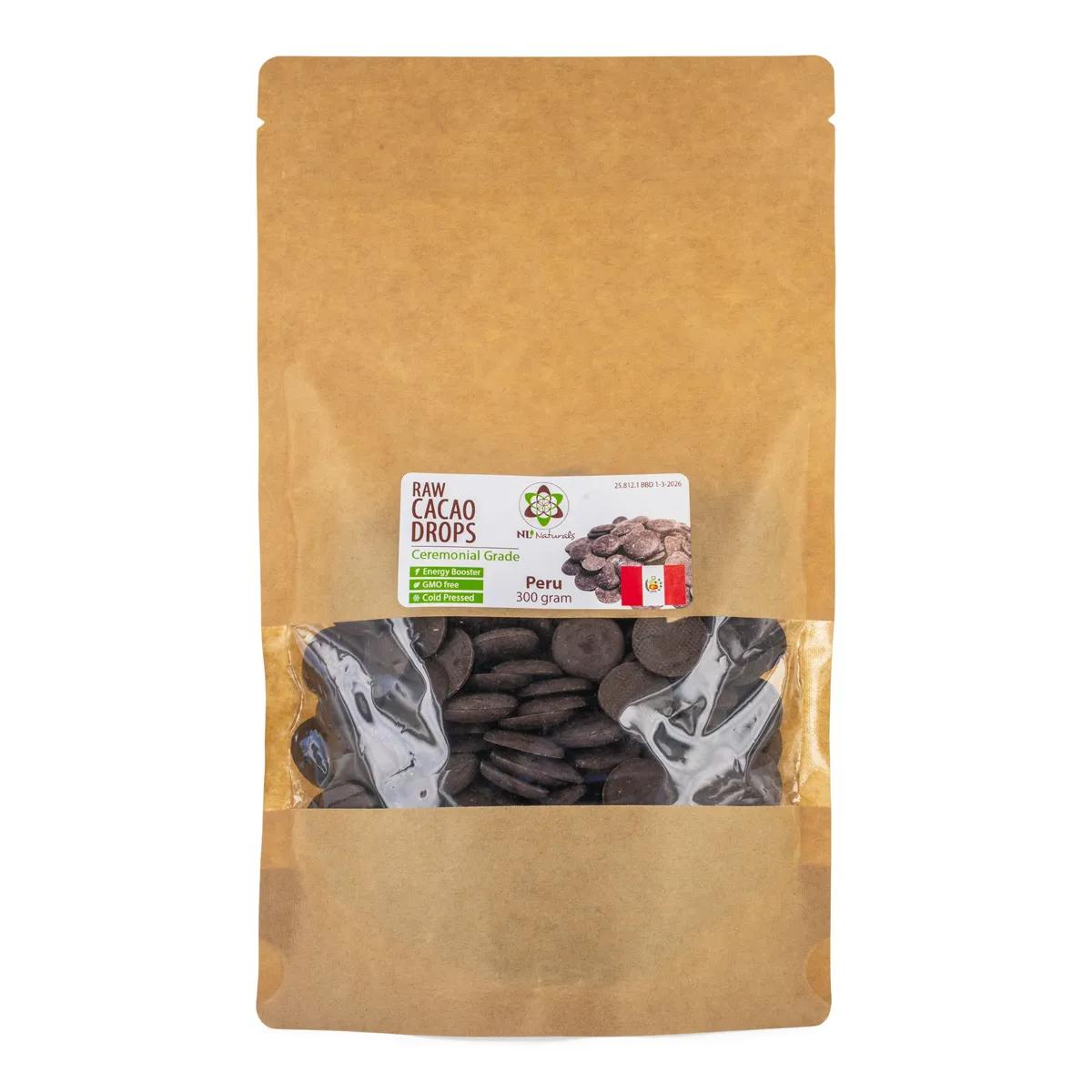
Raw Cacao Drops - Peru is an unroasted ceremonial-grade cacao made from Native Criollo beans grown in the Peruvian Amazon. These 300 g pellets melt easily, drop straight into a saucepan, and skip the chopping faff of working with a solid paste block. If you want a single ingredient that handles both your morning hot cacao and a proper Friday-night ceremony, this is the one we'd reach for.
Why raw Criollo cacao from Peru matters
Criollo is the rare bean — roughly 5% of global cacao production — and the one ceremony facilitators actually ask for by name. The flavour leans fruity and nutty rather than the harsh, tannic bite you get from bulk Forastero beans used in cheap chocolate bars. Because these drops are unroasted and minimally processed, the flavanol content stays high.
According to Cacao Powder: Health Benefits, Nutrients, Risks (WebMD), studies have linked the flavanols in cacao to higher levels of nitric oxide in the blood, which research associates with cardiovascular function. According to Cocoa and Chocolate in Human Health and Disease (PMC4696435), antioxidant effects of cocoa may directly influence insulin resistance. According to Cocoa Polyphenols and Their Potential Benefits (PMC3488419), there is experimental and clinical evidence that polyphenols from cocoa may reduce production of specific proinflammatory cytokines.
The beans here are grown without pesticides, fertilisers, or herbicides — which matters because cacao plants are notorious accumulators of cadmium and other heavy metals when farming gets industrial. Wild-harvested Amazon Criollo from small plots is about as clean as cacao gets.
Drops vs paste vs powder — pick your format
The drop format is the practical middle ground. Powder dissolves fastest but loses some of the cocoa butter character. Solid paste blocks give you the most ceremonial feel but you'll be sawing chunks off with a chef's knife on a Tuesday morning when you just want a cup.
| Format | Best for | Prep effort |
|---|---|---|
| Drops (this product) | Daily cups + ceremonies | Low — scoop and melt |
| Paste block | Pure ceremonial use, baking | Medium — needs chopping |
| Powder | Smoothies, quick drinks | Lowest — but no cocoa butter |
If you've used our Raw Cacao Drops - Ecuador (Arriba Nacional bean), expect a different profile here. Peruvian Criollo is softer and more fruit-forward; Ecuadorian Arriba is floral and brighter. Neither is "better" — they're different beans from different forests.
Dosage ranges from ceremonial tradition
This is reference information, not a personal recommendation. Ceremonial practitioners typically work within a known range, and the bitter taste tends to self-regulate intake anyway.
| Use case | Typical amount | Notes |
|---|---|---|
| Daily cup / culinary | 1–2 tsp (5–10 g) | Light flavour, gentle |
| Standard ceremonial dose | 28–42 g (1–1.5 oz) | Used in group settings |
| Deeper ceremonial | Up to 40 g | Per traditional ceremonial guides |
A 300 g pack gives you roughly 7 full ceremonial cups or 30+ daily cups. Cacao naturally contains theobromine and a small amount of caffeine, so according to Cocoa - Uses, Side Effects, and More (WebMD), caffeine-related effects are possible at higher doses. People on MAOIs, SSRIs, or heart medication should consult a healthcare provider first — theobromine has cardiovascular activity and the interaction picture isn't trivial.
How to prepare a proper cup
- Weigh out your cacao — 5–10 g for a casual cup, 28–42 g for ceremonial.
- Heat 200–250 ml of water or plant milk gently. Do not boil — high heat kills the volatile aromatics and dulls the flavanols.
- Drop the cacao drops into the warm liquid and whisk until fully melted (2–3 minutes).
- Optional: add a pinch of sea salt, a dash of cinnamon, cayenne, or vanilla. Sweetener if you must — raw cacao is bitter and that's the point.
- Whisk vigorously or use a milk frother for that proper frothy top.
- Sip slowly. Effects build over 20–40 minutes.
From our counter: what people actually use this for
We get two types of buyer for this product. First: people running monthly cacao circles who need a reliable, clean source and don't want to import from a US ceremonial brand at triple the price. Second: home bakers and chocolatiers who want the real thing for raw chocolate, energy balls, or proper hot chocolate that doesn't taste like a Cadbury sachet.
The honest limitation: raw cacao is genuinely bitter. If you grew up on Nesquik, your first cup will be a shock. Most people add a date, a drop of maple, or some cinnamon for the first few weeks and then taper down. That's normal.
Pairs well with our Raw Cacao Paste - Peru if you want to compare textures, or the Raw Cacao Drops - Ecuador for a side-by-side bean tasting. For a slow-release morning lift without coffee, brew a cup alongside our guarana products.
Frequently Asked Questions
What's the difference between raw cacao and cocoa?
Raw cacao is unroasted and minimally processed, keeping more of its natural flavanols and antioxidants. Cocoa is roasted at high temperatures, which gives it a milder taste but reduces some of the heat-sensitive compounds. Same bean, different processing.
Can I use these drops for baking?
Yes — they melt cleanly into any recipe calling for unsweetened chocolate or cacao paste. Use roughly 1:1 as a substitute for baker's chocolate, but expect a more fruit-forward flavour from the Criollo bean and a less sweet result since there's no added sugar.
Is raw cacao a stimulant?
Mildly. Cacao contains theobromine (a longer-acting cousin of caffeine) and a small amount of caffeine itself. Most people describe the effect as a clean, sustained lift rather than the jittery spike of coffee. According to Cocoa - Uses, Side Effects (WebMD), caffeine-related side effects are possible at higher doses.
Why is Criollo cacao considered special?
Criollo is one of the three main cacao bean varieties and makes up only around 5% of world production. It's prized for its refined fruit-and-nut flavour profile without the harsh bitterness of bulk Forastero beans. It's also more disease-prone and lower-yielding, which is why it's rare.
How should I store the drops?
Keep them in a cool, dry place in a sealed container — ideally below 20°C and away from direct sunlight. Cacao butter can develop a harmless white bloom if it gets warm and re-cools, but flavour stays intact. Shelf life is around 18–24 months from packaging.
Are these drops suitable for vegans and people with allergies?
Yes — they're 100% pure cacao with no added dairy, sugar, soy, or emulsifiers. Single-ingredient product, suitable for vegan and most allergen-restricted diets. Always cross-check the pack label if you have severe allergies, since shared facilities are common in cacao processing.
Last updated: April 2026