Books & gifts
by Toshiba
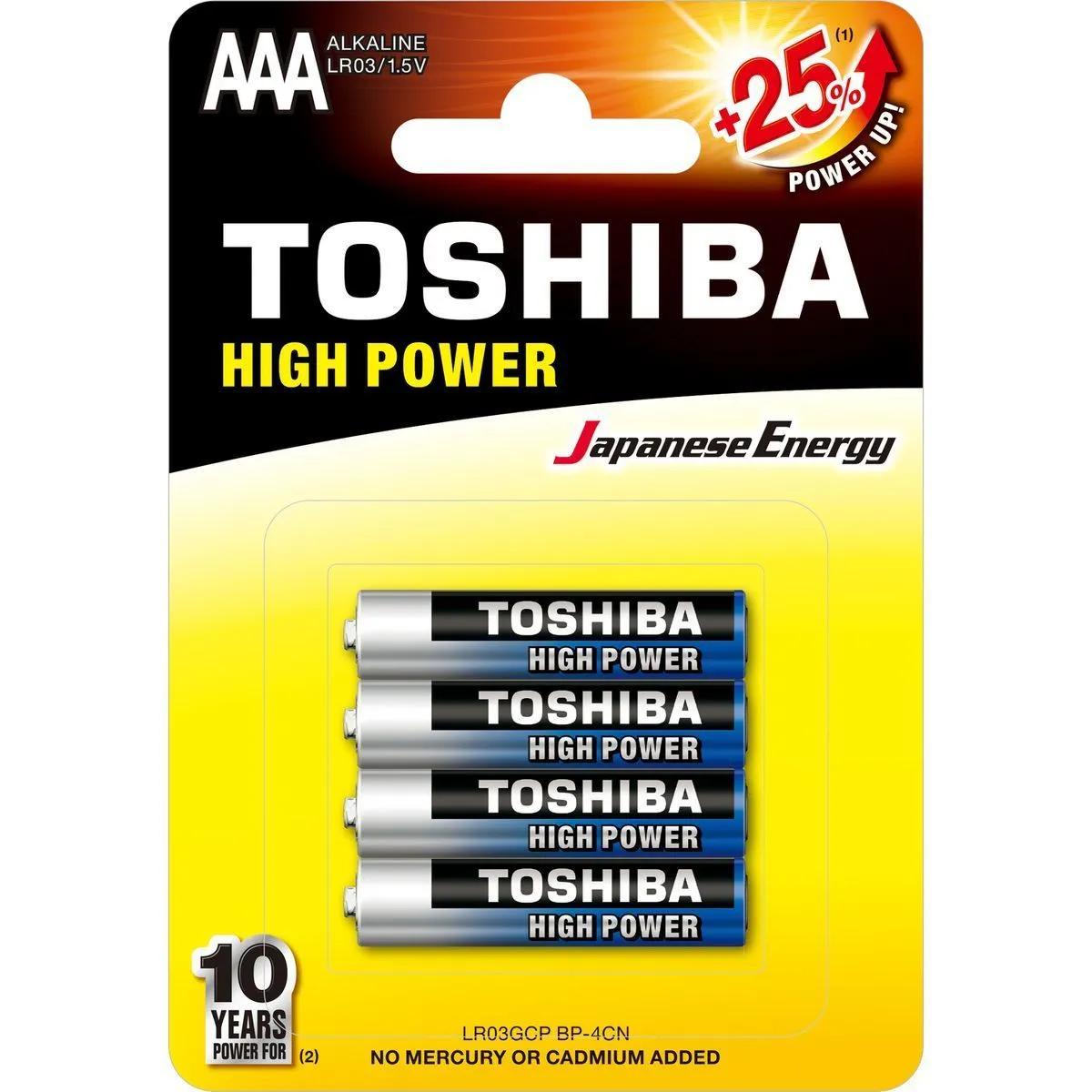
The Toshiba AAA alkaline battery is a reliable, mercury-free power source that keeps your everyday devices running without the frustration of mid-session dropouts. Sold as a 4-pack, these batteries deliver consistent voltage across a long shelf life — the kind of thing you chuck in a drawer and forget about until you actually need them. Which, inevitably, is always at the worst possible moment.
| Spec | Value |
|---|---|
| Brand | Toshiba |
| Battery Type | Alkaline |
| Size | AAA (LR03) |
| Voltage | 1.5V |
| Pack Quantity | 4 |
| Typical Capacity | 850–1,200 mAh |
| Heavy Metals | No mercury, cadmium, or lead |
| Leak Protection | Yes — resistant design |
| SKU | HS2702 |
Running a vaporiser, portable scale, or LED grow light remote? Grab a spare 4-pack so you're never caught short. These pair well with any AAA-powered device in the shop — from digital scales to handheld torches.
There's nothing worse than reaching for your TV remote, your portable vaporiser, or your kitchen scale and getting nothing. Dead batteries have a talent for timing — they always go at the exact moment you need them most. A Friday evening, everything closed, and your device just blinks at you.
Toshiba AAA alkaline batteries sit quietly in a drawer for years without losing meaningful charge. Their leak-resistant design means they won't corrode inside your device while waiting — something we've seen happen with cheaper no-name cells. We've had customers bring in remotes with green crust leaking out of the battery compartment. That's not just a dead battery; that's a dead remote. Toshiba's leak protection is genuinely worth the small premium over bargain-bin alternatives.
The honest limitation? These are single-use alkaline cells. If you're burning through batteries weekly — say, in a wireless gaming controller — rechargeable NiMH batteries will save you money long-term. But for low-drain devices like remotes, clocks, torches, and digital scales, a good alkaline AAA battery is still the most practical choice. You get stable 1.5V output right out of the pack, no charger needed, no waiting around.
We've been shipping gear since 1999, and the number one support question that has the simplest fix? "My device won't turn on." Nine times out of ten, it's the batteries. Not the device, not a defect — just flat AAA cells. We started stocking Toshiba alkaline batteries because we got tired of customers blaming perfectly good vaporisers and scales for what was really a 50-cent battery problem.
One thing worth knowing: alkaline AAA batteries feel noticeably lighter than rechargeable NiMH AAAs. That's normal — alkaline cells weigh roughly 11–12 grams each, while rechargeables sit around 14 grams. The weight difference doesn't affect performance; it's just a different chemistry. If you pick one up and think it feels cheap, it's not — that's just how alkaline rolls.
AAA alkaline batteries deliver between 850 and 1,200 mAh depending on the drain rate. Low-drain devices like remotes and clocks will get closer to the upper end. High-drain gadgets pull more current and exhaust the cell faster.
Yes. The AAA (LR03) form factor is universal. These Toshiba alkaline cells fit any device that takes standard AAA batteries — remotes, torches, wireless mice, digital scales, you name it.
They are. Toshiba manufactures these AAA alkaline batteries without mercury, cadmium, or lead. That makes disposal simpler and reduces environmental impact compared to older battery chemistries.
Alkaline batteries maintain stable voltage even after long periods of inactivity. Stored at room temperature in original packaging, you can expect several years of usable shelf life. Toshiba's leak-resistant design helps prevent corrosion during storage.
For low-drain devices like remotes and clocks, alkaline is the practical choice — no charger, no waiting, stable 1.5V output. For high-drain devices you use daily, rechargeable NiMH batteries save money over time. Both have their place; it depends on how fast you go through them.
Leaked alkaline contents (potassium hydroxide) can corrode battery contacts and damage electronics. If you spot white or greenish residue, clean the contacts with a cotton bud dipped in vinegar, then dry thoroughly. Toshiba's leak-resistant design reduces this risk, but removing batteries from devices in long-term storage is still smart practice.
No. Mixing depleted and fresh alkaline batteries forces the weaker cell to over-discharge, which increases the chance of leaking. Always replace all batteries in a device at the same time, ideally from the same pack.
Last updated: April 2026