Books & gifts
by CJ Spotswood
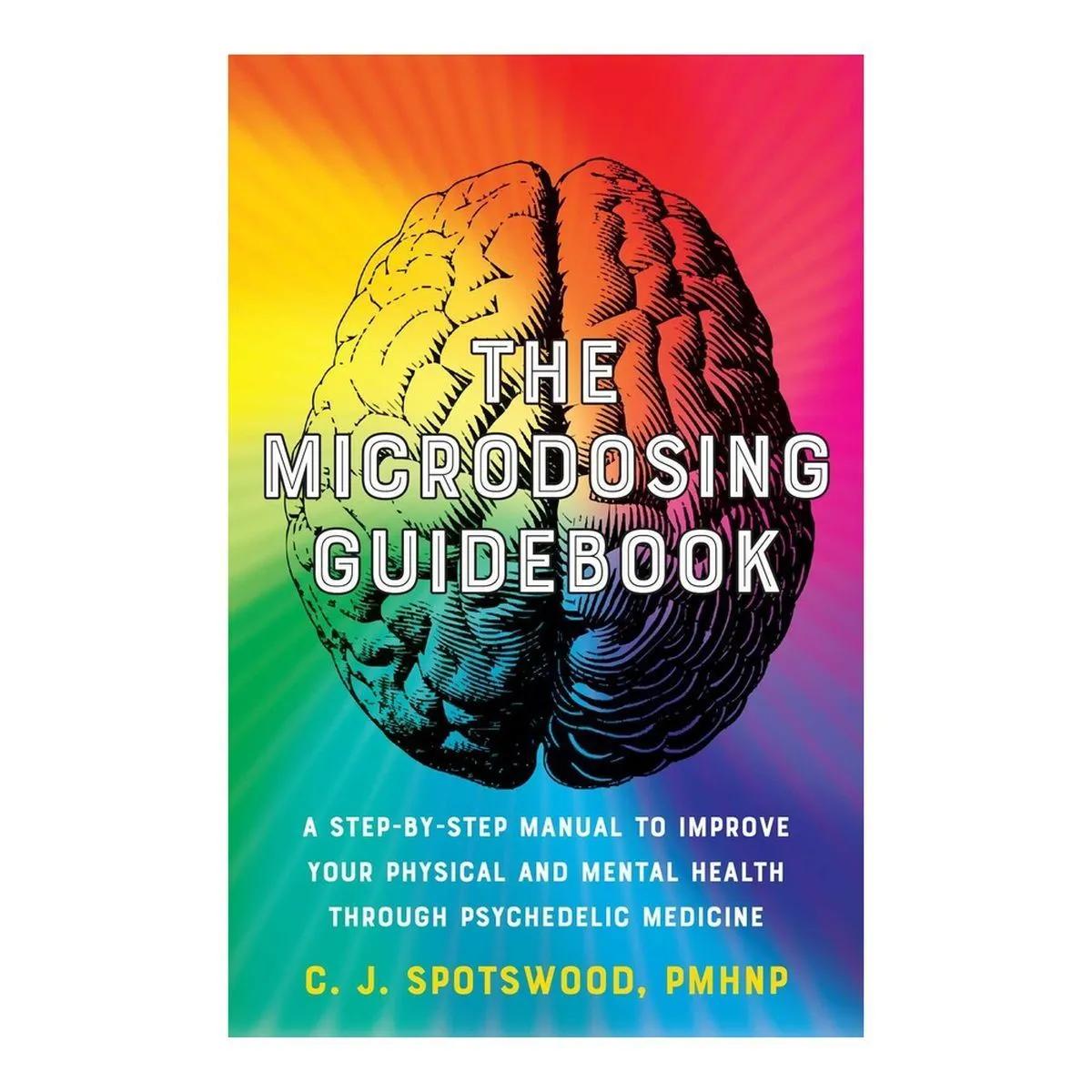
The Microdosing Guidebook is a three-part paperback manual that covers the history, science, and practical application of microdosing psychedelics. Written by CJ Spotswood — a US Board-certified psychiatric nurse with 20 years of clinical experience spanning traditional pharmacotherapy, reiki, yoga, and psychedelic-assisted approaches — this book approaches microdosing as a subject worth understanding properly before you try it. Not a pamphlet, not a manifesto. A proper workbook you'll actually use. You can buy The Microdosing Guidebook here at Azarius and have it shipped across Europe.
This microdosing guidebook stands out because it combines clinical psychiatric expertise with a hands-on 6-week workbook — something most microdosing resources lack entirely. Most content online is either breathless hype or dry academic papers with paywalls. This guidebook sits in the middle — written by someone who understands both clinical psychiatric practice and non-traditional therapeutic modalities. Spotswood doesn't just tell you what microdosing is; the book is structured so you can actually do something with the information.
The three sections serve distinct purposes. Section one is a knowledge base: the history of microdosing (which Spotswood traces back hundreds, possibly thousands of years), the research behind it, contraindications, and potential risks. Section two flips the perspective — it's a reference manual aimed at health professionals who want to support patients already interested in microdosing. Section three is where the rubber meets the road: a 6-week workbook with detailed lessons on incorporating microdosing into daily life.
That structure matters. We've sold plenty of psychedelic literature over the years, and the books that actually get finished are the ones that give you something to do, not just something to read. A 6-week workbook with daily integration exercises is genuinely useful — it turns abstract concepts into a practice.
| Spec | Value |
|---|---|
| Author | CJ Spotswood |
| Author Background | US Board-certified psychiatric nurse, 20 years of experience |
| Format | Paperback |
| SKU | HS1595 |
| Structure | 3 sections: guidebook, professional reference, 6-week workbook |
| Substances Covered | Multiple psychedelics (microdose protocols) |
| Target Audience | Curious individuals, informed readers, health professionals |
The Microdosing Guidebook is designed for three distinct audiences: newcomers seeking a research-informed introduction, health professionals whose patients ask about microdosing, and experienced readers ready to follow a structured protocol. Spotswood designed each section accordingly. If you're new to the topic and want a grounded introduction to microdosing — section one covers the rationale, the science, and the risks without overselling anything. If you're a therapist, nurse, or doctor whose patients keep asking about microdosing — section two gives you a clinical framework to have that conversation. And if you're ready to actually try a structured microdosing protocol — the 6-week workbook in section three walks you through it day by day.
The honest limitation here: this is a US-authored book, so some of the clinical and cultural context is American. That said, the pharmacology doesn't change based on geography, and the workbook structure is universal. We'd recommend it as a solid starting point even if you're already fairly well-read on the topic — the structured workbook alone is worth the price of entry.
| Reader Type | Relevant Section | What You Get |
|---|---|---|
| Curious newcomer | Section 1: Guidebook | History, research overview, contraindications, risk factors |
| Health professional | Section 2: Clinical Reference | Framework for patient conversations, clinical context |
| Practitioner ready to start | Section 3: 6-Week Workbook | Day-by-day programme with integration exercises |
Microdosing research is growing but still preliminary, with most studies reporting mixed results across mood, cognition, and creativity domains. Microdosing generally involves taking between 1/10th and 1/20th of a standard dose of a psychedelic substance — well below the threshold for perceptual changes.
According to a systematic study published in PMC, detailed long-term questionnaires revealed several variables that changed during the microdosing period, with effects broadly characterised across mood, cognition, and creativity domains (Polito & Stevenson, 2019, PMC). A large cross-sectional study found that adults who microdose psychedelics report health-related outcomes of interest, particularly among those with mental health concerns — though the study design precludes causal inference (Rootman et al., 2021, PMC).
A rapid review of low-dose psychedelic studies highlighted a range of neurobiological, physiological, cognitive, and affective changes associated with microdosing (PMC, 2024). Meanwhile, research compiled by Healthline notes that clinical trials suggest microdosing LSD has mild positive effects on certain measures, though microdosing showed little to no benefit for increasing creativity or productivity (Healthline). That last point is worth sitting with — the creativity angle gets a lot of press, but the evidence is mixed at best.
According to a 2020 review on therapeutic potential, a microdose is generally considered to be one-tenth of a dose normally causing perceptual changes. When taking the doses used in clinical research as a reference, that typically falls in the 5-20 microgram range for LSD and 0.1-0.3g for dried psilocybin mushrooms (Kuypers et al., 2020, PMC).
Research from the Beckley Foundation has also contributed to the broader understanding of sub-perceptual psychedelic dosing, particularly regarding LSD microdose protocols and their neurological effects. Spotswood references this body of work alongside data compiled by James Fadiman, PhD and Sophia Korb, PhD. The European Monitoring Centre for Drugs and Drug Addiction (EMCDDA) provides additional context on the regulatory and public health field surrounding psychedelic substances in Europe.
Spotswood covers all of this in the guidebook — and critically, also covers what we don't know yet. Given the lack of large-scale, placebo-controlled human data, studies examining the prevalence of this practice and its associated outcomes are still considered preliminary (Anderson et al., 2019, PMC). The book doesn't pretend the science is settled. That honesty is one of its strengths.
According to the published literature, most adverse effects reported from microdosing are mild and transient, resolving after the substance clears the system — but they do occur, and Spotswood dedicates real page space to them. Side effects can include increases in blood pressure and anxiety, as reported in multiple studies. This is where the psychiatric nursing background shows. If you're on existing medication — particularly SSRIs, MAOIs, or lithium — you need to know about potential interactions before you start.
The book addresses medication interactions directly, which is something most popular microdosing content skips entirely or buries in a disclaimer. James Fadiman, PhD and Sophia Korb, PhD have compiled interaction data that Spotswood references, and the guidebook encourages readers to approach microdosing with the same seriousness they'd bring to any other pharmacological intervention.
From our counter: the customers who get the most out of microdosing books are the ones who actually read the safety sections. We've had people come in having done everything except check whether their current medication was compatible. One customer told us he'd been microdosing for three weeks before realising his SSRI could be an issue — he wished he'd read this book first. This guidebook puts that information front and centre, which is exactly where it belongs.
The best way to use this book is sequentially — read the knowledge base first, then move to the workbook only once you understand the risks and research. Here's the recommended approach:
Pair this with The Psychedelic Explorer's Guide by James Fadiman for a broader context on psychedelic use, or pick up a journal or notebook to track your progress through the 6-week workbook. A dedicated journal makes the daily exercises in section three significantly more useful. If you're interested in the science of psychedelics more broadly, The Encyclopedia of Psychoactive Plants by Christian Rätsch is another title worth exploring from the Azarius book collection.
The Microdosing Guidebook distinguishes itself through its 6-week workbook structure and the author's clinical psychiatric credentials — a combination no other popular microdosing book currently offers. We carry a fair few psychedelic books, and most of them fall into two camps: either they're academic texts that read like journal articles, or they're enthusiast guides that skip the hard questions. Spotswood's book sits between those poles. The psychiatric nursing background means the safety information is clinical-grade. The workbook structure means it's not just theory — you walk away with a 6-week plan.
The one thing to flag: this is a guidebook, not a substitute for professional medical advice. Spotswood is clear about that throughout. If you have a pre-existing mental health condition or you're on medication, the book will give you the knowledge to have a better-informed conversation with your healthcare provider — but it's not telling you to go it alone. That restraint is actually what makes it trustworthy.
Compared to something like Fadiman's Psychedelic Explorer's Guide, which covers the full dose spectrum and is more philosophical in tone, Spotswood's book is narrower in focus and more practical in application. If you specifically want to understand microdosing — the protocols, the research, the risks, and a structured way to try it — this is the better starting point. If you want the broader psychedelic picture, Fadiman's your book. Best case: order both and read them side by side.
From our counter: a regular customer who works as a therapist told us this was the first microdosing book she felt comfortable recommending to clients — specifically because the safety sections are written at a clinical standard rather than glossed over. That feedback tracks with what we see. The people who buy this book tend to come back for the workbook journals, not to return the book.
Microdosing involves taking between 1/10th and 1/20th of a standard dose of a psychedelic substance — well below the threshold for perceptual changes. The goal is sub-perceptual effects that integrate into daily life rather than a full-blown altered state.
Yes. Spotswood covers tips on how to safely take microdoses of different psychedelics, not just one. The book addresses multiple substances and their respective protocols within the 6-week workbook framework.
According to published research, side effects can include increases in blood pressure and anxiety, though most reported adverse effects are mild and transient. The guidebook dedicates significant space to contraindications, medication interactions, and risk factors — it's one of the book's strongest sections.
Absolutely. Section two is specifically designed as a reference manual for health professionals looking to support patients interested in microdosing. Spotswood's 20 years of psychiatric nursing experience makes the clinical framing credible and practical.
The evidence is mixed. According to a 2024 rapid review published in PMC, a range of neurobiological and cognitive changes have been associated with microdosing. However, some researchers suggest an expectancy effect may account for part of the reported benefits. Spotswood covers both sides honestly in the guidebook.
The 6-week workbook structure sets it apart. Most microdosing books are informational only — this one gives you a structured daily programme to follow. The author's clinical psychiatric background also means the safety and contraindication sections are more thorough than typical enthusiast guides.
The guidebook covers medication interactions in detail, particularly concerning SSRIs, MAOIs, and other psychiatric medications. Spotswood strongly encourages readers to consult with a healthcare provider before combining microdosing with any existing medication regimen.
You can order The Microdosing Guidebook by CJ Spotswood directly from Azarius. We ship across Europe and typically dispatch books within one working day.
Last updated: April 2026