Grow tents
by Dark Box
We'll only email you about this product — no marketing.
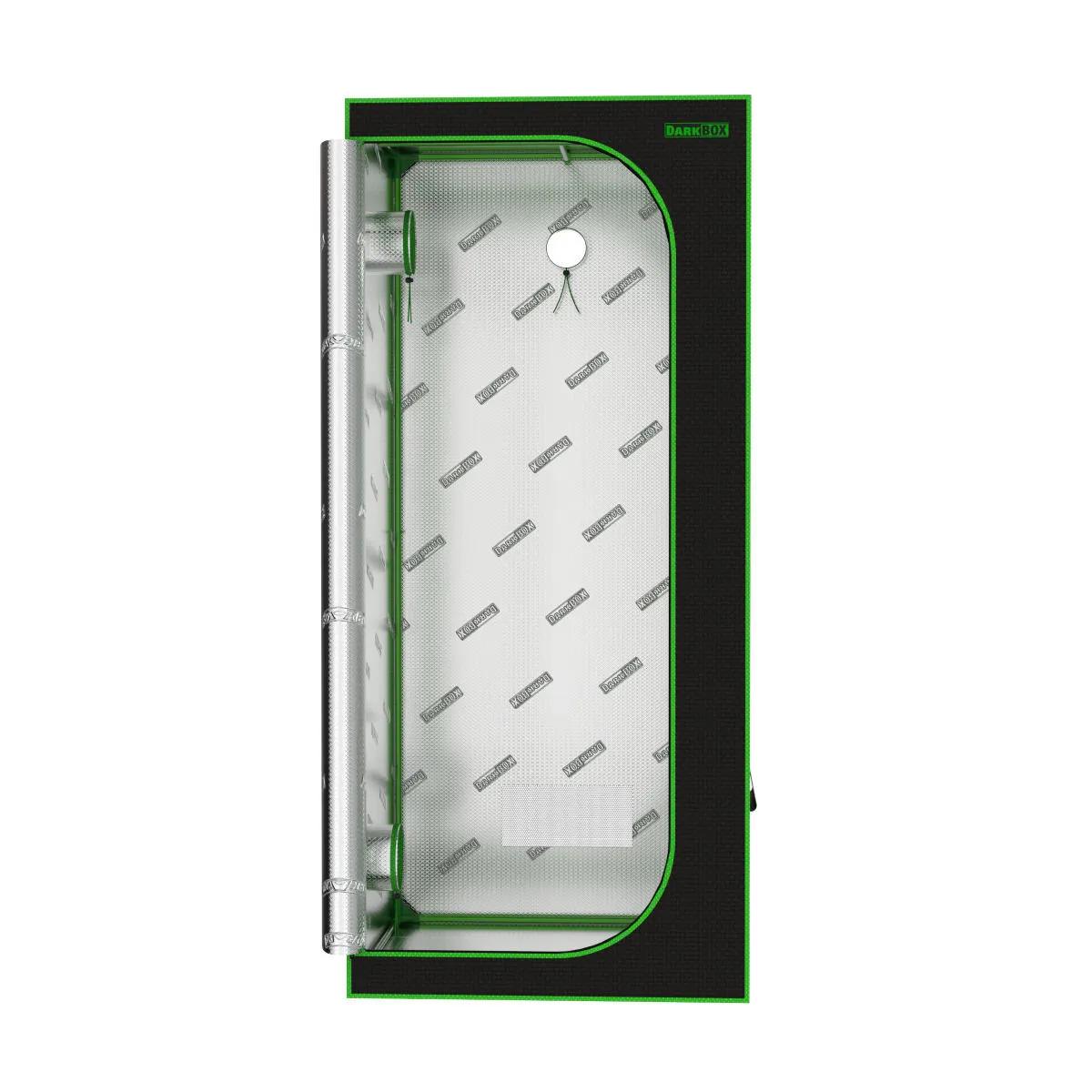
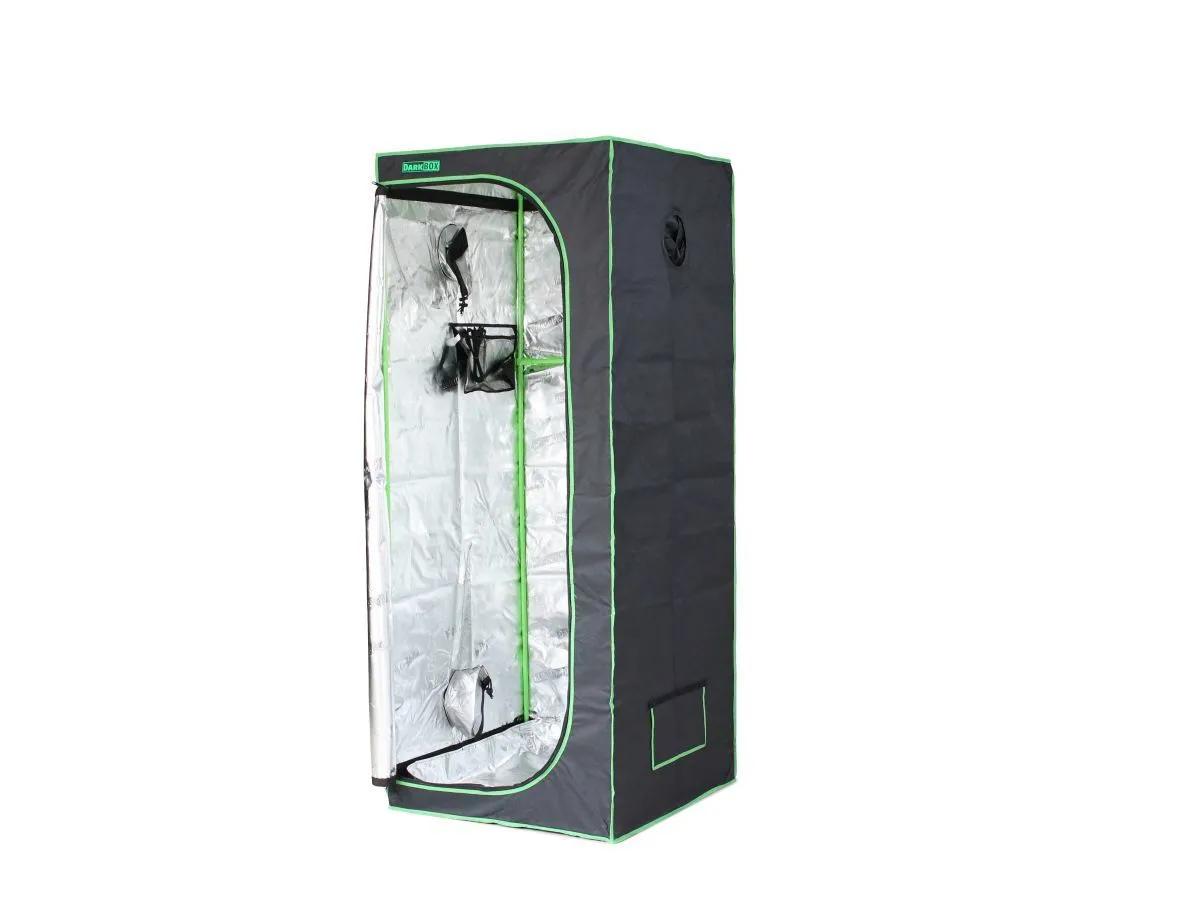
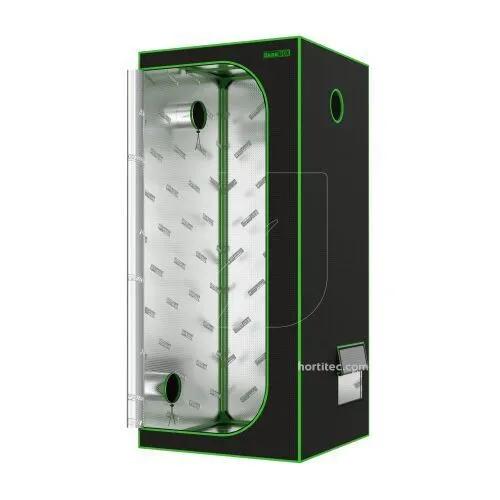
The Dark Box Grow Tent 100x100 is a lightproof indoor growing enclosure that gives you a full square metre of canopy space with 220cm of headroom. That extra height matters more than most new growers realise — it's the difference between cramping your lights against the canopy and actually having room for a proper extraction setup above your plants. We've had this tent set up in the back of the shop, and the 600D oxford fabric feels noticeably heavier than the budget tents that flood the market. The zippers run smooth, the steel frame clicks together without wobble, and the diamond mylar interior actually reflects light instead of just looking shiny.
The Dark Box ships as a complete tent structure — frame, fabric shell, and all the port fittings you need to get started. Here's what you'll find in the box:
What it does not include: lighting, ventilation, carbon filter, or pots. That's worth knowing upfront so you can budget accordingly. A 100x100 tent needs a proper extraction fan and carbon filter — without them, heat builds up fast and any smell goes straight through your house. We'd budget at least another EUR 80-120 for ventilation alone.
A 100x100cm footprint gives you one full square metre of growing space — enough for 4 to 9 plants depending on pot size and training method. That's a meaningful step up from the 80x80 without demanding the spare bedroom that a 120x120 eats up. Most growers we talk to at the counter end up here because it's the smallest size where you can comfortably run a proper setup with room to work.
The 220cm height is where the Dark Box earns its keep. Standard tents come in at 200cm, and those 20 extra centimetres sound trivial until you hang a light, add a driver, mount a carbon filter, and realise you've got about 30cm of clearance above your canopy. With 220cm, you can keep your light at the right distance without cooking your tops. If you're running LED panels — which draw less heat but still need headroom for even light spread — that vertical space is the difference between a flat, even canopy and burnt tips on your tallest colas.
The lightproof design is the other thing that actually matters here. Light leaks during dark periods stress photoperiod plants and can trigger hermaphroditism or delayed flowering. The Dark Box uses double-stitched seams and light baffles behind the zipper line. We checked ours in a dark room with a torch outside — no bleed. That's the baseline for any tent worth buying, but you'd be surprised how many cheaper options fail this test.
The outer shell is 600D oxford fabric. The "D" stands for denier — the thickness of the individual threads. Budget tents run 210D or 420D, and you can literally see light through them if you hold them up. At 600D, the Dark Box blocks light completely and resists tears from frame pressure points. Pick up the fabric and you'll feel the weight — it's got a stiffness to it that cheaper nylon shells simply don't have.
Inside, the diamond mylar lining does the actual work of bouncing light back onto your plants. Flat mylar reflects light in one direction. Diamond-patterned mylar scatters it, which reduces hotspots and gets photons into the lower canopy where they'd otherwise never reach. It's not a massive difference with a single overhead light, but if you're running side lighting or have a bushy canopy, it adds up over a full grow cycle.
The frame is steel — not fibreglass, not aluminium. Steel poles with push-fit connectors that click into place without any tools. We timed the assembly at about 15 minutes the first time, and under 10 once you know which pole goes where. The connectors hold firm, but they're not welded, so don't hang 30kg of equipment from a single crossbar without checking the weight rating. Hang bars across two or more poles to distribute the load.
The one honest limitation: the zippers. They're functional and they seal well, but zippers are always the first thing to fail on any grow tent. Run them gently, don't yank, and they'll last. Force them when the fabric bunches and you'll be replacing them within a year. This isn't unique to the Dark Box — it's a tent-wide reality across every brand we carry.
| Specification | Detail |
|---|---|
| Dimensions | 100 x 100 x 220 cm |
| Floor area | 1 m² (10,000 cm²) |
| Outer material | 600D oxford fabric |
| Inner lining | Diamond mylar reflective |
| Frame material | Steel push-fit poles |
| Assembly | Tool-free, approx. 15 minutes |
| Ventilation ports | Multiple (various diameters) |
| SKU | GS0029 |
| Weight capacity | Distribute load across crossbars |
Choosing a grow tent size is really about how many plants you want to run and how much floor space you can sacrifice. Here's how the Dark Box 100x100 sits in the lineup:
| Tent size | Floor area | Plant capacity | Best use case |
|---|---|---|---|
| 60 x 60 cm | 0.36 m² | 1-2 plants | Single plant grows, seedling/clone station |
| 80 x 80 cm | 0.64 m² | 2-4 plants | Compact personal grows, tight spaces |
| 100 x 100 cm | 1.0 m² | 4-9 plants | Full personal grows, room to train and work |
| 120 x 120 cm | 1.44 m² | 6-12 plants | Larger operations, multiple training methods |
The 80x80 is a solid tent and we'd recommend it if space is genuinely tight. But we've seen too many growers buy the 80x80, outgrow it in one cycle, and come back for the 100x100. If you've got the room, skip the intermediate step. Your back will thank you when you're not contorting yourself to reach the back corner of the tent.
Complete your setup: the Dark Box 100x100 pairs with a 300-400W LED grow light for full canopy coverage. Add a carbon filter and inline extraction fan to manage heat, humidity, and smell. Check our grow tents category for complete kits that bundle everything together, or pick up fabric pots and growing medium separately to build your setup piece by piece.
We've been stocking grow tents since the early 2000s, and the questions haven't changed much. The number one mistake is skimping on ventilation. A 100x100 tent with a 300W LED panel can hit 35°C inside within an hour if you don't have extraction running. Plants stop photosynthesising efficiently above 30°C, and above 35°C you're actively cooking them. A 150mm inline fan with a matching carbon filter is the minimum for this tent size — and it handles smell too, which your housemates will appreciate.
The second most common issue: overwatering. New growers see a full square metre of space, fill it with 9 plants in small pots, and water every day. In an enclosed tent with limited airflow at soil level, that's a recipe for root rot. Start with 4 plants in 11-litre pots, water when the top 2-3cm of medium is dry, and learn from there. You'll get better yields from 4 healthy plants than 9 stressed ones.
Between 4 and 9, depending on pot size and training technique. Four plants in 11-litre pots with LST (low-stress training) will fill the canopy nicely. Nine plants in smaller pots works for a sea-of-green setup with shorter veg time.
A 300-400W LED panel covers 1 m² effectively during flower. Below 300W you'll get thin buds at the edges; above 400W you'll generate more heat than most single extraction fans can handle. Aim for 30-40 watts per square foot of canopy.
Yes. Without one, smell escapes through every duct port and seam. A carbon filter paired with an inline extraction fan scrubs the air before it leaves the tent. Budget for this from day one — it's not optional if you want to keep things discreet.
It is when assembled correctly. The 600D fabric and double-stitched seams block external light, and the zipper baffles prevent bleed around the doors. Always do a dark-room check before your first grow — any pinhole leaks can be sealed with light-proof tape.
You can, but a second person makes attaching the top frame much easier. The whole thing goes together in about 15 minutes with no tools. The push-fit steel connectors are straightforward — just make sure each pole clicks fully into its socket.
A 150mm (6-inch) inline fan with a matching carbon filter is the standard for this tent volume. It provides enough airflow to maintain negative pressure, control temperature, and scrub odour without being excessively loud.
After hanging a light (30cm), carbon filter (40cm), and leaving 30-40cm between light and canopy, you've got roughly 110-120cm of usable plant height. That's plenty for most strains with training, and about 20cm more than a standard 200cm tent gives you.
Last updated: April 2026