Culture Syringes
by Acid Shroomz
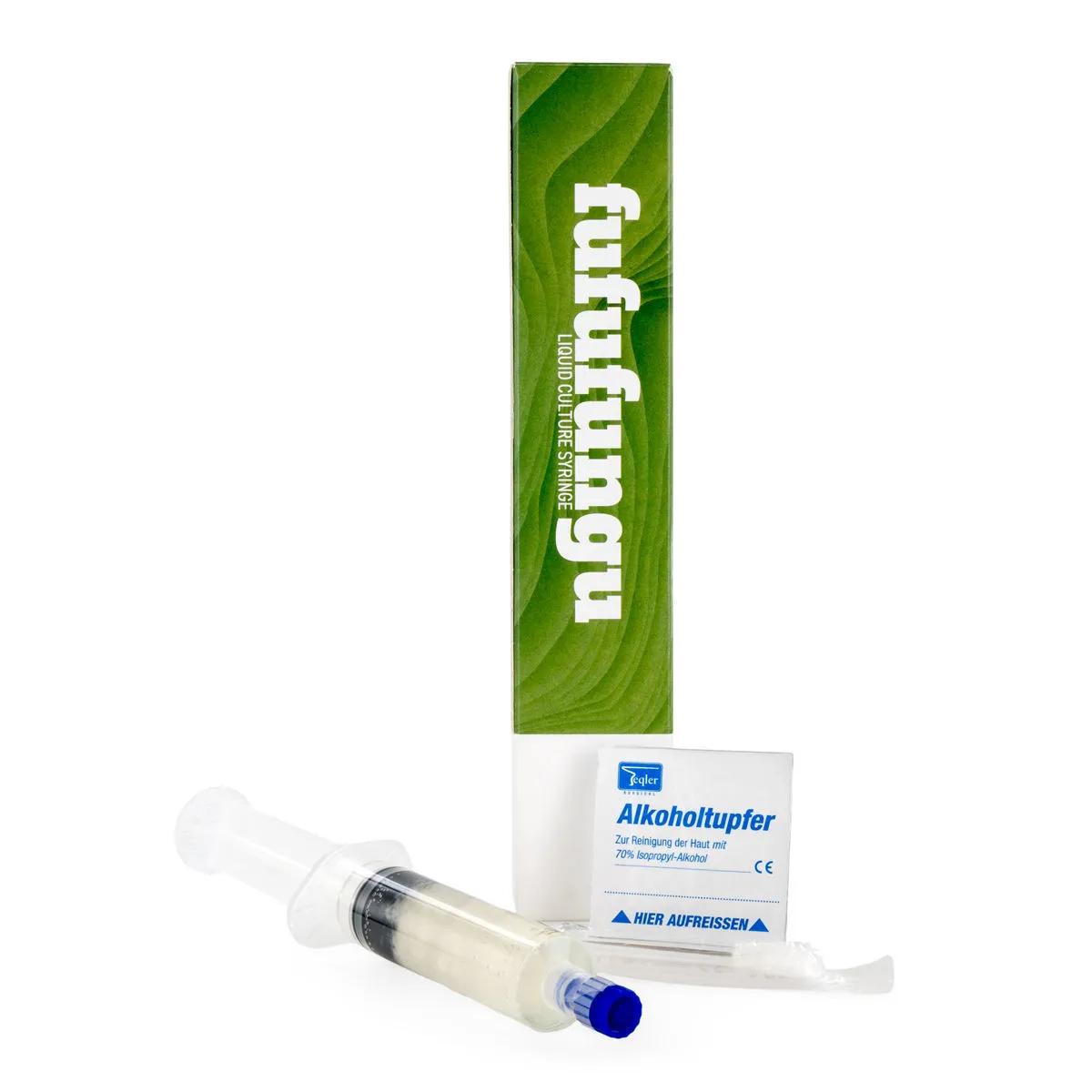
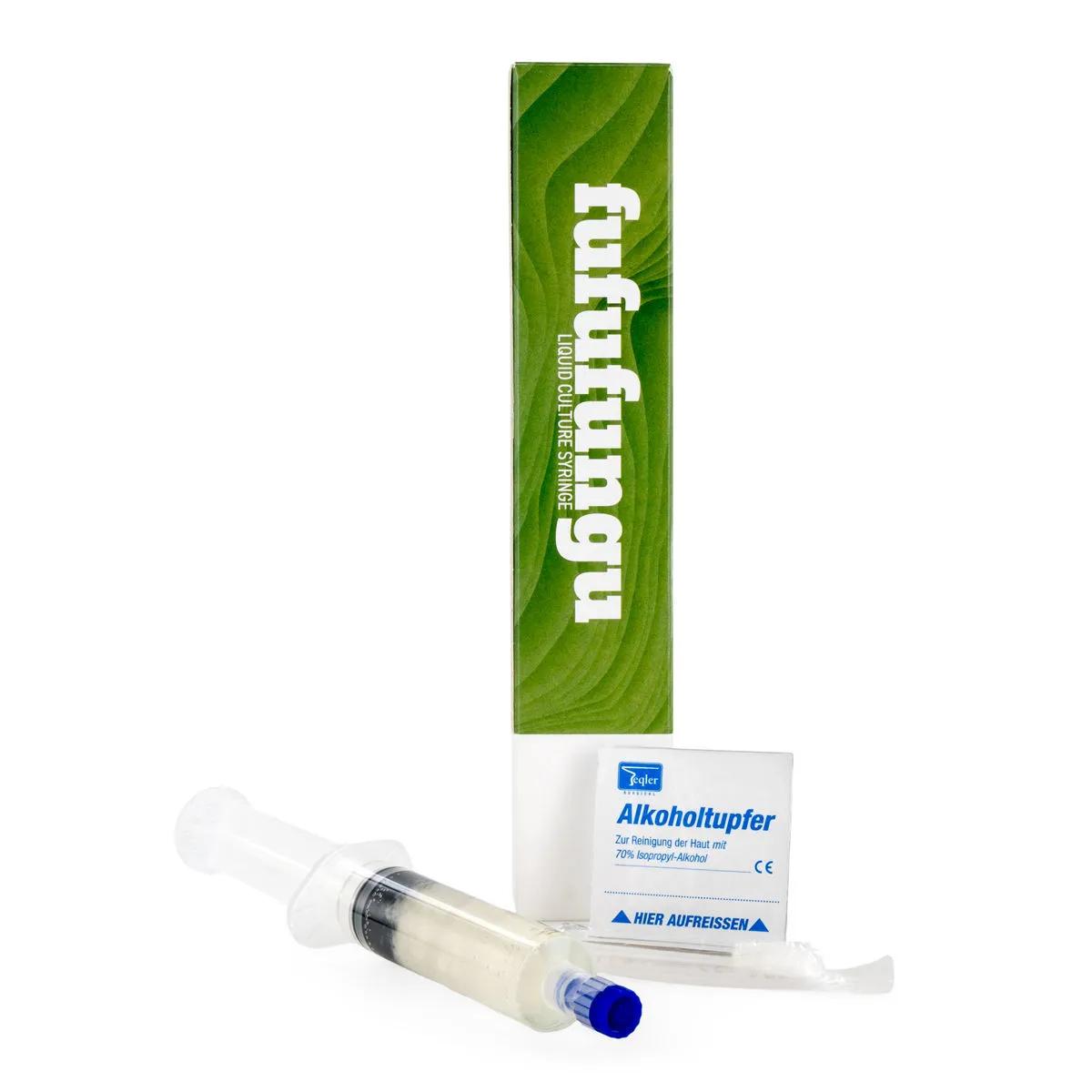
The Rusty Whyte Liquid Culture Syringe is a 20ml ready-to-inoculate culture from Acid Shroomz, designed to grow one of the more visually striking Psilocybe cubensis varieties available. Bred from a cross of Albino A+ and Colombian Rust Spore genetics, Rusty Whyte produces dense clusters of ghostly white fruit bodies with distinctive rusty-coloured spore deposits. If you've already got a grow or two under your belt and want something with a bit more character, this is a solid next step.
Rusty Whyte stands out in a crowded field of cubensis varieties because it genuinely looks different from what most growers are used to. The fruit bodies are almost entirely white — pale caps, pale stems — with rusty brown spore deposits that give the whole cluster a dusted, antique appearance. They grow in tight, dense clusters with smaller caps and thinner stems than something like a Golden Teacher or B+, but what you lose in individual size you gain in sheer number of fruits per flush.
The variety was developed by a mycologist known as PastyWhyte, who started the crossing project in 2014 and spent four years stabilising the genetics before releasing it in 2018. That patience shows — Rusty Whyte is a consistent producer once you dial in conditions, and the liquid culture format from Acid Shroomz means you're starting with actively growing mycelium rather than dormant spores. That translates to faster colonisation times and a shorter wait before you see pins forming.
One honest note: this isn't a beginner variety. Rusty Whyte can be fussier about fruiting conditions than something like Golden Teacher, and the white colouration makes it harder to spot early contamination at a glance. If this is your first grow, we'd steer you towards a Golden Teacher Grow Kit instead — come back to Rusty Whyte once you've got the basics locked in.
Acid Shroomz keeps the package simple and sterile. Everything you need for inoculation is in the box — you just need to supply the substrate or grow bag.
| Item | Details |
|---|---|
| Liquid culture syringe | 1x 20ml, pre-loaded with live Rusty Whyte mycelium |
| Sterile needle | 1x individually wrapped |
| Alcohol wipes | 2x for injection port and surface sterilisation |
| Genetics | Albino A+ x Colombian Rust Spore (Psilocybe cubensis) |
| Developer | PastyWhyte (released 2018) |
| Shelf life | Use within 2 months of delivery |
| Storage | Refrigerate at 2-8°C until use |
| SKU | SH0160 |
A liquid culture syringe contains living mycelium suspended in a nutrient solution, while a spore syringe contains dormant spores that still need to germinate before colonisation begins. The practical difference? Speed. With liquid culture, the mycelium is already active and ready to colonise your substrate the moment it's injected. Spore syringes need to germinate first, which can add days or even a week to your timeline.
The trade-off is shelf life. Spore syringes can last months in the fridge; liquid cultures are best used within 2 months of delivery. That 20ml syringe gives you enough to inoculate multiple bags or jars — typically 3-5 injection points at 3-5ml each — so plan your grow before the culture arrives. Don't let it sit forgotten in the back of the fridge.
Getting the environment right is the difference between a flush that fills the tub and a tub that fills with mould. Rusty Whyte has specific preferences, and hitting these numbers consistently is what separates a decent harvest from a great one.
| Parameter | Incubation Phase | Fruiting Phase |
|---|---|---|
| Temperature | 23-27°C | 21-23°C |
| Relative humidity | 100% | 90-95% |
| Light | Dark or minimal | 12/12 indirect light cycle |
| Fresh air exchange | Minimal | Regular (fan or lid crack) |
| Substrate | Manure-based or coco coir-based | |
| Colonisation time | Typically 10-14 days (liquid culture advantage) | |
| First pins | 7-14 days after fruiting conditions introduced | |
Sterile technique is everything. We've seen growers lose entire batches to one ungloved hand or a needle that touched the table. Take the 5 extra minutes to do this properly.
The white colouration is gorgeous but it's also the one thing that trips up intermediate growers. With a standard brown cubensis, contamination shows up as an obvious off-colour patch — green, black, orange. On Rusty Whyte's pale mycelium, bacterial contamination can hide longer before you notice something's off. Get into the habit of smelling your jars during colonisation. Healthy mycelium smells like fresh mushrooms and damp earth. Anything sour, sweet, or chemical means trouble.
The other thing worth knowing: Rusty Whyte fruits in dense clusters, which looks brilliant but means the inner fruits can trap moisture. Good air circulation during fruiting isn't optional — it's what prevents soft, waterlogged stems that bruise and rot before you can harvest them. If you're growing in a monotub, crack the lid and fan it twice a day. In a Martha tent setup, a small USB fan on a timer does the job.
Psilocybin — the primary active compound in Psilocybe cubensis, including Rusty Whyte — has become one of the most studied psychoactive compounds in modern clinical research. According to a review published in the Journal of Psychopharmacology, psilocybin has been the subject of intense research interest, with clinical trials observing significant reductions in depression and anxiety scores (PMC11016263). A landmark study at Johns Hopkins found that psilocybin produced substantial and sustained decreases in depression and anxiety in patients with life-threatening cancer diagnoses, with clinically significant response rates maintained at 6-month follow-up (PMC5367557).
That said, this is clinical research with controlled doses and professional supervision — not a recommendation. According to a 2023 survey on self-treatment with psilocybin, while most respondents reported positive outcomes, a quarter of those who experienced negative effects reported that these lasted for over 4 weeks (PMC10350727). And a 2025 review notes that psychotic disorders, including schizophrenia, are generally considered absolute contraindications for psilocybin use (PMC12001667). Set, setting, and honest self-assessment matter more than strain choice.
Psilocybin interacts with serotonin receptors, which means it can interact badly with other substances that affect the same system. SSRIs and SNRIs can dull or unpredictably alter the effects. MAOIs are a more serious concern — while psilocybin hasn't been directly associated with serotonin syndrome with MAOIs in the same way as some other compounds, the combination can intensify and prolong effects significantly and should be approached with extreme caution. Stimulants and other serotonergic substances compound the risks. If you're on any medication that affects serotonin, do your homework before growing and consuming.
Dosing research ranges widely. Clinical studies have typically used standardised psilocybin extract rather than whole mushrooms, but general guidance from harm reduction sources suggests starting with no more than 1 gram of dried mushrooms for a new variety. Rusty Whyte is considered fairly potent for a cubensis — stronger than Golden Teacher, roughly comparable to varieties like B+ or Amazonian. Respect that, especially on a first encounter with this strain.
Complete your Rusty Whyte grow setup with an All-in-One Mushroom Grow Bag — the easiest substrate option for liquid culture inoculation. If you're going the monotub route, pick up a bag of Sterilised Grain Spawn and Coco Coir Substrate separately. And if you're new to mushroom cultivation and want to build confidence first, a Golden Teacher Grow Kit gives you the full experience with less room for error.
Typically 3-5 bags or jars, using 3-5ml per injection point. If you're using an all-in-one bag, one bag usually takes 5-10ml spread across 2-3 injection sites for even colonisation.
We'd say no. The white mycelium makes contamination harder to spot, and the strain is pickier about fruiting conditions than something like Golden Teacher. Get one or two successful grows under your belt first, then come back to Rusty Whyte.
Refrigerate at 2-8°C and use within 2 months of delivery. Don't freeze it — ice crystals damage the live mycelium. Keep the syringe in its sealed packaging until you're ready to inoculate.
Manure-based or coco coir-based substrates both work well. For the simplest approach, use an all-in-one grow bag. For better yields and more control, grain spawn transferred to a coco coir and vermiculite bulk substrate in a monotub is the way to go.
Roughly 4-6 weeks total. Expect 10-14 days for full colonisation with liquid culture, then another 7-14 days for pins to appear once you introduce fruiting conditions. Harvest follows within a few days of pinning.
Check your temperature first — below 23°C and colonisation slows significantly. Also verify your injection port sealed properly after inoculation. Bacterial contamination from a poor seal is the most common cause of stalled growth we hear about.
Yes, though liquid culture works best with grain-based substrates. PF Tek (brown rice flour and vermiculite jars) will colonise, but you're not getting the full speed advantage that liquid culture offers over spore syringes. Grain spawn to bulk substrate is the recommended approach for Rusty Whyte.
Dense clusters of white fruit bodies with small, rounded caps and thin stems. The caps flatten as they mature. Harvest just before the caps fully open — you'll see the veil underneath beginning to tear. The rusty-brown spore deposits on mature caps are the signature look.
Last updated: April 2026
Medical disclaimer. This content is for informational purposes only and does not constitute medical advice. Consult a qualified healthcare provider before use of any substance.