
Dit artikel bespreekt psychoactieve stoffen bedoeld voor volwassenen (18+). Raadpleeg een arts als je een aandoening hebt of medicijnen gebruikt. Ons leeftijdsbeleid
How to Make Hash Brownies: A Step-by-Step Guide
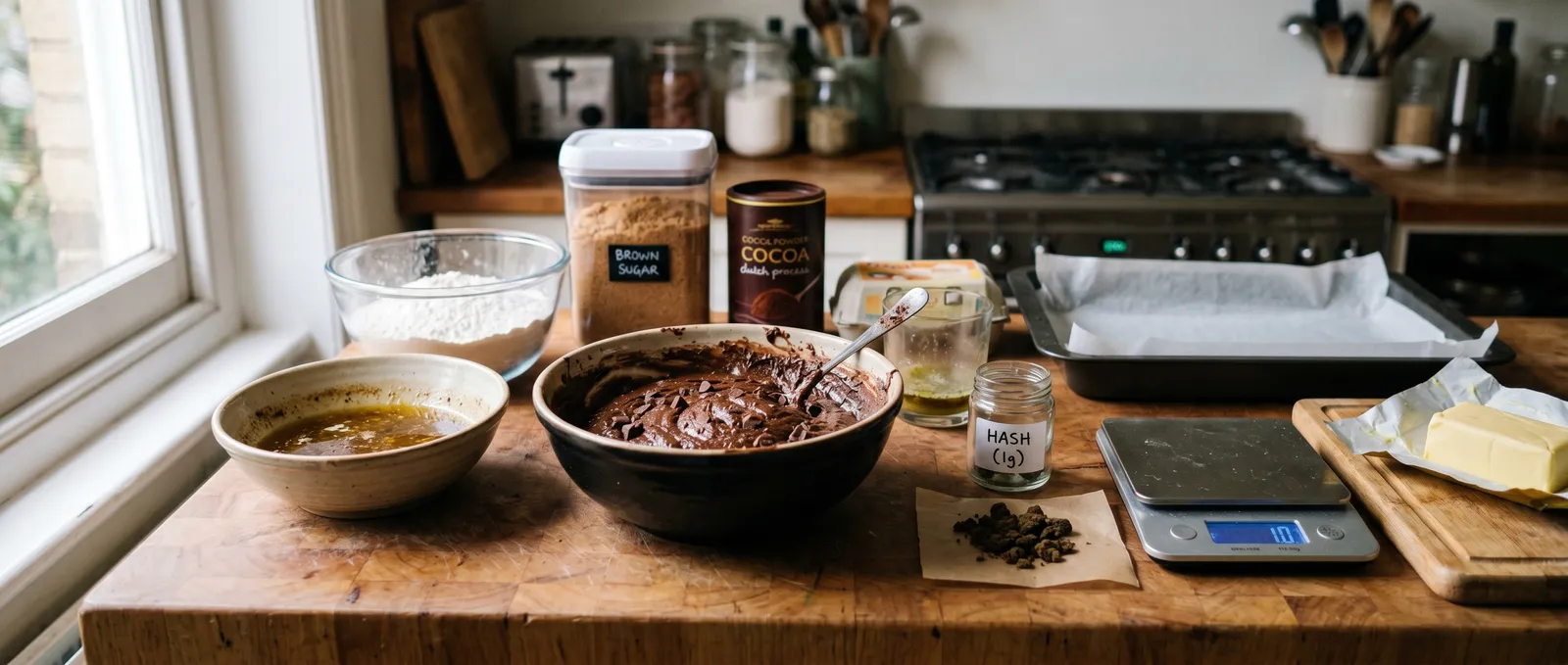
Definition
Hash Brownies are chocolate brownies infused with decarboxylated cannabis resin, where THC binds to the fat and is metabolised in the liver into 11-hydroxy-THC, producing a delayed onset of 30–120 minutes and effects lasting 4–8 hours (Lemberger et al., 1972).
What Are Hash Brownies?
Hash brownies are chocolate brownies infused with cannabis resin (hash) that has been decarboxylated and dissolved into the fat component — usually butter or oil. The THC binds to the fat during cooking, which is how it survives baking and reaches your bloodstream via the digestive tract rather than the lungs. This guide is written for adults aged 18 and over; effects and dosing ranges below apply to adult physiology.
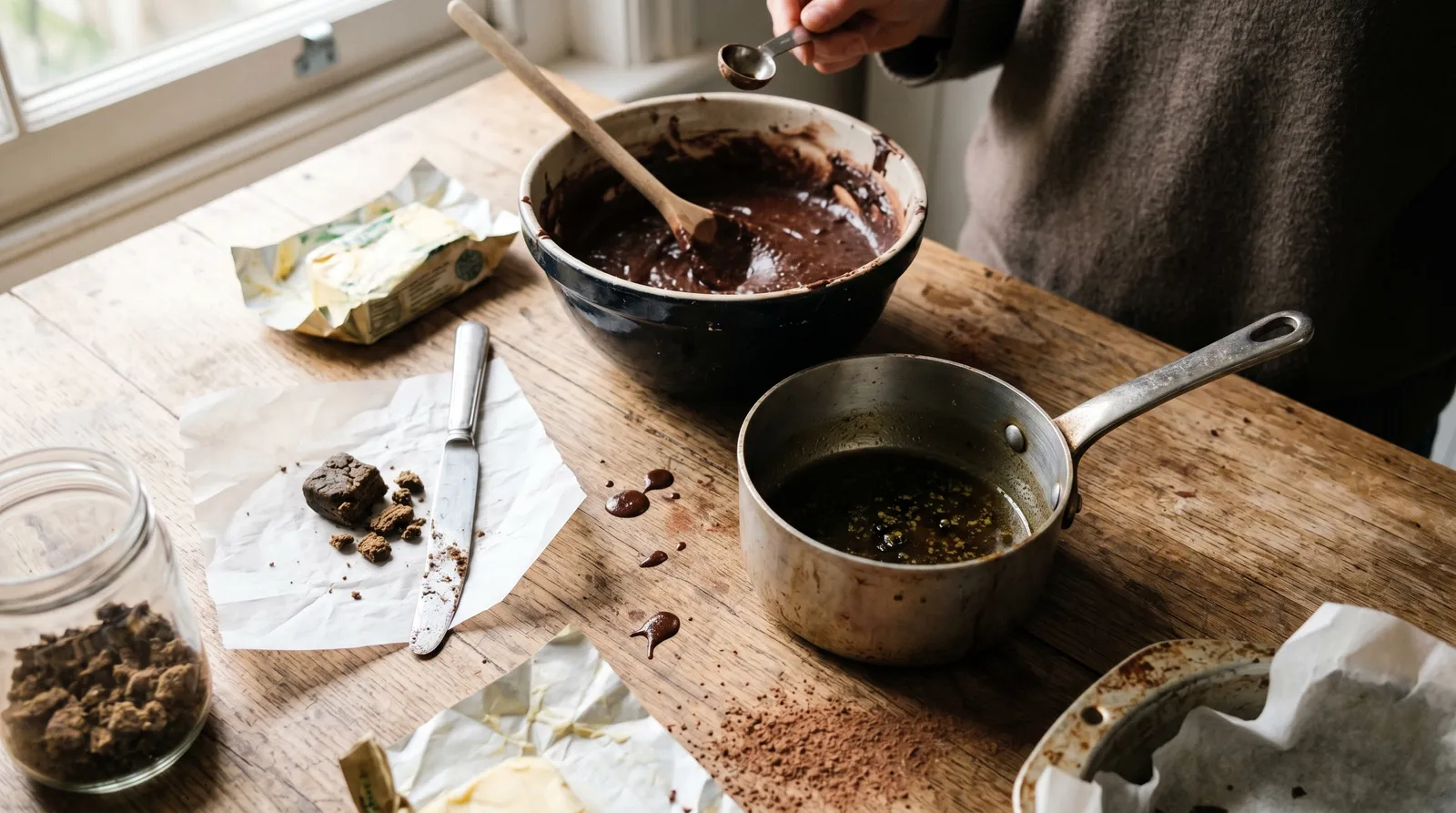
Unlike inhaled cannabis, where onset takes minutes, oral THC is metabolised by the liver into 11-hydroxy-THC — a metabolite roughly 1.5 to 7 times more potent than THC itself, with a much longer half-life (Lemberger et al., 1972). That's why hash brownies hit harder and last longer than people expect. A 2020 Harvard Health review noted that edibles are the single biggest driver of cannabis-related emergency visits, almost always because someone ate a second piece before the first one worked (Harvard Health, 2020).
Key Facts
- Onset: 30–120 minutes — highly dependent on stomach contents and individual metabolism (MacCallum & Russo, 2018).
- Duration: 4–8 hours, with residual effects up to 12 hours.
- Active compound: Delta-9-THC, converted to 11-hydroxy-THC in the liver.
- Typical hash potency: 20–60% THC, depending on the type (dry-sift, bubble, rosin).
- Decarboxylation: Required — raw hash contains THCA, which is not psychoactive until heated (~110°C for 30–45 minutes).
- Reported dose range in published literature: 2.5–10mg THC per serving for recreational use in adults (Barrus et al., 2016).
Azarius sells cannabis-adjacent products including grinders, decarb boxes, and herbal culinary equipment, and has a commercial interest in this topic area. Our editorial process includes independent pharmacological review to mitigate commercial bias.
Before You Start: Contraindications
Oral cannabis is not a neutral substance. According to the European Medicines Agency's 2018 pharmacovigilance review, THC edibles carry elevated risk in the following populations and should be avoided:
- Pregnancy and breastfeeding: THC crosses the placenta and enters breast milk (SAMHSA, 2023).
- History of psychosis or schizophrenia: Cannabis can precipitate or worsen psychotic episodes (Di Forti et al., 2019).
- Cardiovascular disease: THC increases heart rate by 20–50% and can trigger arrhythmia.
- Liver impairment: Hepatic metabolism is the entire mechanism of edible potency — impaired liver function creates unpredictable blood levels.
- Concurrent sedatives: Benzodiazepines, opioids, alcohol — all potentiate THC sedation.
- SSRI/MAOI users: Limited clinical data; serotonergic interactions have been reported.
- Driving: Oral THC impairs psychomotor function for 6–8 hours post-peak (Hartman et al., 2015).
History & Origin
Cannabis-infused food long predates the 20th-century brownie. The majoun of Morocco — a paste of hash, honey, dates, and nuts — appears in accounts from at least the 11th century, and Alice B. Toklas published her famous "Haschich Fudge" recipe (contributed by the painter Brion Gysin) in her 1954 cookbook. The recipe used kief rather than cooked hash butter, which is why the original Toklas fudge is technically inferior to a properly decarbed modern brownie.

The brownie-as-vehicle came later, popularised in the 1960s San Francisco scene by Mary Jane Rathbun — "Brownie Mary" — who baked thousands of batches for AIDS patients at San Francisco General Hospital throughout the 1980s. Her activism directly informed California's Proposition 215, the first US medical cannabis law, in 1996.
The most reliable batches we've seen come from people who weigh the hash on a 0.01g jeweller's scale and calculate the total THC before they even turn the oven on. Everyone else is guessing, and guessing with edibles is how evenings go sideways.
Step 1: Choose Your Hash and Calculate the Dose
Hash potency varies enormously. According to a 2020 EMCDDA market report, hashish samples analysed across Europe averaged 21% THC, but premium dry-sift and modern solventless rosin can exceed 60% (EMCDDA, 2020).
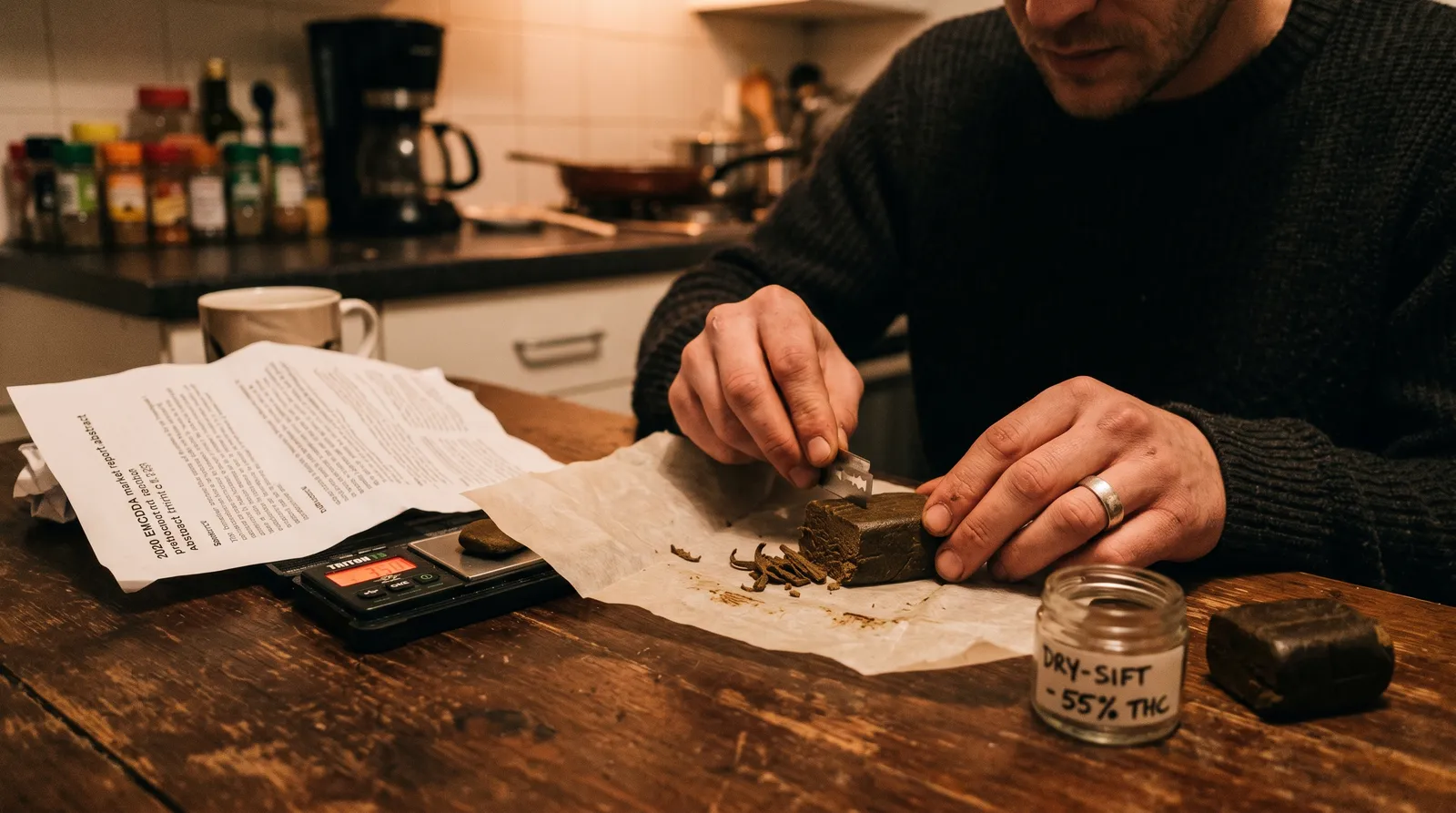
The calculation: multiply hash weight (mg) × THC percentage × 0.85 (decarb efficiency loss) = approximate total mg THC in your batch. Divide by number of servings.
Example: 2g of 30% THC hash → 2000 × 0.30 × 0.85 = 510mg THC. Baked into 16 brownies = ~32mg per brownie. That's already a high dose by published research standards — you'd want to cut each brownie into quarters for a starting serving.
| Hash type | Typical THC % | Notes |
|---|---|---|
| Moroccan import | 10–25% | Variable; often contains plant matter |
| Dry-sift / kief-pressed | 25–50% | Clean, consistent |
| Ice-water / bubble hash | 30–60% | Solventless, high terpene retention |
| Rosin | 50–75% | Very potent; use tiny amounts |
Step 2: Decarboxylate the Hash
Raw cannabis resin contains THCA, not THC. Heat drives off the carboxyl group (CO2), converting THCA to active THC. Skip this step and your brownies will be weak regardless of how much hash you used.
- Preheat oven to 110°C (230°F). Higher temperatures degrade THC to CBN (sedating, not intoxicating).
- Crumble the hash onto parchment paper in a small oven dish. Cover loosely with foil to reduce terpene loss.
- Bake for 30–45 minutes. Softer hash decarbs faster; dense, pressed hash needs the full time.
- Let it cool. It should be dry, crumbly, and darker than when it went in.
A 2016 study by Wang and colleagues found decarboxylation efficiency plateaus around 110°C for 30 minutes, with higher temperatures actually reducing final THC yield through oxidation (Wang et al., 2016).
Step 3: Make the Hash Butter
THC is lipophilic — it binds to fat molecules. Water won't extract it, which is why every edible recipe starts with fat.
- Melt 250g unsalted butter in a saucepan on the lowest possible heat. Add 50ml water to prevent scorching.
- Add the decarbed hash and stir until dissolved. Good hash dissolves cleanly; low-grade material leaves sediment.
- Keep at 70–90°C for 2–3 hours. Stir occasionally. Never let it simmer — boiling degrades THC.
- Strain through cheesecloth into a container. Refrigerate; the butter solidifies on top, water sinks below. Discard the water.
Properly wrapped hash butter keeps 1–2 weeks in the fridge, 6 months in the freezer.
Step 4: Bake and Portion Precisely
Use any standard brownie recipe, substituting the hash butter for the regular butter 1:1. A basic template:
- 250g hash butter (melted)
- 200g dark chocolate (70%)
- 250g caster sugar
- 3 large eggs
- 100g plain flour
- 30g cocoa powder
- Pinch of salt
Melt chocolate into the warm hash butter. Whisk in sugar, then eggs one at a time. Fold in flour, cocoa, and salt. Pour into a lined 20×20cm tin. Bake at 175°C for 25 minutes — do not exceed 180°C or you'll start degrading THC in the batter.
Portioning matters more than baking. Once cooled, measure the tin and use a ruler to cut equal squares. Mark total THC and per-serving mg on the container with tape. A 2017 JAMA analysis found commercial edibles varied by up to 138% from their labelled dose (Vandrey et al., 2015) — and homemade is worse unless you measure.
Step 5: Dose, Wait, and Do Not Redose
This is where everything goes wrong for beginners. Oral THC onset in published studies ranges from 30 to 120 minutes, with peak plasma concentration at 1.5–3 hours (Grotenhermen, 2003).
| Level | THC per serving | Observed in literature as |
|---|---|---|
| Threshold | 1–2.5mg | Microdose range; mild effects only |
| Low | 2.5–5mg | Standard starting dose for THC-naive adults (Barrus et al., 2016) |
| Moderate | 5–15mg | Recreational range for experienced users |
| High | 15–30mg | Strong effects; frequent source of adverse events |
| Very High | 30mg+ | Not routinely studied in naive subjects; linked to ER visits |
The protocol that actually works: eat one portion, set a 2-hour timer, do something else. If nothing happens at 2 hours, wait another hour. Do not eat more on the first evening. The dose-response data on edibles has wide individual variation — CYP2C9 liver enzyme polymorphisms alone can produce a 3-fold difference in 11-hydroxy-THC levels between two people eating identical brownies (Sachse-Seeboth et al., 2009), which is part of why "I ate the same amount as my friend" is not a useful reference point.
Effects: What to Expect
Oral THC produces a different profile than smoked cannabis. Because 11-hydroxy-THC dominates, effects skew more sedating, more body-heavy, and longer-lasting than an equivalent smoked dose.
| Phase | Timing | Effects |
|---|---|---|
| Onset | 30–120 min | Subtle warmth, mild appetite, slight head change |
| Come-up | 1.5–2 hours | Clear cognitive shift, altered time perception |
| Peak | 2–4 hours | Strongest effects; sedation, appetite, altered sensory processing |
| Plateau | 4–6 hours | Effects taper gradually |
| Residual | 6–12 hours | Mild drowsiness, cognitive slowness |
Reported acute adverse effects in published emergency data include anxiety (most common), tachycardia, nausea, hypotension on standing, and in rare cases transient psychotic symptoms at very high doses (Monte et al., 2019). None of these are typically dangerous in healthy adults, but they're deeply unpleasant for 4+ hours when you cannot simply stop the dose the way you can with smoked cannabis.
Safety and Drug Interactions
THC is metabolised primarily by liver enzymes CYP2C9, CYP2C19, and CYP3A4. Medications that share these pathways can either increase THC plasma levels or have their own levels altered — and the interaction runs both directions.
| Drug class | Interaction | Risk level |
|---|---|---|
| CNS depressants (opioids, benzodiazepines, alcohol) | Additive sedation, respiratory depression | Severe |
| Warfarin and anticoagulants | CYP2C9 inhibition increases bleeding risk (Damkier et al., 2019) | High |
| SSRIs / SNRIs | Variable — case reports of anxiety potentiation | Moderate |
| CYP3A4 inhibitors (ketoconazole, clarithromycin, grapefruit juice) | Increase THC blood levels unpredictably | Moderate |
| Stimulants (amphetamines, cocaine) | Cardiovascular strain; masked intoxication | High |
| Antipsychotics | May counteract each other; limited data | Moderate |
The storage question matters too: hash butter and finished brownies look identical to regular ones, and accidental paediatric ingestion is the fastest-growing category of cannabis ER presentations in Europe and North America (Richards et al., 2019). Label, refrigerate, and keep away from children and pets — dogs in particular are exquisitely sensitive to THC and regularly end up at emergency vets.
Emergency Information
If someone has overconsumed and is distressed but conscious: keep calm, stay with them, offer water, remind them it will pass. CBD (10–40mg) has been shown to partially blunt acute THC anxiety in clinical settings (Zuardi et al., 1982).
Seek medical help for: chest pain, fainting, persistent vomiting, seizure, severe confusion, or suspected paediatric ingestion. Tell medical staff exactly what was taken, the estimated dose, and the timing. They are not there to judge — they are there to treat.
- Netherlands: 112 (emergency), 030 274 88 88 (National Poisons Information Centre, healthcare professionals)
- EU-wide emergency: 112
- UK: 111 (NHS non-emergency), 999 (emergency)
Azarius has a commercial interest in cannabis culture and sells related equipment. This article is educational; our editorial process includes independent pharmacological review.
References
- Barrus, D. G., Capogrossi, K. L., Cates, S. C., Gourdet, C. K., Peiper, N. C., Novak, S. P. (2016). Tasty THC: Promises and Challenges of Cannabis Edibles. RTI Press.
- Damkier, P., Lassen, D., Christensen, M. M. H., et al. (2019). Interaction between warfarin and cannabis. Basic & Clinical Pharmacology & Toxicology, 124(1), 28–31.
- Di Forti, M., Quattrone, D., Freeman, T. P., et al. (2019). The contribution of cannabis use to variation in the incidence of psychotic disorder across Europe (EU-GEI). The Lancet Psychiatry, 6(5), 427–436.
- EMCDDA (2020). European Drug Report 2020: Trends and Developments. Publications Office of the EU.
- Grotenhermen, F. (2003). Pharmacokinetics and pharmacodynamics of cannabinoids. Clinical Pharmacokinetics, 42(4), 327–360.
- Hartman, R. L., Brown, T. L., Milavetz, G., et al. (2015). Cannabis effects on driving lateral control with and without alcohol. Drug and Alcohol Dependence, 154, 25–37.
- Harvard Health Publishing (2020). Edibles have fuelled the debate about cannabis safety. Harvard Medical School.
- Lemberger, L., Crabtree, R. E., Rowe, H. M. (1972). 11-Hydroxy-delta-9-tetrahydrocannabinol: pharmacology and disposition. Science, 177(4043), 62–64.
- MacCallum, C. A., & Russo, E. B. (2018). Practical considerations in medical cannabis administration and dosing. European Journal of Internal Medicine, 49, 12–19.
- Monte, A. A., Shelton, S. K., Mills, E., et al. (2019). Acute illness associated with cannabis use, by route of exposure. Annals of Internal Medicine, 170(8), 531–537.
- Richards, J. R., Smith, N. E., Moulin, A. K. (2019). Unintentional cannabis ingestion in children: A systematic review. The Journal of Pediatrics, 190, 142–152.
- Sachse-Seeboth, C., Pfeil, J., Sehrt, D., et al. (2009). Interindividual variation in the pharmacokinetics of Δ9-tetrahydrocannabinol as related to genetic polymorphisms in CYP2C9. Clinical Pharmacology & Therapeutics, 85(3), 273–276.
- SAMHSA (2023). Marijuana and Pregnancy. Substance Abuse and Mental Health Services Administration.
- Vandrey, R., Raber, J. C., Raber, M. E., et al. (2015). Cannabinoid dose and label accuracy in edible medical cannabis products. JAMA, 313(24), 2491–2493.
- Wang, M., Wang, Y. H., Avula, B., et al. (2016). Decarboxylation study of acidic cannabinoids. Cannabis and Cannabinoid Research, 1(1), 262–271.
- Zuardi, A. W., Shirakawa, I., Finkelfarb, E., Karniol, I. G. (1982). Action of cannabidiol on the anxiety and other effects produced by delta 9-THC in normal subjects. Psychopharmacology, 76(3), 245–250.
Last updated: April 2026
Veelgestelde vragen
8 vragenHow long do hash brownies take to kick in?
How much hash do I need for a batch of brownies?
Do I have to decarboxylate hash before baking?
Why are hash brownies stronger than smoking the same amount?
How long do the effects of hash brownies last?
What should I do if I've eaten too much?
Can I use hash instead of cannabis flower for brownies?
What oven temperature should I use to bake brownies without degrading THC?
Over dit artikel


Joshua Askew serves as Editorial Director for Azarius wiki content. He is Managing Director at Yuqo, a content agency specialising in cannabis, psychedelics and ethnobotanical editorial work across multiple languages. Th
Dit wiki-artikel is opgesteld met hulp van AI en gecontroleerd door Joshua Askew, Managing Director at Yuqo. Redactioneel toezicht door Adam Parsons.
Medische disclaimer. Deze inhoud is uitsluitend bedoeld ter informatie en vormt geen medisch advies. Raadpleeg een gekwalificeerde zorgverlener voordat je een stof gebruikt.
Laatst beoordeeld op 26 april 2026