
Arizer Portable Lineup Compared: Solo vs Solo 2 vs Solo 3 vs ArGo
Definition
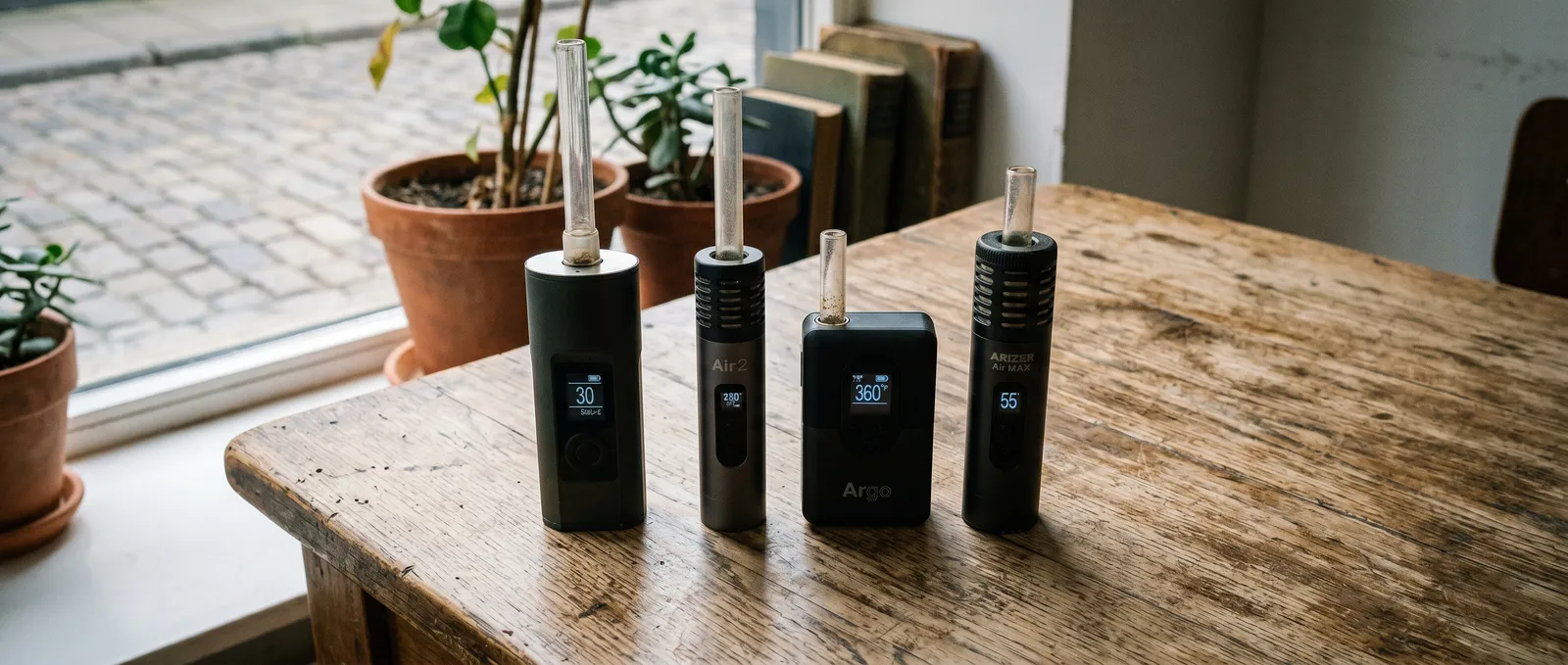
Arizer's portable vaporizers all use borosilicate glass vapour paths and session-style heating, but differ meaningfully in battery architecture, heating method, and portability. A teardown by VaporizerWizard (2023) confirmed the Solo 3 introduced a substantially redesigned hybrid airflow path compared to earlier models. This guide breaks down each model so you pick the right one.
Arizer Portable Lineup at a Glance
Arizer portable lineup compared is a side-by-side breakdown that helps adults choose between four glass-stem vaporizers sharing the same design philosophy but differing in heating, battery, and portability. The Solo, Solo 2, Solo 3, and ArGo all use borosilicate glass vapour paths and session-style heating, yet they split apart enough in size, battery architecture, heating method, and session flexibility that picking the wrong one means either lugging around more vaporizer than you need or wishing you'd spent a bit more. This guide is written for adults choosing between Arizer's current portable models so you can buy the one that actually fits your routine.
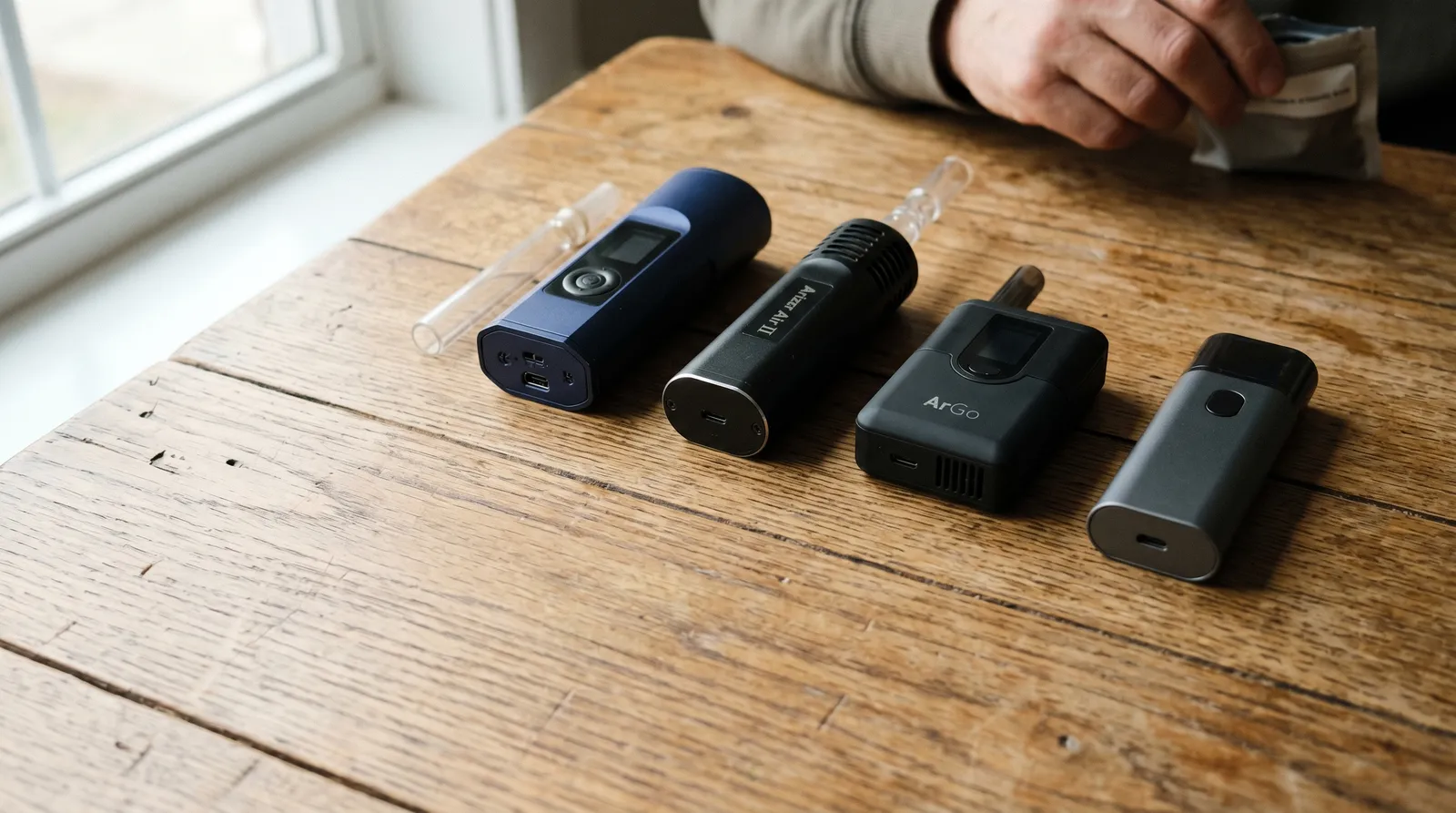
The comparison table below covers the specs that actually matter when you're deciding. Below it, we unpack each dimension so you know what the numbers mean in practice.
| Feature | Arizer Solo | Arizer Solo 2 | Arizer Solo 3 | Arizer ArGo |
|---|---|---|---|---|
| Heating type | Conduction-dominant hybrid | Conduction-dominant hybrid | Full hybrid (convection + conduction) | Conduction-dominant hybrid |
| Temperature control | 7 preset levels | Precise digital (50–220 °C) | Precise digital (50–220 °C) | Precise digital (50–220 °C) |
| Session vs on-demand | Session only | Session only | Session + on-demand | Session only |
| Heat-up time | ~90 seconds | ~25 seconds | ~15 seconds | ~90 seconds |
| Battery capacity | ~2,200 mAh (internal) | ~3,100 mAh (internal) | ~3,500 mAh (swappable 18650) | ~2,600 mAh (swappable 18650) |
| Approx. sessions per charge | 5–7 | 10–14 | 12–16 | 5–8 |
| Stem type | Long glass (110 mm) | Long glass (110 mm) | Long glass (110 mm) | Short glass (60 mm, recessed) |
| Oven capacity | ~0.15 g | ~0.15 g | ~0.15 g | ~0.10 g |
| Dimensions (approx.) | 112 x 30 mm (body) | 112 x 30 mm (body) | 118 x 32 mm (body) | 97 x 29 mm (body) |
| Display | LED indicator ring | OLED | OLED | OLED |
| USB-C charging | No (barrel charger) | No (barrel charger) | Yes | No (barrel charger) |
| Pass-through use while charging | No | No | Yes | No |
| Price tier | Budget | Mid-range | Upper mid-range | Mid-range |
Heating and Vapour Quality
The Solo 3 is the only Arizer portable with a true hybrid convection-conduction heater; the other three models are conduction-dominant. Every Arizer portable runs herb through a borosilicate glass stem — that's the family trait that keeps flavour clean and free of plastic or metal off-gassing. The difference is how the oven heats the herb before the air reaches that glass.
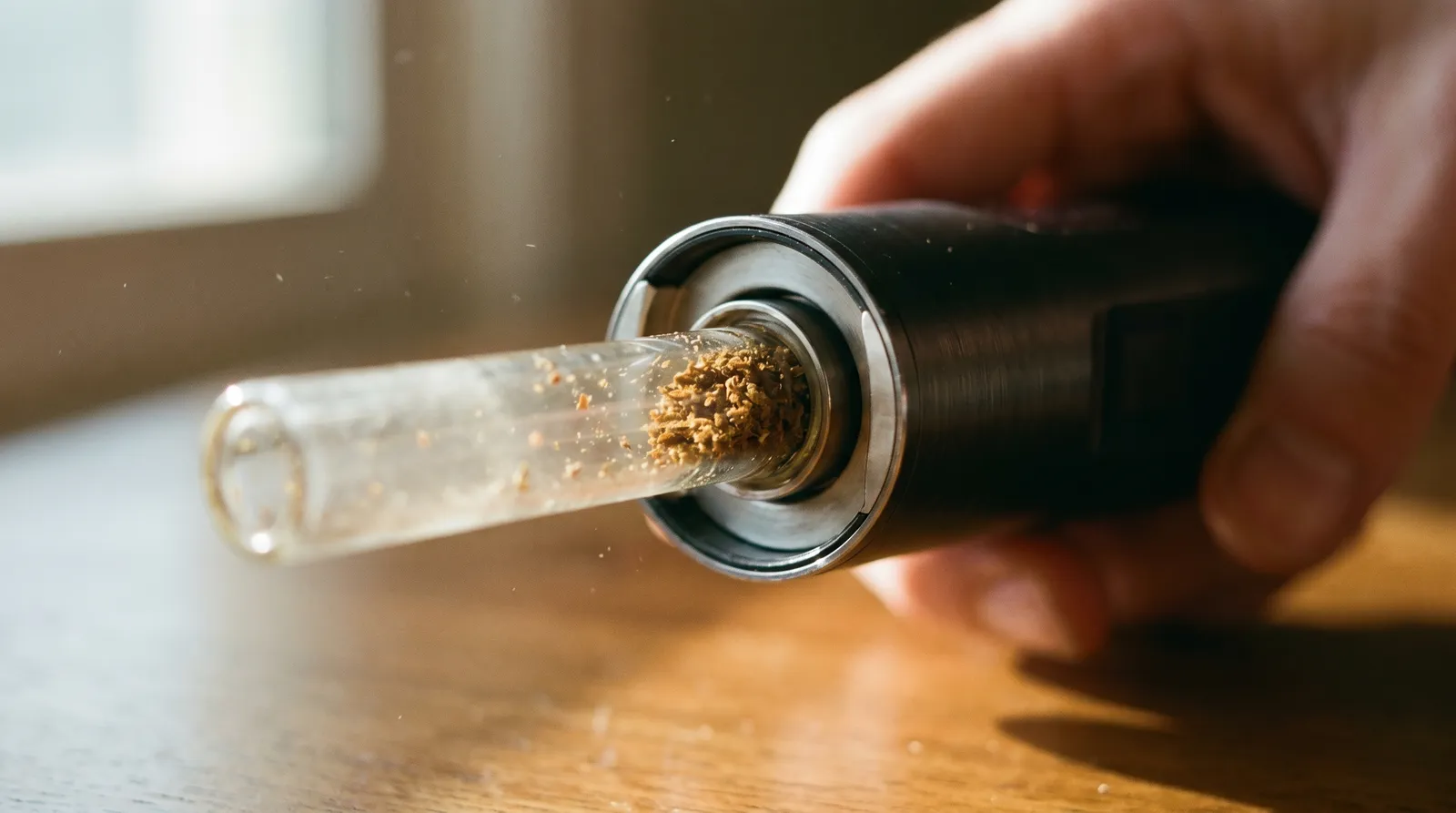
The original Solo and the ArGo rely on a ceramic heater that wraps around the oven chamber. Heat transfers mostly through direct contact with the herb (conduction), though some hot air does pass through as you draw. The Solo 2 refines this with a faster-heating element but follows the same conduction-dominant approach. These models produce solid, consistent vapour during a session — but they keep cooking your herb between draws, which means you'll want to keep sipping steadily once it's up to temperature.
The Solo 3 is the outlier. Arizer redesigned the heater to push significantly more hot air through the herb on demand. According to a teardown analysis by VaporizerWizard (2023), the Solo 3's airflow path routes convection heating more actively than any previous Arizer portable. In practice, this means denser vapour on the first draw and better extraction at lower temperatures. It also means the Solo 3 can operate in on-demand mode — heat up, take a draw or two, switch off, come back later — without wasting herb the way session-only models do.
For flavour chasers, the Solo 3's convection emphasis pulls more terpene-rich vapour at temperatures around 170–185 °C. The Solo 2 catches up at higher temperatures (200 °C+), where conduction efficiency narrows the gap. The ArGo, with its smaller oven and shorter stem, produces slightly warmer and less voluminous draws — decent for a pocket device, but noticeably behind the Solo line in raw vapour quality.
Portability and Form Factor
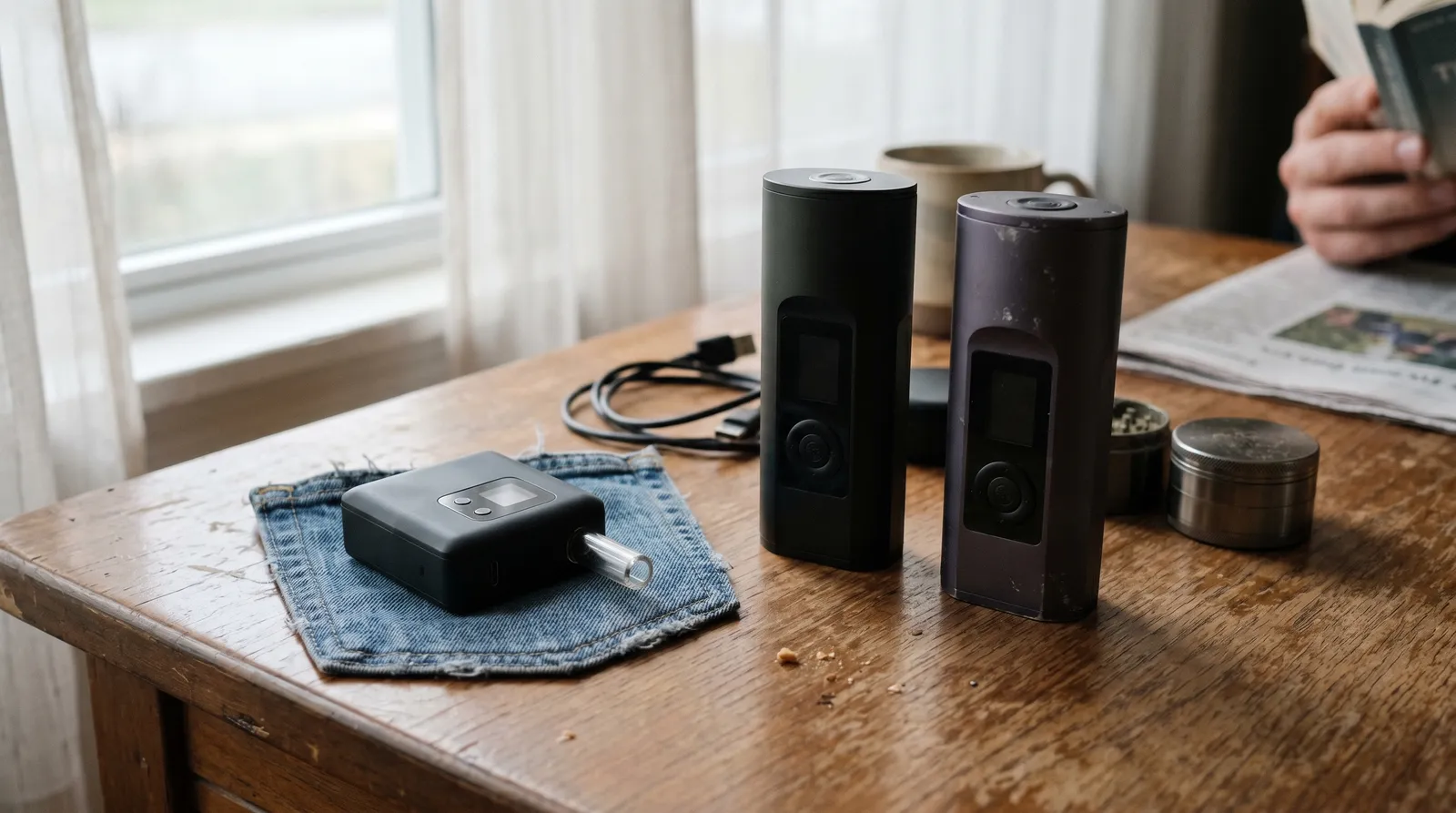
The ArGo is the only genuinely pocketable Arizer portable — the Solo, Solo 2, and Solo 3 are all jacket-pocket devices at best. Here's where the Arizer portable lineup compared really shows its range. The Solo, Solo 2, and Solo 3 are all roughly the same shape — a cylinder about the size of a Red Bull can, with a glass stem poking out the top. They fit in a jacket pocket, but you won't forget they're there, and the exposed glass stem needs protection during transport. Most owners carry them in a padded case or at least wrap the stem separately.
The ArGo was designed specifically to solve this. Its stem is shorter (about 60 mm) and tucks entirely inside the body, protected by a sliding cover. Closed up, it's genuinely pocketable — closer to a chunky lighter than a drinks can. If you need a vaporizer that disappears into a trouser pocket or a small bag without any glass sticking out, the ArGo is the only Arizer portable that delivers.
The trade-off is real, though. That shorter stem means less cooling distance between the oven and your lips. Draws run warmer, and you lose some of the flavour separation the longer Solo stems provide. The smaller 0.10 g oven also means shorter sessions or more frequent repacking if you're sharing.
Battery Life and Charging
The Solo 3 offers the best battery flexibility in the lineup thanks to its swappable 18650 cell and USB-C charging. Battery is the single biggest practical differentiator across the Arizer portable lineup compared here, and it's worth understanding the numbers rather than just glancing at milliamp-hours.
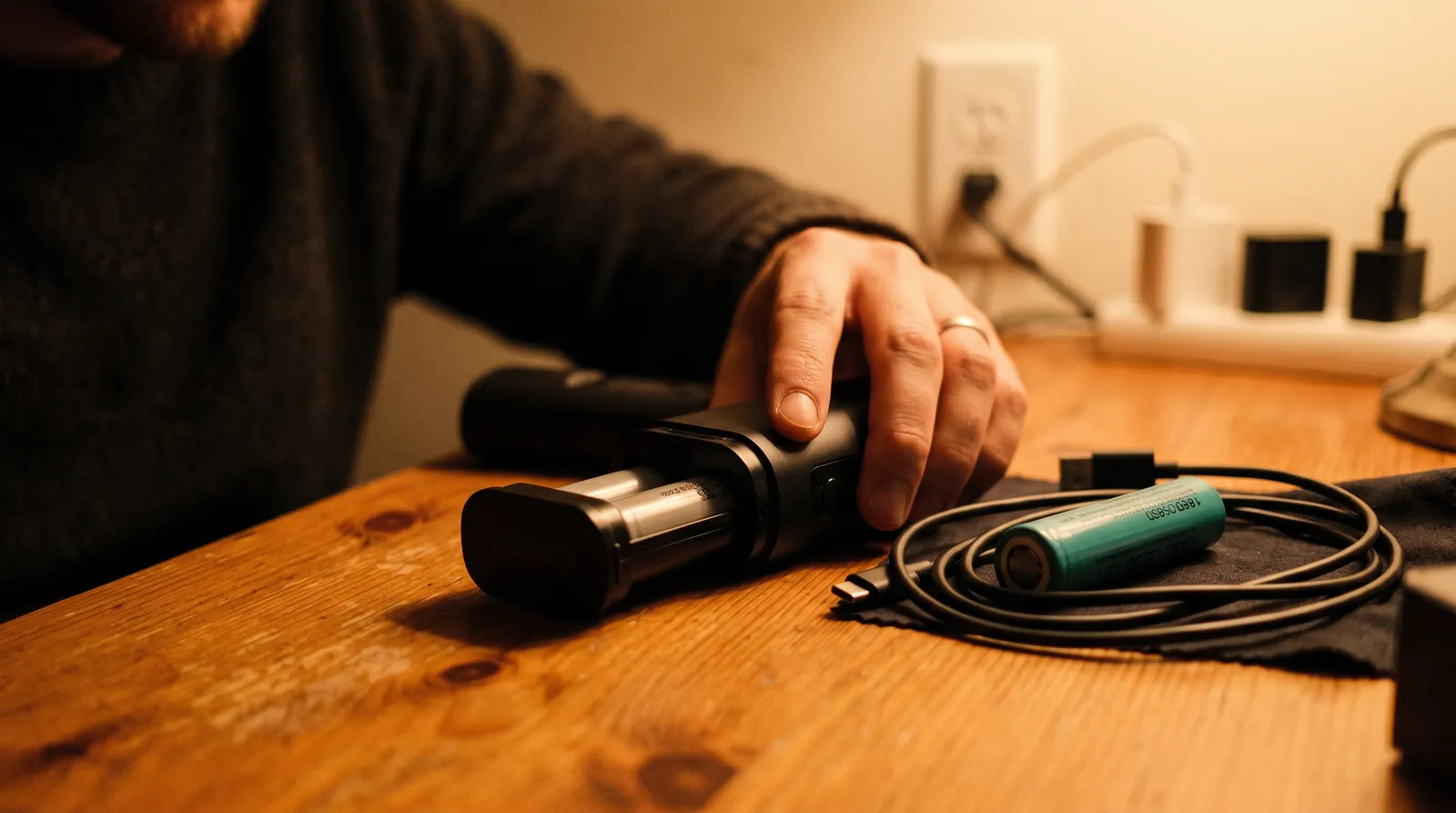
The original Solo and the ArGo both use internal lithium-ion cells in the 2,200–2,600 mAh range. Expect 5–8 sessions per charge — enough for a day out, but you'll want to top up overnight. Neither uses USB-C; both use Arizer's proprietary barrel charger, which means carrying an extra cable if you travel.
The Solo 2 bumps internal capacity to around 3,100 mAh and pairs it with a more efficient heating element. Real-world sessions per charge land around 10–14, which is genuinely impressive for a portable. It still uses the barrel charger, though — a frustrating choice given that the unit launched well into the USB-C era.
The Solo 3 addresses both pain points. It runs on a user-swappable 18650 cell (approximately 3,500 mAh), charges via USB-C, and according to Arizer's official specifications (2024) it allows use while plugged in — meaning you can vaporize while charging without degrading the battery. The swappable cell is the real win: carry a spare 18650 and you've effectively doubled your runtime. If you use 18650 batteries, store them in a proper plastic or silicone case when not in the vaporizer — loose cells rattling around with keys or coins is a genuine safety risk.
For weekend trips or festivals, the Solo 3's battery flexibility is hard to beat. For home-and-garden use where a charger is always nearby, the Solo 2's internal cell is more than adequate.
Temperature Control and Session Modes
The Solo 2, Solo 3, and ArGo all offer single-degree digital temperature control from 50–220 °C; only the original Solo is limited to preset steps. The original Solo offers seven preset temperature levels — functional, but imprecise. You're choosing between broad steps rather than dialling in a specific extraction point. Every other model in the lineup gives you single-degree digital control via an OLED screen, which is a significant upgrade for anyone who wants to explore how different temperatures affect flavour and vapour density.
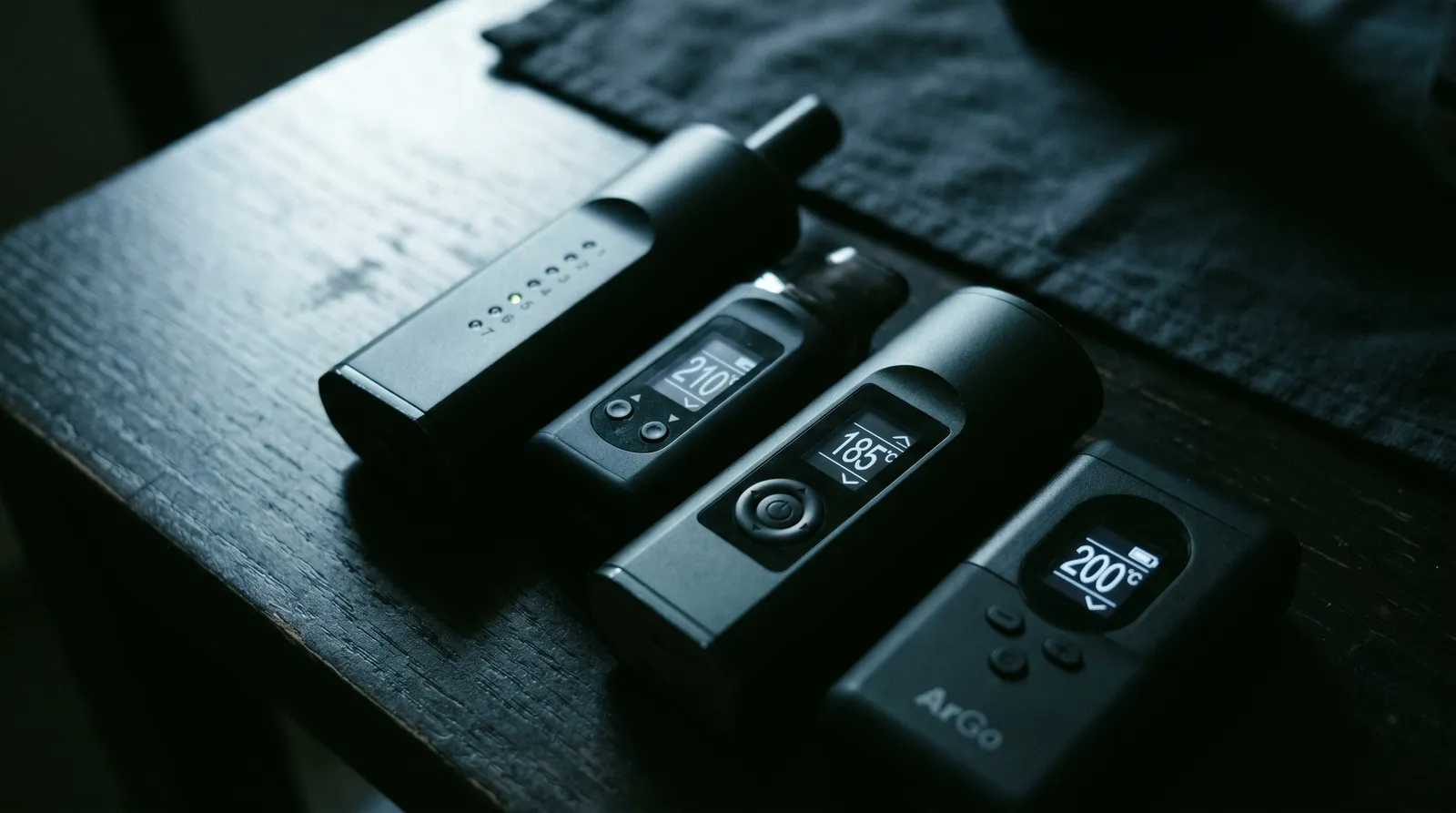
All four models default to session mode: the heater kicks on, maintains temperature for a set period (typically 10–15 minutes depending on the model), then auto-shuts off. This works well for a sit-down session but wastes herb if you only want a draw or two.
The Solo 3 adds on-demand mode, and this is a genuine game-changer for how many people actually use portable vaporizers. Press the button, the heater fires in about 15 seconds, you take your draws, release, and it cools down. Your herb stays uncooked between hits. According to user-reported data compiled by the EMCDDA's harm-reduction resource partners and community forums such as PlanetOfTheVapes (2024), on-demand users report roughly 20–30% better herb efficiency compared to session mode on the same device — though individual draw technique and pack density make these numbers approximate rather than absolute.
Who Should Pick Which
Each Arizer portable suits a different use case — there is no single best model. Rather than ranking these as "best to worst," think of them as tools for different situations.
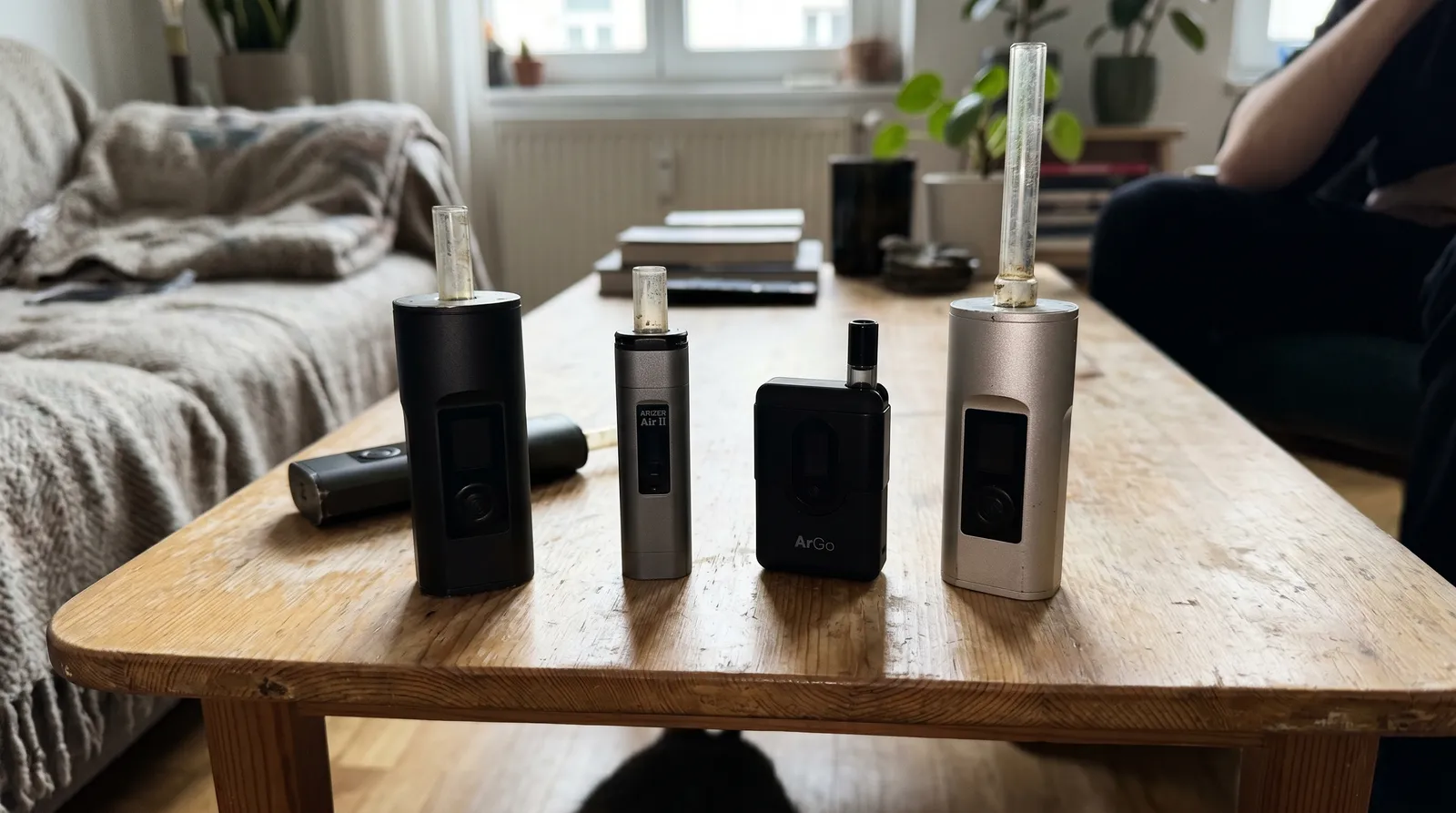
The original Solo is the entry point. If you want to try the Arizer glass-stem experience without spending much, it does the job. Vapour quality is good, not great. The preset temperatures and slower heat-up feel dated next to the Solo 2, but the price gap is the point. An honest limitation: the barrel charger and lack of precise temperature control make it feel like a previous-generation device, because it is.
The Solo 2 is the workhorse. Precise temperature control, excellent battery life, and the same long glass stems that make Arizer's flavour reputation. It's session-only, which suits people who sit down for a full 10–15 minute session. If that's your rhythm — evening wind-down, balcony session, weekend garden use — the Solo 2 is arguably the sweet spot of the lineup for value. You can buy the Solo 2 knowing it handles the vast majority of home-use scenarios.
The Solo 3 is the flagship. On-demand mode, hybrid heating, USB-C, swappable battery, faster heat-up. It does everything the Solo 2 does, plus the flexibility to take single draws without committing to a full session. The price premium is noticeable, but if on-demand matters to you, no other Arizer portable offers it. Compared to non-Arizer competitors like the Mighty from Storz and Bickel, the Solo 3 trades app connectivity for a cleaner all-glass vapour path — a worthwhile swap if flavour purity is your priority.
The ArGo is the pocket option. It sacrifices oven size, stem length, and some vapour quality for genuine pocketability. If discretion and portability rank above everything else, the ArGo is the pick. If you can tolerate a slightly larger device, the Solo 2 outperforms it in every other metric.
Glass Stems and Maintenance
Borosilicate glass stems are the shared vapour path across every Arizer portable — and the main reason the brand is known for clean flavour. This is one of the cleanest material choices in any portable vaporizer — glass doesn't off-gas, doesn't retain flavour between sessions (when cleaned), and lets you visually gauge resin build-up.

Cleaning is straightforward: soak stems in isopropyl alcohol (90%+) for 20–30 minutes, rinse with warm water, let dry completely before use. Do this in a well-ventilated space — isopropyl vapour in a closed bathroom is unpleasant. A pipe cleaner handles the inside of the stem. The oven itself just needs a brush-out between sessions and an occasional iso wipe with a cotton bud.
The ArGo's shorter stems are slightly fiddlier to clean due to their recessed design, but the same method applies. Replacement stems for all models are inexpensive and widely available — worth keeping a spare if you're prone to dropping things on tile floors.
Quick Verdict
The Arizer portable lineup compared across every meaningful dimension shows no single winner — each model earns its place. The Solo 2 is the best value for dedicated session users. The Solo 3 is the most capable overall, especially if on-demand mode matters. The ArGo wins on pocketability alone. And the original Solo still works as a budget entry to the glass-stem experience. Pick based on how you'll actually use it — not the spec sheet.
This guide covers hardware for use by adults. Vaporizers, bongs, pipes, dab rigs and rolling accessories are for adult use only.
References
- VaporizerWizard (2023). Arizer Solo 3 teardown and airflow analysis. VaporizerWizard.com.
- PlanetOfTheVapes (2024). Arizer Solo 3 v2 vs Solo 2: side-by-side comparison and user-reported efficiency data. PlanetOfTheVapes.com.
- Arizer Tech (2024). Official specifications: Solo, Solo II, Solo 3, ArGo. Arizer.com.
- EMCDDA (2023). European drug report: harm-reduction approaches and vaporization references. emcdda.europa.eu.
Last updated: April 2026
Veelgestelde vragen
8 vragenDoes the Arizer Solo 3 have on-demand mode?
Can you swap the battery in the Arizer ArGo?
Which Arizer portable has the best battery life?
Is the Arizer ArGo stem compatible with the Solo models?
What is the difference between the Arizer Solo 2 and Solo 3 heating systems?
Can I order replacement glass stems for Arizer vaporizers?
Does the Arizer Solo 3 support USB-C charging and pass-through use?
How long does the Arizer Solo 3 take to heat up compared to the Solo 2?
Over dit artikel


Adam Parsons is an external cannabis and psychedelics writer and editor who contributes to Azarius's wiki as both author and reviewer. On the writing side, he authors Azarius's kratom and kanna clusters, drawing on exten
Dit wiki-artikel is opgesteld met hulp van AI en gecontroleerd door Adam Parsons, External contributor. Redactioneel toezicht door Joshua Askew.
Medische disclaimer. Deze inhoud is uitsluitend bedoeld ter informatie en vormt geen medisch advies. Raadpleeg een gekwalificeerde zorgverlener voordat je een stof gebruikt.
Laatst beoordeeld op 25 april 2026
Gerelateerde artikelen
Storz & Bickel Volcano complete guide
De Volcano is een desktop convectie-vaporizer van Storz & Bickel die losse ballonnen vult met damp via heteluchtextractie. Hazekamp et al.
TinyMight, Boundless en XMAX vergeleken: specs en advies
Een vergelijking van zes draagbare droogkruidvaporizers van drie merken: TinyMight 2, Boundless CFC en CFX, en XMAX V3, Starry en Ace.
Vaporizer schoonmaken: complete gids voor elke vape
Een vaporizer schoonmaken is een eenvoudige onderhoudsroutine die je apparaat fris laat smaken, soepel laat trekken en jaren langer laat meegaan.
Arizer portable lineup vergeleken: Solo, Solo 2, Solo 3 en ArGo
De Arizer portable lineup vergeleken is een zij-aan-zij-analyse van vier draagbare glassteamvaporizers — Solo, Solo 2, Solo 3 en ArGo — die dezelfde…
Storz & Bickel Crafty vs Mighty – Vergelijking
De Storz & Bickel Crafty en Mighty zijn hybride conductie-convectie vaporizers uit dezelfde Duitse fabriek met identieke kamergeometrie, koelelement en…
DynaVap complete guide — handleiding voor beginners
Een DynaVap is een compacte, handmatige droogkruidvaporizer zonder batterij of elektronica.
PAX Vaporizer Lineup Guide — PAX 3, Mini & Flow vergeleken
De PAX vaporizer lineup guide vergelijkt de drie huidige draagbare PAX-modellen — PAX 3, PAX Mini en PAX Flow — op verhittingsmethode, ovencapaciteit…
Portable vs desktop vaporizer: koopgids en vergelijking
De keuze tussen een portable en een desktop vaporizer draait om hoe en waar je dampt.
DaVinci IQ vs MIQRO: verschil in specs en gebruik
De DaVinci IQ en MIQRO zijn conductie-vaporizers voor droge kruiden met een damppad van zirkoniumoxide-keramiek en een temperatuurbereik van 177–222 °C. Het…