
Convection vs Conduction Vaporizers: Key Differences

Definition
Convection vaporizers heat herb with hot air for even extraction and cleaner flavour; conduction vaporizers use direct contact with heated oven walls for faster heat-up at a lower price. Most modern portables blend both methods into hybrid designs. Research by Lanz et al. (2016) found measurable efficiency differences between the two approaches, making the heating method one of the most practical specs to compare before buying.
Convection vs Conduction: At a Glance
If you're shopping for a dry-herb vaporizer as an adult (18+), the heating method is the single biggest design choice that shapes your experience — how your vapour tastes, how quickly the device is ready, how evenly your herb gets extracted, and how much you'll spend. The table below lays it all out, and the sections that follow unpack every row.
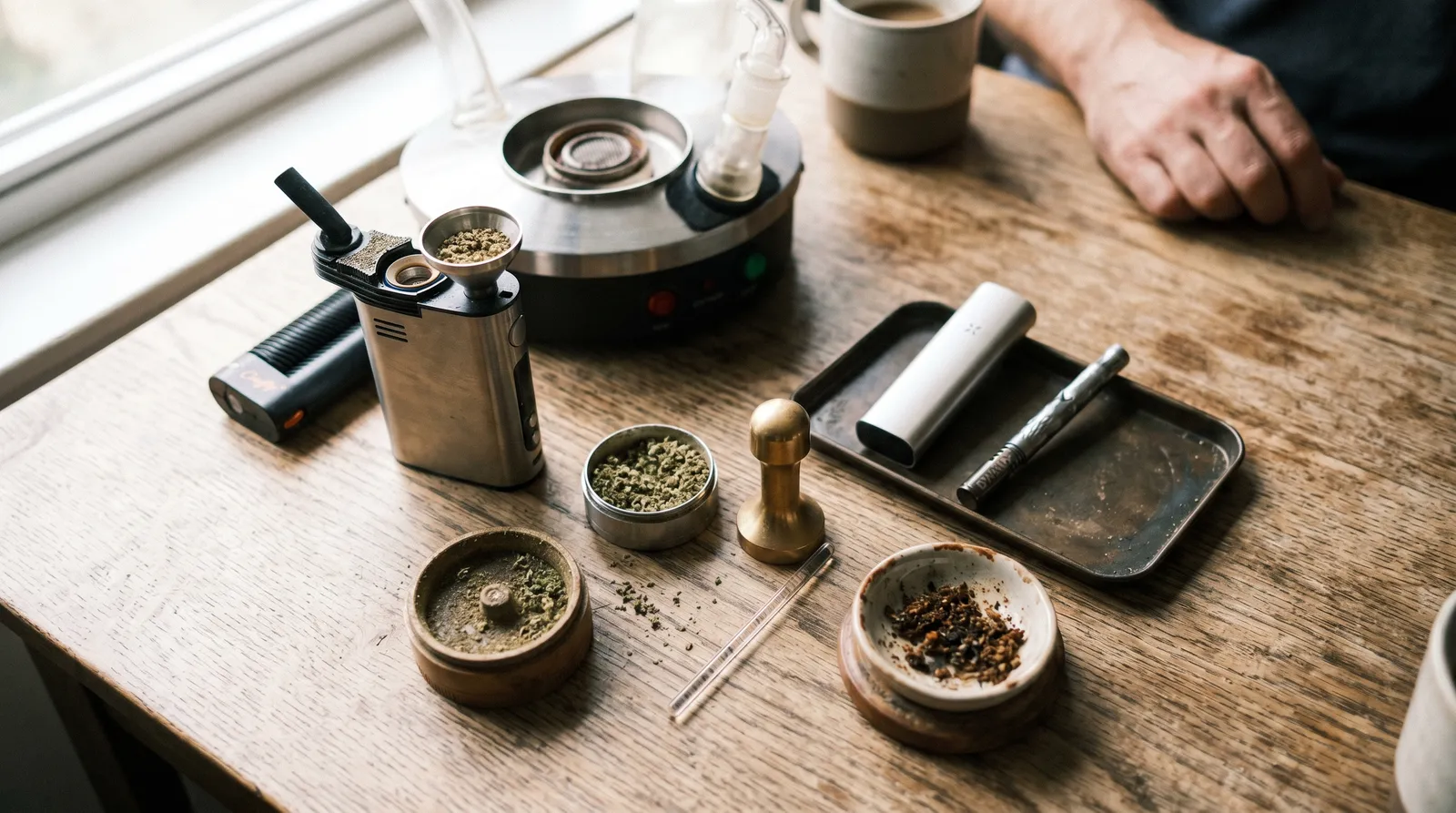
| Dimension | Conduction | Convection | Hybrid |
|---|---|---|---|
| How it heats | Direct contact between herb and a hot surface (usually a metal or ceramic oven wall) | Hot air passes through the herb without direct contact | Oven walls heat the herb AND hot air is drawn through it |
| Heat-up time | Typically 15–30 seconds | Typically 30–90 seconds (some on-demand units under 10 s) | 20–45 seconds |
| Vapour flavour | Good on first few draws; can degrade as herb scorches near walls | Cleaner, more consistent terpene profile across the session | Near-convection flavour with faster warm-up |
| Extraction evenness | Less even — herb touching the walls browns faster than the centre | More even — airflow reaches the full load | Good evenness with moderate stirring |
| Session style | Session mode (oven stays hot; use it or lose it) | Session or on-demand (some heat only while you draw) | Mostly session mode |
| Grind requirement | Fine to medium grind, tightly packed | Medium grind, loosely packed for airflow | Medium grind, moderate pack |
| Stirring needed? | Often yes, mid-session | Rarely | Occasionally |
| Battery demand | Lower — heater cycles on/off against a surface | Higher — maintaining airflow temperature takes more energy | Moderate |
| Price range | Entry to mid-tier | Mid to upper tier (with exceptions) | Mid to upper tier |
| Stocked examples | XMAX V3, Flowermate V5 Mini, Boundless CFC, PAX 3 | TinyMight 2, Storz and Bickel Volcano (desktop), DynaVap (butane-powered) | Storz and Bickel Crafty / Mighty, Arizer Solo / Air, DaVinci IQ2, Healthy Rips Rogue |
What Is Conduction Heating?
Conduction is the same heat transfer you feel when you press your palm against a warm mug. In a conduction vaporizer, your ground herb sits directly against electrically heated oven walls — usually stainless steel or ceramic. The walls reach the target temperature, and the plant material touching them begins to release vapour almost immediately.
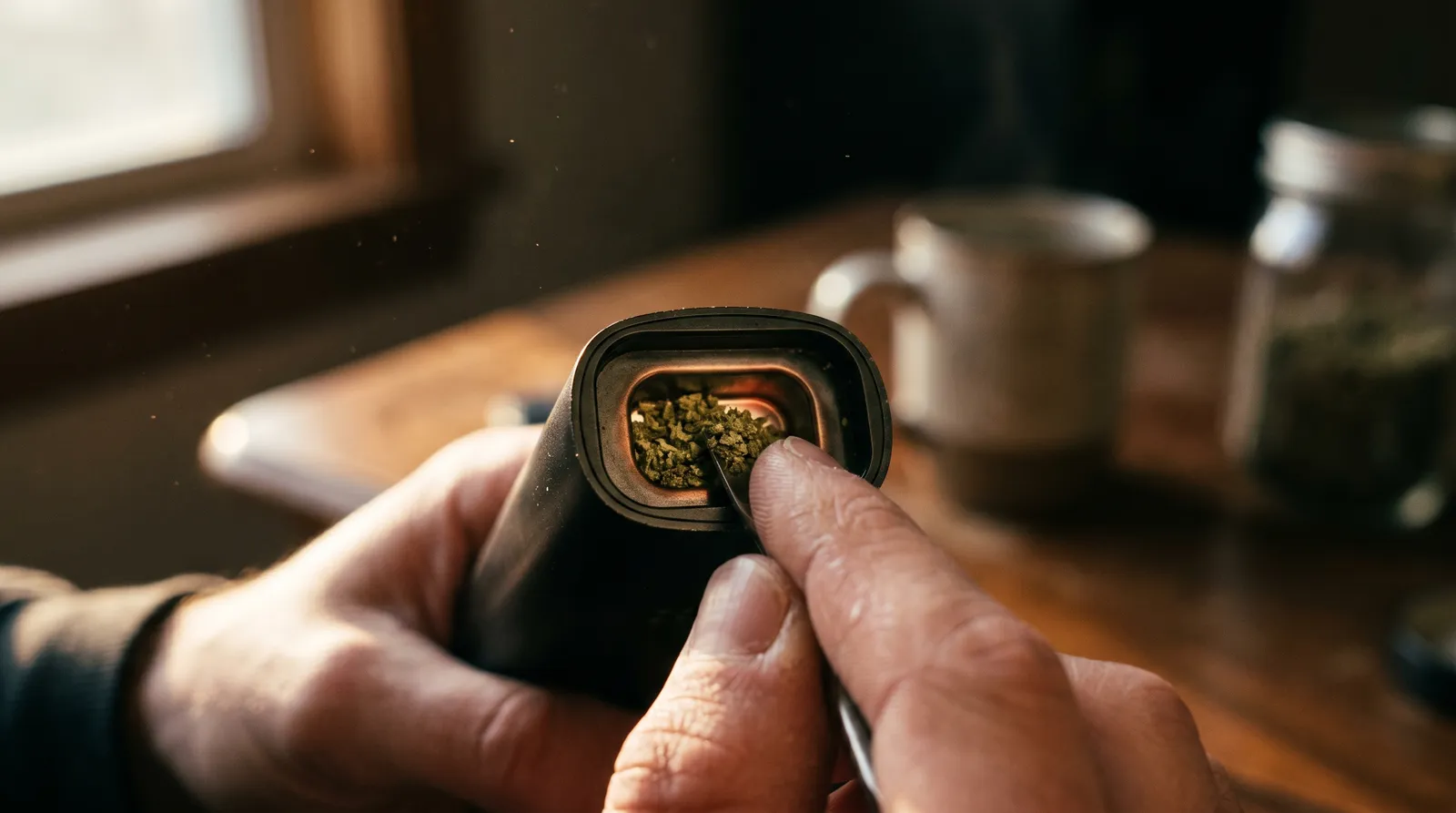
This directness is the method's greatest strength and its main limitation. Because only the herb in contact with the hot surface receives full heat, the centre of the pack can remain under-extracted while the outer layer starts to darken. A 2015 analysis of vaporizer efficiency by Lanz et al. found that conduction devices recovered roughly 46–57% of available cannabinoids per oven load, compared with higher figures for convection designs (Lanz et al., 2016). The practical fix is simple: stir the oven halfway through, or pack a finer grind so heat conducts more uniformly through the material.
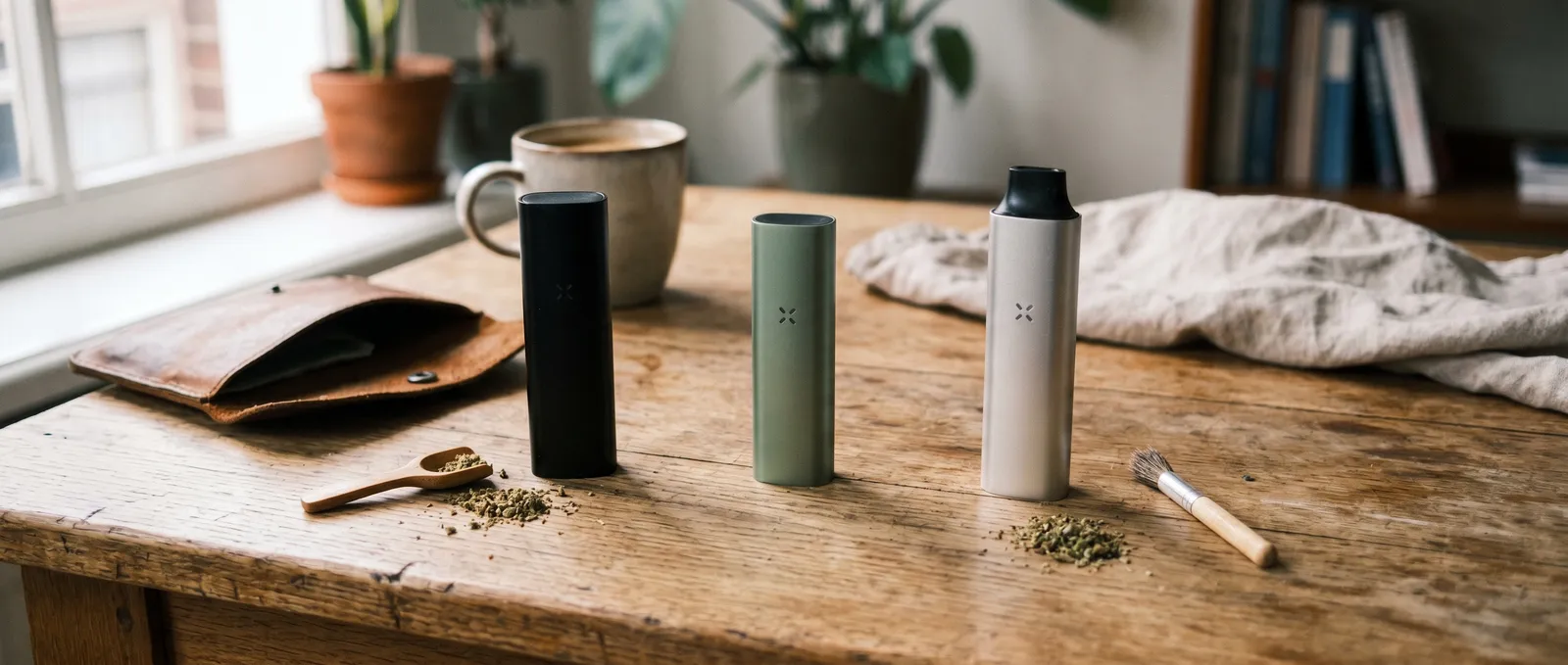
Conduction devices dominate the entry-level and mid-tier portable market. They're mechanically simpler — no fan, no complex air path — so they cost less to manufacture and tend to be more compact. Units like the XMAX V3, Boundless CFC, and PAX 3 all rely primarily on conduction. Heat-up times of 15–30 seconds make them grab-and-go devices, which is exactly why so many first-time vaporizer buyers end up with one.
The trade-off is session style. Most conduction portables are "session" vaporizers: once the oven is hot, it stays hot whether you're drawing or not. That means your herb is cooking even between puffs. If you set the device down and forget about it, you'll come back to a spent oven and a slightly toasted taste. For people who like to take a draw every few minutes over a longer period, that continuous heating wastes material.
What Is Convection Heating?
Convection is the principle behind a fan oven in your kitchen: hot air circulates around the food (or in this case, the herb) rather than a hot surface touching it directly. In a convection vaporizer, a heating element warms incoming air, and that air is pulled or pushed through the herb chamber. The plant material is surrounded by heat rather than pressed against it.

The result is noticeably more even extraction. Because air reaches all sides of the herb — top, bottom, and the spaces between particles — you get a more uniform brown across the load when you empty the oven. Terpenes, the volatile compounds responsible for flavour and aroma, are preserved more effectively at lower and more consistent temperatures. A study published in Scientific Reports examining cannabinoid and terpene delivery found that convection-based systems maintained a more stable thermal profile, reducing localised hot spots that degrade flavour compounds (Hazekamp et al., 2006).
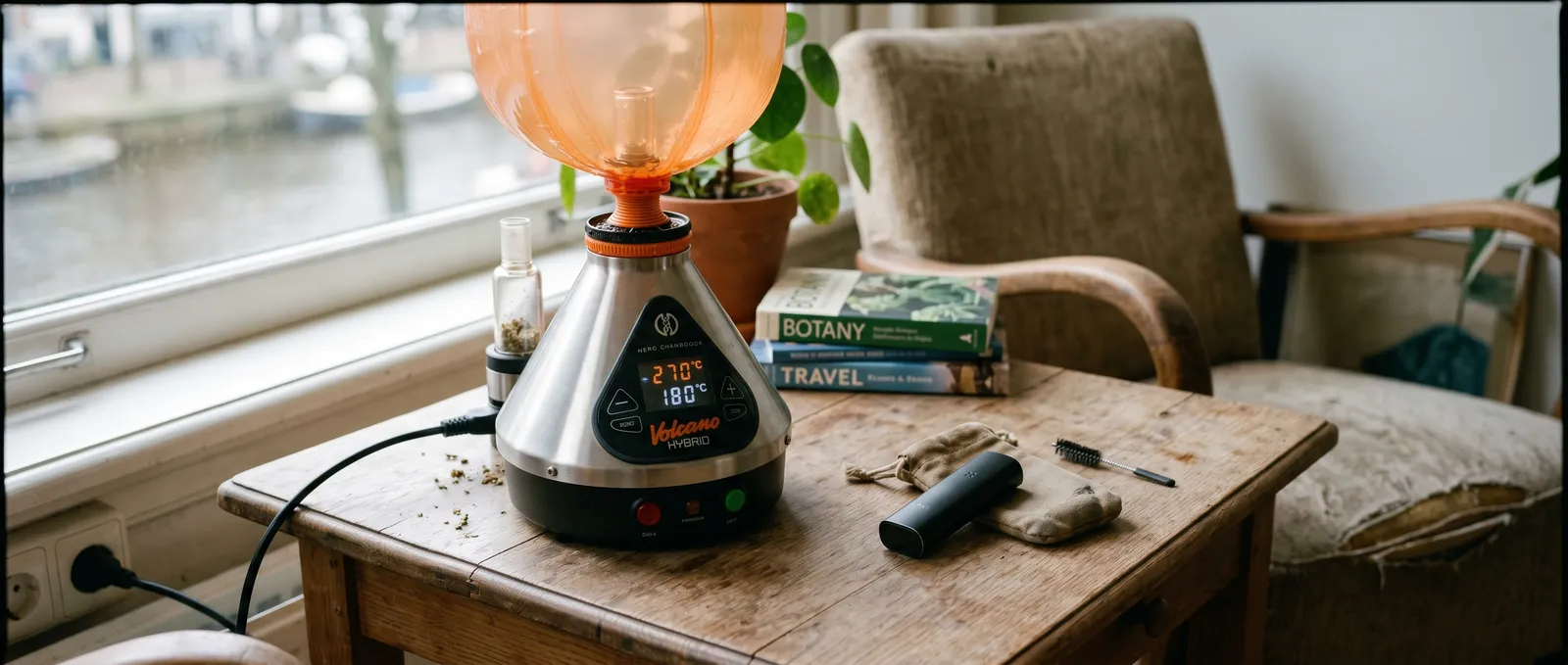
Desktop convection vaporizers like the Storz & Bickel Volcano use a built-in fan to force heated air through herb packed in a chamber, filling a detachable bag with vapour. Portable convection units work differently — the TinyMight 2, for instance, heats air on demand as you inhale, meaning the herb only gets hot while you're actually drawing. That on-demand approach wastes almost nothing between puffs.
The DynaVap is an interesting outlier. It's technically a conduction-dominant device — the herb sits inside a heated metal tip — but because you heat the cap externally with a butane torch and the air you draw passes through the herb, there's a meaningful convection component too. Most people classify it as a hybrid, though DynaVap's own documentation leans toward thermal extraction as a catch-all term. It's a good reminder that these categories aren't always clean boxes.
The downsides of pure convection? Higher price, longer heat-up for session-style units, and greater battery drain in portables. Maintaining a stream of precisely heated air takes more energy than keeping an oven wall at temperature.
What Is a Hybrid Vaporizer?
Most mid-range and upper-tier portables sold today are actually hybrids, even when marketing copy doesn't spell it out. A hybrid vaporizer uses conduction from the oven walls to get extraction started quickly, then supplements it with convection airflow as you draw. The oven heats the herb on contact; your inhale pulls hot air through the pack to reach the centre.
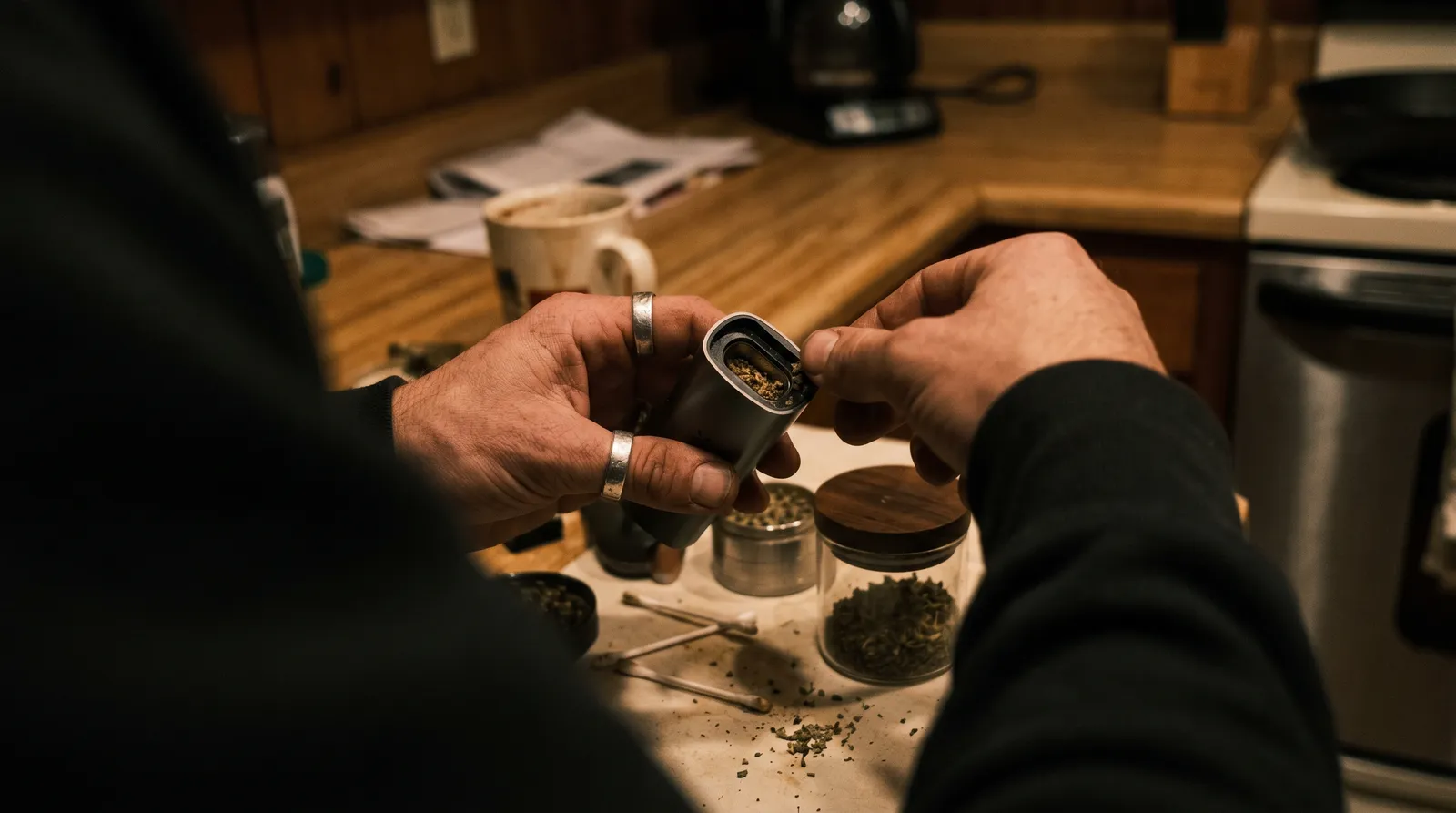
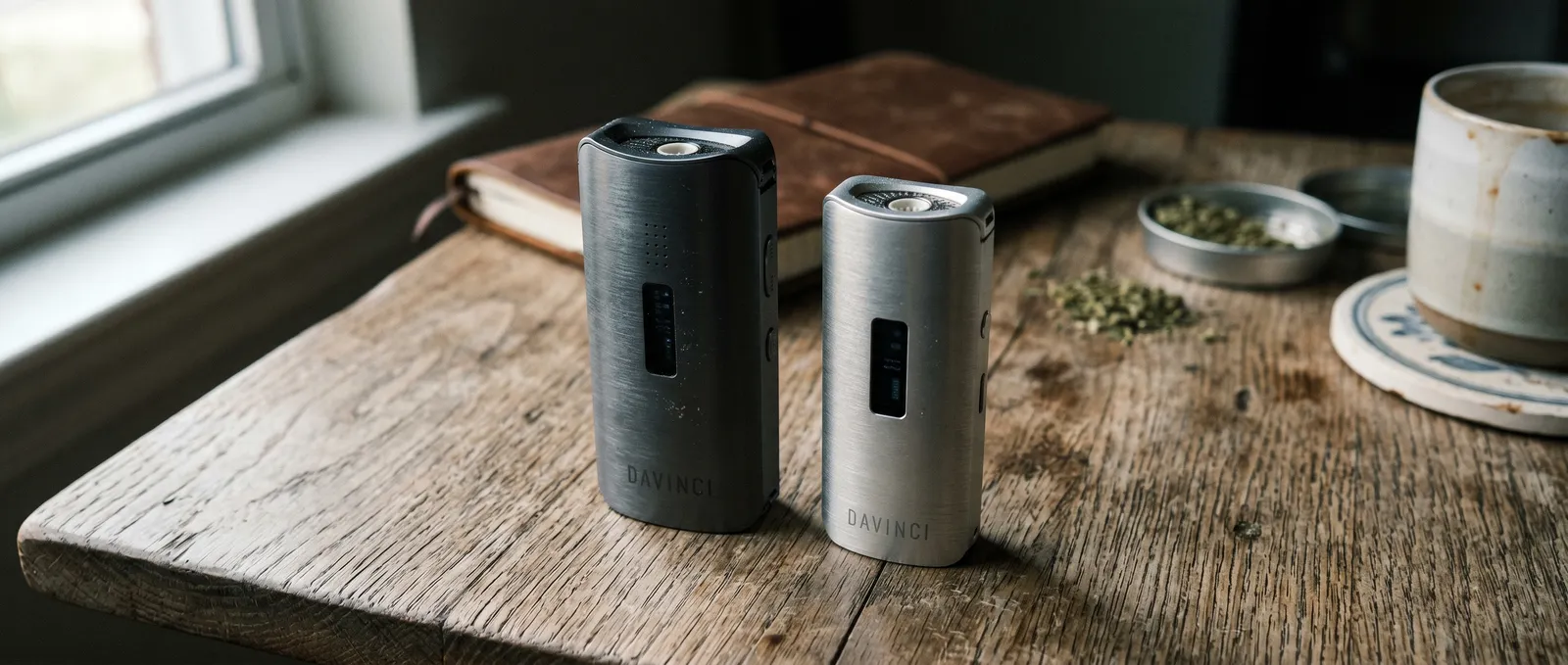
The Storz & Bickel Mighty is probably the most well-known hybrid portable. Its aluminium oven heats the herb conductively, while a secondary air path routes warm air through the load. The Crafty uses the same principle in a smaller body. Arizer's Solo and Air series work similarly — herb sits in a glass stem that slots into a heated oven, and the draw pulls convection air through the pack. The DaVinci IQ2 adds an adjustable airflow dial to let you control how much convection you're getting relative to conduction.
Hybrids aim to give you the best of both: fast heat-up (conduction), even extraction (convection), and decent flavour preservation. They don't quite match a pure convection unit on terpene clarity in the first few draws, but they outperform pure conduction devices over a full session. For most people buying their first serious vaporizer, a hybrid is the practical sweet spot.
Flavour and Terpene Preservation
Terpenes are volatile — they evaporate at relatively low temperatures, some as low as 120°C. When a conduction oven has hot spots against the walls, the herb in those zones can overshoot the target temperature, burning off terpenes before you even take a draw. That's why the first hit from a conduction vaporizer often tastes great, but the flavour drops off quickly.
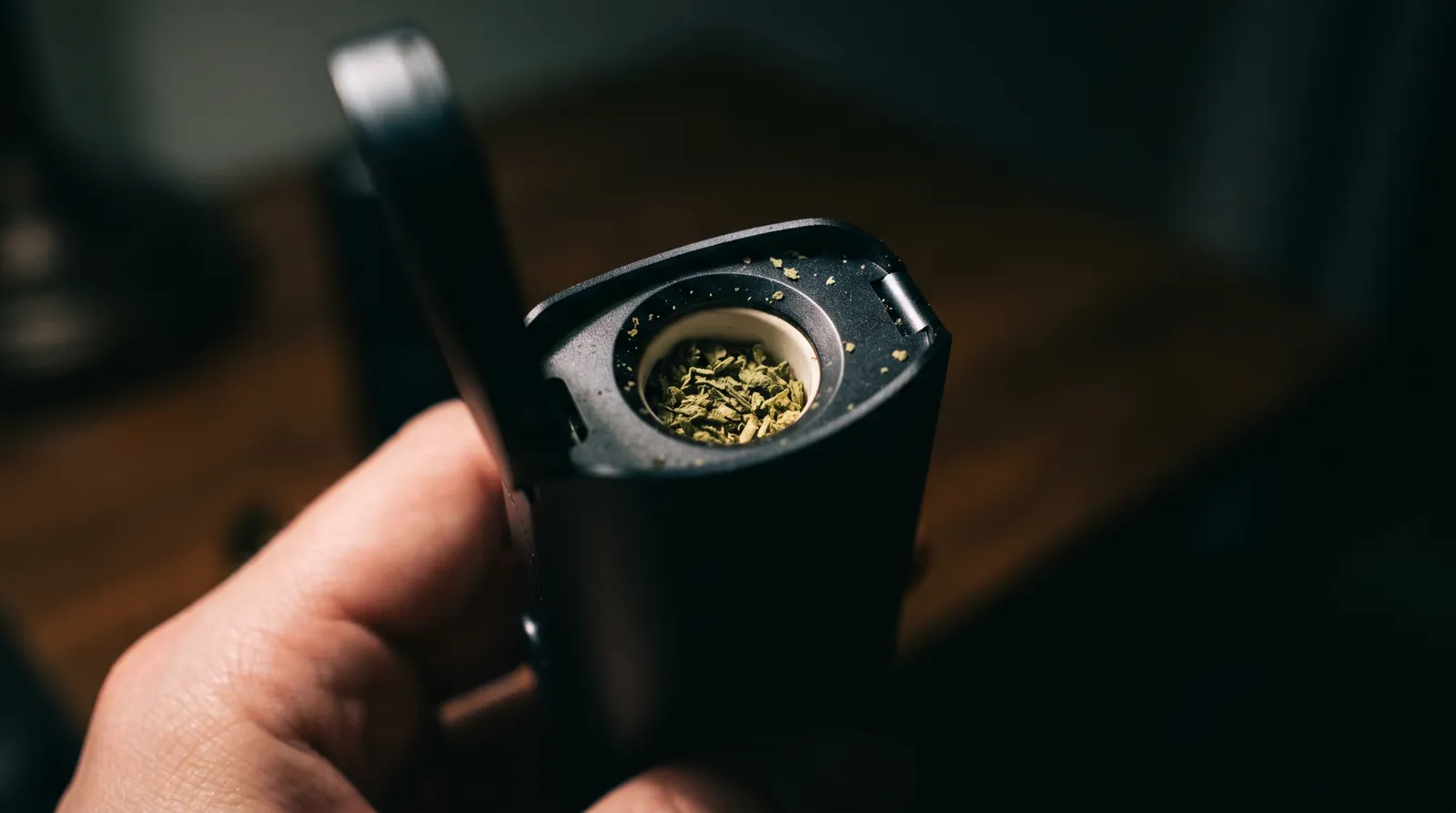
Convection and hybrid designs distribute heat more gently. According to research by Russo (2011), the therapeutic and flavour profiles of cannabis are heavily influenced by the "entourage" of terpenes present, and preserving those compounds requires consistent, moderate temperatures rather than sharp thermal spikes (Russo, 2011). In practical terms, if flavour matters to you more than speed, lean toward convection or hybrid.
Temperature control matters here too. Nearly all electric vaporizers — conduction, convection, or hybrid — let you set a specific temperature. Starting low (around 170–185°C) and stepping up toward 200–210°C over a session gives you a flavour-first beginning and a denser vapour finish. The heating method determines how evenly that set temperature is applied to your herb, but the set point itself is in your hands.
Efficiency and Herb Consumption
Efficiency means how much active material you extract per gram of herb loaded. Conduction vaporizers, because of uneven heating, tend to leave some material under-extracted — particularly in the centre of the pack. Stirring helps, but it interrupts the session and isn't always practical on the go.
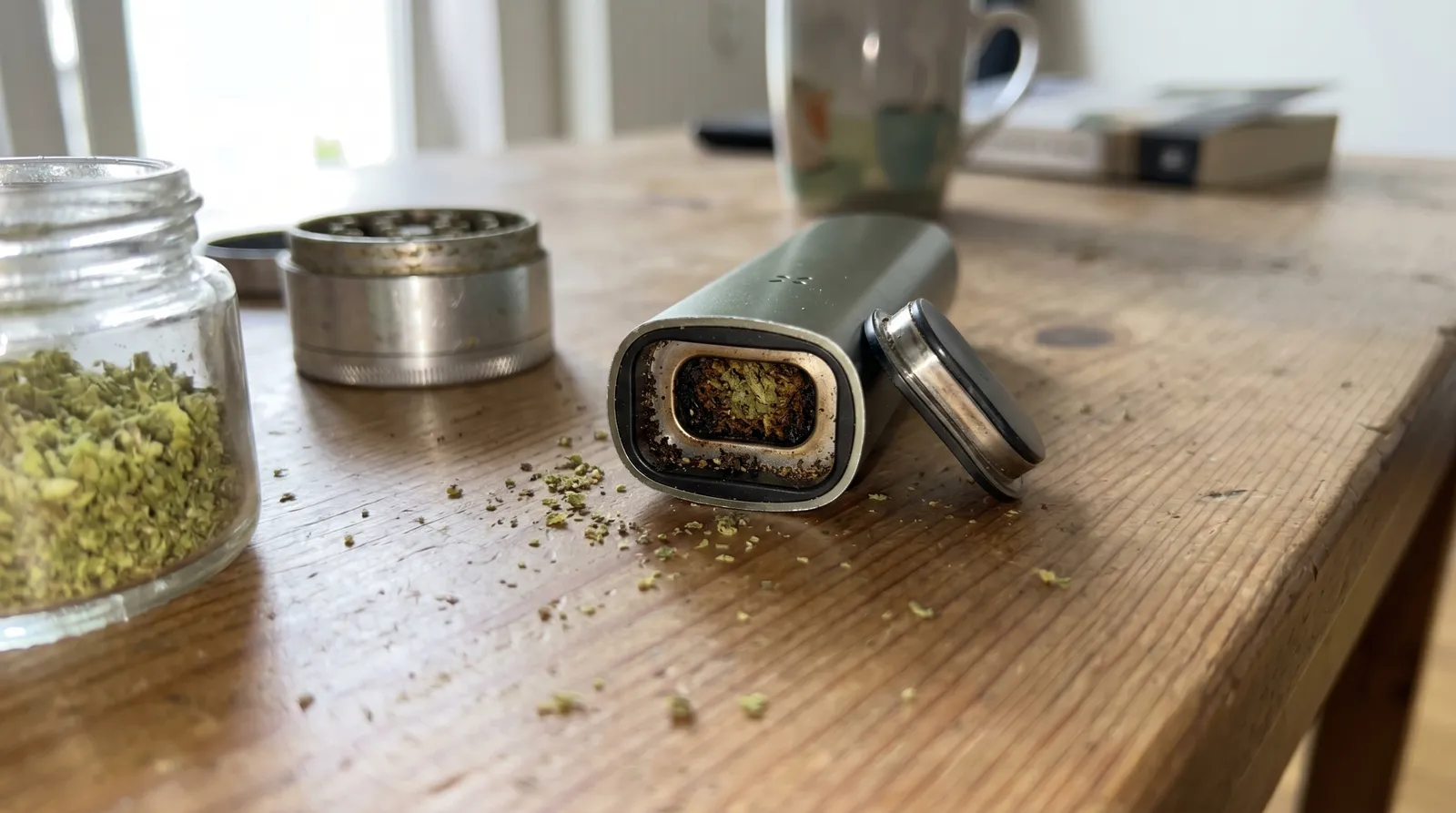
Convection devices generally extract more from the same load. On-demand convection units are especially efficient because they only heat herb when you draw, so nothing is wasted between puffs. The DynaVap, despite its small 0.1g chamber, extracts remarkably thoroughly — users routinely report uniformly dark-brown AVB (already-vaped bud) after a single heat cycle.
Hybrid portables like the Mighty or Healthy Rips Rogue land in between. They extract well enough that most users don't feel the need to stir, though a quick shake halfway through a session can squeeze out a bit more.
If you're trying to stretch your herb, convection and on-demand devices will get you further per gram. If you don't mind slightly higher consumption and want a simpler, faster experience, conduction works fine.
Portability, Battery, and Session Style
Conduction portables tend to be smaller and lighter. The PAX 3 is barely larger than a marker pen. The XMAX V3 slips into a jacket pocket. Because conduction heaters are mechanically simple, they don't need large batteries or complex air paths, which keeps the form factor compact.
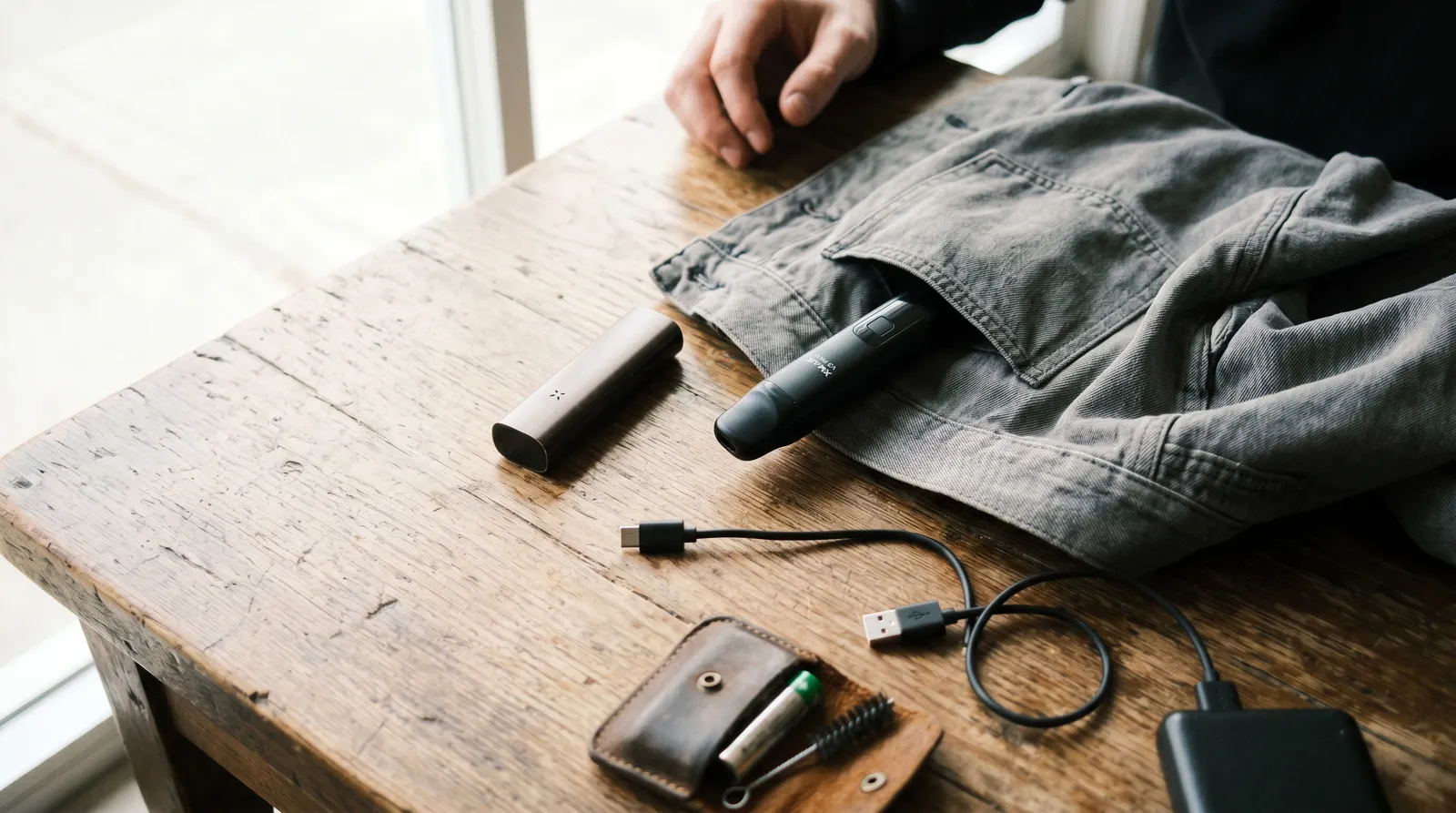
Convection portables are improving, but physics works against them: maintaining a precise air temperature requires more power, and the air path needs room. The TinyMight 2 is impressively compact for a convection device, though it's still chunkier than a PAX. Desktop convection units like the Volcano or Arizer Extreme Q aren't portable at all — they're designed to sit on a table and serve a group.
Battery life is a real consideration. A convection portable might give you 4–6 sessions per charge; a conduction portable of similar size might manage 6–10. If you're out all day without access to a charger, that difference matters. The DynaVap sidesteps the issue entirely — no battery, just a butane torch or induction heater.
Grind and Packing Technique
Your grinder matters more than most people think, and the ideal grind differs by heating method.
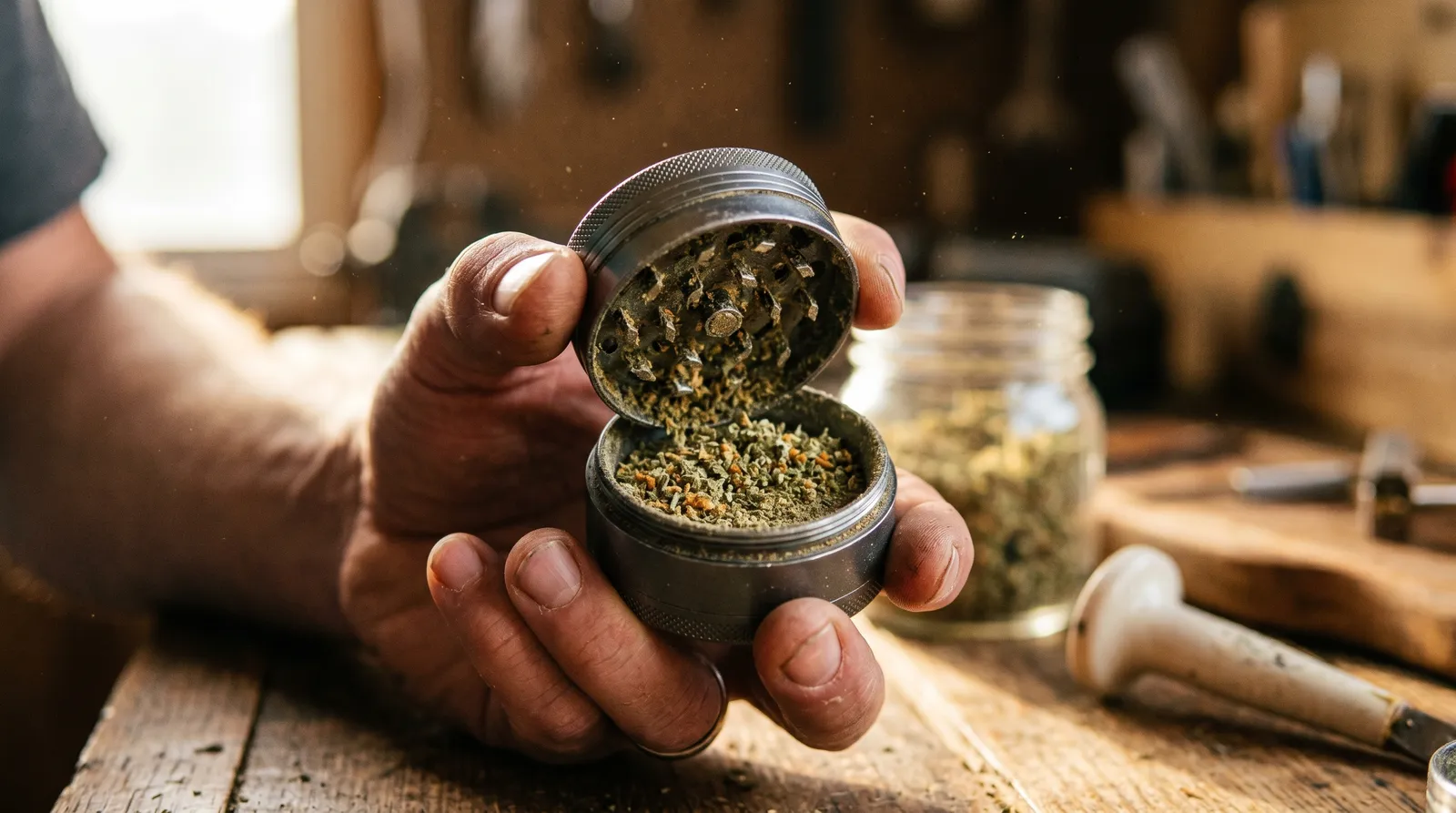
Conduction: Go fine. A fine, consistent grind maximises surface contact with the oven walls, which is how conduction transfers heat. Pack the oven firmly — not crushed, but snug. Air gaps between particles mean unheated zones. A four-piece grinder like the SLX or Santa Cruz Shredder will give you the consistency you need.
Convection: Go medium. You need airflow through the herb, so a looser pack with slightly coarser particles works better. If you pack a convection chamber too tightly, you restrict the air path and end up with weak, wispy vapour. The herb should sit in the chamber without being compressed.
Hybrid: Medium grind, moderate pack. You want enough contact for conduction to kick in, but enough space for air to move. Most hybrid devices are forgiving here — you don't need to be precise.
Cleaning and Maintenance
Conduction ovens accumulate residue faster because herb is pressed directly against hot walls. That baked-on residue affects flavour and, eventually, airflow. Regular cleaning — a brush after each session, isopropyl alcohol on the oven walls weekly — keeps things tasting fresh. Make sure the device is fully cool and powered off before cleaning, and work in a ventilated space when using isopropyl, since the fumes are flammable.
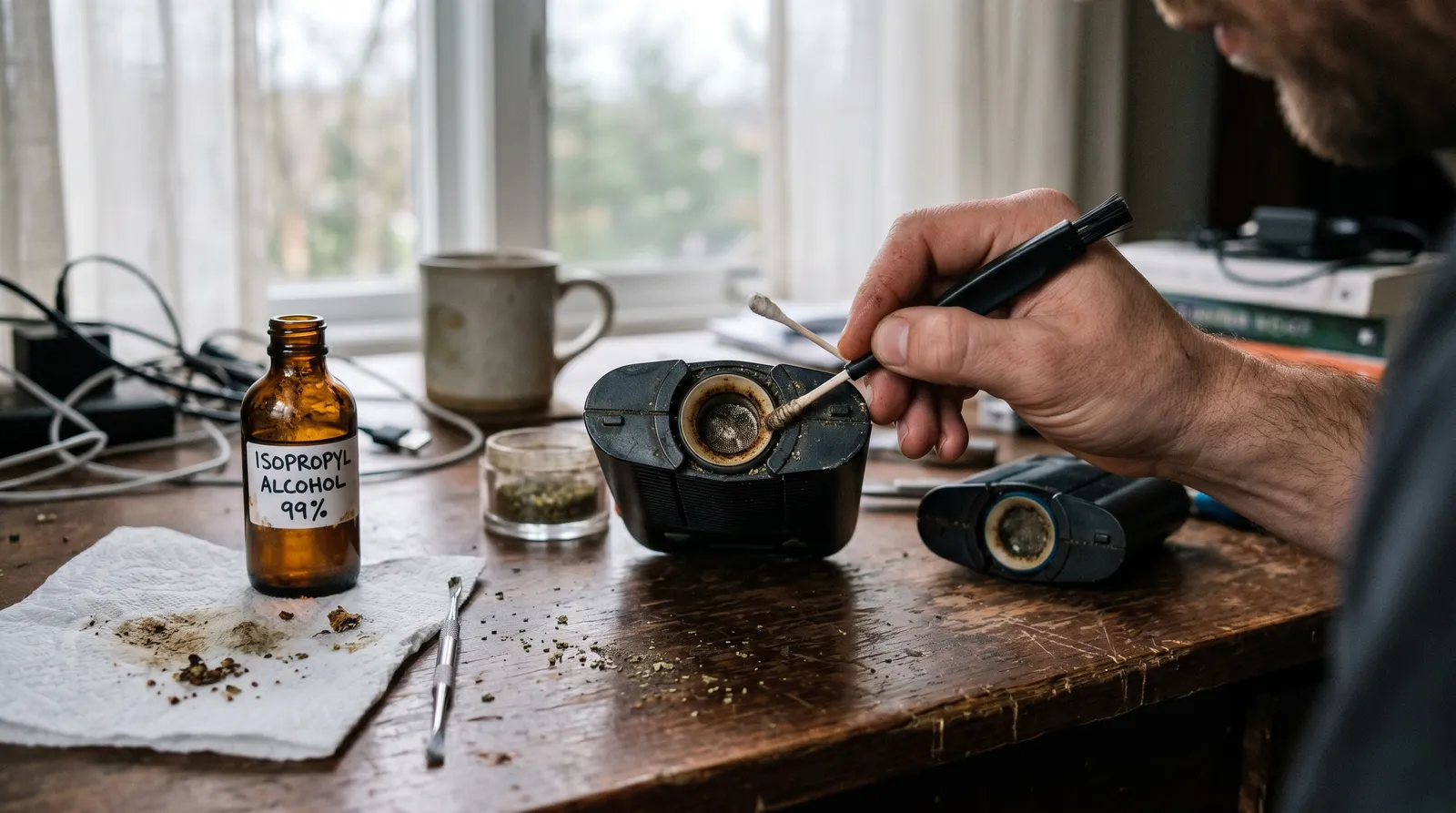
Convection chambers stay cleaner longer because the herb isn't being pressed against a hot surface. The air path and screen are the main maintenance points. Desktop units like the Volcano have replaceable screens and valve components that should be swapped periodically.
Hybrid devices fall in between. The Arizer glass stems are particularly easy to maintain — soak them in isopropyl for 30 minutes and rinse. The Mighty's cooling unit benefits from a weekly soak as well.
Which Heating Method Suits You?
There's no universally "better" method — the right choice depends on how you actually use a vaporizer.
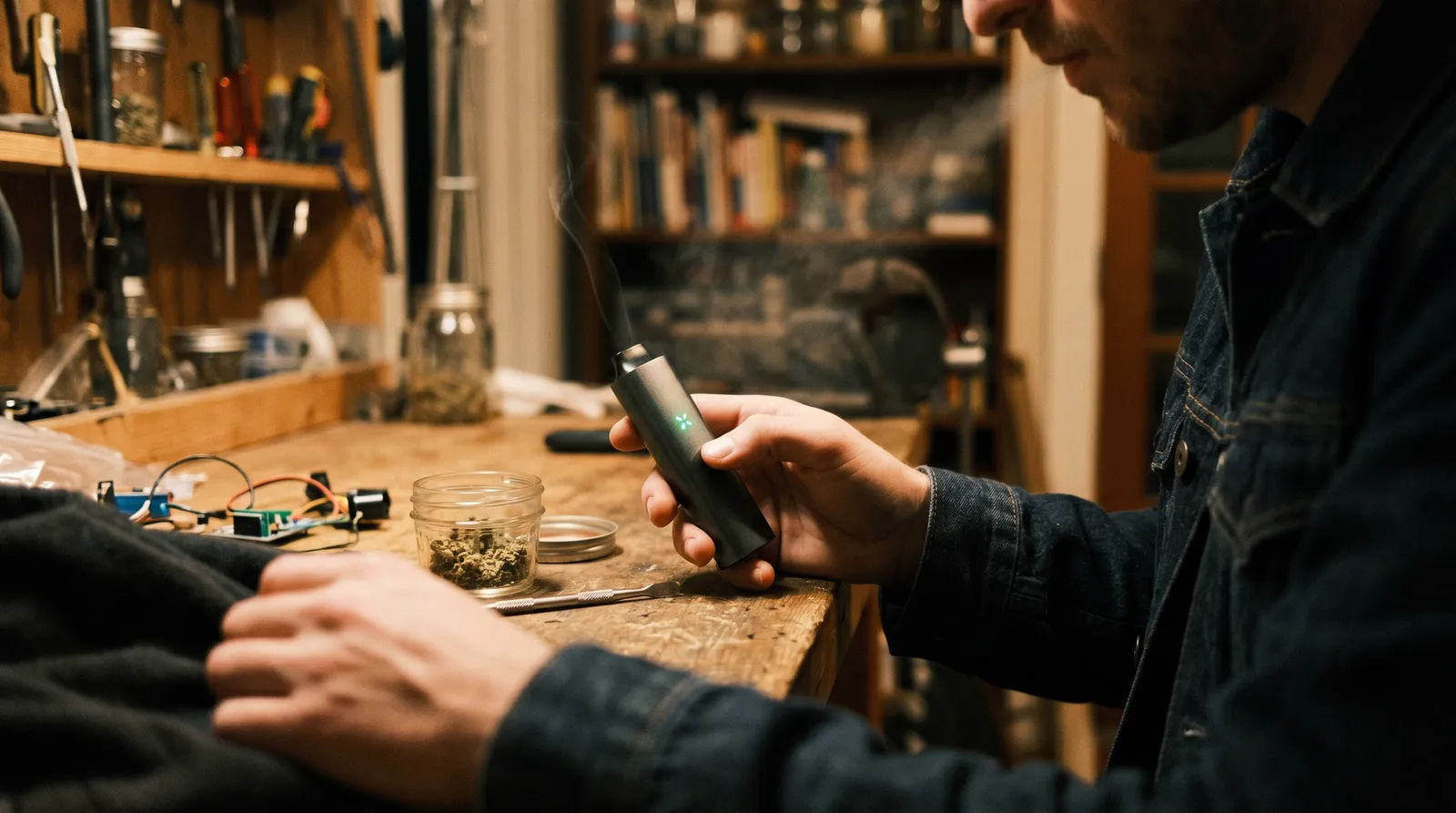
Pick conduction if: you want fast heat-up, a compact device, a lower price point, and you don't mind stirring the oven occasionally. Good starting points: XMAX V3, Boundless CFC, PAX 3, Flowermate V5 Mini.
Pick convection if: flavour is your priority, you want on-demand draws without wasting herb, and you're comfortable with a higher price or a desktop unit. Good starting points: TinyMight 2 (portable), Storz & Bickel Volcano (desktop), DynaVap (butane-powered, no battery needed).
Pick hybrid if: you want the practical middle ground — good flavour, reasonable heat-up, solid extraction, and a wide range of portable options. Good starting points: Storz & Bickel Mighty or Crafty, Arizer Solo or Air, DaVinci IQ2, Healthy Rips Rogue.
The honest reality is that most modern vaporizers above the entry tier are hybrids to some degree, even when they're marketed as one or the other. The lines have blurred, and that's a good thing — it means the average device in 2026 performs better than the best devices of ten years ago.
Battery Safety
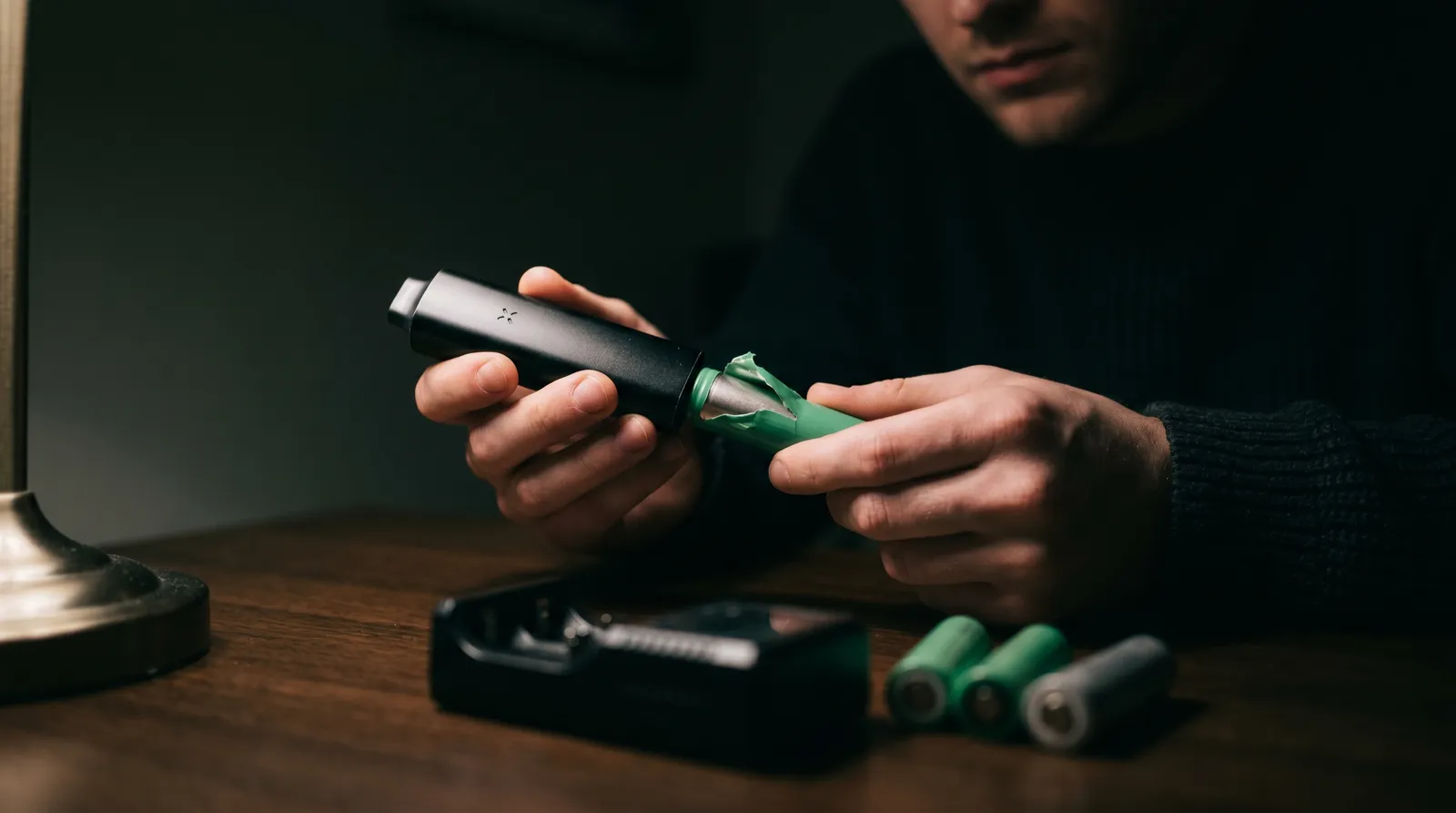
Most portable vaporizers use 18650 lithium-ion cells, either built-in or removable. Regardless of heating method: don't use a device with a visibly damaged battery or torn wrap. If your vaporizer uses removable 18650s, store spares in a protective case — loose cells in a pocket with keys or coins can short-circuit. Charge with the cable or dock provided by the manufacturer, not a random USB cable rated for a different voltage.
References
- Lanz, C., Mattsson, J., Soydaner, U., & Brenneisen, R. (2016). Medicinal cannabis: In vitro validation of vaporizers for the smoke-free inhalation of cannabis. PLoS ONE, 11(1), e0147286.
- Hazekamp, A., Ruhaak, R., Zuurman, L., van Gerven, J., & Verpoorte, R. (2006). Evaluation of a vaporizing device (Volcano) for the pulmonary administration of tetrahydrocannabinol. Journal of Pharmaceutical Sciences, 95(6), 1308–1317.
- Russo, E. B. (2011). Taming THC: Potential cannabis combination and phytocannabinoid-terpenoid entourage effects. British Journal of Pharmacology, 163(7), 1344–1364.
This guide covers hardware for adults (18+). Use of vaporizers, bongs, pipes, dab rigs and rolling accessories is for adult use only. Verify your local laws on the substances you choose to use — Azarius does not provide legal advice. Consult a qualified professional if you have a health condition or take medication.
Last updated: April 2026
Veelgestelde vragen
8 vragenDo convection vaporizers use more battery than conduction?
Can you use concentrates in a conduction or convection vaporizer?
What is a hybrid vaporizer and how does it differ?
Does grind size matter differently for conduction and convection?
Why does my conduction vaporizer taste burnt after a few draws?
Is a convection vaporizer worth the higher price?
Do I need to stir the oven during a session with a convection vaporizer?
How much more efficient is a convection vaporizer at extracting cannabinoids compared to conduction?
Over dit artikel


Adam Parsons is an external cannabis and psychedelics writer and editor who contributes to Azarius's wiki as both author and reviewer. On the writing side, he authors Azarius's kratom and kanna clusters, drawing on exten
Dit wiki-artikel is opgesteld met hulp van AI en gecontroleerd door Adam Parsons, External contributor. Redactioneel toezicht door Joshua Askew.
Medische disclaimer. Deze inhoud is uitsluitend bedoeld ter informatie en vormt geen medisch advies. Raadpleeg een gekwalificeerde zorgverlener voordat je een stof gebruikt.
Laatst beoordeeld op 25 april 2026
Gerelateerde artikelen
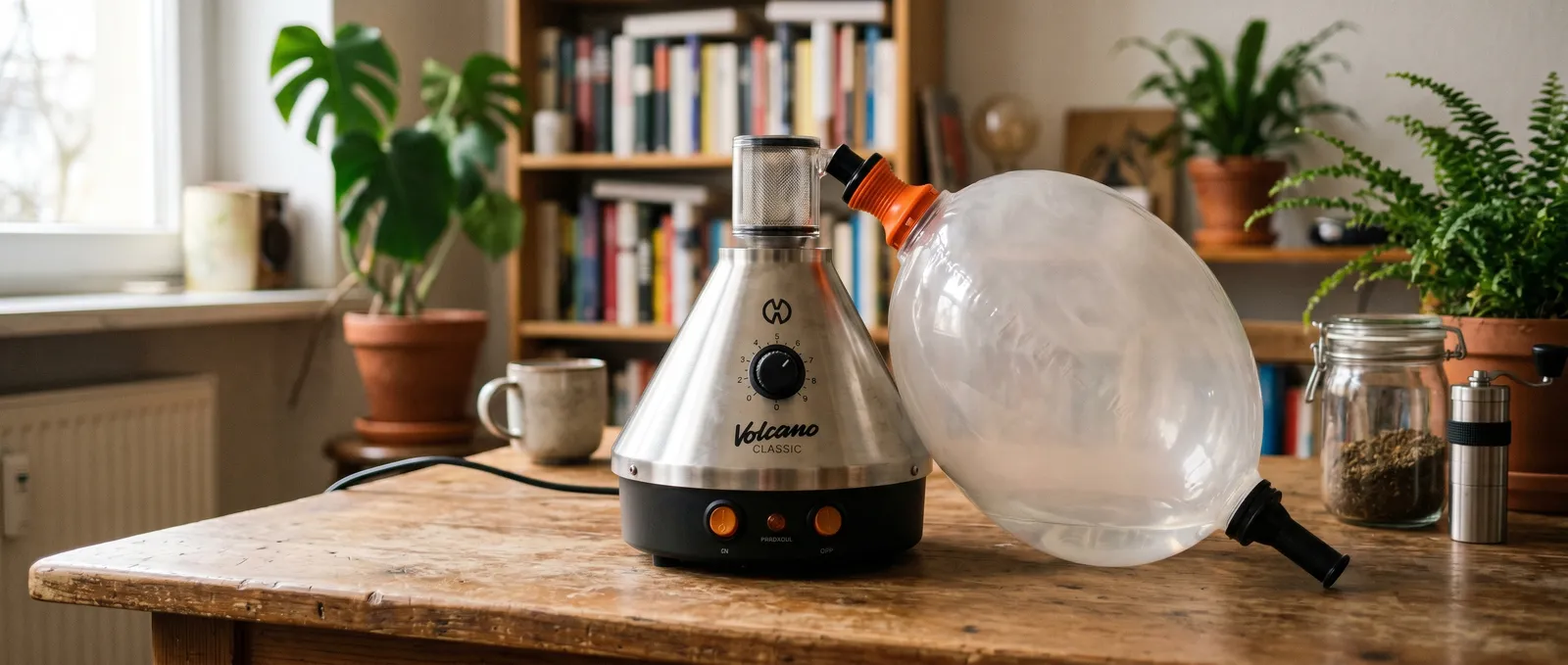
Storz & Bickel Volcano complete guide
De Volcano is een desktop convectie-vaporizer van Storz & Bickel die losse ballonnen vult met damp via heteluchtextractie. Hazekamp et al.
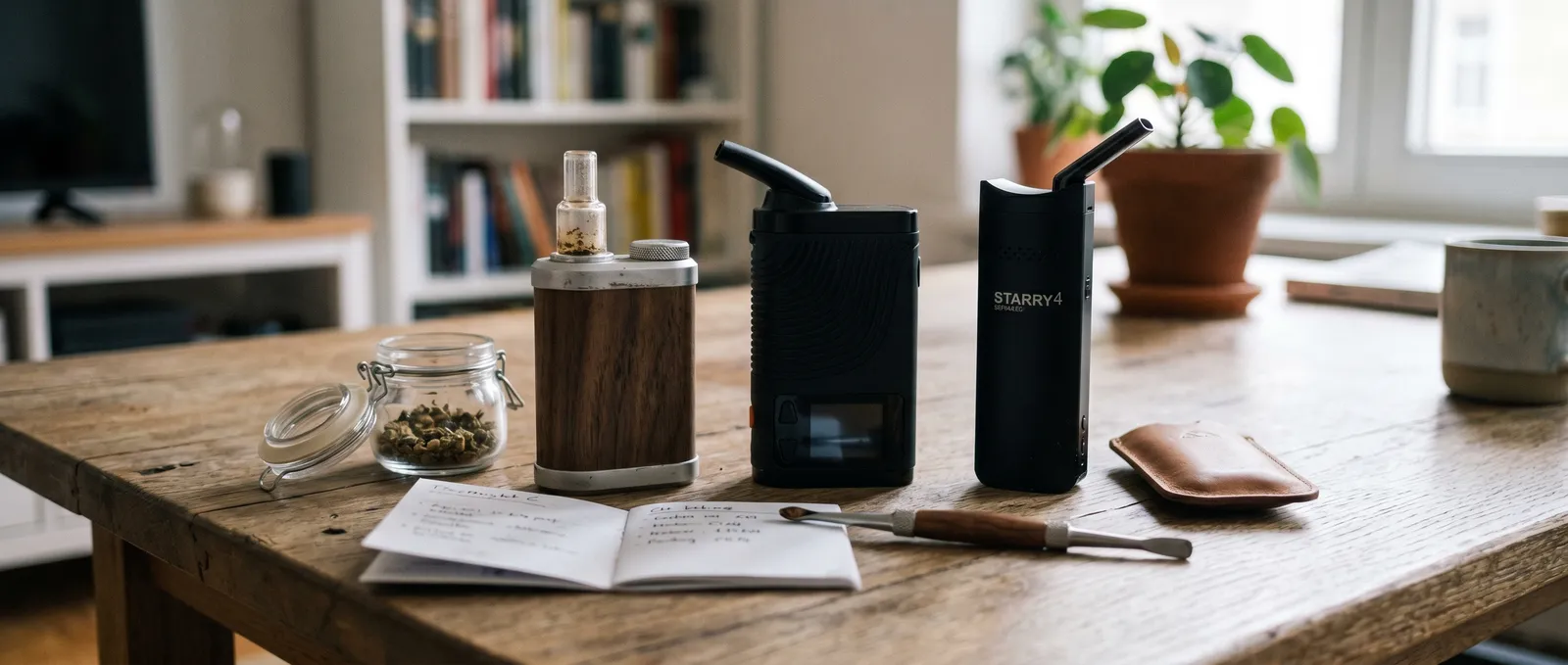
TinyMight, Boundless en XMAX vergeleken: specs en advies
Een vergelijking van zes draagbare droogkruidvaporizers van drie merken: TinyMight 2, Boundless CFC en CFX, en XMAX V3, Starry en Ace.
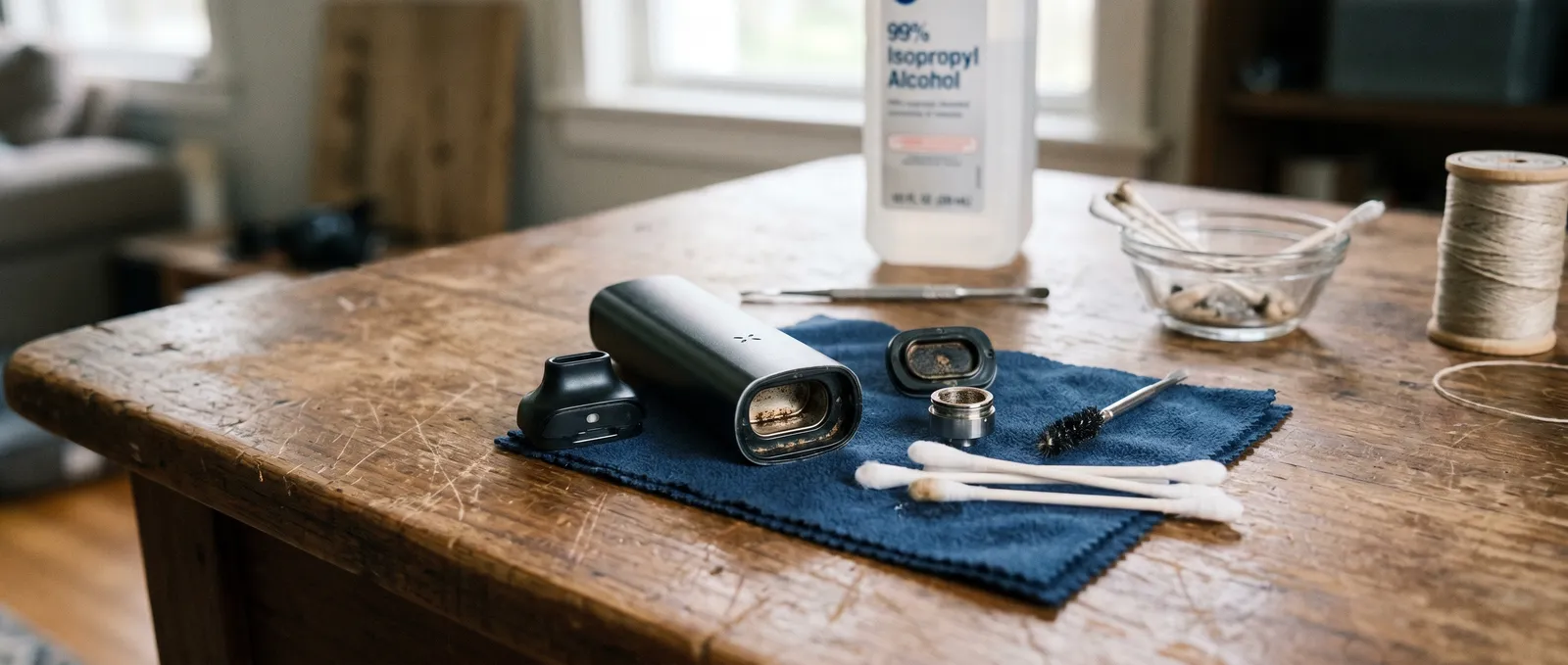
Vaporizer schoonmaken: complete gids voor elke vape
Een vaporizer schoonmaken is een eenvoudige onderhoudsroutine die je apparaat fris laat smaken, soepel laat trekken en jaren langer laat meegaan.
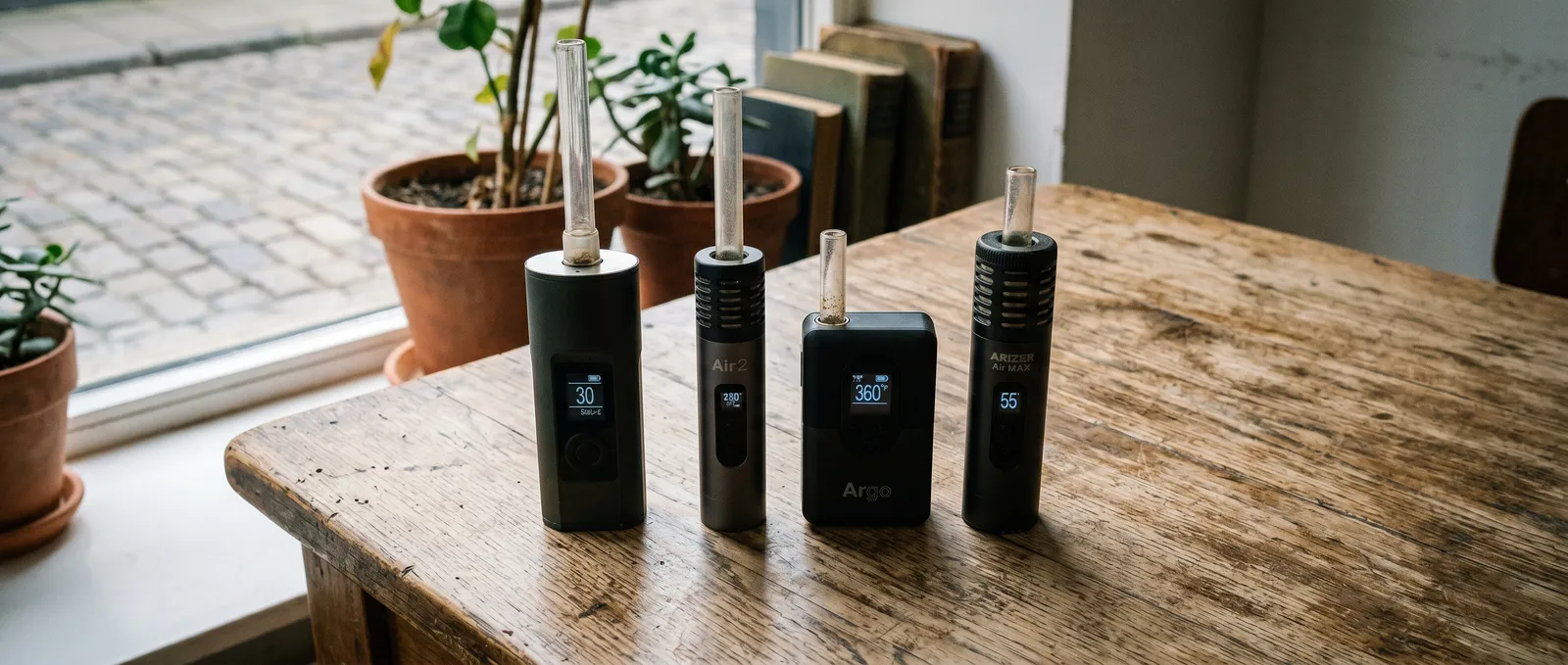
Arizer portable lineup vergeleken: Solo, Solo 2, Solo 3 en ArGo
De Arizer portable lineup vergeleken is een zij-aan-zij-analyse van vier draagbare glassteamvaporizers — Solo, Solo 2, Solo 3 en ArGo — die dezelfde…
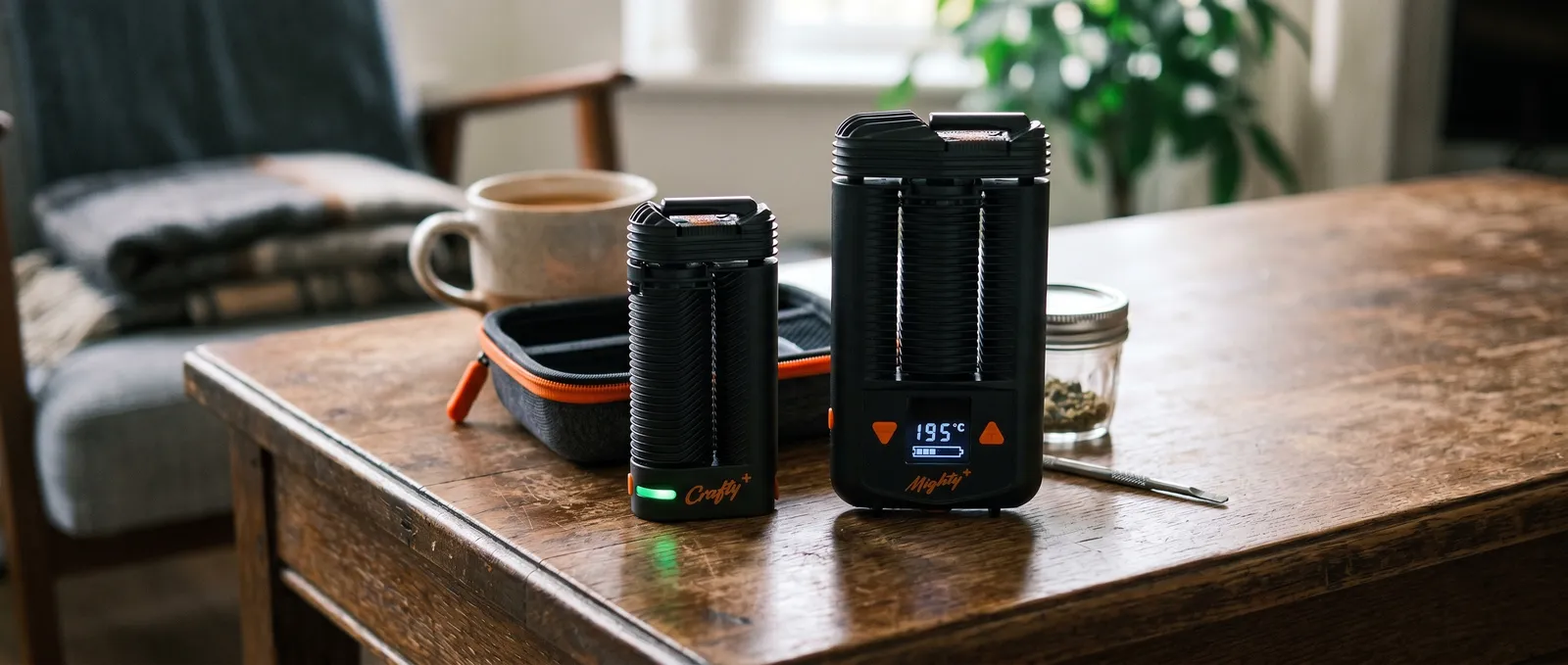
Storz & Bickel Crafty vs Mighty – Vergelijking
De Storz & Bickel Crafty en Mighty zijn hybride conductie-convectie vaporizers uit dezelfde Duitse fabriek met identieke kamergeometrie, koelelement en…
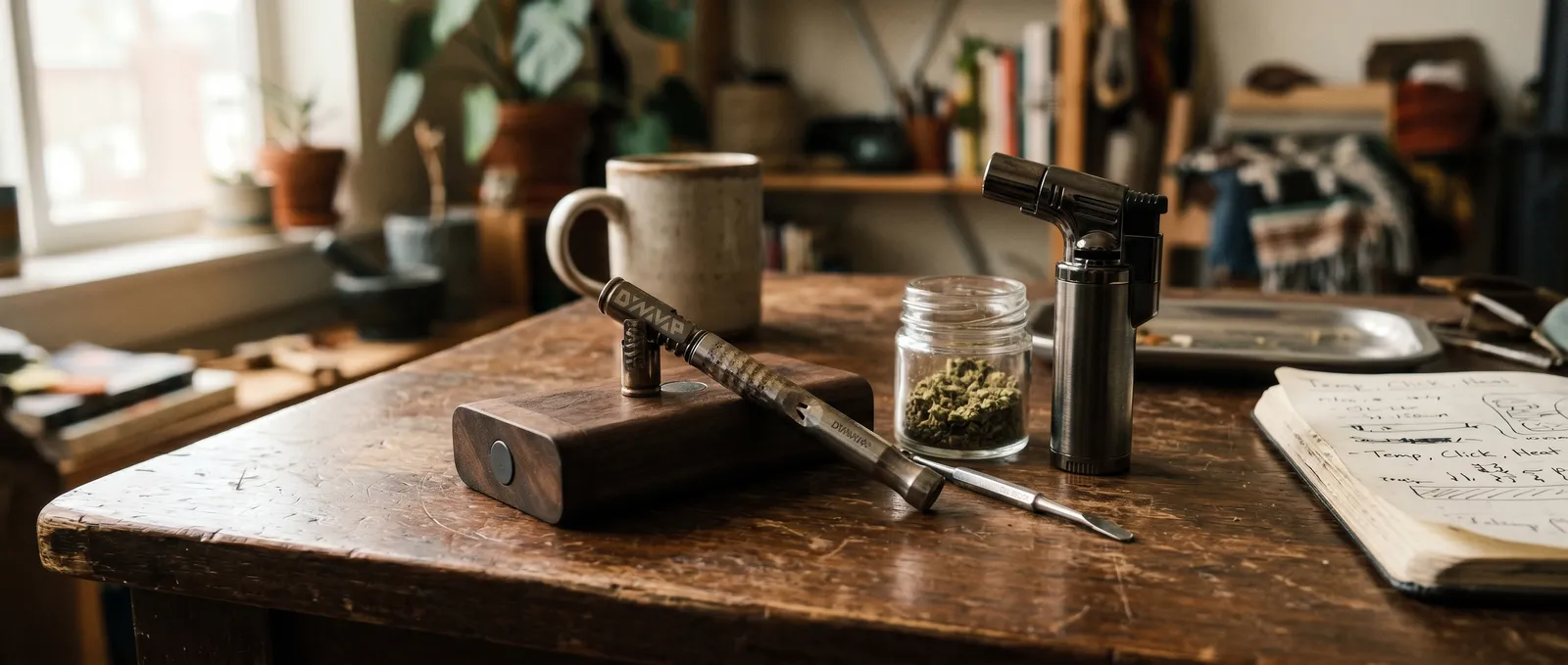
DynaVap complete guide — handleiding voor beginners
Een DynaVap is een compacte, handmatige droogkruidvaporizer zonder batterij of elektronica.
PAX Vaporizer Lineup Guide — PAX 3, Mini & Flow vergeleken
De PAX vaporizer lineup guide vergelijkt de drie huidige draagbare PAX-modellen — PAX 3, PAX Mini en PAX Flow — op verhittingsmethode, ovencapaciteit…
Portable vs desktop vaporizer: koopgids en vergelijking
De keuze tussen een portable en een desktop vaporizer draait om hoe en waar je dampt.
DaVinci IQ vs MIQRO: verschil in specs en gebruik
De DaVinci IQ en MIQRO zijn conductie-vaporizers voor droge kruiden met een damppad van zirkoniumoxide-keramiek en een temperatuurbereik van 177–222 °C. Het…