
Portable vs Desktop Vaporizers: Buyer's Guide
Definition
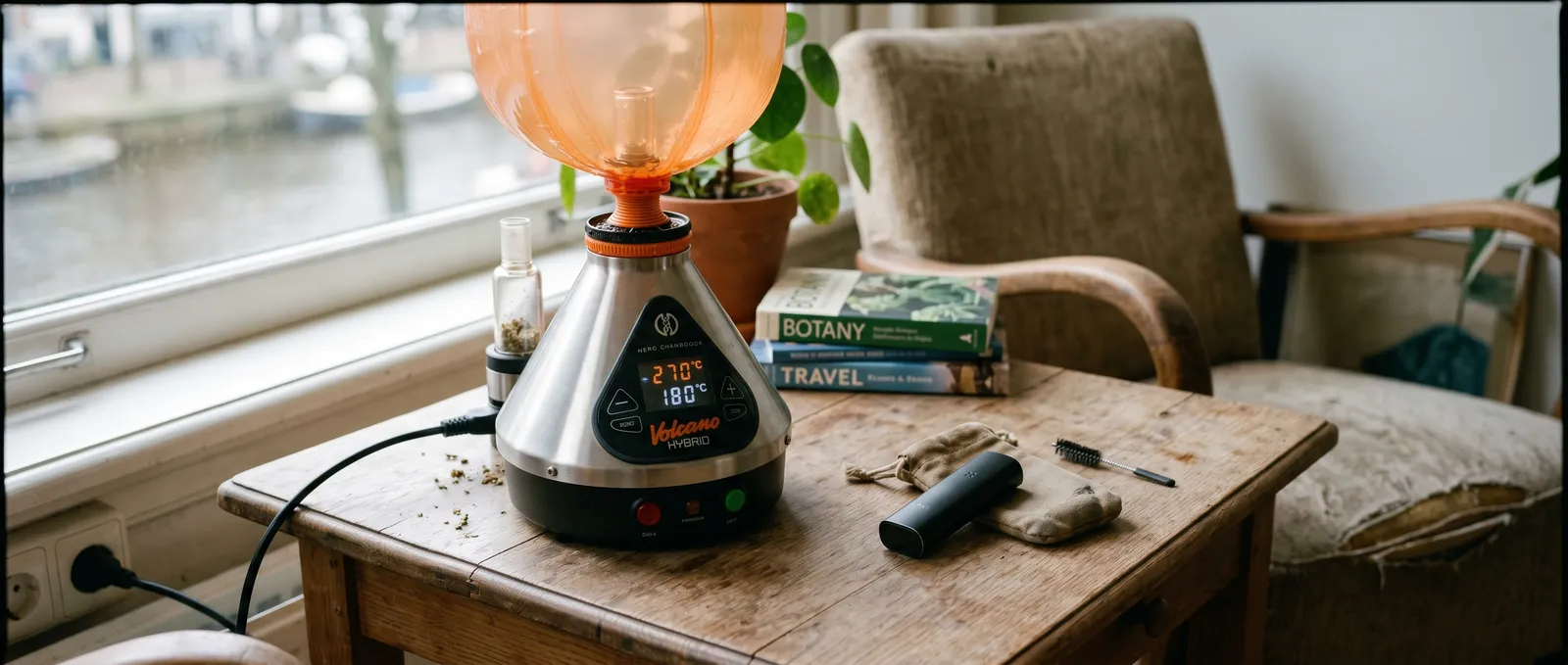
Portable vaporizers run on batteries or butane and go where you go; desktop vaporizers plug into the wall and deliver denser, more consistent vapour from larger heating elements. A 2022 Headset consumer survey found that 34% of regular users eventually own both types. This guide breaks down the real differences — power, session style, maintenance, and cost — so you pick the right category before you pick a brand.
Portable vs Desktop: The Comparison at a Glance
Choosing between a portable and a desktop vaporizer is really about choosing a lifestyle. One goes where you go; the other stays put and rewards you for it. This comparison table covers the dimensions that actually matter when you're spending your money — not marketing fluff, but the stuff that determines whether you'll still be using the thing six months from now.
| Dimension | Portable Vaporizers | Desktop Vaporizers |
|---|---|---|
| Power source | Rechargeable battery (lithium-ion, typically 18650 or internal cell) or butane (DynaVap) | Mains power (wall outlet) — unlimited session length |
| Heat-up time | 15–60 seconds typical | 60–180 seconds typical (fan-assisted units take longer to stabilise) |
| Vapour quality | Good to very good — smaller air path, smaller chamber | Excellent — larger heating element, longer air path, superior cooling |
| Temperature control | Digital (stepped or precise) on most units; manual on butane models | Precise digital control standard; some offer both whip and balloon delivery |
| Chamber size | 0.1–0.3 g typical | 0.2–0.5 g typical; balloon systems can fill multiple bags per load |
| Session style | Solo or small group; session or on-demand depending on model | Solo to group; balloon units pass easily among 3–5 people |
| Portability | Pocket- or bag-sized; use anywhere | Stays on a table; requires mains power |
| Cleaning frequency | Every 5–10 sessions (smaller parts clog faster) | Every 10–20 sessions (larger parts, easier disassembly) |
| Price tier | Entry to mid-range for most; a few premium portables compete with desktops | Mid to high; the initial investment is typically higher |
| Durability | Battery degrades over 300–500 charge cycles; drop risk | No battery degradation; stationary = less physical wear |
What Portable Vaporizers Do Well
The obvious advantage is mobility. A portable vaporizer fits in your jacket pocket, your backpack, or your bedside drawer. You charge it, load it, and go. That simplicity is why portables dominate sales across Europe — according to a Grand View Research market report (2023), portable dry-herb vaporizers accounted for over 60% of the consumer vaporizer market by unit volume.

Heat-up speed is another genuine win. Most modern portables reach operating temperature in under 30 seconds. The Storz & Bickel Crafty, for example, is ready in roughly 60 seconds, while the DynaVap M — heated with a butane torch — can be draw-ready in about 5–7 seconds once you learn the technique. That speed suits people who want a quick session without ceremony.
Battery-powered portables from Arizer (the Solo and Air lines), PAX, DaVinci, Boundless, XMAX, Flowermate, and Healthy Rips all offer digital temperature control, usually in 1–5°C increments. That means you can dial in a specific temperature for terpene-forward draws at lower settings (around 170–185°C) or denser vapour at higher settings (200–210°C). The TinyMight 2 stands out here with on-demand convection heating — no waiting for a session timer, just heat when you draw.
Size constraints do limit chamber capacity. Most portables hold between 0.1 g and 0.3 g of ground material. That's fine for one or two people, but if you're passing a device around a table of four, you'll be reloading frequently.
What Desktop Vaporizers Do Well
Desktops plug into the wall, so there's no battery to die mid-session and no degradation over time. That mains connection also means the heating element can be larger, more powerful, and more thermally stable. The result is denser, cooler, more consistent vapour — especially over extended sessions.
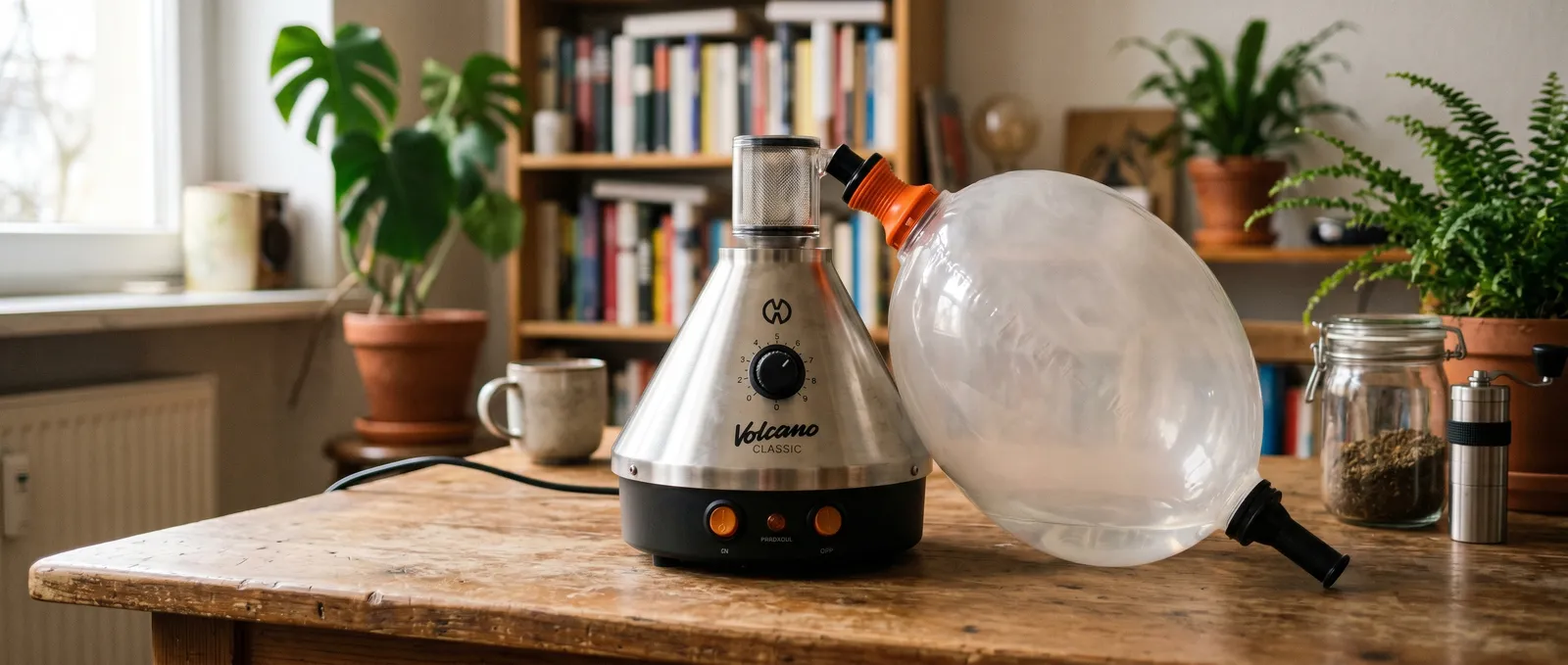
The Storz & Bickel Volcano is the reference point here, and has been since its original release in 2000. Its forced-air balloon system fills a detachable bag with vapour, which you then sip at your own pace. One bowl can fill two or three balloons, making it the most efficient group-session device on the market. A 2015 study published in PLOS ONE (Pomahacova et al., 2009, building on earlier Leiden University work) used the Volcano as a standardised delivery device for cannabinoid research precisely because of its dosing consistency — the coefficient of variation in delivered compound was under 5% across repeated fills.
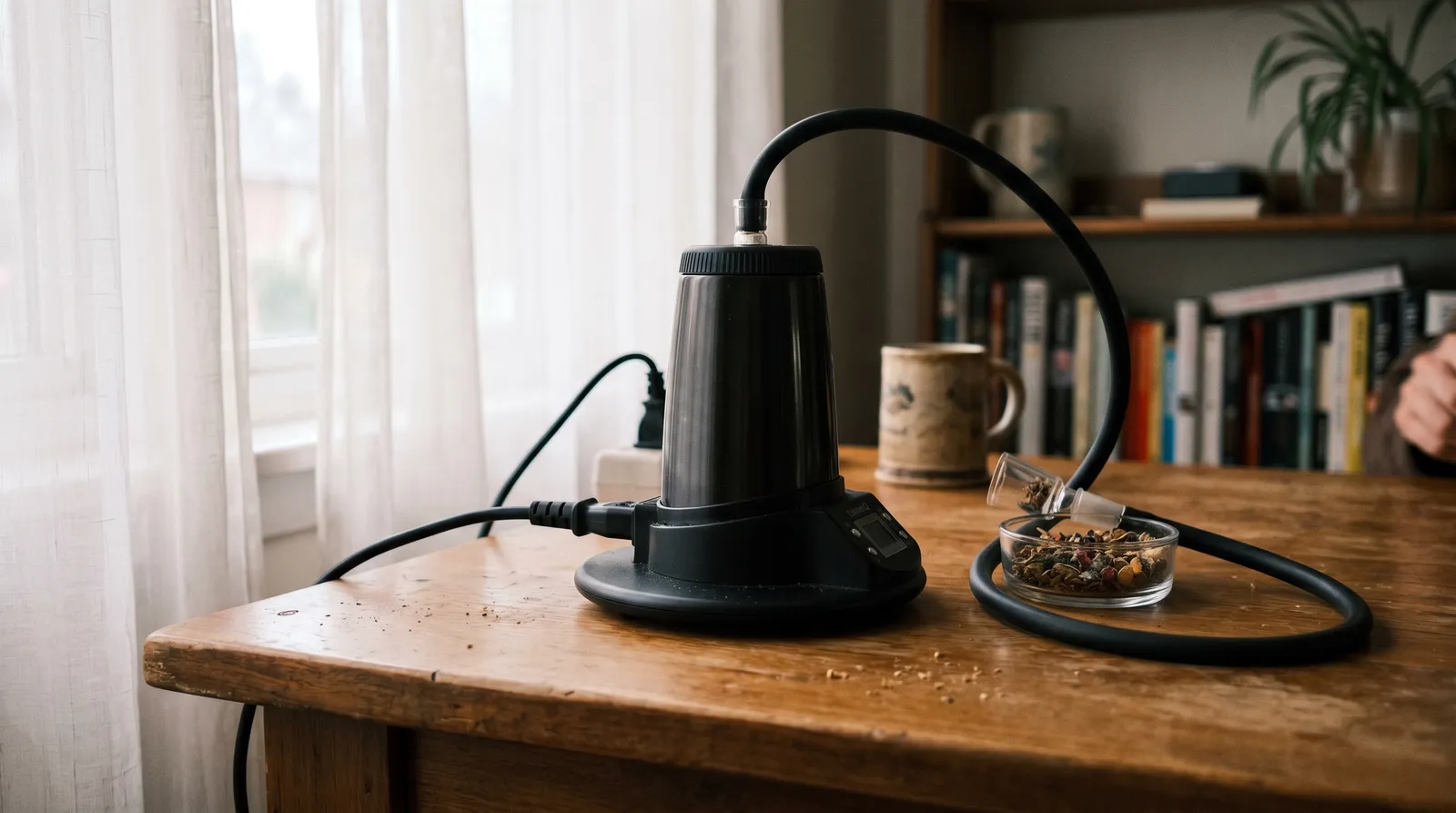
The Arizer Extreme Q offers both balloon and whip delivery at a lower price tier than the Volcano, which makes it a solid entry point for anyone curious about desktop vaping but not ready for the top-shelf investment. The Arizer V-Tower is whip-only and even more affordable — stripped back, but the vapour quality per pound spent is hard to beat.
Cleaning is also easier with desktops. Larger glass parts (whip mouthpieces, balloon adapters, elbow joints) are simpler to soak in isopropyl alcohol than the tiny screens and narrow air paths in portables. A quick note on that: always let isopropyl-soaked parts dry completely in a ventilated area before reheating. Iso vapour plus a hot element is a bad combination.
Convection vs Conduction — and Why It Matters Here
The heating method is often more important than the portable-vs-desktop question itself. Most portables use conduction heating (the chamber walls get hot and transfer heat directly to your material) or a hybrid of conduction and convection. Pure convection portables — where hot air passes through the material only when you draw — are rarer and tend to sit at the premium end. The TinyMight 2 and DynaVap range are notable convection-forward options in portable form.
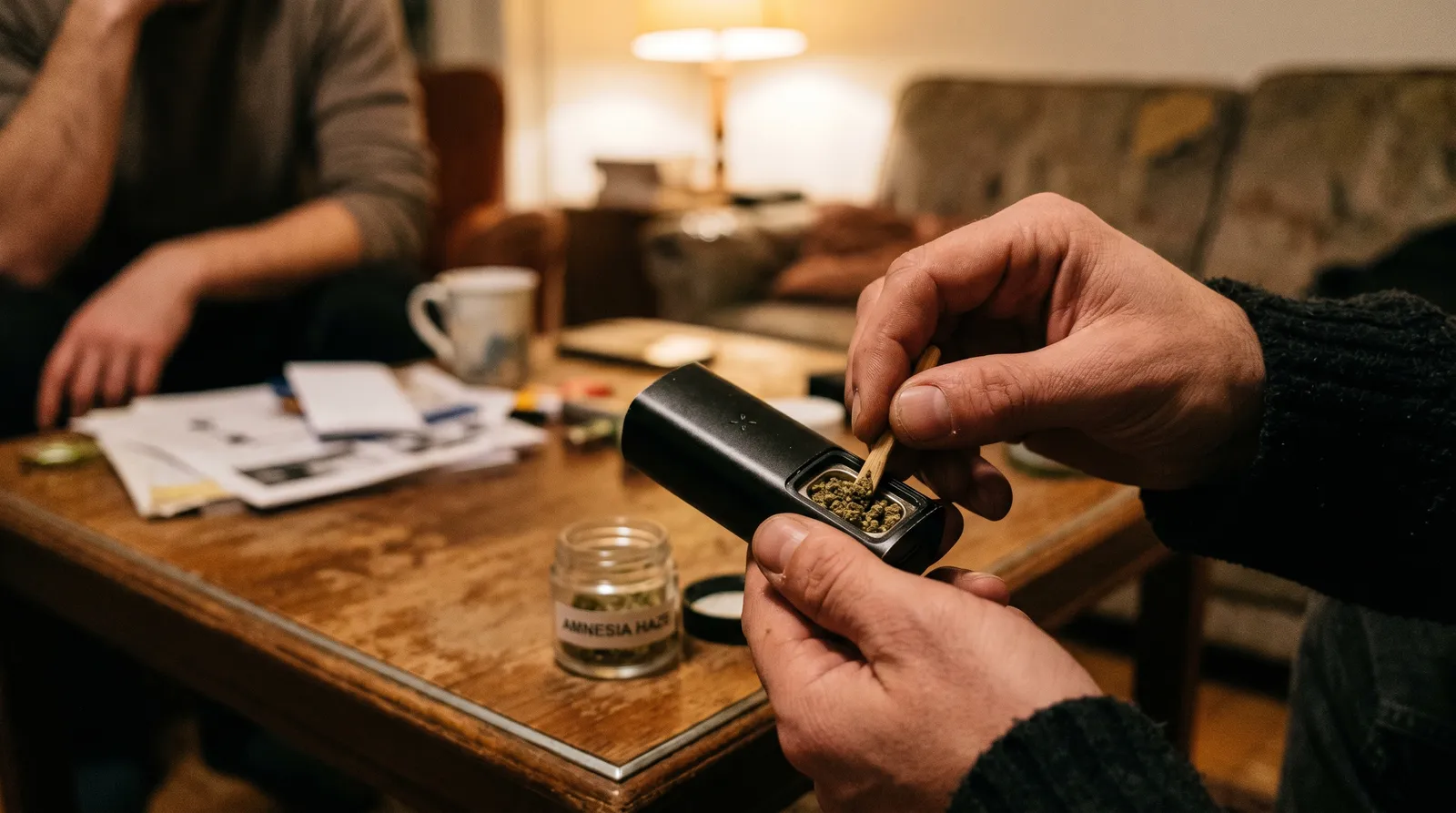
Desktops, by contrast, almost universally use convection or forced-air convection. The Volcano's pump pushes heated air through the chamber and into the balloon; the Arizer Extreme Q can do the same with its fan, or you can draw through the whip manually. Convection heating extracts more evenly and wastes less material, because the herb isn't being cooked by contact heat between draws.
For a deeper breakdown, see our convection-vs-conduction vaporizer article — it covers the physics and practical trade-offs in detail.
Battery Life and Safety
Every rechargeable portable vaporizer runs on lithium-ion cells. Most use internal batteries charged via USB-C, though some (like certain DaVinci and XMAX models) use removable 18650 cells. Removable batteries are a genuine advantage: when the cell degrades after a couple of years, you swap it out for a few euros instead of replacing the whole unit.
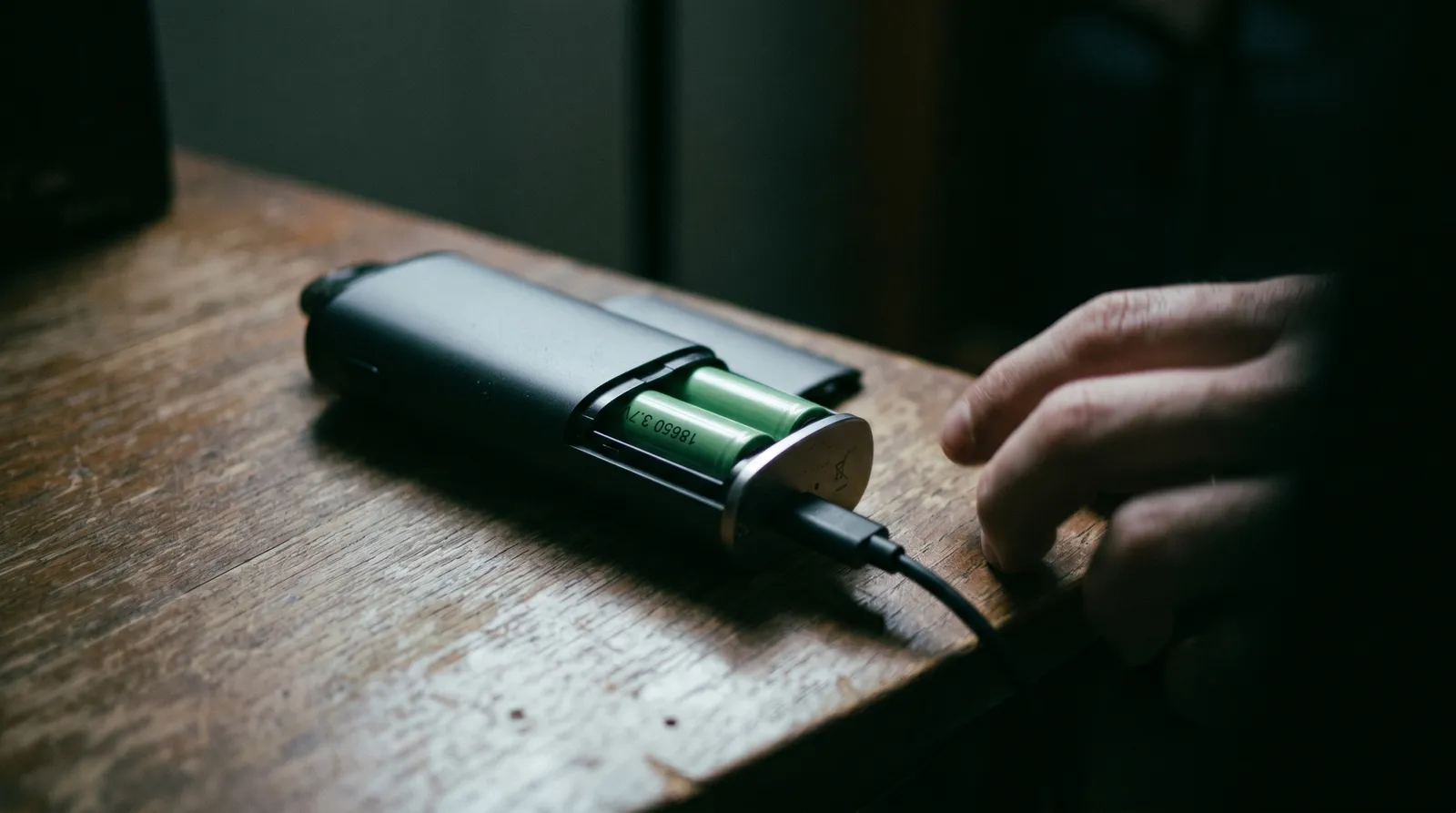
Battery safety is straightforward but non-negotiable. Store spare 18650 cells in a protective case — loose cells in a pocket or bag can short-circuit against keys or coins. Never use a cell with a torn or damaged wrap. Charge with the cable or charger the manufacturer supplies, not a random fast-charger. These aren't scare tactics; they're the same handling rules any 18650 flashlight forum will tell you.
Desktop vaporizers sidestep this entirely. Mains power means no charge cycles, no degraded capacity after two years, and no worrying about whether you'll make it through a long evening session. The Volcano's heating element, for reference, is rated for thousands of hours of continuous use — units from the early 2000s are still running in Amsterdam coffee shops today.
Session Style: Solo vs Group
If you vape alone or with one other person, a portable is almost always sufficient. The Storz & Bickel Mighty, with its larger chamber and hybrid heating, bridges the gap between portable convenience and desktop-grade vapour. The Arizer Solo line is similarly capable for solo sessions — its glass stem doubles as the air path, which keeps the flavour clean.

Groups change the equation. Passing a portable around four people means the battery drains fast, the chamber empties after a couple of rounds, and someone's always waiting. A balloon desktop like the Volcano or Arizer Extreme Q solves this: fill a bag, pass it, fill another. No one's holding a hot device, no one's waiting for a heat-up cycle, and the material goes further because convection extraction is more efficient per gram.
Cleaning and Maintenance
All vaporizers need regular cleaning. Residue builds up in screens, air paths, and chambers, and it degrades both flavour and airflow. The difference is how annoying the process is.
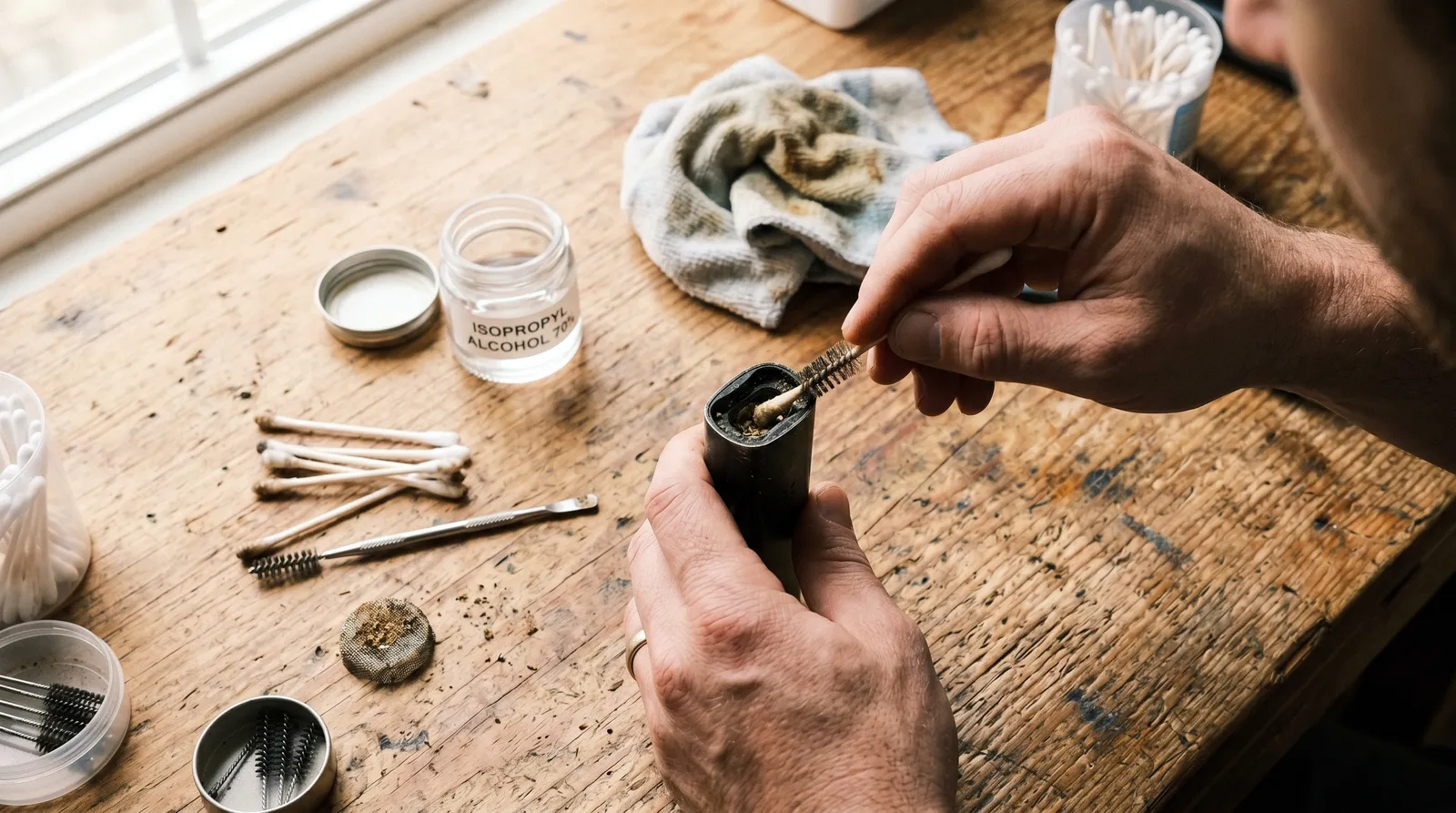
Portables have smaller parts — tiny screens, narrow mouthpiece channels, and compact ovens. The Crafty's cooling unit, for instance, should be disassembled and soaked in isopropyl every 10–15 sessions. It's not difficult, but the parts are fiddly. DynaVap's all-metal construction is arguably the easiest portable to clean: drop the tip and cap in iso, swab the condenser, done.
Desktops benefit from larger, often glass components. The Arizer Extreme Q's glass elbow and whip can be soaked in a jar of iso overnight. The Volcano's filling chamber and screen set come apart in seconds. Bigger parts mean less precision cleaning and fewer lost O-rings.
Whichever type you own, a basic cleaning kit — isopropyl alcohol (90%+), cotton swabs, pipe cleaners, and a small brush — covers everything. We stock cleaning supplies specifically for this purpose.
Who Should Buy Which
There's no universal answer, but there are clear use cases:
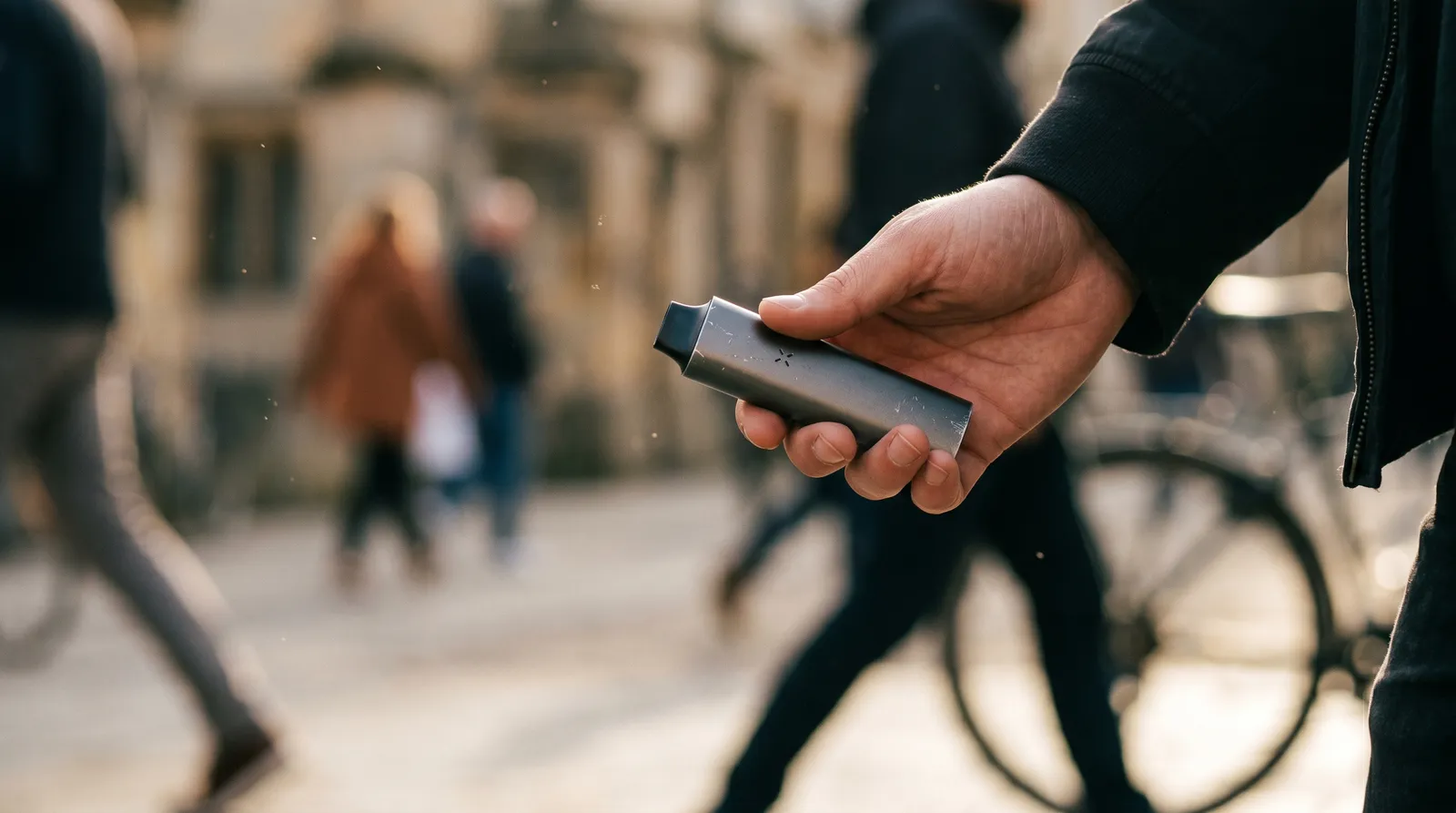
Buy a portable if: you vape on the move, prefer quick solo sessions, want something discreet, or live in a space where a permanent tabletop setup isn't practical. First-time buyers often start here because the entry cost is lower and the learning curve is gentle.
Buy a desktop if: you vape primarily at home, value vapour density and flavour above all else, host group sessions regularly, or want a device that will last a decade without battery degradation. The higher upfront cost pays for itself in longevity and extraction efficiency.
Buy both if: you can. Seriously. Many experienced users end up with a portable for daily carry and a desktop for evenings and weekends. The two categories aren't competing — they serve different moments in your day. A 2022 consumer survey by Headset (a cannabis analytics firm) found that 34% of regular vaporizer users owned at least one device in each category, suggesting the either/or framing is something most people eventually outgrow.
A Note on Concentrates
This guide focuses on dry-herb vaporizers, but it's worth mentioning that some units handle concentrates (wax, rosin, hash) via dosing capsules or concentrate pads. The Storz & Bickel Mighty and Crafty both include steel concentrate pads in the box. The Arizer desktops can handle hash sandwiched between layers of herb in the glass bowl. Dedicated concentrate consumption — dab rigs, e-rigs, dab pens — is a separate category entirely; see our dabbing gear buyer's guide for that rabbit hole.

This guide covers hardware for adults (18+). Use of vaporizers, bongs, pipes, dab rigs and rolling accessories is for adult use only. Verify your local laws on the substances you choose to use — Azarius does not provide legal advice. Consult a qualified professional if you have a health condition or take medication.
References
- Pomahacova, B. et al. (2009). "Cannabis smoke condensate III: The cannabinoid content of vaporised Cannabis sativa." Inhalation Toxicology, 21(13), 1108–1112.
- Grand View Research (2023). "Dry Herb Vaporizer Market Size, Share & Trends Analysis Report." Grand View Research, San Francisco.
- Headset (2022). "Consumer Vaporizer Ownership and Usage Patterns." Headset Analytics, Seattle.
Last updated: April 2026
Veelgestelde vragen
7 vragenCan a portable vaporizer produce vapour as good as a desktop?
How long do portable vaporizer batteries last before needing replacement?
Are desktop vaporizers more efficient with material than portables?
Is a desktop vaporizer worth it if I only vape alone?
Do I need separate vaporizers for dry herb and concentrates?
How often do you need to clean a portable vaporizer compared to a desktop?
Can you use a desktop vaporizer with a group of friends using a balloon bag?
Over dit artikel


Adam Parsons is an external cannabis and psychedelics writer and editor who contributes to Azarius's wiki as both author and reviewer. On the writing side, he authors Azarius's kratom and kanna clusters, drawing on exten
Dit wiki-artikel is opgesteld met hulp van AI en gecontroleerd door Adam Parsons, External contributor. Redactioneel toezicht door Joshua Askew.
Medische disclaimer. Deze inhoud is uitsluitend bedoeld ter informatie en vormt geen medisch advies. Raadpleeg een gekwalificeerde zorgverlener voordat je een stof gebruikt.
Laatst beoordeeld op 25 april 2026
Gerelateerde artikelen
Storz & Bickel Volcano complete guide
De Volcano is een desktop convectie-vaporizer van Storz & Bickel die losse ballonnen vult met damp via heteluchtextractie. Hazekamp et al.
TinyMight, Boundless en XMAX vergeleken: specs en advies
Een vergelijking van zes draagbare droogkruidvaporizers van drie merken: TinyMight 2, Boundless CFC en CFX, en XMAX V3, Starry en Ace.
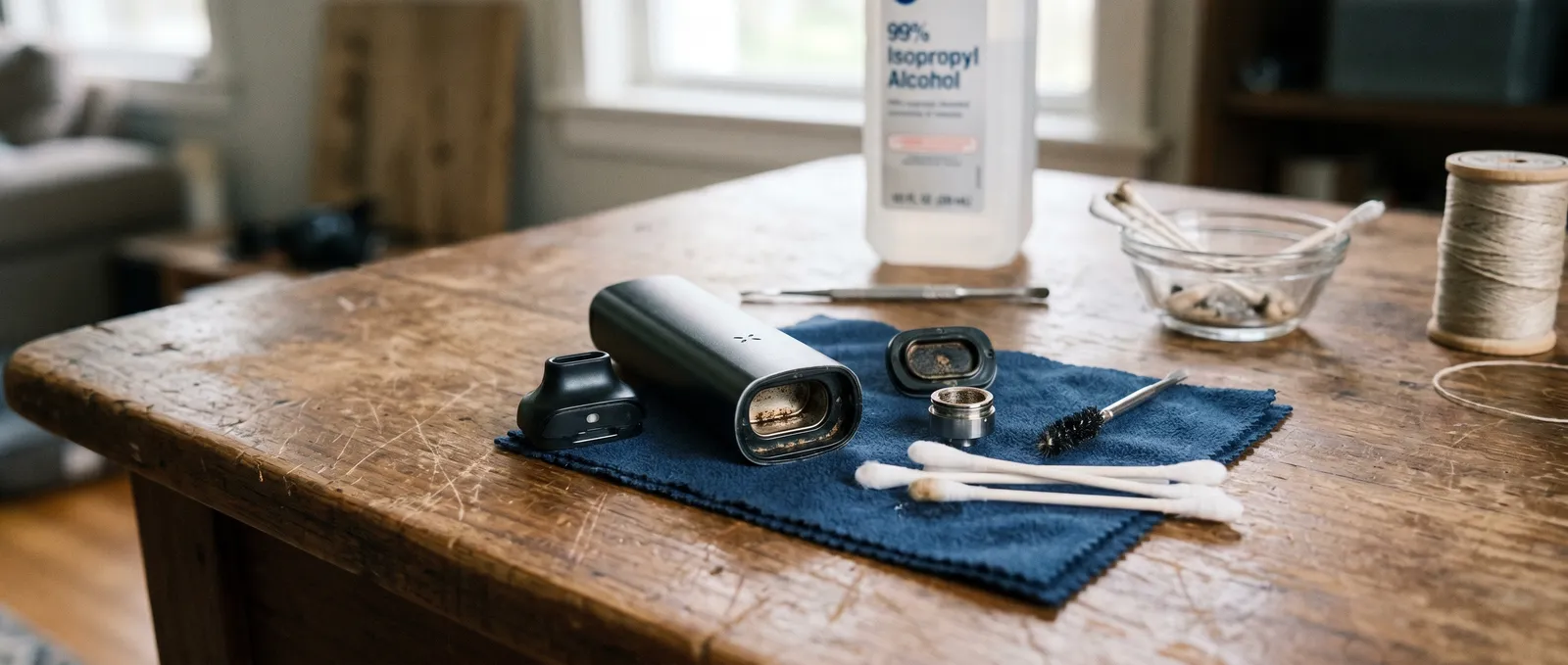
Vaporizer schoonmaken: complete gids voor elke vape
Een vaporizer schoonmaken is een eenvoudige onderhoudsroutine die je apparaat fris laat smaken, soepel laat trekken en jaren langer laat meegaan.
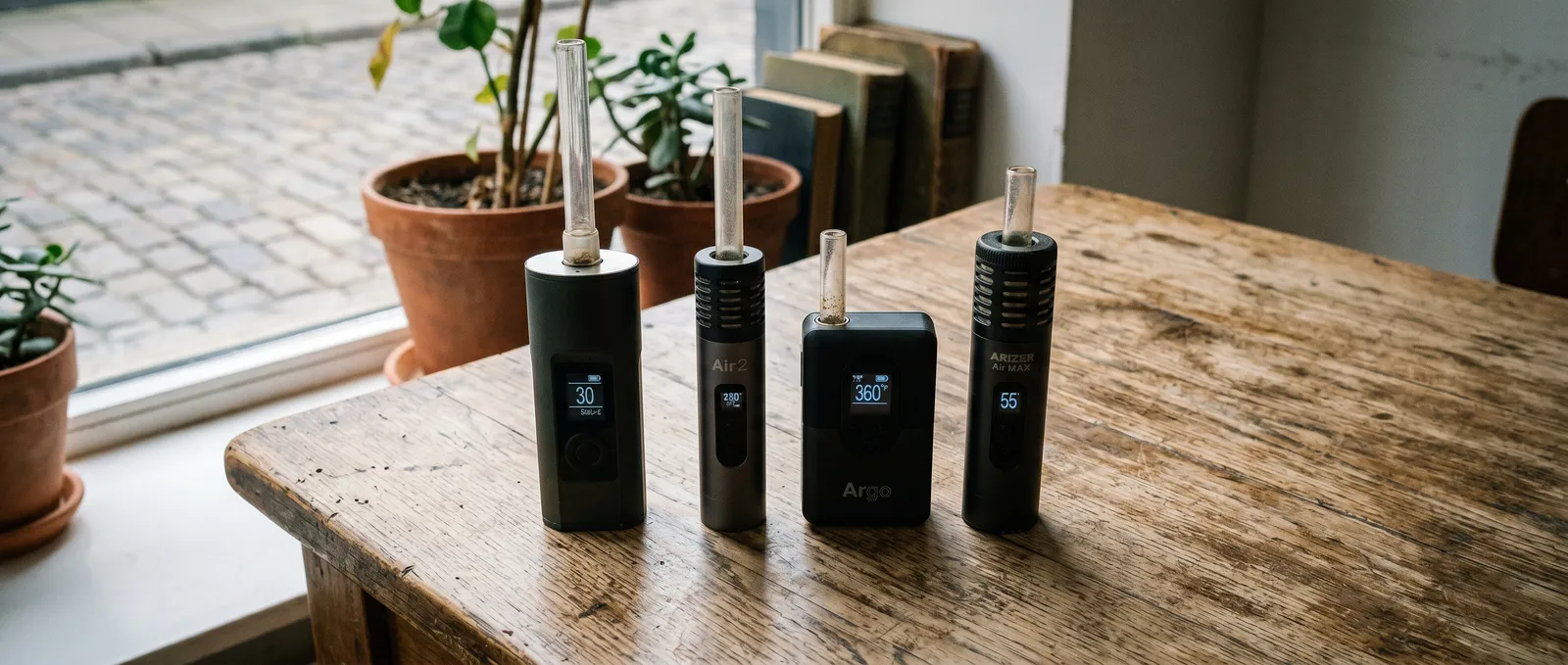
Arizer portable lineup vergeleken: Solo, Solo 2, Solo 3 en ArGo
De Arizer portable lineup vergeleken is een zij-aan-zij-analyse van vier draagbare glassteamvaporizers — Solo, Solo 2, Solo 3 en ArGo — die dezelfde…
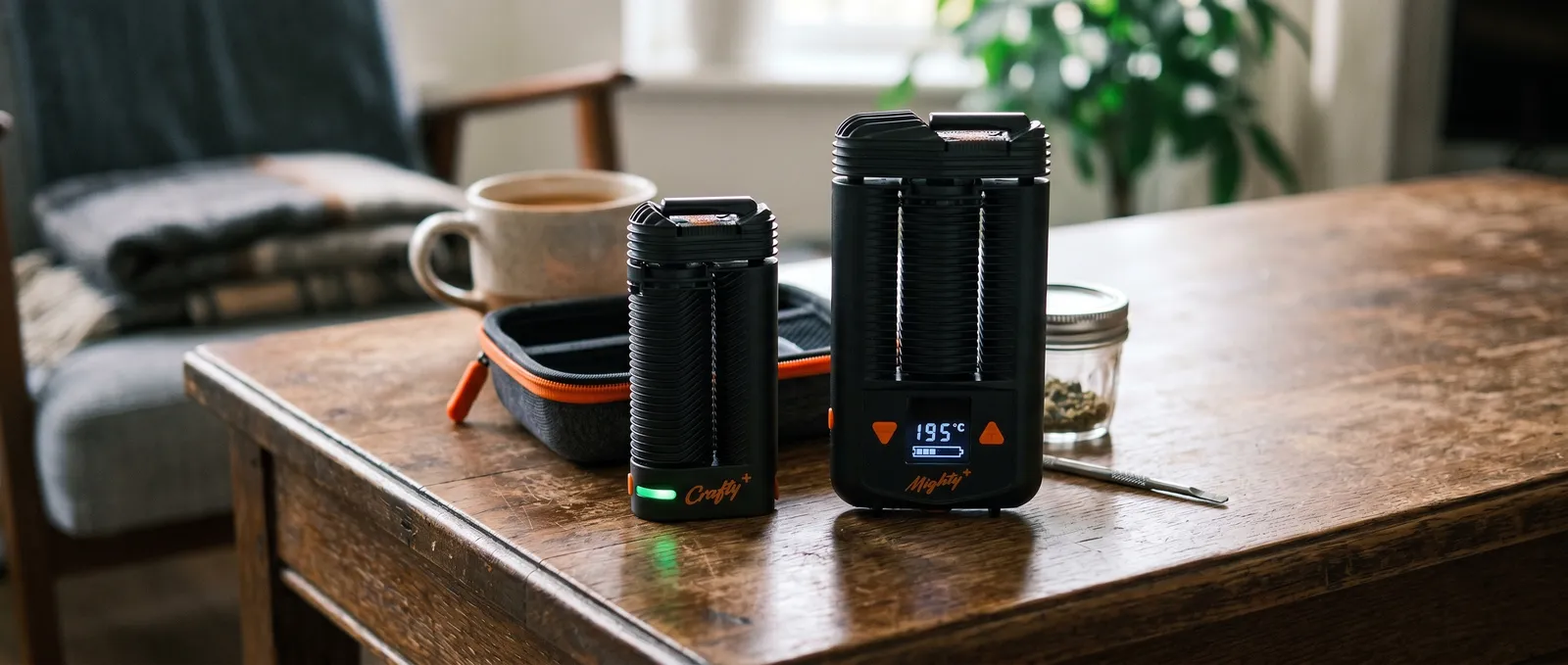
Storz & Bickel Crafty vs Mighty – Vergelijking
De Storz & Bickel Crafty en Mighty zijn hybride conductie-convectie vaporizers uit dezelfde Duitse fabriek met identieke kamergeometrie, koelelement en…
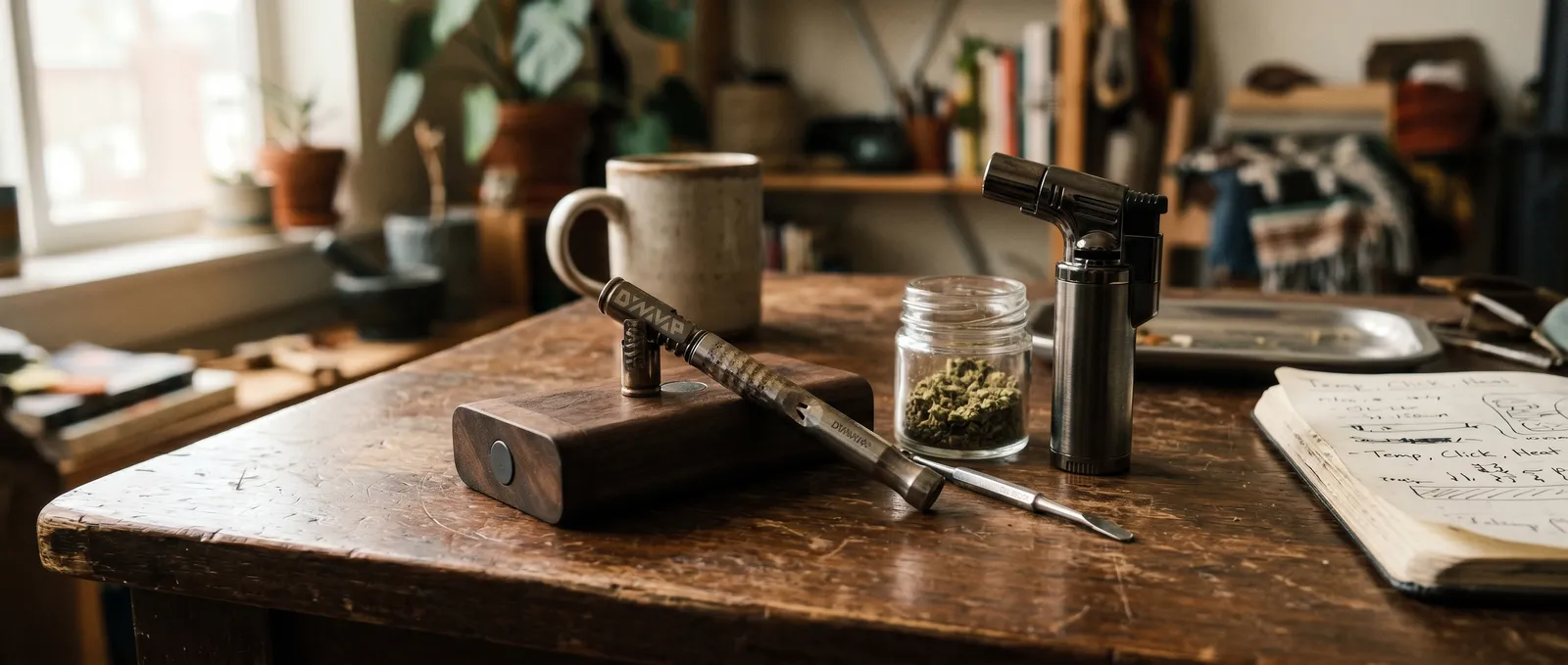
DynaVap complete guide — handleiding voor beginners
Een DynaVap is een compacte, handmatige droogkruidvaporizer zonder batterij of elektronica.
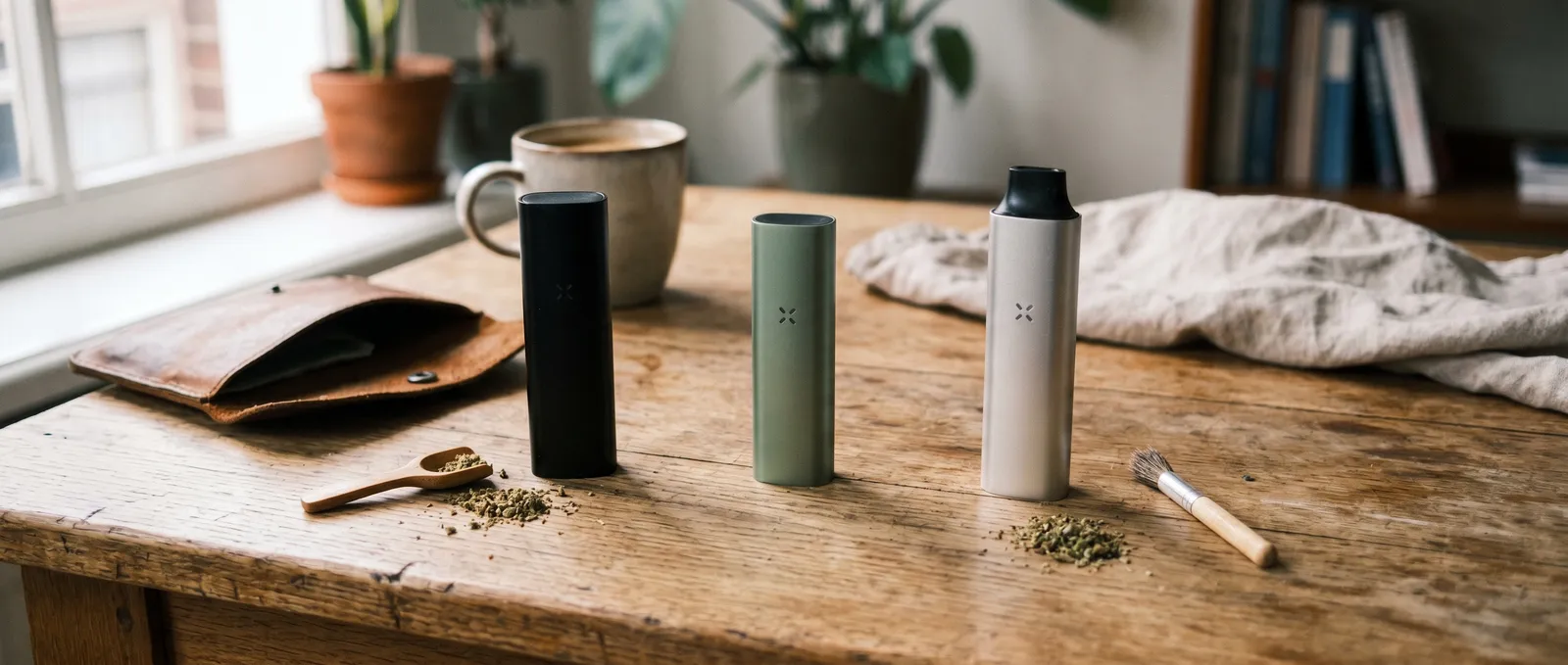
PAX Vaporizer Lineup Guide — PAX 3, Mini & Flow vergeleken
De PAX vaporizer lineup guide vergelijkt de drie huidige draagbare PAX-modellen — PAX 3, PAX Mini en PAX Flow — op verhittingsmethode, ovencapaciteit…
Portable vs desktop vaporizer: koopgids en vergelijking
De keuze tussen een portable en een desktop vaporizer draait om hoe en waar je dampt.
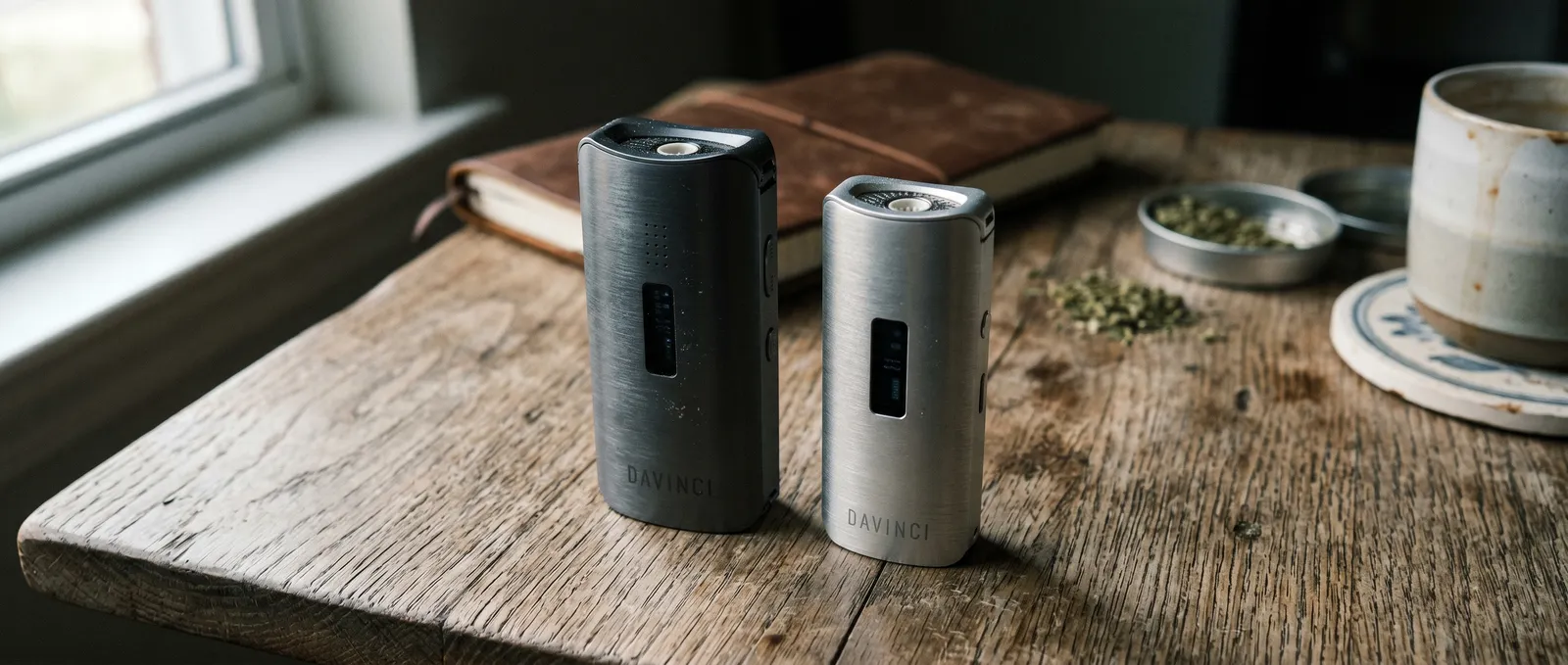
DaVinci IQ vs MIQRO: verschil in specs en gebruik
De DaVinci IQ en MIQRO zijn conductie-vaporizers voor droge kruiden met een damppad van zirkoniumoxide-keramiek en een temperatuurbereik van 177–222 °C. Het…